Mathematics
As of February 2026, the summer 2026 program will not be offered and is no longer accepting applications. Check back for updates on program availability in the summers of 2027-2029.
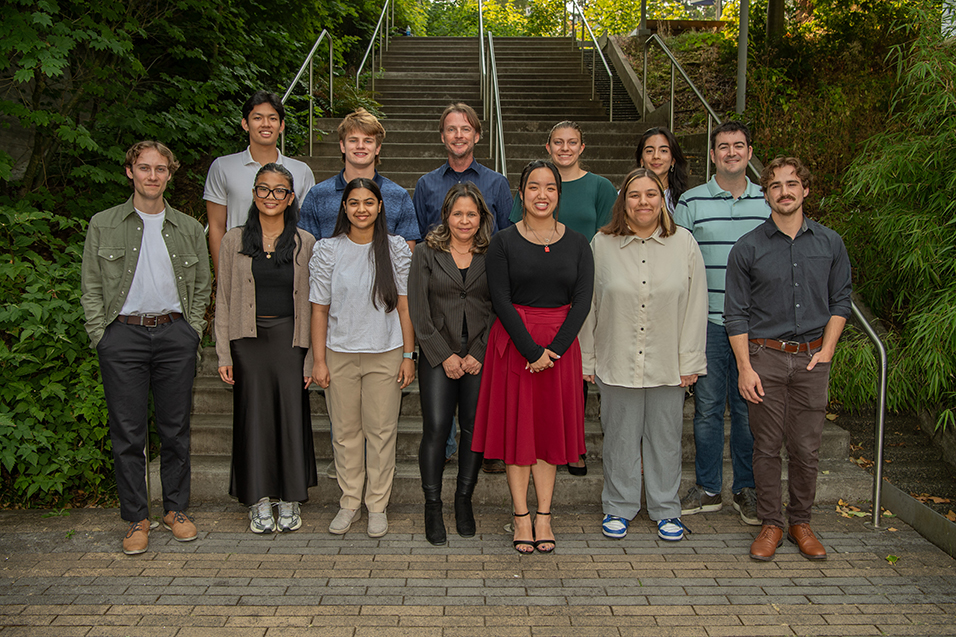
UW Bothell Mathematics REU Program
Established in 2015, the Mathematics Research Experience for Undergraduates (REU) program at the University of Washington Bothell provides a unique opportunity for undergraduate students from underrepresented groups to explore mathematical research and prepare for graduate studies. Over an 8-week summer experience, participants work on impactful research projects alongside dedicated faculty mentors, engage in professional development workshops, build lasting connections with peers and present their research results. With a focus on fostering diversity and inclusion, the program combines rigorous academics with a fun, supportive environment to inspire the next generation of mathematicians.
Celebrating ten years
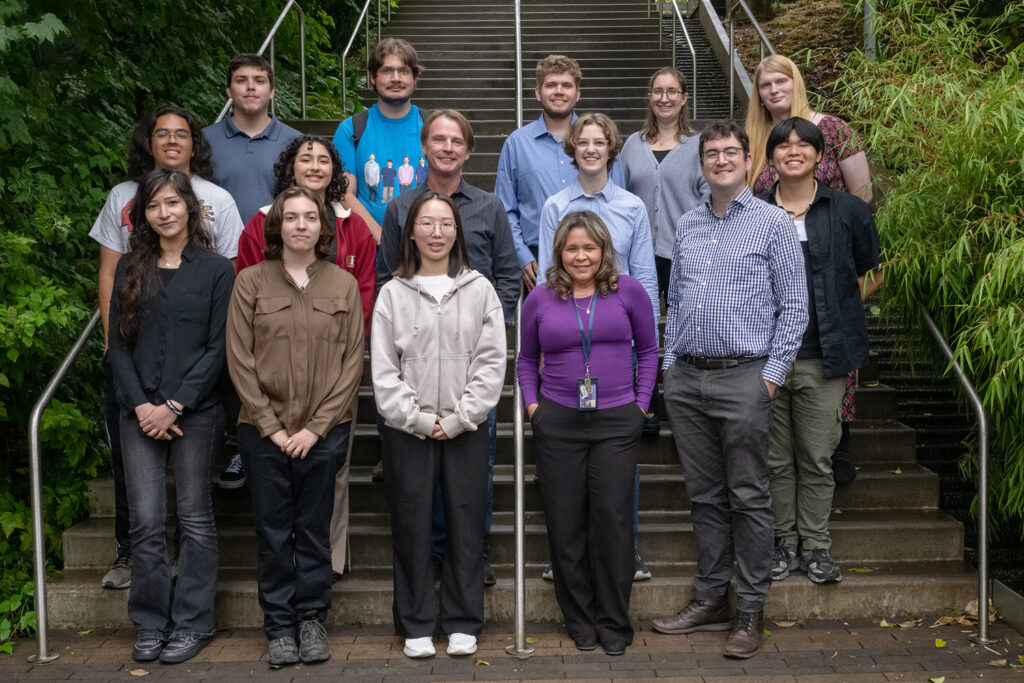
Founded in 2015, the Mathematics REU has empowered underrepresented students in STEM and inspired graduate study. A decade later, it continues to welcome students nationwide. Explore the program’s transformative journey.
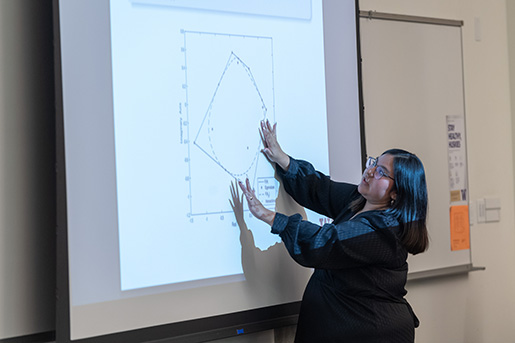
Summer 2026 research areas
2026 program calendar
UPDATE: As of February 2026, the summer 2026 program will not be offered and is no longer accepting applications. Check back for updates on program availability in the summers of 2027-2029.
The summer 2026 program is planned for June 22-Aug. 14, 2026.
- Jan. 1, 2026: application opens
- Feb. 20, 2026: priority application deadline
- May 1, 2026: deadline for applications
All offers to participate will be pending funding from the NSF.
Eligibility
- You must be enrolled as an undergraduate student in any academic year (freshman through senior) in the fall semester/quarter following the summer REU to participate.
- Participants must be U.S. citizens or permanent residents.
How to apply
Your application is comprised of the following:
- A completed online application.
- A personal statement.
- Your current college transcript(s).
- Unofficial transcripts from your school registrar are acceptable. If your school provides you with online access to your transcript or degree audit, a PDF printout is acceptable.
- Contact information for 2 professors or research mentors who can supply letters of reference.
All application materials must be submitted online.
The University of Washington is committed to providing access and accommodation in its services, programs, and activities. If any accommodation is needed in the completion and submission of this form please contact the Mathematics REU program contact, Dr. Casey Mann, uwbmathreu@uw.edu.
Stipends, lodging, and travel expenses
- You are paid a program stipend in the range of $2000 – $3000.
- You will live in the new UW Bothell dorms and use the dining hall at no direct expense to you. Your roommates will be participants in the Mathematics REU at UW Bothell and other summer programs.
- The program includes funding for students to travel to conferences to present their research from the program.
Local and regional resources
Achievements
- Loreto, M., Humphries, T., Raghavan, C., Wu, K., & Kwak, S. (2024). A new spectral conjugate subgradient method with application in computed tomography image reconstruction. Optimization Methods and Software, 1-24.
- 1st place Presentation: Harper Hults, A Markov Partition for the Penrose Shift, 14th annual Northwest Undergraduate Mathematics Symposium, Portland State University, November 12, 2023
- M. Loreto, Y. Xu, and D. Kotval, A numerical study of applying spectral-step subgradient method for solving nonsmooth unconstrained optimization problems, Computer and Operation Research, Vol. 104, pp. 90-97, 2019
- Rebekah Aduddell, Morgan Ascanio, Adam Deaton, Casey Mann, Unilateral and equitransitive tilings by equilateral triangles. Discrete Mathematics Volume 340, Issue 7, July 2017, Pages 1669-1680
- 2nd Place Poster Presentation at the 2017 SIAM Pacific Northwest Conference, Oregon State University (2017 Nonlinear Optimization Group)
- Outstanding Posters at the Joint Mathematics Meetings Student Poster Session (top 15% in each subject area)
- 2017, A Spectral Subgradient Method for Non-Smooth Optimization, David Kotval, Yiting Xu, Mentored by Milagros Loreto
- 2016, Unilateral and Equitransitive Tilings by Triangles, Adam Deaton, Rebekah Aduddel, Morgan Ascanio, Mentored by Casey Mann
REU in the news
- Undergraduates immerse themselves in research
- Summer research strengthens math majors
- Student poster selected at math conference
- First cohort completes math REU
Questions?
For questions, please contact Dr. Casey Mann, uwbmathreu@uw.edu
Research mentors and project descriptions
Refer to project references (indicated as numbers in brackets within project descriptions) to dive deeper into a topic.
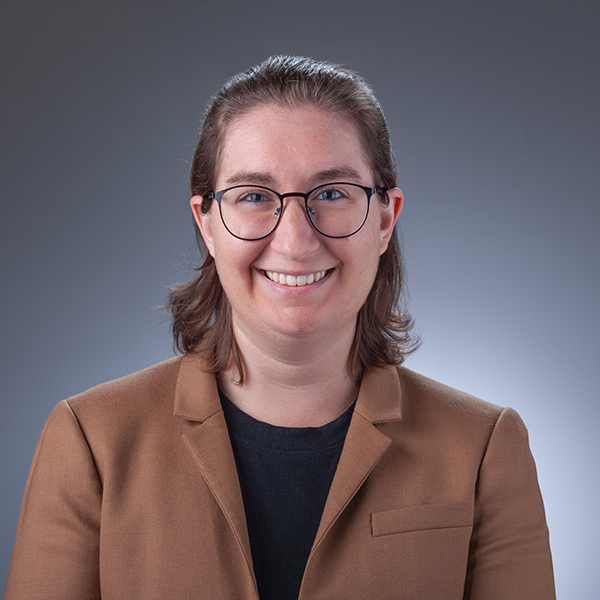
Elizabeth Field
Project: Topological Data Analysis
Prerequisites: Multivariable calculus, introductory programming, algebra
Dr. Field is a mathematician whose research interests lie in the fields of topology, geometric topology, and geometric group theory. The following project arises from a collaboration that Dr. Field is engaged in with her colleague Dr. Amy Van Cise at the University of Washington. The southern resident killer whale (SRKW) is an endangered species that lives off the coast of Washington and forages in the Puget Sound and Salish Sea. Conservation efforts of the SRKW depend, in large part, on increasing the availability of the Chinook salmon that the SRKW feeds upon throughout the year. However, there are a vast number of genetically distinct stocks of
Chinook salmon, each of which spawn in a different geographic/temporal location throughout the lakes and streams of the Pacific Northwest. Therefore, it is essential to identify precisely which genetic stocks of these salmon the SRKW feeds upon in order to protect those specific breeding grounds. As the SRKW is an endangered species, investigators are limited to the non-invasive studying of fecal samples. The problem of genetic stock identification from fecal samples is a particularly difficult problem, due to the fact that these samples contain a mixture of an unknown number of individuals. As such, the genetic data generated from these samples must first
be clustered to identify individual genotypes before the stock can be identified. Initial attempts using existing bioinformatic approaches have been insufficient for tackling this problem using the current short-read genetic sequence data currently available. The overall goal of these projects will be to utilize the tools of topological data analysis to cluster genotype data coming from SRKW fecal samples into the individual genetic stocks of Chinook salmon that are present in the samples. REU students will begin each project by reading selected materials and attending lectures by Dr. Field which will cover the foundational theory underlying TDA, including simplicial complexes, homology groups, and persistent homology. The students will also meet with Dr. Field and her collaborator, Dr. Amy Van Cise, to learn about the biological and genomic aspects of the project. Once the students are familiar with the mathematical and biological underpinnings of the problem, they will then participate in a research project focused on identifying the topological features which are present in the genomic data available for individual Chinook salmon with the goal of identifying those features which are unique to specific genetic stocks of salmon.
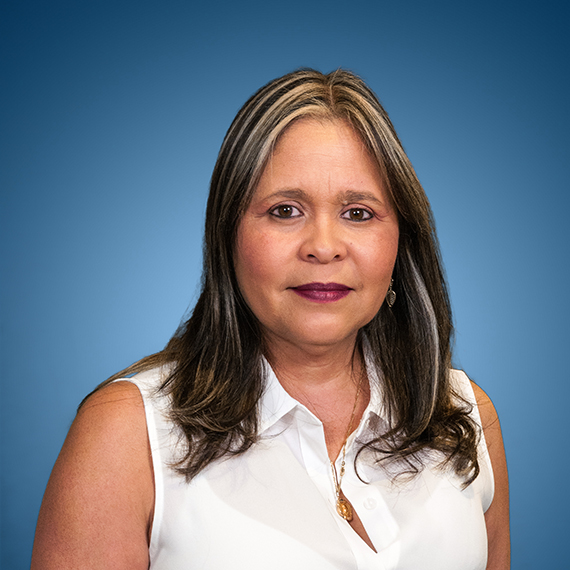
Milagros Loreto
Project: Numerical Optimization
Prerequisites: Numerical Analysis, multivariable calculus and introductory programming
The Barzilai-Borwein (BB) method [5], made a significant impact on the field of numerical optimization with its innovative delayed step lengths, often referred to as BB1 and BB2 steps. This method introduces non-monotonic behavior, which significantly enhances the convergence speed of the classical gradient method. Dr. Loreto has concentrated on expanding the application of BB steps to address nonsmooth unconstrained minimization problems, resulting in several publications in collaboration with REU students [16, 20, 22, 23]. Additionally, she has authored and co-authored articles with her research collaborators in the realm of nonsmooth optimization [10, 19, 21]. In this project, Dr. Loreto aims to combine a new Adaptive BB step (ABB) [38], with a nonmonotonic line search technique developed by Zhang et al [37]. The new step alternates BB1 and BB2 steps, and it seems promising to use it to minimize non-smooth functions. The new linesearch focuses on using the average of the function values rather than the maximum. The project will begin with students learning key concepts on nonsmooth optimization. This will include attending preparatory lectures by Dr. Loreto and reading selected background papers. Dr. Loreto is dedicated to providing the necessary support to help students understand the challenges, particularly when gradient vectors are not available. Once they grasp these concepts and familiarize themselves with the codebase, students will participate in a research project focused on solving nonsmooth minimization problems coming from the literature and explore some applications.
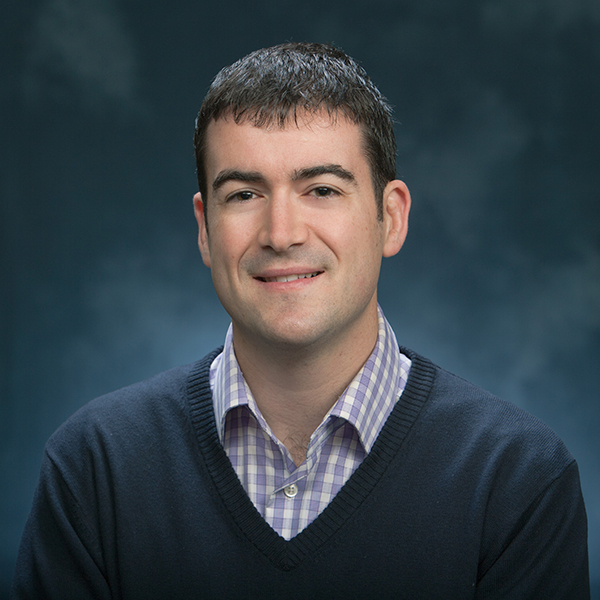
Thomas Humphries
Project: Medical Imaging and Optimization
Prerequisites: Linear algebra, multivariable calculus, introductory programming
Dr. Humphries is an applied and computational mathematician whose main research interests are medical imaging and optimization. In recent years, he has also become interested in how techniques from deep learning can be applied to problems in imaging. He has supervised a total of thirty-three undergraduate students and two Master’s students on research projects in these areas since arriving at UW Bothell in 2015. A research problem suitable for undergraduates is described below. Applications of deep learning to computed tomography: In medical computed tomography (CT) imaging, a volumetric image of the body is reconstructed from X-ray data acquired from numerous views around the patient. This image reconstruction problem can be modeled as a large
linear inverse problem, Ax= b, where b represents the X-ray data and x the unknown image to be reconstructed. While CT imaging is used daily in medical clinics around the world, a number of important and challenging problems exist in the field, such as low-dose, sparse-view, and limited-angle imaging. In these scenarios it is typically necessary to incorporate some prior information into the image reconstruction problem, as simply solving the system Ax= b results in poor image quality.
Addressing these problems using deep learning has been a topic of considerable interest within the CT community over the last ten years, with neural networks being employed to enhance the performance of classical reconstruction algorithms. This can be done in many ways, including using the network as a pre or post-processing step; integrating a neural network into an iterative algorithm, or even reconstructing CT images directly from the X-ray data. Many different types of network architecture from the deep learning literature can be applied, including autoencoders, U-Nets, or Transformer models. Students working on this project will require knowledge of linear algebra and multivariable calculus to understand the mathematics of CT image reconstruction, as well as basic programming skills to work on implementing the algorithms. Following an introduction to the basic concepts of CT imaging and deep learning, students will begin work on developing the algorithmic framework, generating simulated data, and modifying existing code to train the deep-learning based prior and incorporate it into the reconstruction algorithm. Potential avenues of investigation include comparing different approaches, such as post-processing, algorithm unrolling, or plug-and-play methods, and investigating different types of network architecture. Projects will be natural continuations of Dr. Humphries’ existing research in this area, e.g. [13, 16-18]. The project offers students the opportunity to gain exposure to cutting-edge concepts in imaging science and machine learning, and to develop mathematical programming skills.
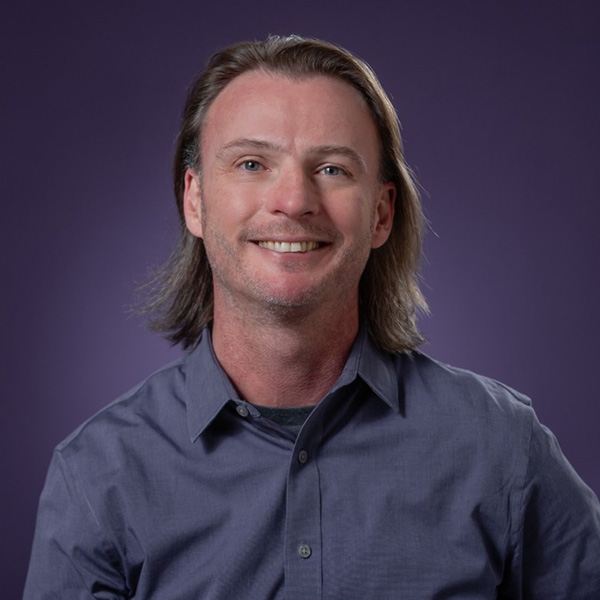
Casey Mann
Project: Tiling Theory
Prerequisites: Introductory programming, introductory proofs
The topic of tiling theory is plentiful with accessible open problems (for example, [12] is full of open problems, several of which have been solved with REU students under Dr. Mann’s direction [1, 2, 27, 28, 31, 32]). Dr. Mann has many potential projects in mind, and here specifically proposes one such research topic in tiling theory centered on the well-known Heesch’s Tiling Problem [12]. Put simply, this problem asks for which integers n does there exist a tile T such that n complete layers containing no holes and formed from copies of T can be formed around a centrally placed copy of T. Dr. Mann has contributed to this problem previously, applying systematic computer searches to classes of tiles called polyominies, polyiamonds, and polyhexes (shapes formed from squares, equilateral triangles, and regular exagons, respectively), finding many examples of tiles with Heesch numbers 0 through 5 [24-26, 32], and we propose to extend that search to a large and previously unexplored classes of tiles we call polyLaves tiles. PolyLaves tiles include polykites, an example of which is the famous and recently discovered aperiodic “Einstein” monotile [35]. For this project, students would need to adapt some existing code to these new polyLaves tiles and learn how to implement the code on a high performance computing cluster. Based on the results of the computered search, conjectures may be formed and proven. Moreover, specific examples found through the computer search process may be of wide interest. The current world-record for Heesch numbers is 6 [6], a recently discovered result. The proposed topic may advance that record further.
Mathematics REU cohorts

Funded by National Science Foundation Award #2150511
Project references
- [1] J. Adams, G. Lopez, C. Mann, and N. Tran. Your Friendly Neighborhood Voderberg Tile. Math. Mag., 93(2):83–90, 2020.
- [2] R. Aduddell, M. Ascanio, A. Deaton, and C. Mann. Unilateral and equitransitive tilings by equilateral triangles. Discrete Math., 340(7):1669–1680, 2017.
- [3] J. Antonides, C. Kiers, and N. Yamzon. On the long-repetition-free 2-colorability of trees. Rose-Hulman Undergrad Math J., 18(1), 2017.
- [4] R. Bailey, H. Chaumont, M. Dennis, J. McLoud-Mann, E. McMahon, S. Melvin, and G. Schuette. Stick numbers in the simple hexagonal lattice. Involve, 8(3):503–512, 2015.
- [5] J. Barzilai and J. M. Borwein. Two point step size gradient methods. IMA Journal of Numerical Analysis, 8:141–148, 1988.
- [6] B. Baˇsi´c. A figure with heesch number 6: Pushing a two-decade-old boundary. The Mathematical Intelligencer, 43, 01 2021.
- [7] C. Bouey, C. Graves, A. Ostrander, and G. Palma. Non-recursively constructible recursive families of graphs. Electron. J. Combin., 19(2):Paper 9, 8, 2012.
- [8] J. Bush, P. Commins, T. Gomez, and J. McLoud-Mann. Hexagonal mosaic links generated by saturation. J. Knot Theory Ramifications, 29(12):2050085, 14, 2020.
- [9] R. Chick and C. Mann. Equilateral k-isotoxal tiles. Geombinatorics, 23(4):149–157, 2014.
- [10] A. Crema, M. Loreto, and M. Raydan. Spectral projected subgradient with a momentum term for the Lagrangean dual approach. Computers & operations research, 34(10):3174–3186, 2007.
- [11] M. J. Fyfe, Y. Hernandez, P. Paparella, and M. Rajbhandari. Matrices whose field of values is inscribed in a polygon, 2023.
- [12] B. Gr¨unbaum and G. C. Shephard. Tilings and patterns. W. H. Freeman and Company, New York, 1987.
- [13] J. Henshaw, A. Gibali, and T. Humphries. Plug-and-play superiorization. arXiv preprint arXiv:2410.23401, 2024.
- [14] S. L. Hoover, D. A. McCormick, P. Paparella, and A. R. Thrall. On the realizability of the critical points of a realizable list. Linear Algebra Appl., 555:301–313, 2018.
- [15] H. Hults, H. Jitsukawa, C. Mann, and J. Zhang. Experimental results on potential markov partitions for wang shifts, 2024.
- [16] T. Humphries, M. Loreto, B. Halter, W. O’Keeffe, and L. Ramirez. Comparison of regularized and superiorized methods for tomographic image reconstruction. J. Appl. Numer. Optim, 2(1):77–99, 2020.
- [17] T. Humphries, D. Si, S. Coulter, M. Simms, and R. Xing. Comparison of deep learning approaches to low dose CT using low intensity and sparse view data. In Medical Imaging 2019: Physics of Medical Imaging, volume 10948, page 109484A. International Society for Optics and Photonics, 2019.
- [18] Y. Jia, N. McMichael, P. Mokarzel, B. Thompson, D. Si, and T. Humphries. Superiorizationinspired unrolled sart algorithm with u-net generated perturbations for sparse-view and limited-angle ct reconstruction. volume 67, page 245004. IOP Publishing, 2022.
- [19] M. Loreto, H. Aponte, D. Cores, and M. Raydan. Nonsmooth spectral gradient methods for unconstrained optimization. EURO Journal on Computational Optimization, 5(4):529–553, 2017.
- [20] M. Loreto, S. Clapp, C. Cratty, and P. Breeanna. Modified spectral projected subgradient method: convergence analysis and momentum parameter heuristics. Bulletin of Computational Applied Mathematics, 4(2), 2016.
- [21] M. Loreto and A. Crema. Convergence analysis for the modified spectral projected subgradient method. Optimization Letters, 9(5):915–929, 2015.
- [22] M. Loreto, T. Humphries, C. Raghavan, K. Wu, and S. Kwak. A new spectral conjugate subgradient method with application in computed tomography image reconstruction. Optimization Methods and Software, pages 1–24, 2024.
- [23] M. Loreto, Y. Xu, and D. Kotval. A numerical study of applying spectral-step subgradient method for solving nonsmooth unconstrained optimization problems. Computers & Operations Research, 104:90–97, 2019.
- [24] C. Mann. Heesch’s Problem and Other Tiling Problems. PhD thesis, University of Arkansas, 2001.
- [25] C. Mann. Heesch’s tiling problem. Amer. Math. Monthly, 111(6):509–517, 2004.
- [26] C. Mann. Hyperbolic regular polygons with notched edges. Discrete Comput. Geom., 34(1):143–166, 2005.
- [27] C. Mann, L. Asaro, J. Hyde, M. Jensen, and T. Schroeder. Uniform edge-c-colorings of the Archimedean tilings. Discrete Math., 338(1):10–22, 2015.
- [28] C. Mann, J. DiNatale, E. Peirce, and E. Vitercik. Unilateral and equitransitive tilings by squares of four sizes. Ars Math. Contemp., 10(1):135–167, 2016.
- [29] C. Mann, B. McCarty, J. McLoud-Mann, R. Ranalli, and N. Smith. Metrics in threedimensional lattices. J. Geom. Graph., 12(2):133–140, 2008.
- [30] C. Mann, J. McLoud-Mann, R. Ranalli, N. Smith, and B. McCarty. Minimal knotting numbers. J. Knot Theory Ramifications, 18(8):1159–1173, 2009.
- [31] C. Mann, J. McLoud-Mann, and D. Von Derau. Convex pentagons that admit i-block transitive tilings. Geom. Dedicata, 194:141–167, 2018.
- [32] C. Mann and B. C. Thomas. Heesch numbers of edge-marked polyforms. Exp. Math., 25(3):281–294, 2016.
- [33] A.-M. Neunez and S. Cieuccaro-Alamin. First-generation students: Undergraduates whose parents never enrolled in postsecondary education. (NCES 98-082), 1998.
- [34] E. Peralta. With discovery, 3 scientists chip away at an unsolvable math problem. NPR Web Site.
- [35] D. Smith, J. S. Myers, C. S. Kaplan, and C. Goodman-Strauss. An aperiodic monotile. Combinatorial Theory, 4(1), July 2024.
- [36] J. Striplin. Facilitating transfer for first-generation community college students. ERIC Digest, June, 1999.
- [37] H. Zhang and W. W. Hager. A nonmonotone line search technique and its application to unconstrained optimization. SIAM journal on Optimization, 14(4):1043–1056, 2004.
- [38] B. Zhou, L. Gao, and Y.-H. Dai. Gradient methods with adaptive step-sizes. Computational optimization and applications, 35:69–86, 2006.