Researchers discover fastest ultraviolet quasar
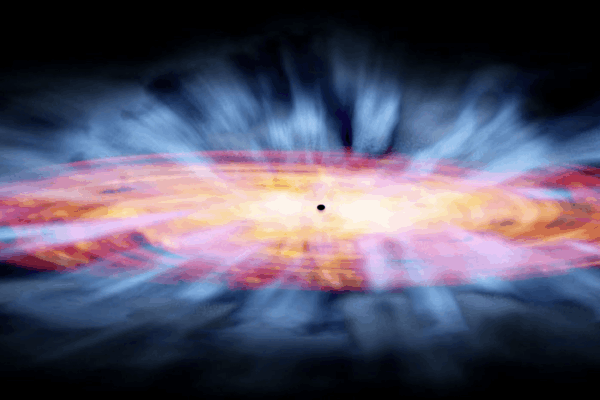
Researchers from UW Bothell helped discover the fastest ultraviolet quasar outflow ever detected.
Dr. Paola Rodríguez Hidalgo, associate professor in the Department of Physical Sciences, and Liliana Flores (Physics ’25), a former undergraduate researcher, published their research in “The Astrophysical Journal” as part of a team led by York University in Toronto.
While studying the distant quasar known as J2318, they found that the quasar hosts a black hole approximately 1.7 billion times the mass of the Sun and generates a powerful wind at nearly 30% of the speed of light.
Researchers say the finding could help astronomers better understand how energy from supermassive black holes regulates star formation and shapes the growth of galaxies over cosmic time.
Read more about this research in the full UW Bothell story, “Discovery gives insight into black holes.”