Workshops in France highlight women in science, Dean Jennifer McLoud-Mann featured
From Bothell to Bordeaux, mathematical discovery continues to be celebrated.
Just over ten years ago, Dean Jennifer McLoud-Mann was lauded for being among the first people in decades to have discovered a new type of pentagon that can tile a plane.
In 2015, McLoud-Mann, along with Professor Casey Mann and Alumnus David Von Derau, made mathematics history by using a computer algorithm to find the 15th pentagon tile.
Since then, this finding has been recognized in many places; it was featured in a building design for a school in the Netherlands, in a comic about the history of pentagonal tiling and in a mosaic art piece previously displayed in Discovery Hall.
Most recently, it has reached the outskirts of southwestern France, near the city of Bordeaux.
Selecting scientists who inspire the next generation
“Jennifer naturally stood out,” said Anne-Laure Allègre, founder of Labo enchanté, a French company that holds educational science workshops and events.
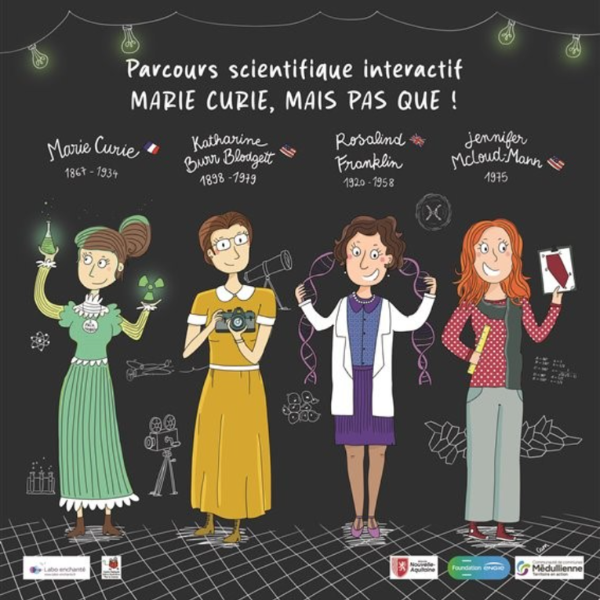
Last year, Allègre oversaw the “Marie Curie, but not only!” project, an interactive science trail aimed at highlighting four women scientists in the fields of physics, chemistry, mathematics and biology.
When looking into potential scientists to feature, she found McLoud-Mann’s research inspiring, ultimately deciding to include her and the tiling discovery in the project.
“[McLoud-Mann’s] research in mathematics is highly visual, easy to understand, and lends itself perfectly to a playful approach that appeals to a wide audience,” said Allègre.
The other scientists recognized for their achievements were Marie Curie, Rosalind Franklin and Katharine Burr Blodgett. French scientist Marie Curie is known for discovering polonium and radium in the nineteenth century, later becoming the first woman to win a Nobel Prize. The DNA research of English scientist Rosalind Franklin was crucial in the discovery of the double helix structure in the 1950s. American physicist and chemist Katharine Burr Blodgett invented non-reflective glass coating in the 1930s, which is used today in optical equipment such as eyeglasses and computer screens.
McLoud-Mann appeared as the only living scientist of out the four, something Allègre said was deliberate.
“I also wanted to include a living woman scientist, to show young people that it is still possible today to become a great scientist and to make these role models feel closer and more inspiring,” Allègre said. “Having a living scientist also helps people relate more easily, since she is part of our current society. It’s especially meaningful for children: it helps them see that doing science is possible today, even if you’re a girl.”
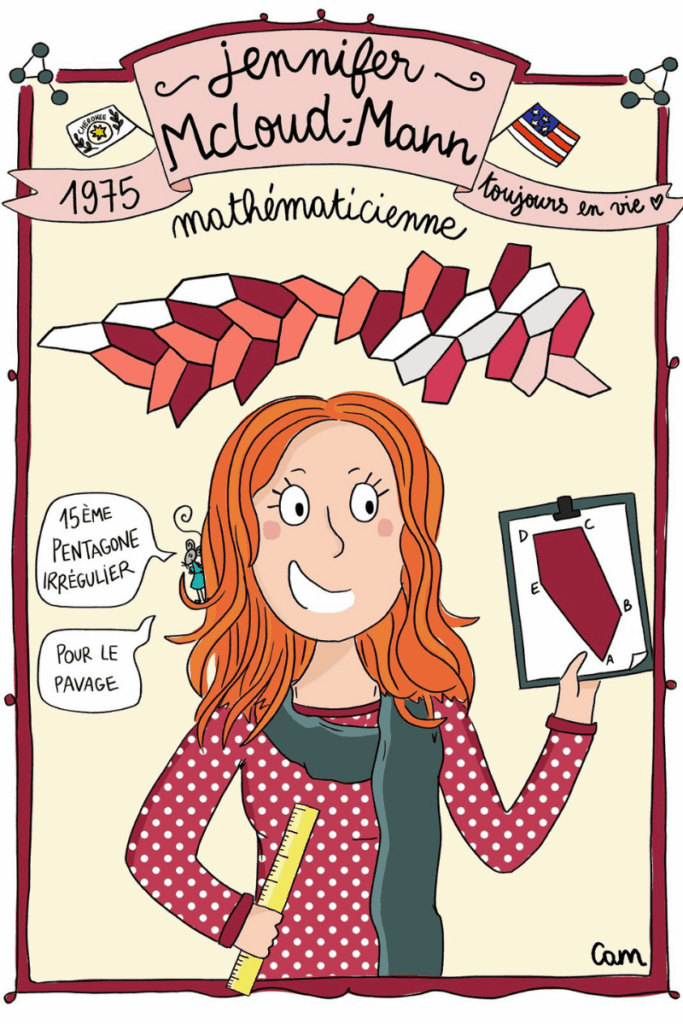
The “Marie Curie, but not only!” title informs this perspective, inviting attendees to look beyond Marie Curie and “discover other, often lesser-known women scientists,” Allègre noted.
She briefly touched on the Matilda effect, which has historically underrecognized women’s scientific contributions. Rosalind Franklin herself was not credited for her work on X-ray diffraction DNA images which led to the discovery of the double helix structure of DNA. Fellow researchers Francis Crick, James Watson, and Maurice Wilkins used her data without her permission, which led to them winning a Nobel Prize in Physiology or Medicine in 1962.
It became increasingly important for Allègre to “place inclusion at the heart of future projects,” she said, especially after working with audiences with limited access to scientific culture.
In this case, learning more about gender inequality in science encouraged her to start the project with the theme of “Growing ‘Her’ Futures.”
“[The theme] immediately felt like an obvious choice,” Allègre said. “It provided an ideal framework to develop a project showcasing the careers of women scientists, challenging gender stereotypes, offering inspiring role models for girls, and raising awareness among all audiences about equality of skills in science.”
Allègre’s approach resonated with Dean McLoud-Mann, who was excited to be included in the science trail.
“Projects like this bring those stories to light while also making science fun and accessible,” Dean McLoud-Mann said. “Being featured alongside these scientists is deeply meaningful, and it’s an honor to see my work included in efforts that celebrate women’s contributions to science.”
Using the pentagon to create a toucan-shaped model
The interactive trail spanned from Aug. to Nov. 2025 across various libraries and community centers in Gironde, the department where Bordeaux is located.
Allègre designed the project to actively engage attendees — especially children and their families — through hands-on experiments, guided reflection questions and knowledge checks at the end of the visit.
McLoud-Mann’s tiling research was displayed through an experiment where participants formed regular tile shapes with triangles, squares, pentagons and hexagons before being introduced to the 15th type of pentagon. A toucan-shaped model was used to present the 15th type, something that was “chosen to be both playful and visually appealing,” said Allègre.
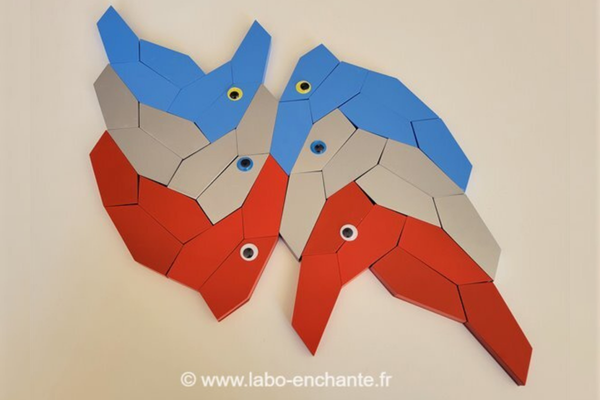
“The children love creating a tiling with the toucans!” Allègre recalled. “They spend a lot of time on it! The parents are curious about the history of science behind the tiling.”
Drawing in nearly 400 attendees across Gironde, Allègre deemed the project a success.
She specifically designed the trail to encourage “discovery, hands-on experimentation and intergenerational sharing, regardless of age or level of scientific knowledge,” she said. “I was particularly struck by the strong engagement of teenagers, who stayed, experimented and showed genuine interest in the content, as well as by the high proportion of female participants, in line with the project’s objectives.”
“When people get excited about learning and become curious after seeing our discovery, it sparks a deep joy for me,” said McLoud-Mann. “Experiences like this encourage young people to ask why and how things work, helping them discover their interests and open paths that can change the direction of their lives.”
“Marie Curie, but not only!” received support from the Communauté de Communes Médullienne, the Nouvelle-Aquitaine Regional Council, and the ENGIE Foundation, and is part of the 2025 programme for scientific, technical and industrial culture (CSTI) in Nouvelle-Aquitaine.
Illustrations were created by children’s author and illustrator Camille Piantanida.
Learn more about pentagon tiling, as explained by McLoud-Mann and Mann themselves.