Alumni Q&A: Jui Bangali
By Jui Bangali (MSCYBER ‘25)
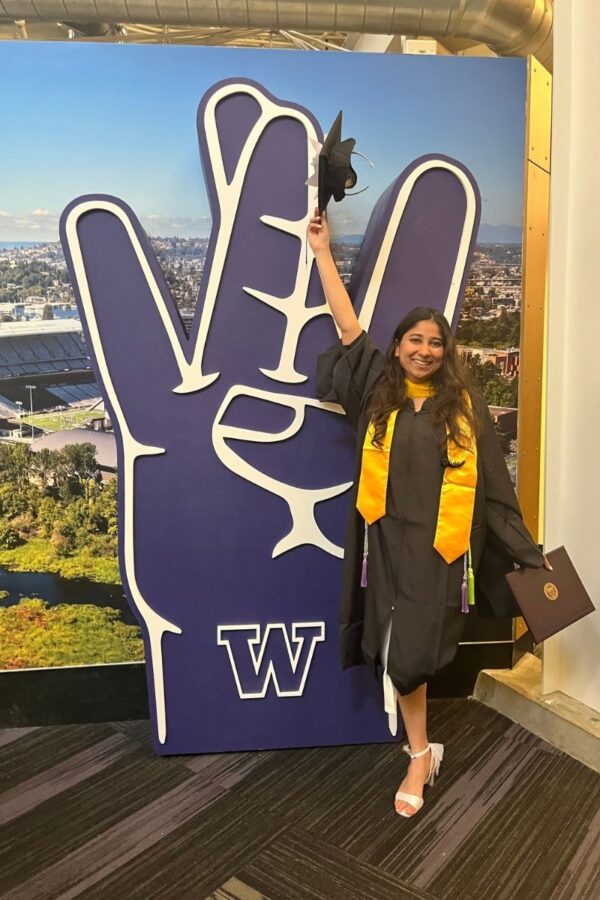
Jui Bangali earned her Master of Science in Cybersecurity Engineering at UW Bothell. Today, she works in Security Engineering at Microsoft. We caught up with her to learn more about her educational journey, career path and advice for students.
What inspired you to choose the MSCYBER program at UW Bothell, and how did you know it was right for you?
A few things immediately stood out to me about the MSCYBER program. The curriculum offered a great balance between foundational cybersecurity concepts and advanced, specialized topics that are not always available in other programs. While many Computer Engineering students learn networking during their undergraduate studies, revisiting it through a cybersecurity lens in the Network Security course is extremely valuable. At the same time, courses such as Machine Learning in Security helped me understand where current technology trends are headed and how cybersecurity is evolving alongside them. After earning my bachelor’s degree in Computer Engineering and spending two years working in cybersecurity, I knew I wanted to dive deeper into this domain. I wasn’t looking for a program that focused only on theory or only on practical skills. I wanted both. MSCYBER offered that balance, which is what made it the right fit for me.
What makes the program unique?
For me, what makes the program unique is not only the coursework but also the thesis and project options. Those experiences give students the opportunity to pursue something they are genuinely passionate about while taking ownership of a long-term effort from start to finish. Beyond technical knowledge, I think the thesis and project options help students develop accountability, time management, and the ability to balance multiple priorities. Those are skills that are valuable in any career. The opportunity to combine technical learning with independent research and project work is what makes the program stand out.
Can you share a moment from your program that had a lasting impact on your career or perspective?
Completing my master’s thesis had a lasting impact on me because it was my first real experience conducting independent research. The research opportunity gave me a chance to explore problems that did not have predefined answers, form and test hypotheses, and contribute something new rather than simply finding an existing solution. Defending my thesis was both challenging and rewarding because it required me to stand behind my work, methodology, and conclusions. That experience gave me confidence in my ability to tackle ambiguous problems, think more critically, and approach innovation in a structured way.
Beyond academics, my experience as an international student shaped me tremendously. Balancing coursework, research, an on-campus job, extracurricular activities, and my role as president of the Women in CyberSecurity student chapter often felt overwhelming, but it was also incredibly empowering. Looking back, that period taught me resilience, time management and how to perform under pressure. Those lessons continue to help me every day in my career.
How did your degree help prepare you for your current role?
The MSCYBER program strengthened my cybersecurity foundation while allowing me to explore different domains within security that I may not have otherwise been exposed to. The combination of coursework, projects, and research expanded my thought process, problem-solving abilities, and critical thinking skills, which ultimately helped me become a better security engineer. The program exposed me to a wide range of concepts, from secure software development and ethical penetration testing to machine learning in security. That exposure helped me develop a broader perspective on how different areas of cybersecurity connect and continue to evolve. The skills and experiences I gained through the program played an important role in helping me land my current role at Microsoft and continue to influence how I approach security challenges today.
What do you enjoy most about your role?
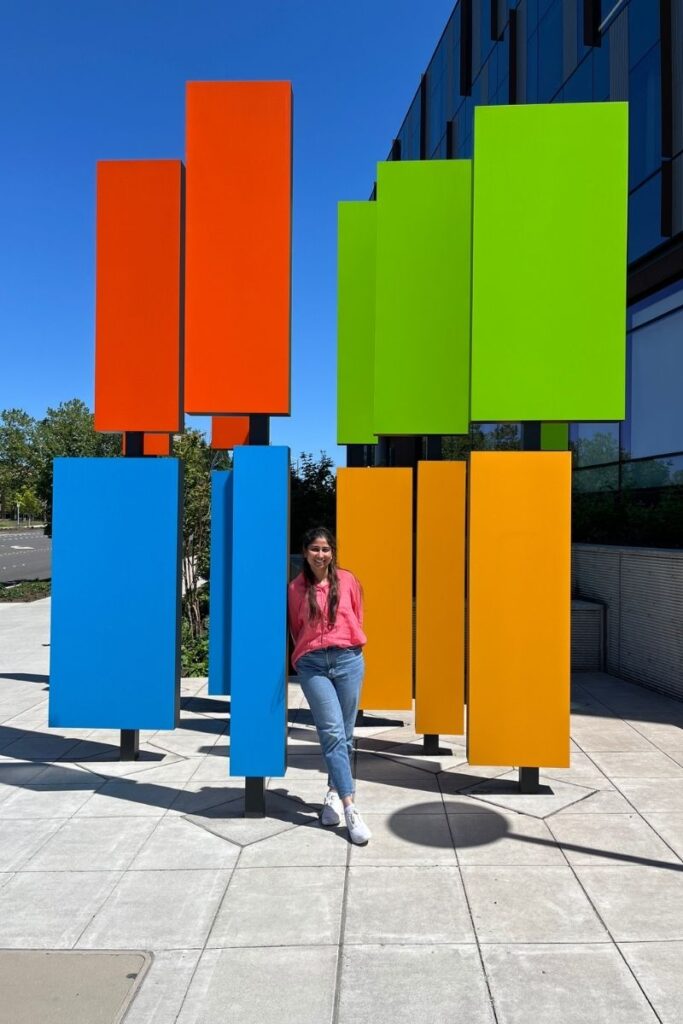
The impact. That’s what initially drew me to cybersecurity and what continues to motivate me every day. I’ve worked on the defensive side of cybersecurity throughout my career, and I find a great deal of satisfaction in knowing that my work helps protect products, systems, and people’s data. Security is one of those fields where, when everything is working well, most people never see the effort behind it. But knowing that my contributions help make technology safer for someone out there is incredibly rewarding and gives purpose to the work I do.
What are some highlights from your time as a student?
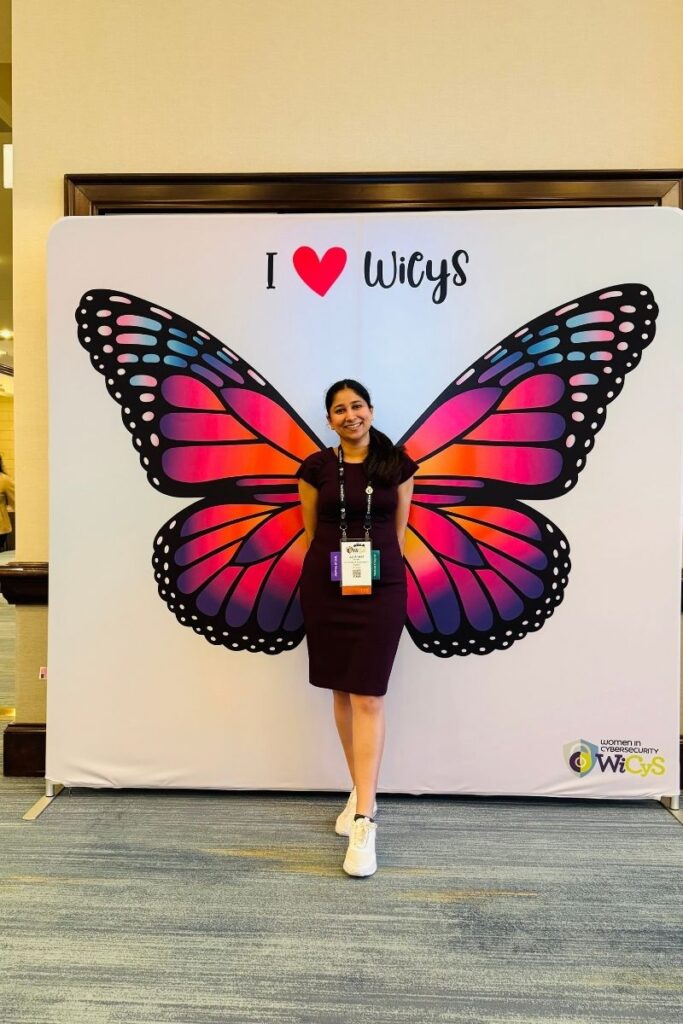
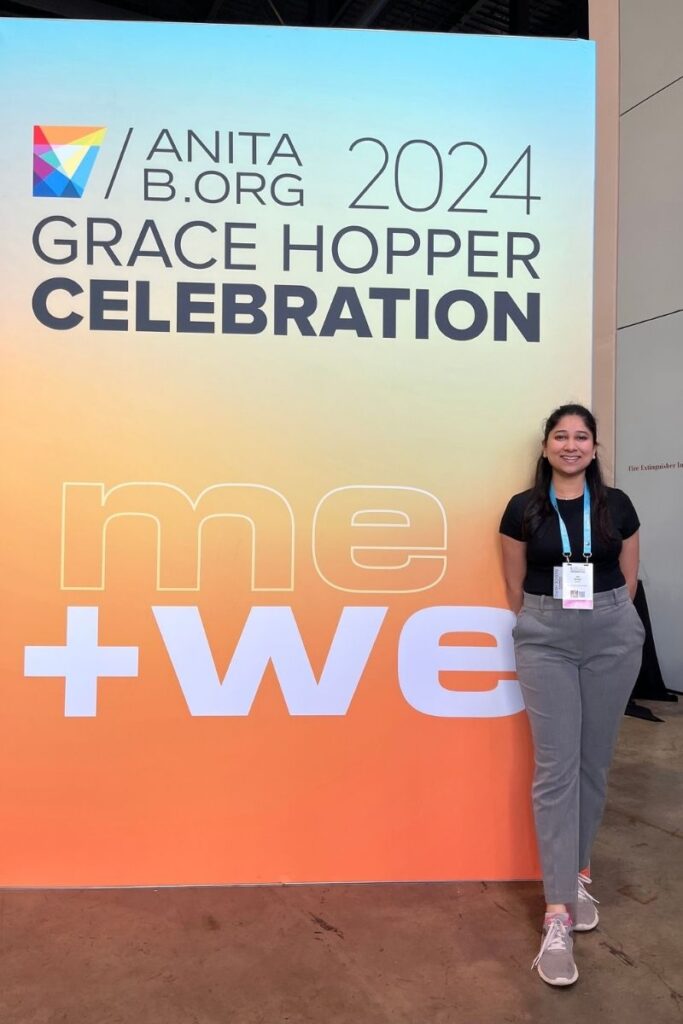
One of the biggest highlights of my time at UW Bothell was being involved with the Women in CyberSecurity (WiCyS) student chapter for two years, including serving as president during my second year. That experience gave me opportunities to grow as a leader, build a strong community, and connect with inspiring people across the cybersecurity industry. I was also part of the team that helped organize the 2025 UW Bothell Hackathon, which brought together more than 300 participants. Seeing that event come together and watching students collaborate, learn, and enjoy the experience was incredibly rewarding. Another major highlight was attending conferences such as Grace Hopper Celebration 2024, Microsoft BlueHat 2024, and WiCyS 2025. Receiving scholarships and support to attend these events allowed me to learn from industry leaders, expand my professional network, and gain exposure to different areas of cybersecurity. I’m especially grateful to UW Bothell and the organizations that helped make those opportunities possible.
What courses did you enjoy the most, and was there a research area that inspired you?
One of my favorite courses was Secure Software Development. Part of that was because of the professor, but I also genuinely enjoyed the course material. The assignments were challenging, practical, and highly relevant to real-world cybersecurity. The course provided valuable insight into secure development practices, common vulnerabilities, and the history behind some of the most significant cyber attacks. As someone who enjoys diving deep into security topics, it was one of the most impactful and useful courses I took during the program.
The research area that inspired me most was the intersection of machine learning and cybersecurity. I got to learn about both sides of the field: how machine learning can be used to improve security and how machine learning systems themselves need to be secured.
In what ways did your degree prepare you for your professional career goals?
When I started the program, my goal was simple: I wanted to become a better engineer and gain the knowledge and skills needed to contribute to increasingly complex cybersecurity challenges. The degree helped me achieve that by exposing me to a broad range of cybersecurity concepts, technologies, and problem-solving approaches. It gave me opportunities to work on meaningful projects, conduct research, and explore areas of cybersecurity that I hadn’t previously encountered. One of the most valuable skills I gained was learning how to communicate complex technical concepts effectively. Through research presentations, project work, and defending my thesis, I became a more confident presenter and communicator. Looking back, the program helped shape me into a stronger engineer and provided the technical depth, exposure, and confidence I was hoping to gain when I first started the program.
What advice would you give to students interested in pursuing a career in this field?
Cybersecurity is an exciting field because it’s constantly changing and evolving. There are so many paths you can take, including offensive security, defensive security, privacy, compliance, application security, web security, AI security, and responsible AI. It can feel intimidating at first because you’ll meet people who are incredibly talented, passionate, and knowledgeable. Cybersecurity attracts some of the most curious and dedicated people in technology. But don’t let that discourage you. We all start somewhere.
My advice is to build a strong foundation, stay curious, and expose yourself to different areas of the field until you find what excites you most. Cybersecurity is about much more than the stereotype of “hackers.” It’s a broad field with opportunities for many different interests and skill sets. Take that first step, keep learning, and explore the field thoroughly. There is much more to cybersecurity than people typically see from the outside, and I’m confident you’ll find an area that fits your interests and strengths. It’s a challenging field, but it’s also one of the most rewarding because of the impact you can have and the opportunity to keep learning throughout your career.