Celebrating experiential learning at the 2026 STEM Soirée
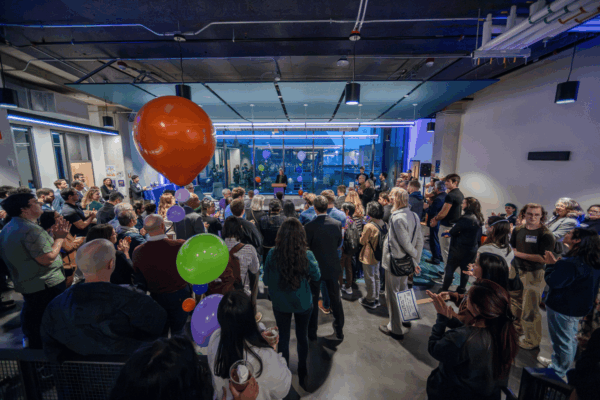
On Oct. 23, the School of STEM hosted its third annual STEM Soirée: A Night of Innovation & Impact. Every year, the STEM Soirée offers our community a place to connect with one another and celebrate our collective achievements in research, experiential learning and supporting student success.
This year, more than 200 industry partners, alumni, student volunteers, staff and faculty came together to recognize the collaborations that help bring classroom learning into real-world settings and strengthen the region’s STEM workforce.
Highlighting student work
To kick off the evening, students presented their research during a poster session, some supported by paid internships, co-op experiences and sponsored capstone projects.
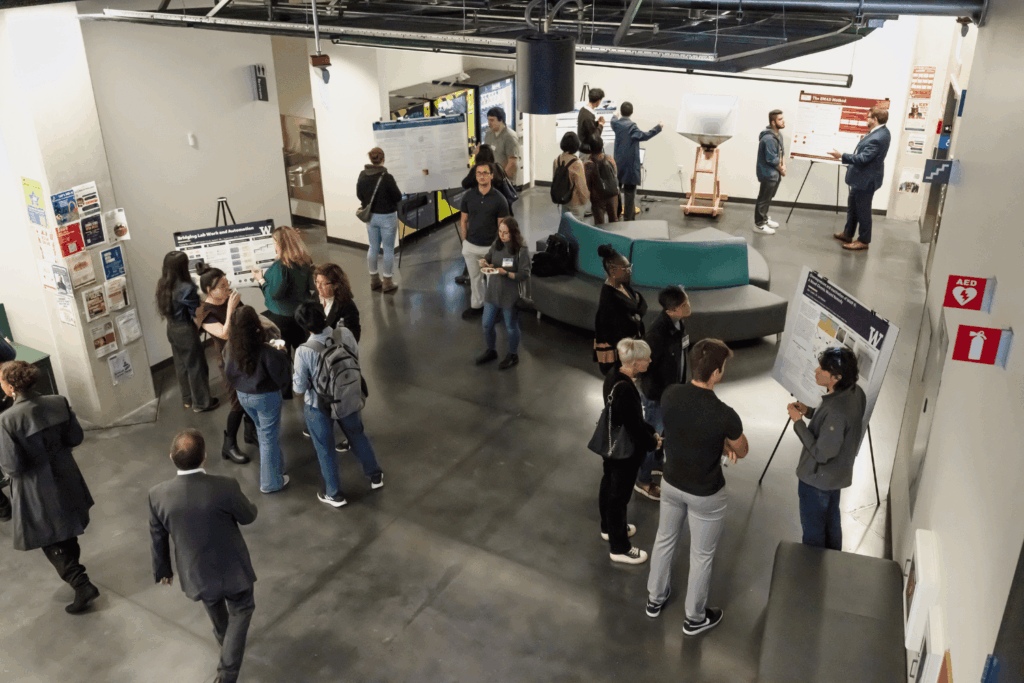
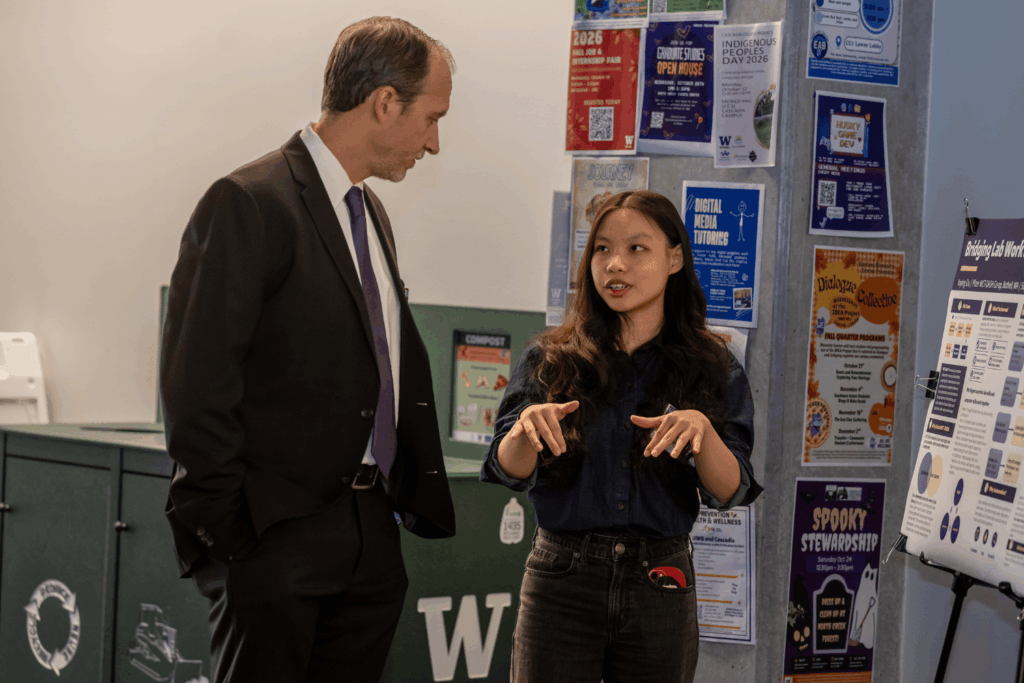
Yuying Ou, a senior in Biochemistry, presented her work as a Pfizer co-op participant.
Working with an industry mentor on antibody development, Ou’s research focused on upstream process development and cloned antibody design, characterizing cells and optimizing their expression to help create more effective therapeutic proteins and treatments.
Showcasing lab spaces
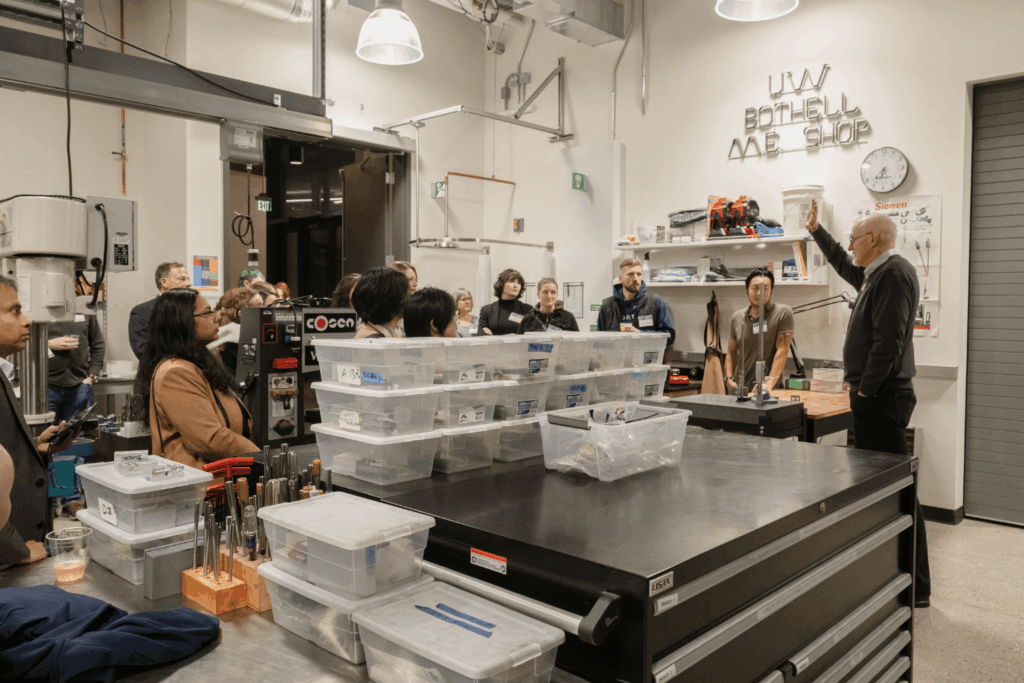
With experiential learning at the heart of the event, three lab spaces were featured: Machine Shop, Cybersecurity Lab and Investigative Biology Teaching Lab.
The impact of capstone projects
The Machine Shop spotlighted an engineering capstone project. Electrical Engineering Alumnus Michal Kozubczyk (’26) worked on a capstone project with industry mentors from Korry Electronics to redesign an aircraft switch, which evolved into a career opportunity with the company.
Kozubczyk worked on this project with a fellow Electrical Engineering alumnus who also got hired by Korry Electronics following graduation.
Throughout the process, they both checked in weekly with mentors from UW Bothell and Korry Electronics, going back-and-forth to improve their designs.
Dr. Imen Hannachi, professor of practice and head of engineering capstone program and industry partnerships, also served as a mentor, helping the two with presenting their project.
“[Hannachi] was really good at [presentation] and helped us kind of refine a lot of our slides and presentations to Korry,” one student said.
Kozubczyk also pointed out how the Electrical Engineering program prepared him for a career in the industry.
“[The program] definitely emphasizes hands-on, and you can’t get away from it,” he said. “A lot of our professors really push to do physical projects, and I kind of boohooed them when we were in courses, like, ‘Oh, this is lame, doing another group project.’ But it’s funny enough, that was probably the most important part when we went through, is physically actually doing one.”
“You get to work around with a bunch of different people, and you’re kind of forced to work with people you’ve never worked with before, and that’s just the nature of working in industry, so that was great,” Kozubczyk said.
Spotlight on student internship and research experiences
The Cybersecurity Lab highlighted the work of two Computer Science & Software Engineering bachelor’s students. One student completed an internship with AT&T and gained experience creating a catalogue of Gen AI resources for employees. Another student interned with Interface, working alongside the CEO and CTO in this fast-paced AI integration start-up. Sunny Grewal also shared his student experience as an Information Assurance & Cybersecurity student.
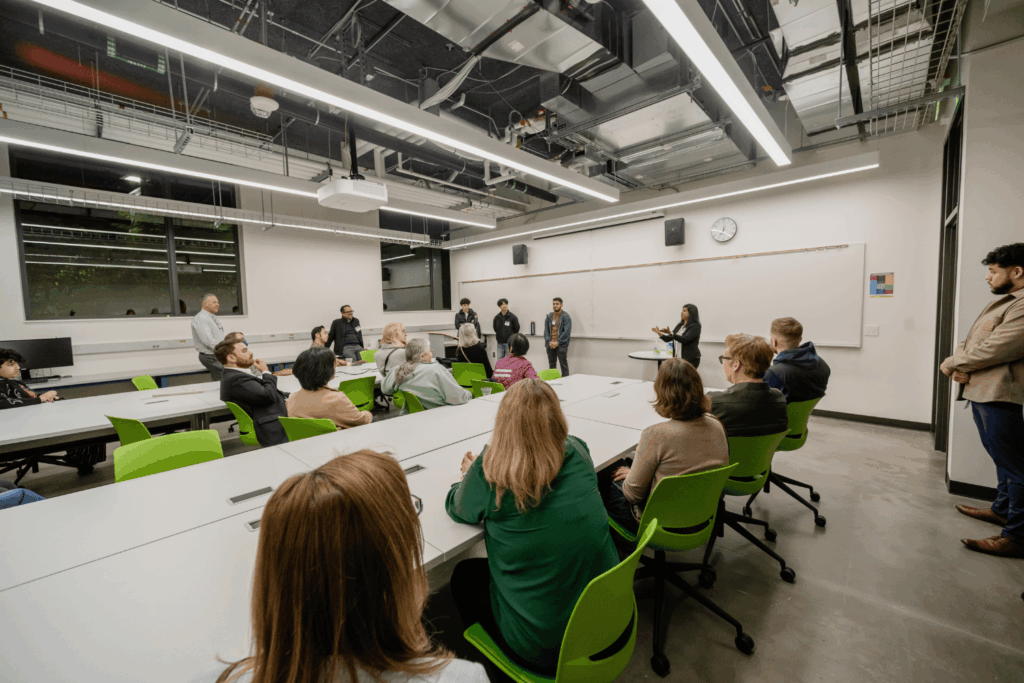
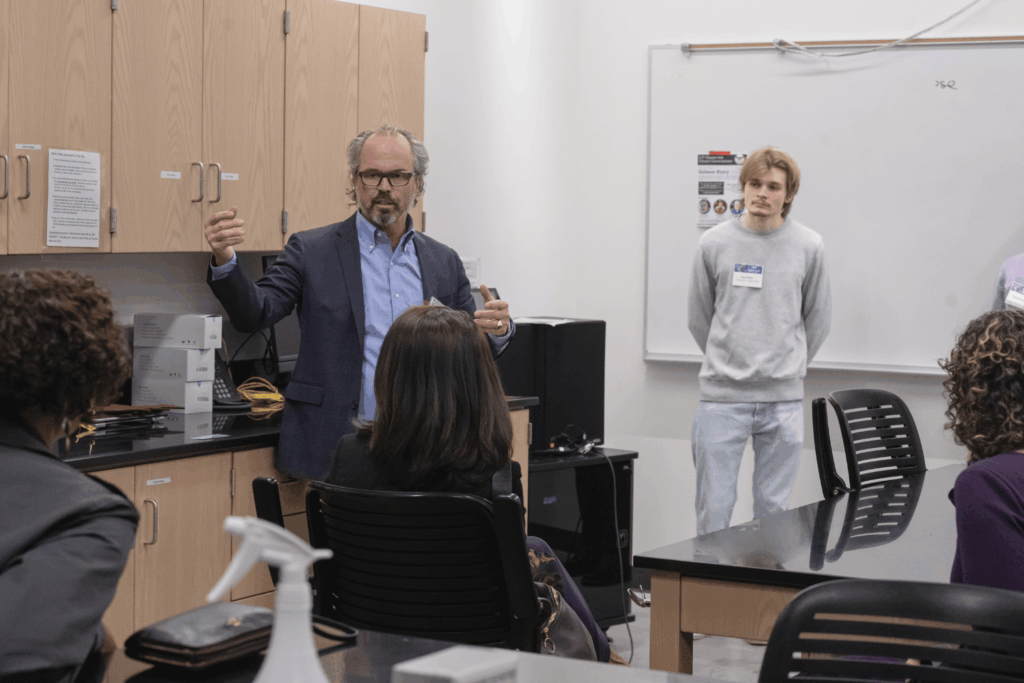
The Investigative Biology Teaching Lab session was led by Dr. Guy Hamilton, professor of practice in the Department of Biological Sciences and director of our Center for Biotechnology Innovation & Training, who introduced how he designed the Investigative Biology course to connect hands-on student research with real-world biotechnology practices and industry standards to help students succeed in their careers. Industry mentors, Biochemistry student Easton Young and another student spoke about how this connected their work in the lab to on-the-job skills.
A moment for community
The STEM Soirée brings us together to recognize our community’s hard work and look to the future of STEM.
Our greatest strength is our community, something that Dean Jennifer McLoud-Mann highlighted in her speech to attendees.
“Many of you are already investing your time, expertise and support to help our students succeed, and we’re grateful for the conversations already underway about deepening and expanding those partnerships,” she said.
Thank you to all who made the 2026 STEM Soirée possible. We can’t wait to connect with you all next year!
We invite you to be part of our community. Explore ways to engage on our Industry Partners webpage or contact Dean Jennifer McLoud-Mann, jmcloud@uw.edu, or John Naumann, UW Bothell’s director of corporate & foundation relations, at johnn4@uw.edu.