Current CELR courses
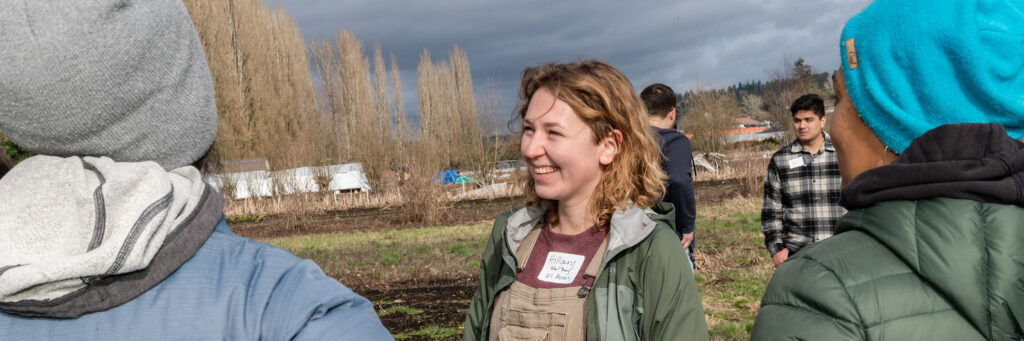
What is a Community-Engaged Learning and Research (CELR) Course?
CELR courses are hands-on, reflective, skill-building opportunities for students to engage with campus and community projects. Through a mutually beneficial exchange with community partners, students apply theory to practice, develop professional experience, and contribute to the public good.
PB – Project-based course
Students work individually, in small groups, or as a full class on a project or research-based question identified by a community partner in collaboration with faculty. Examples include: GIS mapping project, statistical analysis, event planning, business plans and consulting, etc.
PL – Placement-based course
Individuals or small groups of students work at a campus or off-site community organization for a specific number of hours outside of course time. Students choose from a pre-approved list of positions posted by community partners. Students also have the option to coordinate their own placement and supervisor. Examples include: tutoring programs, generating marketing resources, planting native species, outreach and promotion, etc.
If you are an international student, please read about visas and place-based courses.
*E-Designated – Community Engaged Learning
This tag is viewable on student transcripts to show that they have taken a course that has been approved for university standards of courses that have students participate in community engagement opportunities.
Summer 2026
Business
- (PB) BBUS 441 A: Business Project Management – Nick Cuhaciyan – Skills that prepare students for rules as business project leaders and team members. Topics include project selection, risk, definition, stakeholder analysis, communication plans, scheduling, software, resource allocation, monitoring, and post-project assessment. Emphasis on critical thinking and analysis.
Education
- (PL) BEDUC 391 A: Special Topics in Education – Jason Naranjo – Apply learning from the field of disability studies by making outdoor play and recreation accessible to people with disabilities. Course focuses on service learning partnership with the Outdoors For All Foundation. Course requires you to be at parks and other outdoor recreational spaces in Seattle area between June 29th and August 21st. Online UW Class meeting will be: Fridays 6/26; 7/24; 8/14 from 11:00am-1:00pm. Outdoors For All will provide training for the outdoor activities that you will support. If you do not complete these trainings, you cannot participate in this course. Partner: Outdoors for All
- (PL) BEDUC 529 A: Community Based Fieldwork – Tyson E.J. Marsh – Designed for educators committed to building and enhancing equitable collaborations with minoritized youth and communities in advancing educational justice. Offering a critique of the deficit perspectives underlying traditional approaches to community partnerships, this course situates youth and community voices, experiential knowledge, and agency as central to advancing enduring, justice-centered collaborations.
First Year Pre Major Programs
- (PL) B CUSP 199 A: Field-based Learning – Cinnamon Hillyard – Designed for pre-majors interested in gaining hands-on work experience to access potential educational and career paths. Requires participation in an internship.
Interdisciplinary Arts & Sciences
- (PB) BIS 352 A: Mapping Communities — Jin-Kyu Jung — (E-Designated) – Uses mapping and other methods to examine the concept of community. Explores the intersections of life in urban areas including perception and interaction with built environments, political and economic relationships, and social and cultural ties. Partners: Interim Community Development Association (CDA)
Nursing and Health Studies
- (PL) B NURS 424 A: Population Health Community Practicum – Maureen West – (E-Designated) – Provides introduction to community health practice emphasizing nurses’ roles in population-based care through partnership with community agencies. Discusses socio-cultural, epidemiological, economic, and political influences on community health. Explores the role of professional communication and collaboration in facilitating health promotion, disease prevention, public health, and social justice efforts
- (PL) B NURS 424 B: Population Health Community Practicum – Lisa Howard – (E-Designated) – Provides introduction to community health practice emphasizing nurses’ roles in population-based care through partnership with community agencies. Discusses socio-cultural, epidemiological, economic, and political influences on community health. Explores the role of professional communication and collaboration in facilitating health promotion, disease prevention, public health, and social justice efforts
- (PL) B NURS 424 C: Population Health Community Practicum – Sydney Record – (E-Designated) – Provides introduction to community health practice emphasizing nurses’ roles in population-based care through partnership with community agencies. Discusses socio-cultural, epidemiological, economic, and political influences on community health. Explores the role of professional communication and collaboration in facilitating health promotion, disease prevention, public health, and social justice efforts
Science, Technology, Engineering and Mathematics
- (PB) B BIO 495 A: Investigative Bio – Han-Wei Shih – Develop molecular biology tools to investigate signaling and protein function in Giardia, a waterborne parasite. Our goal is to tag genes with luminescent proteins and develop Giardia knockdowns using CRISPR-CAS9. Gain hands on experience in molecular cloning, luminescence assays, and CRISPR-CAS9 techniques, and present a final group presentation summarizing your research.
Autumn 2026
Last updated: 07/15/2026. This course list* is subject to changes and additions.
*Community Engaged Learning and Research is partnering with other departments on campus to roll out the UW Bothell E-Designation to make it easier for students to find community engaged courses while registering for classes. Through this transition as more faculty get onboarded, courses listed below will all be confirmed to be working with community partners but may not be tagged as E in the time schedule.
Business
- (PB) B BUS 441 A: Business Project Management – Nick Cuhaciyan – In-depth coverage of skills that prepare students for rules as business project leaders and team members. Topics include project selection, risk, definition, stakeholder analysis, communication plans, scheduling, software, resource allocation, monitoring, post-project assessment. Emphasis on critical thinking and analysis.
- (PB) B BUS 491 A: Business Consulting – Nick Cuhaciyan – (E-Designated) – Applies principles and methods of consulting to organizations. Teams work as consultants for local businesses, applying management theory and concepts to develop strategic and tactical solutions to client-driven problems involving multiple functions.
Education
- (PL) B EDUC 410 A: Knowing, Teaching, and Assessing in Reading, Writing and Communicating – Antony Smith – The second of two course sequence that builds understandings about literacy development and instruction. Focuses on reading for intermediate readers including comprehension, assessment, and remediation.
- (PL) B EDUC 435 A: Student Teaching – Nathanie Lee – Field experience in K-8 public school classroom part-time or full-time. Supervised placement transitions from observing, assisting, co-teaching, to assuming all facets of the teaching role.
- (PL) B EDUC 441 A: Second Language Acquisition – Yue Bian – (E-Designated) – Focuses on theories in second language acquisition, bilingual education, and the structure of English. Topics include research, practice, and connections between language, literacy, cultural tradition, identity, and education in preparation for teaching ELL’s in general education of classes specifically for ELL’s.
- (PL) B EDUC 495 A: Applied Experience- Sarita Shukla – (E-Designated) – The Applied Experience is designed to integrate the knowledge and skills cultivated in Educational Studies coursework, an experience in an educational setting, and collaborative self-reflection on the challenges and opportunities of education in diverse settings
- (PL) B EDUC 541 A: Second Language Acquisition – Yue Bian – (E-Designated) – Focuses on theories in second language acquisition, bilingual education, and the structure of English. Topics include research, practice, and connections between language, literacy, cultural traditions, identity, and education in preparation for teaching ELLs in general education of classes specifically for ELLs.
- (PL) B EDUC 456 A: Adolescents in Society – Angel Hayoung Kim – (E-Designated) – Discusses some of the transformations of consciousness that occur in adolescence and examines how social structures, particularly formal schooling, help shape those transformations.
First Year Pre Major Programs
- (PL) B CORE 104 E: Atoms in Art and Culture – Gavin Doyle and Charity Lovitt – (E-Designated) – In this class, we will explore the atoms–the materials–that make up our world and how their properties have affected our culture, art, and history. You will learn how to re-frame scientific concepts into the context of stories. We will communicate our research through comics in which we will draw connections between atoms and art; between materials and culture; between matter and what matters. Partner: King County Library Services- Bothell Library
- (PL) B CORE 110 B: Atoms in Art and Culture – Gavin Doyle and Charity Lovitt – (E-Designated) – In this class, we will explore the atoms–the materials–that make up our world and how their properties have affected our culture, art, and history. You will learn how to re-frame scientific concepts into the context of stories. We will communicate our research through comics in which we will draw connections between atoms and art; between materials and culture; between matter and what matters. Partner: King County Library Services- Bothell Library
- (PB) B CORE 104 R: Managing Mental Health in the Classroom – Laura Umetsu – (E-Designated) – This course will explore resources and practical coping skills through art, writing, and other creative mediums to manage anxiety. Guest speakers may include local therapists to provide the framework for workshops/weekly journaling writing exercises based on cognitive behavioral therapy techniques. There will be a civic engagement portion with a local nonprofit to provide mental health education and support to others in the UWB community. Partner: National Alliance for Mental Illness (NAMI)
- (PB) B CORE 107 N: Managing Mental Health in the Classroom – Laura Umetsu – (E-Designated) – This course will explore resources and practical coping skills through art, writing, and other creative mediums to manage anxiety. Guest speakers may include local therapists to provide the framework for workshops/weekly journaling writing exercises based on cognitive behavioral therapy techniques. There will be a civic engagement portion with a local nonprofit to provide mental health education and support to others in the UWB community. Partner: National Alliance for Mental Illness (NAMI)
- (PL) B CORE 104 L: Disability Representation in the Media – Maureen West – This course provides students with introductory knowledge of Critical Disability Studies (CDS), a growing multi-disciplinary field that investigates, critiques, and enhances Western society’s understanding of disability. Partner: Seattle Children’s Alyssa Burnett Center
- (PL) B CORE 107 K: Disability Representation in the Media – Maureen West – This course provides students with introductory knowledge of Critical Disability Studies (CDS), a growing multi-disciplinary field that investigates, critiques, and enhances Western society’s understanding of disability. Partner: Seattle Children’s Alyssa Burnett Center
- (PB) B CORE 104 P: Learning Ecology Thru Storytelling – Jennifer Atkinson – This course surveys existing children’s literature to explore ecological concepts and environmental issues. Students will be introduced to popular children’s picture books that provide engaging and accessible explanations about the relationship between organisms and their surrounding environment. We will learn important ecological relationships such as mutualisms, plant-animal relationships, and human-driven ecosystem change. At the same time, we will explore how storytelling draws on written & oral traditions, rhetorical strategies, and art & illustration to convey ecological concepts. Partner: Environmental Education Research Center at St. Edwards Park
- (PB) B CORE 110 C: Learning Ecology Thru Storytelling – Cynthia Chang – This course surveys existing children’s literature to explore ecological concepts and environmental issues. Students will be introduced to popular children’s picture books that provide engaging and accessible explanations about the relationship between organisms and their surrounding environment. We will learn important ecological relationships such as mutualisms, plant-animal relationships, and human-driven ecosystem change. At the same time, we will explore how storytelling draws on written & oral traditions, rhetorical strategies, and art & illustration to convey ecological concepts. Partner: Environmental Education Research Center at St. Edwards Park
- (PB) B CORE 104 V: Urban Life and Nature: Crows and Other Birds Inhabiting the Cities – Ursula Valdez – This course will cover a thorough exploration of the natural history, ecology and behavior of crows and other urban birds in the PNW and about birds that live in the city of Lima, Peru (via an international collaboration). For this course, we will also cover birds’ influence in history, literature, art, culture, mythology, and other aspects of human life. Students will also be Participating on a remote interdisciplinary and international collaboration with students from a Peruvian University.
- (PB) B CORE 110 D: Urban Life and Nature: Crows and Other Birds Inhabiting the Cities – Ursula Valdez – (E-Designated) – This course will cover a thorough exploration of the natural history, ecology and behavior of crows and other urban birds in the PNW and about birds that live in the city of Lima, Peru (via an international collaboration). For this course, we will also cover birds’ influence in history, literature, art, culture, mythology, and other aspects of human life. Students will also be Participating on a remote interdisciplinary and international collaboration with students from a Peruvian University.
Interdisciplinary Arts & Sciences
- (PB/PL) BES 492 A: Capstone Research in Environmental Science – Martha Groom – (E-Designated) – The first course of a two-quarter capstone sequence. Students plan and develop a detailed proposal for their capstone environmental science project. Partner(s): Friends of Hooven Forrest, Richmond Beach Saltwater Park, Whale Scout, and more.
- (PB) B DATA 497 A: Advanced Topics in Data Visualization: Data Studio – Nicole Cote – (E-Designated) – Advanced study of a specific topic, theme, or problem in data visualization and data analytics.
- (PL) BIS 418 A: Global Scholars: Global Citizenship in Context– Maryam Griffin – (E-Designated) – Explores questions of power, privilege, difference, and identity and how they play out in hands-on international-facing experiences. Students in the Global Scholars Program will reflect on and make sense of their global learning experiences in the context of larger social, political, economic and cultural processes.
- BIS 451 A: Multicultural Counseling – Jaki Yi – (E-Designated) – Introduces students to key theories and applications of multiculturalism in counseling and therapy contexts. Draws from intersectional frameworks, explores various cultural identities and experiences, and their impact on clients, counselors, and the client-counselor relationship.
Nursing & Health Studies
- (PB) B HLTH 435 A: Foundations and Principles of Health Education and Communication – Jody O Early – (E-Designated) – Introduction to the health education profession, associated competencies, theories and principles of health communication. Covers strategies and design principles for planning culturally tailored health education and communication for a variety of audiences, uses digital technology and social media for health promotion.
- (PL) BHS 496 A: Health Studies Fieldwork – Mabel Ezeonwu – (E-Designated) – Students participate in fieldwork experiences to explore career options and develop skills in population health practice. Students use critical reflection to synthesize knowledge and experiences from fieldwork and program courses to support their professional development.
Science, Technology, Engineering, Mathematics (STEM)
- (PB) B BIO 495 E: Investigative Bio – Population Structure and Restoration of Kokanee Salmon in Lake Washington Watershed – Jeff Jensen – Provides research experience in Biology. Topic and research methods vary.
- (PB) B BIO 495 D: Investigative Bio – Tagging genes with luminescent proteins and develop giardia knockdowns using CRSPR-CAS9 – Han-Wei Shih – Provides research experience in Biology. Topic and research methods vary.
- (PB) B BIO 495 B: Investigative Bio – Crow Communication – Douglas Wacker – Provides research experience in Biology. Topic and research methods vary.
- (PB/PL) CSS 295 A: Computing K-12 Education – Arkady Retik – (E-Designated) – Collaboration with community partners to develop computing education opportunities for K-12 students. Curriculum development and basic computing education environments.
- (PB) B ME 315 A: Intro to 3-D Modeling – Bill Anderson – (E-Designated) – Explorers design, representation, and analysis of three-dimensional objects using computational methods and computer-aided design (CAD). Topics include free-hand sketching; optimization of design parameters; documentation and communication of design information using appropriate engineering standards and practices.