Safety Resources
UW Bothell and Cascadia College provide resources, tools, and guidance to help you prepare for emergencies, respond to safety concerns, and make informed decisions about your personal safety. Explore the resources below to learn what to do before, during, and after an emergency or safety-related situation.

Emergency Numbers
- Emergency — Police, Fire, or Medical: 911
- Blue Emergency Call Towers and Parking Garage Help Buttons: Dial 911
- Washington Poison Center: 1-800-222-1222
Non-Emergency Numbers
- Campus Safety: 425-352-5359
- Facilities Services: 425-352-5466
- Emergency Preparedness: 425-352-3763
- Bothell Police Non-Emergency: 425-486-1254
UWB-CC Safe
UWB-CC Safe is the official safety app for UW Bothell and Cascadia College. The app provides quick access to campus safety information, emergency contacts, safety resources, reporting tools, and important safety notifications to help you stay informed and prepared.
Download UWB-CC Safe for Apple or Android devices. UW Bothell and Cascadia College community members can sign in using their UW NetID or Cascadia credentials, and guests can access available public safety resources.
Safety Tips & Guidance
Active threat incidents are rare, but preparing in advance can help you respond quickly if one occurs. An active threat may involve a person or situation that presents an immediate danger to people on or near campus.
Every situation is different. If you become aware of an immediate threat, call 911 when it is safe to do so and follow instructions from law enforcement and emergency notifications.
Have a Plan
- Sign up for UW Alert to receive emergency notifications and safety information.
- Know your surroundings and exits. Identify multiple ways to leave the buildings where you study, work, live, or regularly visit.
- Call 911 for an immediate threat to life or safety. Move to a safe location first when possible.
- Report concerning behavior to SafeCampus. SafeCampus provides consultation and support when you are concerned about behaviors or situations that could affect the safety or well-being of yourself or others.
Respond by Evaluating Your Options
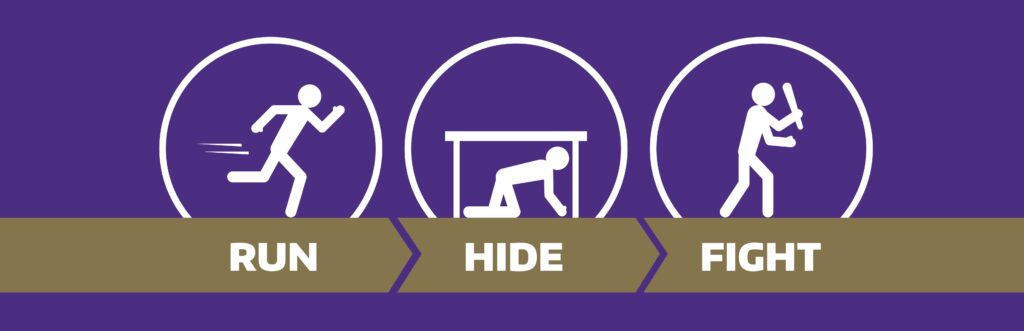
- RUN — Escape if you can. If there is a safe path away from the threat, leave the area quickly. Move away from the danger and do not stop until you are in a safer location.
- HIDE — Find a secure location. If you cannot safely escape, move out of view, lock or barricade doors when possible, turn off lights, silence electronic devices, and remain quiet.
- FIGHT — Defend yourself as a last resort. If you cannot run or hide and you face an immediate threat to your life, take action to protect yourself and others. Commit to your actions and attempt to disrupt or stop the threat.
Be Safe After
- Follow law enforcement instructions. When officers arrive, their immediate priority is to locate and stop the threat. Remain calm and follow their directions.
- Keep your hands visible and empty. Avoid sudden movements and follow instructions from responding officers.
- Share information with 911 or law enforcement. If you are in a safe location and have information that could assist responders, provide relevant details about the threat, location, people involved, or other information you observed.
Active Threat Training
- UW Bothell Emergency Preparedness offers active threat awareness training for students, faculty, and staff, as well as workplace security and situational assessments. To request training or an assessment, contact Emergency Preparedness at 425-352-3763.
- FEMA Active Shooter: What You Can Do (IS-907.a) — This free online course provides guidance on preparing for and responding to an active shooter situation.
An Automated External Defibrillator (AED) is a portable device used to help someone experiencing sudden cardiac arrest. AEDs analyze the heart’s rhythm and provide step-by-step voice or visual instructions. The device will deliver a shock only when it determines one is needed.
If someone is unresponsive and not breathing normally, call 911 immediately, begin CPR if you are able, and use the nearest AED as soon as possible. Follow the AED’s instructions until emergency responders arrive.
To help locate a nearby AED, use the PulsePoint AED app. You can also learn more about AEDs and public access AED resources through the King County Public Access AED Program.
AED Locations on Campus
- Activities and Recreation Center (ARC): (1) Lower-level across from fitness center checkout desk; (2) Level 2 south wall by restrooms
- Campus Safety Office: LB2-005 (and in Campus Safety vehicle)
- Cascadia College Building 1: Hallway by Information Desk
- Cascadia College Building 3 (Mobius Hall): Coat room
- Discovery Hall: Level 1 south of elevators
- Husky Hall: Hallway next to employee breakroom 1454
- Innovation Hall: (1) Lower-level by elevators; (2) Level 3 hallway next to 341
- Library (LB1): Behind circulation desk
- Physical Plant: Locker room area next to employee breakroom
- Sarah Simonds Greenhouse Conservatory: Classroom 101
- UW1 (Founders Hall): Level 1 south of welcome desk
- UW2 (Commons Hall): Lower-level across from elevators
- UWBB: Level 2 near elevators
- Warehouse: Employee break room
If you receive a bomb threat or discover a suspicious object or package on campus, take the situation seriously and avoid touching, moving, or disturbing the item.
- Threat received by phone: Remain calm and gather as much information as you safely can. Use the Bomb Threat Checklist to document details about the call. When the call ends, contact 911 immediately and follow instructions from law enforcement.
- Threat received by email, text, social media, or written message: Do not delete, alter, forward, or respond to the message. Preserve the original message and any available information about the sender. Contact 911 and follow instructions from law enforcement.
- Suspicious object or package: Do not touch, move, open, or disturb the item. Move away from the immediate area and prevent others from approaching if you can do so safely. From a safe location, call 911 and notify Campus Safety at 425-352-5359. Follow instructions from emergency responders and be prepared to evacuate if directed.
- Signs of a suspicious package: A package or letter may warrant additional caution if it has unusual characteristics such as no return address, excessive postage or tape, unusual labeling or markings, stains or odors, protruding wires or materials, or an unusual shape or weight. Do not handle an item solely to determine whether it is suspicious.
- If you discover a suspicious package: Do not open, touch, move, or disturb it. Move away from the immediate area, keep others away if you can do so safely, and call 911 from a safe location.
- If a suspicious package has already been opened: Do not touch, smell, taste, or clean up any powder, liquid, or other substance. Leave the material where it is, move away from the immediate area, and call 911 from a safe location. If you may have come into contact with the substance, follow instructions from emergency responders.
Everyone plays a role in supporting a safe campus community. The following practices can help reduce opportunities for crime, protect personal property, and increase awareness of your surroundings.
- Protect your belongings. Keep personal items such as backpacks, purses, laptops, tablets, and phones with you or secured. Avoid leaving valuables unattended, even for a short period.
- Secure your space and vehicle. Lock doors and windows when leaving offices, rooms, or other secured spaces. Lock your vehicle whenever you leave it, and avoid leaving valuables visible inside.
- Use a safety escort when you would like assistance getting around campus. Campus Safety provides safety escorts on campus. To request an escort, call 425-352-5359.
- Stay aware of your surroundings. Pay attention to what is happening around you, particularly when traveling through parking areas, buildings, and less populated areas of campus. Minimize distractions when doing so helps you stay aware of your environment.
- Know how to reach emergency assistance. Blue Emergency Call Towers and parking garage Help buttons provide direct access to 911. Elevators are also equipped with emergency communication systems. Campus Safety is available 24 hours a day, seven days a week at 425-352-5359.
- Protect access to secured spaces. Do not provide access to locked buildings, offices, labs, or other restricted areas to people you do not know or who do not have authorized access. Report concerning or suspicious activity to Campus Safety at 425-352-5359.
- Trust your instincts and prioritize your safety. If a situation or behavior makes you feel unsafe or concerned, move to a safer location when possible and contact Campus Safety at 425-352-5359. For an immediate threat or emergency, call 911.
- Report crimes and safety incidents. If you experience or witness a crime or safety-related incident, move to a safe location when possible. For emergencies or immediate threats, call 911. For non-emergency campus safety assistance or reporting, contact Campus Safety at 425-352-5359.
Evacuation chairs are assistive devices that may be used to help evacuate individuals who cannot safely use stairs during an emergency. Evacuation chairs should be operated only by personnel who have received appropriate training. Campus Safety, building coordinators, and evacuation wardens may assist with evacuation procedures based on the circumstances of the emergency.
Evacuation Chair Locations
- CC1: 2nd level south stairwell and 3rd level south stairwell
- CC2: 2nd level north stairwell and 3rd level north stairwell
- CC3: 2nd level north stairwell, 3rd level north stairwell, and 3rd level south stairwell
- Discovery Hall: 4th level west stairwell
- Innovation Hall: TBD
- Library: LB1 3rd floor north stairwell
- UW1: 3rd floor north stairwell and 3rd level south stairwell
- UW2: 3rd floor south stairwell and 4th level north stairwell
If you notice fire, smoke, or any evidence of fire:
- Activate the fire alarm. If the alarm has not already activated, use the nearest fire alarm pull station and begin evacuating the building.
- Call 911 from a safe location. Provide the building name, location of the fire or smoke, and any other information requested by the dispatcher.
- Use a fire extinguisher only if it is safe to do so. Your first priority is to evacuate and call 911. Only attempt to extinguish a small, contained fire if you are trained and comfortable using a fire extinguisher, the correct extinguisher is available, and you have a clear escape route behind you. If there is any doubt, evacuate immediately and close doors behind you when possible.
- Evacuate when the fire alarm sounds. Use the nearest safe exit and proceed to the building’s designated Evacuation Assembly Point (EAP). Do not use elevators unless directed by emergency responders. Remain outside and do not re-enter the building until authorized by emergency responders or campus officials.
- If you cannot safely evacuate: Move to a room or area away from the fire and smoke, close the door, and call 911 to report your location and that you need assistance. If smoke is entering the room, seal gaps around the door with available material when possible. Stay where emergency responders can locate you and follow their instructions.
Identity theft occurs when someone uses your personal or financial information without your permission, often to commit fraud. Protecting sensitive information, recognizing scams, and responding quickly to suspicious activity can help reduce the risk and impact of identity theft.
- Protect sensitive documents. Secure documents containing personal or financial information and shred them before disposal when appropriate.
- Limit sharing sensitive information. Provide information such as your Social Security number, account numbers, passwords, or other sensitive personal information only when necessary and when you have verified who is requesting it and why.
- Verify requests for personal information. Be cautious of unexpected calls, emails, text messages, or websites requesting personal or financial information. Verify the request through a trusted contact method before providing information.
- Protect your accounts and devices. Be cautious with unexpected links and attachments, use strong and unique passwords, enable multi-factor authentication when available, and keep your devices and software up to date.
- Act quickly if you suspect identity theft. Contact the affected financial institution or account provider immediately to report unauthorized activity, secure the account, and follow their instructions for disputing fraudulent transactions or accounts.
- Report identity theft and fraud. Report identity theft to the Federal Trade Commission at IdentityTheft.gov, which provides a personalized recovery plan. If the situation involves a crime that should be reported to law enforcement, contact the appropriate police agency.
Naloxone (brand name Narcan) is a medication designed to reverse an opioid overdose. Opioids slow down the activity of the central nervous system, which can dangerously slow or stop breathing possibly leading to death. Naloxone displaces the opioids from the opioid receptors in the brain which allows the person who is experiencing an opioid overdose to begin breathing normally.
Naloxone/Narcan won’t harm a person if they’re overdosing on drugs other than opioids, so it’s always best to use it if you think someone is overdosing. Naloxone is not effective for alcohol poisoning. More than one dose of Naloxone may be required when stronger opioids like fentanyl are involved.
Narcan is available for free to campus community members in the following locations:
- Campus Safety Office LB2-005: Stop by in-person 24/7
- Health & Wellness Resource Center (HaWRC): ARC-120
- Library: First floor vending machine
- People’s Harm Reduction Alliance: Mail order request program
- Washington State Naloxone Finder
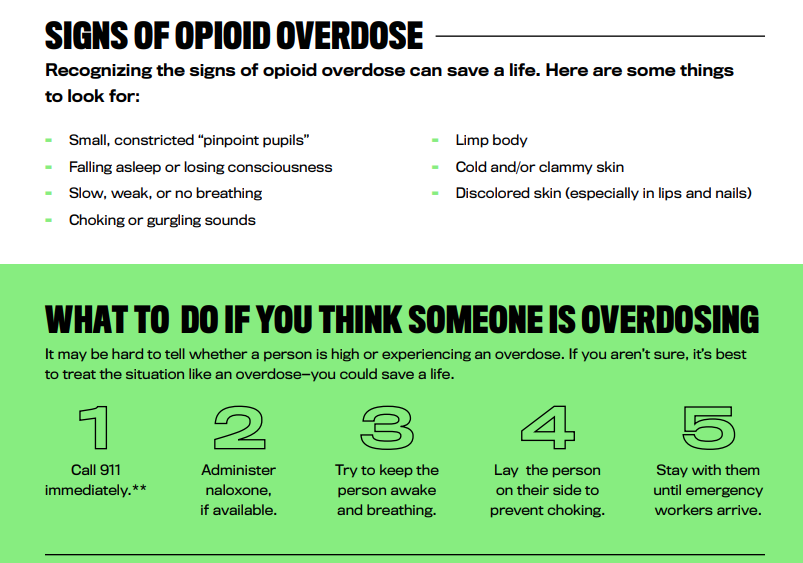
If someone on campus is suspected of experiencing an overdose call 9-1-1 to initiate a response from a local emergency first responder.
- Campus Safety staff are trained to administer Naloxone and can be reached at 425.352.5359.
- If you give someone Narcan, call 9-1-1 and stay with them until emergency help arrives.
How to Use Naloxone Nasal Spray Video: How to Use Naloxone Nasal Spray (:30) – YouTube
The Violence Prevention & Advocacy Program leads the efforts of UW Bothell and Cascadia College to create a community that is free of sex-and gender-based violence and harassment.
A student of concern is any student who is displaying behaviors that may get in the way of a student’s ability to be successful in the university environment. Other times, behaviors are being noticed by many members of our community and creating a significant amount of concern. This could mean a student experiencing crisis, displaying odd or unusual behavior, engaging in behaviors that are perceived to be harmful (to themselves or others), or behaviors that may be deemed academically damaging.
- The Purple Sheet: A resource developed by the CARE Team to help faculty and staff understand how and when to submit CARE Team reports.