Inclusive Environmental Education Pathway
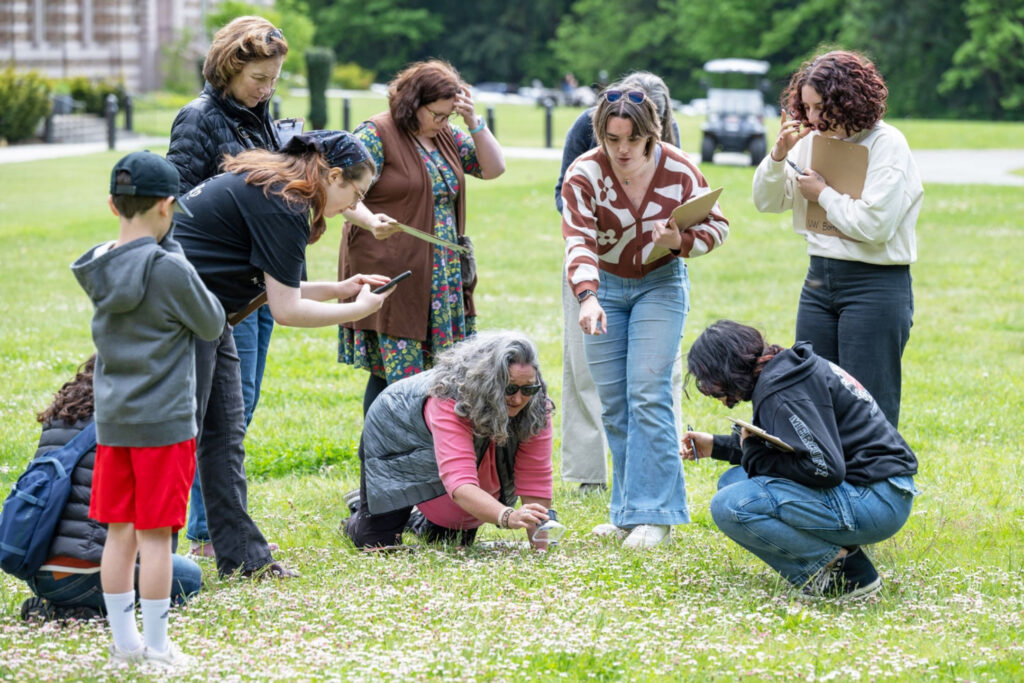
This pathway centers inclusive, place-based environmental education through program design, hands-on learning tools, and accessible storytelling. Interns help create, adapt, and deliver environmental education experiences that are engaging, culturally responsive, and accessible to learners of all ages and abilities. Interns collaborate with CoSEE staff and community partners to design new programs, develop portable environmental education kits, and support an adaptive, multisensory children’s library. The work emphasizes equity, creativity, and real-world application, meeting learners where they are and expanding who environmental education is for.
This internship isn’t reserved for the most experienced applicants. We welcome students at every stage of their learning, including those just beginning to explore this field, and no prior experience is required.
Projects may include:
- Design and lead inclusive environmental education programs at the EERC and in community spaces
- Create, test, and refine hands-on, place-based environmental education kits
- Adapt activities for different ages, abilities, and learning environments
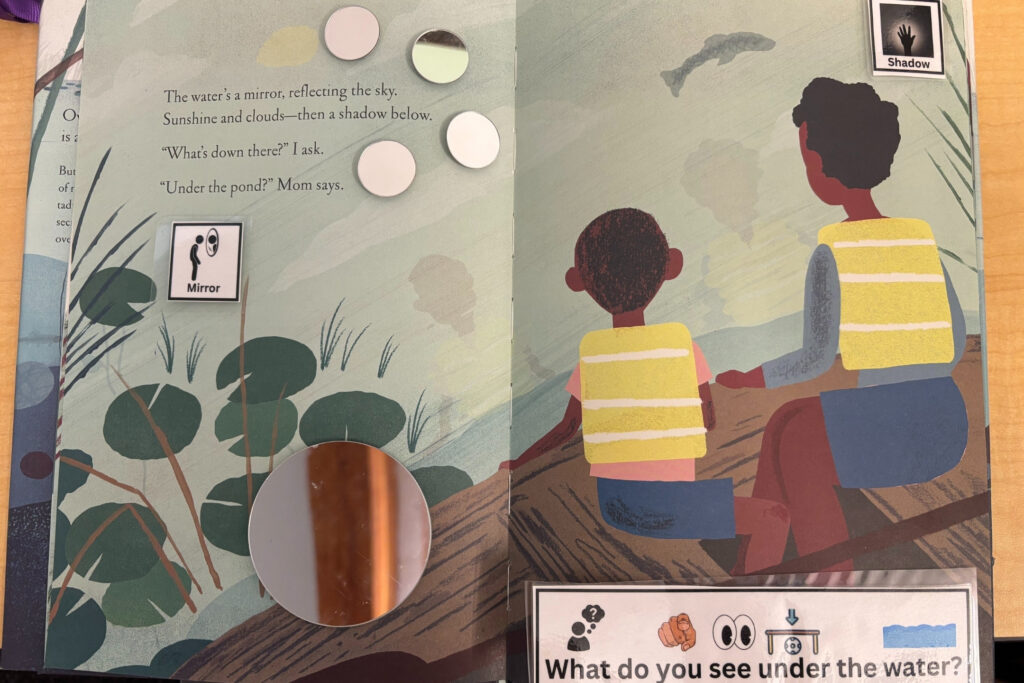
- Co-design accessible children’s books with communication boards and interactive elements
- Support the development of an inclusive reading nook and adaptive library
- Collaborate with community partners to pilot and improve programming
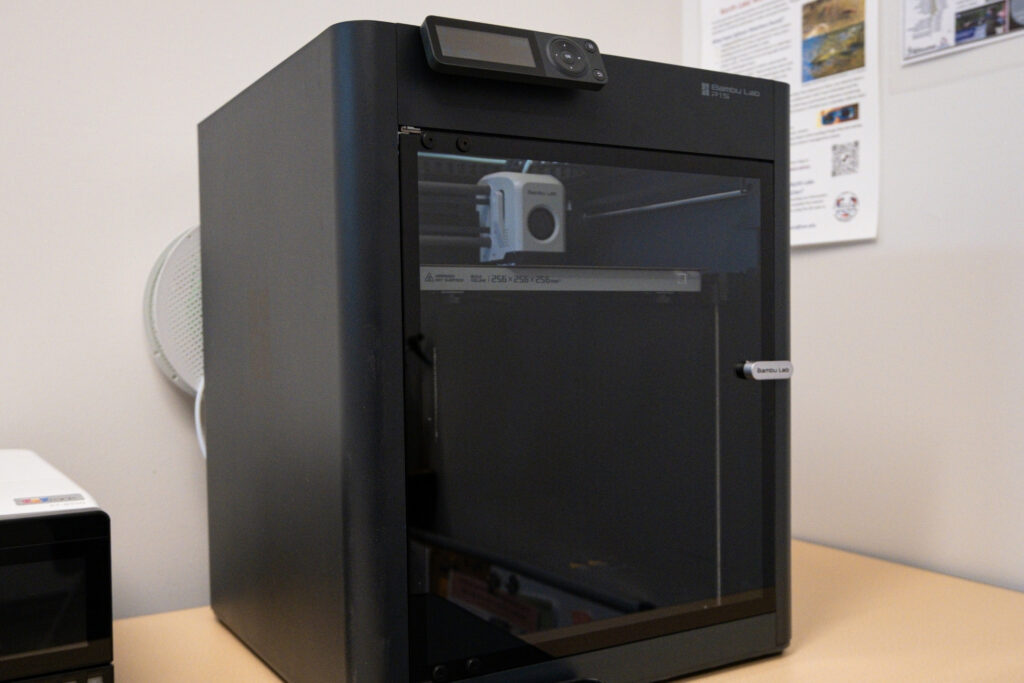
- Work on fulfilling orders for the 3D Printer Program, by printing accessible items as well as possible pieces to go along with adapted books
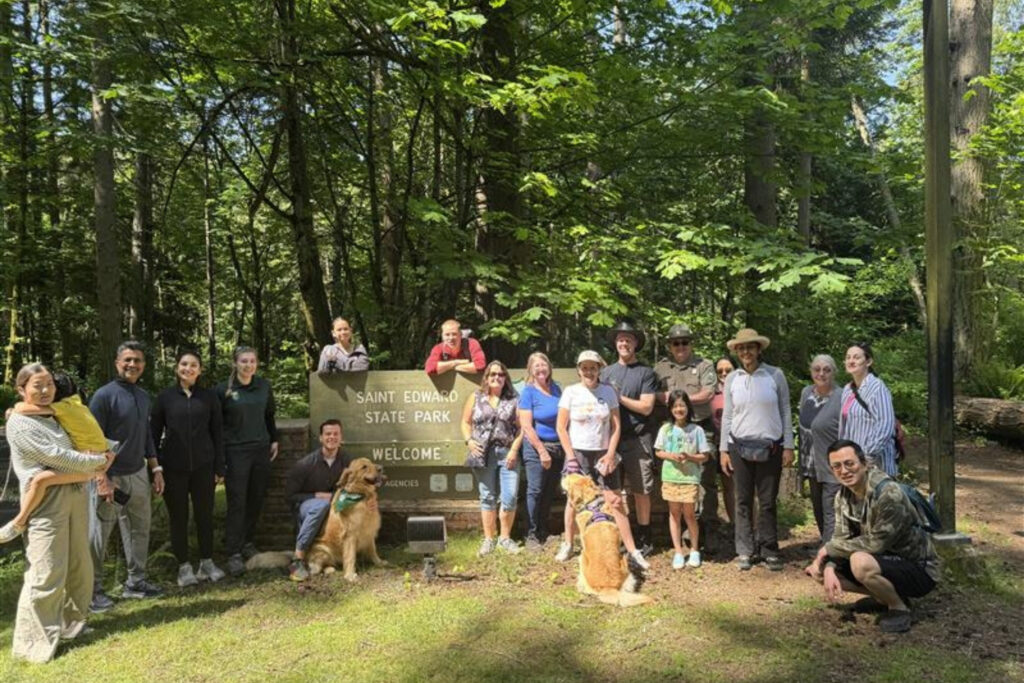
- Co-lead nature walks at Saint Edward State Park in collaboration with state parks
Past project highlights
UW Seattle Capstone student working on Adaptive Library
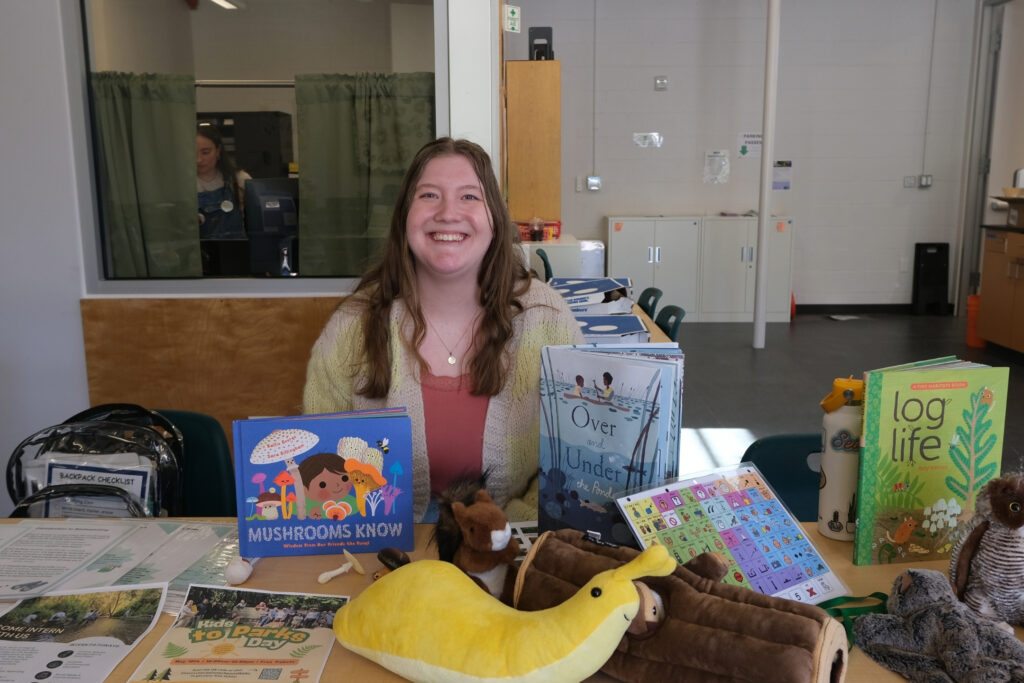
A previous UW Seattle Capstone Intern, Kaylin Datwyler, helped to further grow the Adaptive Library at CoSEE. Her project included reading, adapting, and putting together 5 environmental STEAM-based picture books for those who use augmentative and alternative communication (AAC). These adaptations were interactive features like picture symbols and sensory pieces, as well as communication boards uniquely designed for each book. She also conducted research on effective strategies to make educational materials more accessible and engaging in which her methods included a Literature Review and creating a database for CoSEE’s current books in categories and age groups.
UW Bothell Capstone student working on early childhood environmental education
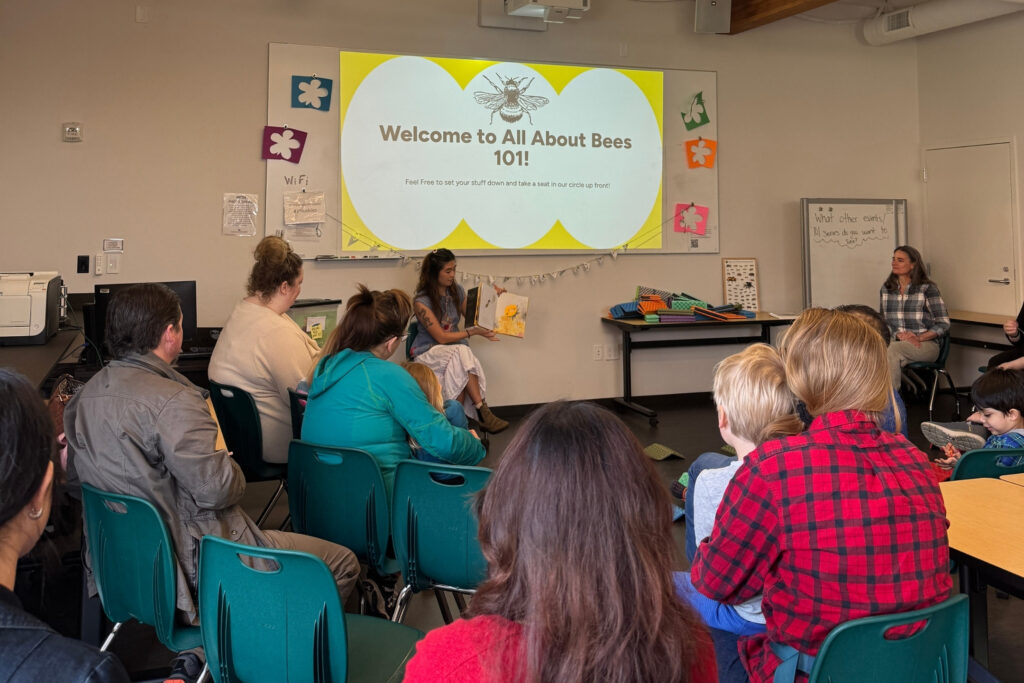
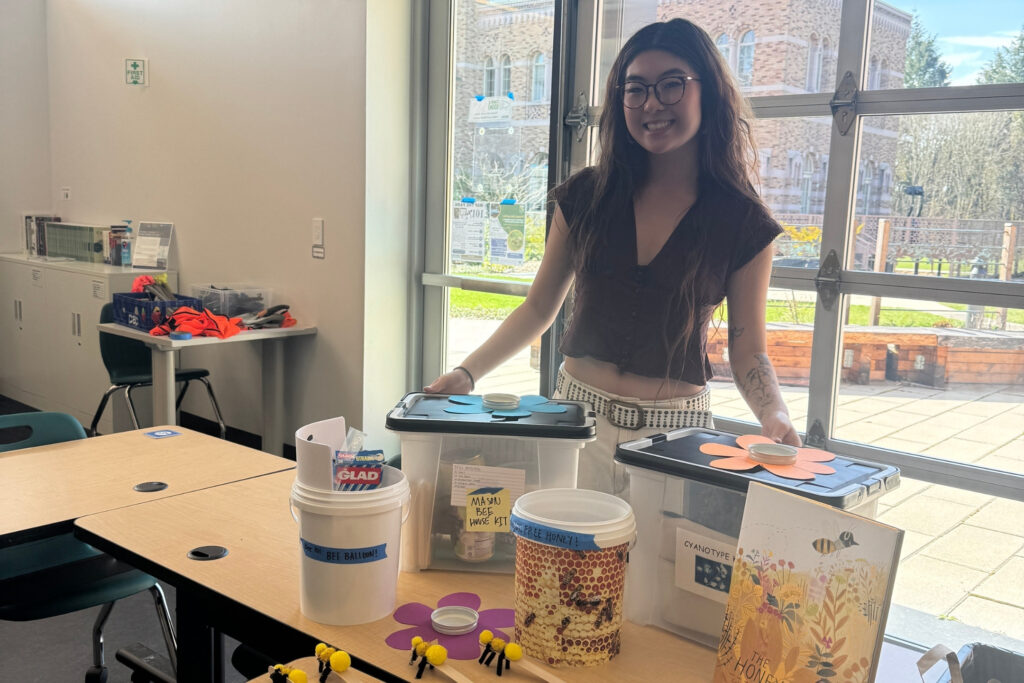
A UW Bothell Capstone student, Hayley Ren, helped bring pollinator education to life for young learners at CoSEE. Her project centered on the creation and support of the Bee 101 event, designed to introduce young children to the world of bees and their importance to local ecosystems. Hayley also developed a hands-on bee house creation kit, giving children and families a tangible, take-home way to continue supporting pollinators long after the event.
Blogs on this pathway
- Learn about the ClimeTime grant that CoSEE got to expand the Adaptive Library
- Learn about how the Adaptive Library came to be
- Learn about a past wildlife exploration event based on wildlife camera research happening at Saint Edward State Park
- Learn about a previous CoSEE intern’s project on Kincentricity
- Learn about Bee Monitoring
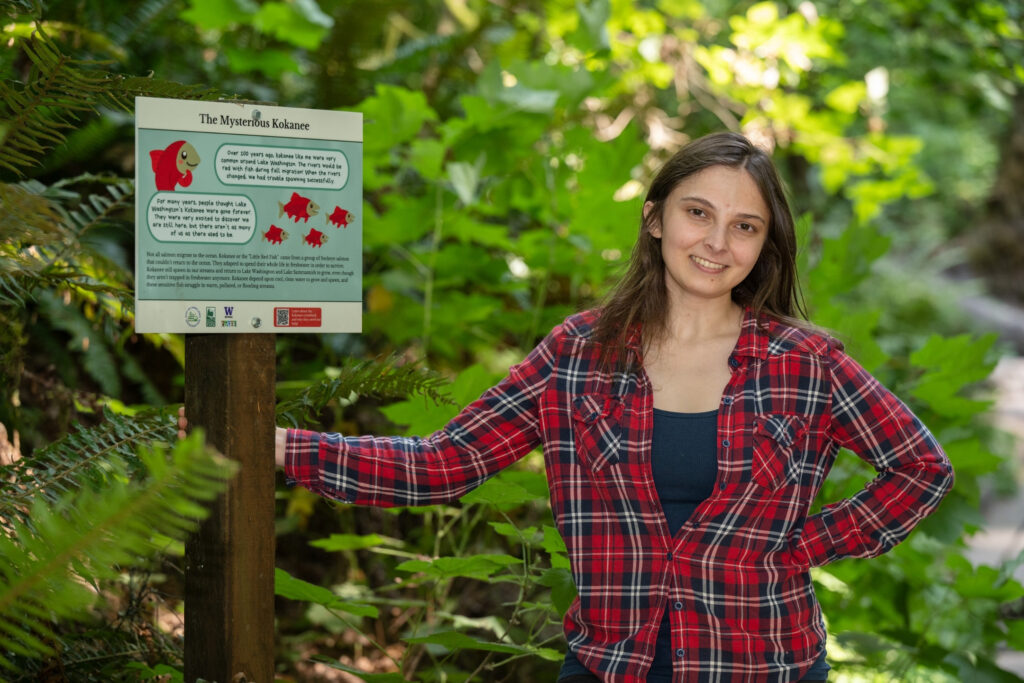
- Learn about Salmon Signs at OO Denny Park
- Learn more about the events that the Alyssa Burnett Center and CoSEE have put on in the past: Learning about Water blog and Becoming Forest Detectives blog
- Learn about using stories to turn climate anxiety into hope
- Learn about CoSEE’s Second Annual Mushroom Walk