Lake Washington’s Deep History
As you gaze across Lake Washington, it’s easy to see the impact of humans on the landscape—but this land was changing long before people arrived.
Satisfy your curiosity here! Follow your interests by exploring videos, photos, and writing all about the topics on each sign. Looking for a different page? Click here to explore all topics!
What’s on this page:
Glacial Bulldozers
Lake Washington sits between the volcanic Cascades to the east and the Olympics to the west. During cool periods of the earth’s history, giant ice sheets slowly creeped south from Canada. The glacier, thousands of feet thick, plowed and crushed its way south through where you stand now. Read a short overview “How did the Puget Lowland form?” from the Washington DNR or watch this 3-minute video, “20,000 Years in Puget Sound,” to see how glaciers shaped the Puget Sound.
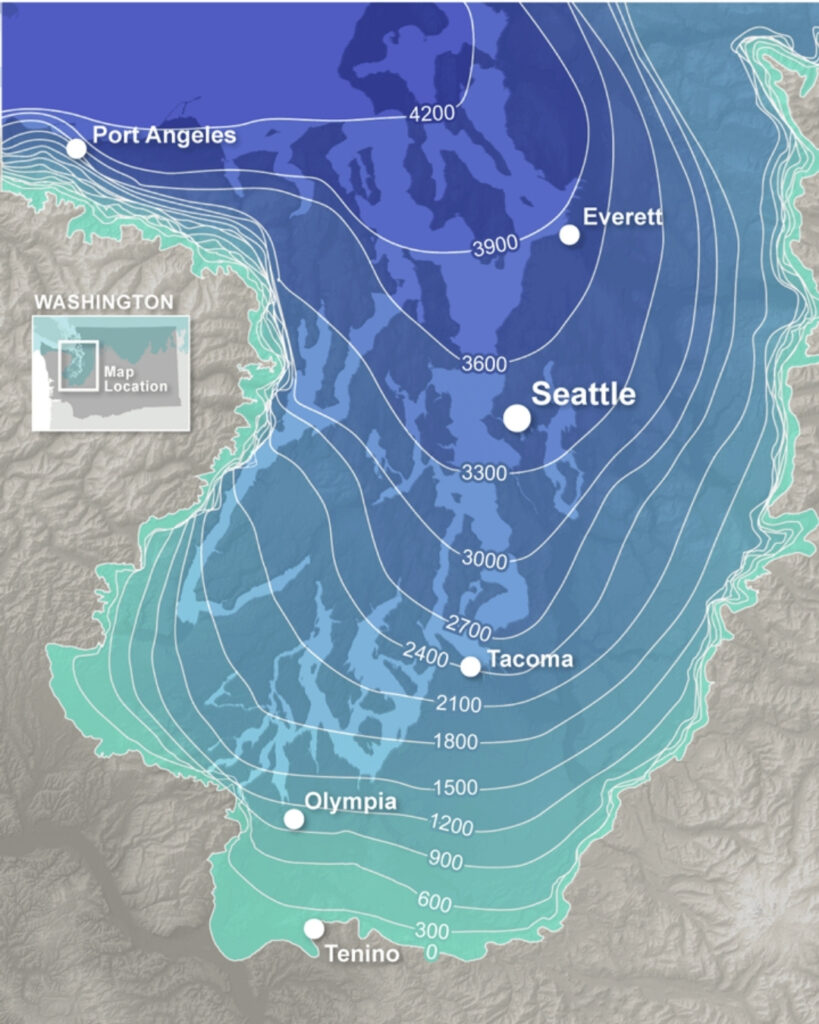
Q: What kind of marks might a glacier scraping over the surface make?
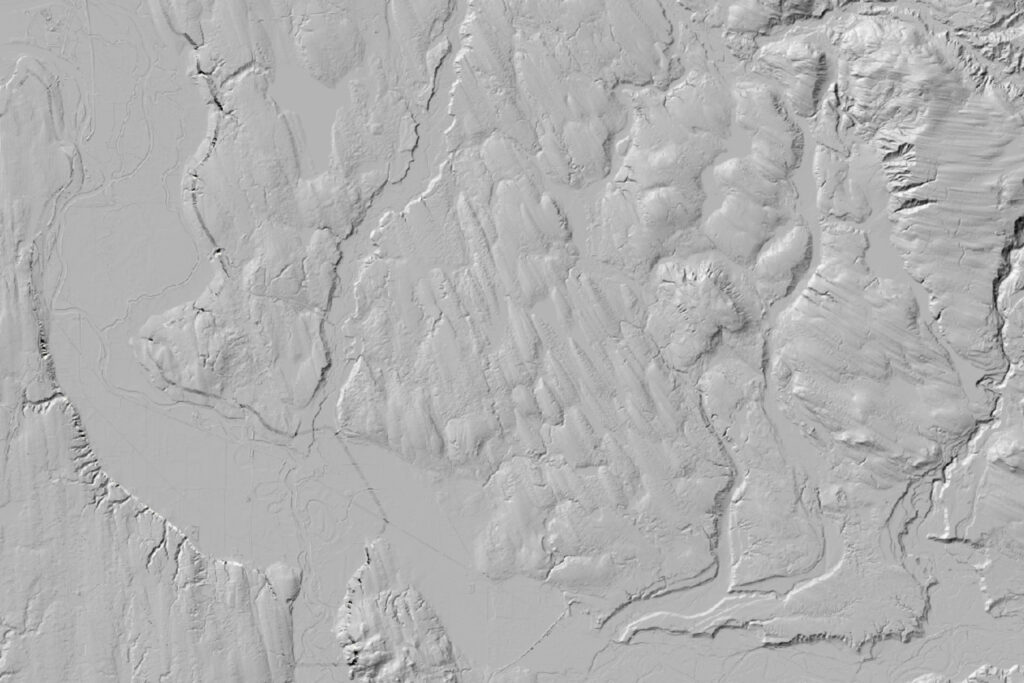
Seattle’s famous hills, Lake Washington, and Lake Sammamish all run north-south. Why? Because they are the scrapes and depressions left behind by the glacier as it moved! It’s easy to see the evidence of bulldozing glaciers in areal imagery like this.
Explore more types of glacier evidence at “Glacial Landforms and Rock Types” from the Washington DNR. You may even find glacial evidence in your own neighborhood once you know what to look for!
Glacial Plugs
Did you know Puget Sound’s connection to the Pacific Ocean was temporarily blocked by glaciers?
The glacial plug created deep, still water where clay and silt could settle out. We can still see the clay layer at some beaches, rivers, or even construction sites. Water has a hard time getting through this layer, so the soil on top of the layer can get very wet and, when combined with things like earthquakes, lead to landslides.
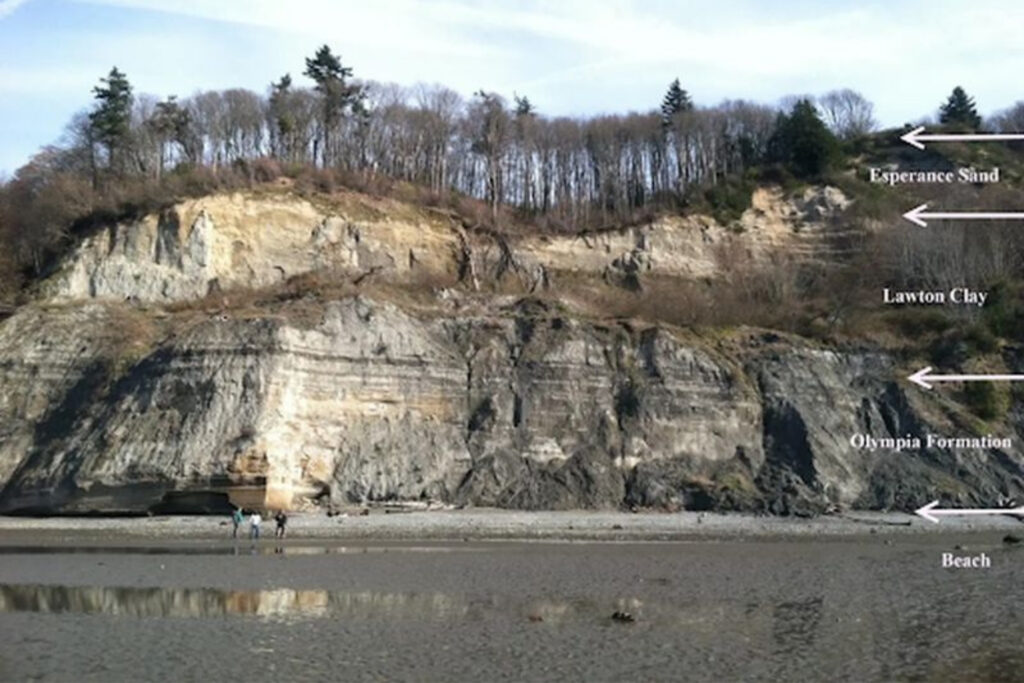
If you’re interested in how the glaciers tell their story with geological layers, check out “Discovery Park bluffs tell the story of Seattle’s glacial history” from the Ice Age Floods Institute to see what these layers mean and where you can see them.
Temporarily blocking the connection to the ocean is a big deal! Consider:
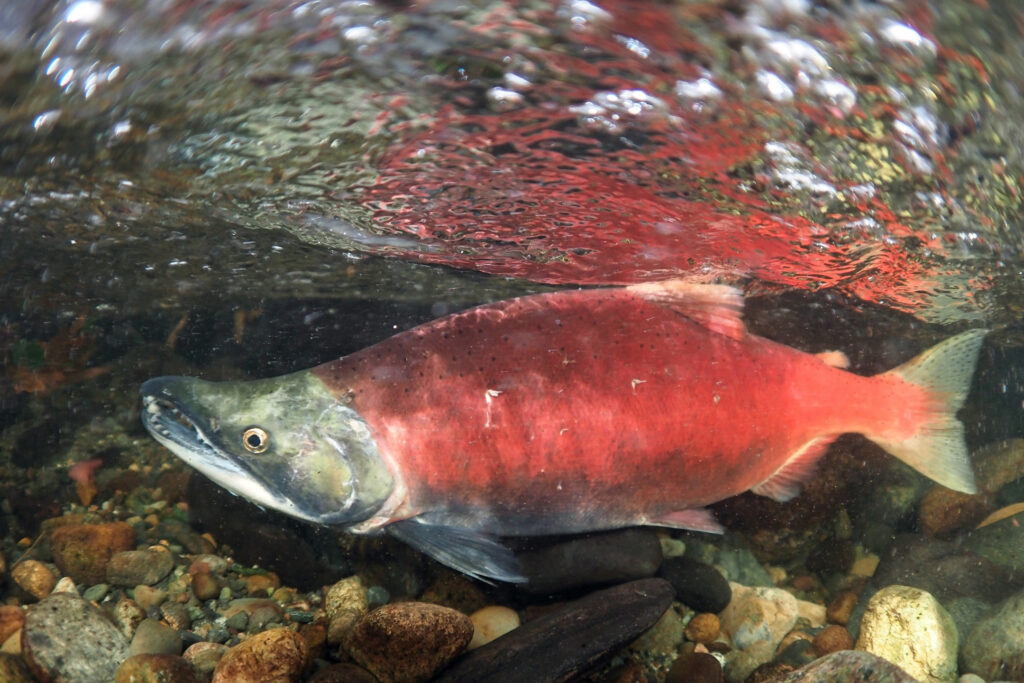
Q: How might cutting the Puget Sound off from the Pacific Ocean affect the animals in the Puget Sound?
Q: What animals can you think of that travel between the ocean and freshwater lakes and rivers?
Draining Lake Washington
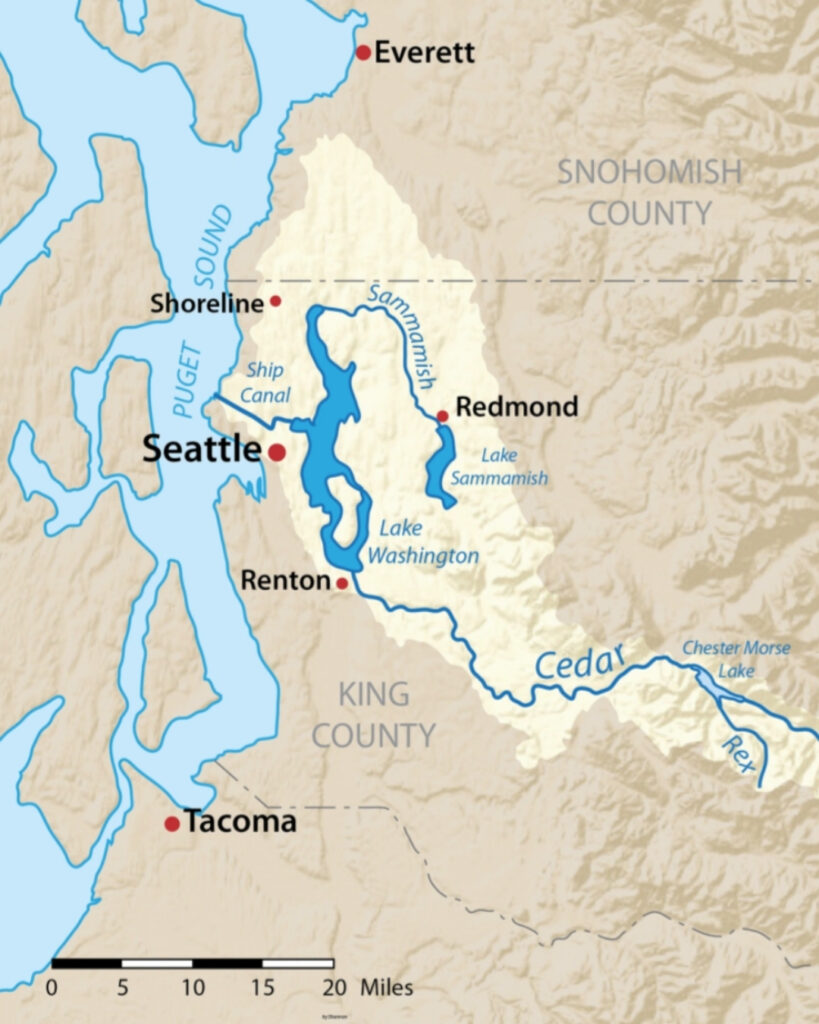
The Sammamish River connects Lake Sammamish to Lake Washington, which then drains into the Puget Sound. In the last 200 years, people have made drastic changes to this system. The Ballard Locks created a new drain for Lake Washington, connecting it directly to the Puget sound. The cedar river, which once passed the lake and entered into the ocean, was rerouted into the lake. Use this slider from the Seattle Times to see how much western Lake Washington changed as a result. These massive changes drastically changed salmon migration routes from the ocean, lowered the lake by 9 feet and caused much more fresh water to flow through Lake Washington than before.
Check out “Historical changes to Lake Washington and route of the Lake Washington Ship Canal” for in-depth reading on the many ways Lake Washington changed due to the construction of the Ballard Locks, like its habitat, water quality, and fish.
Questions to consider:
Q: Can you imagine if the lake were 9 feet higher? Where would the shoreline be?
Q: If the ground here were underwater, what different plants and animals might be here?
Restoring Wetlands
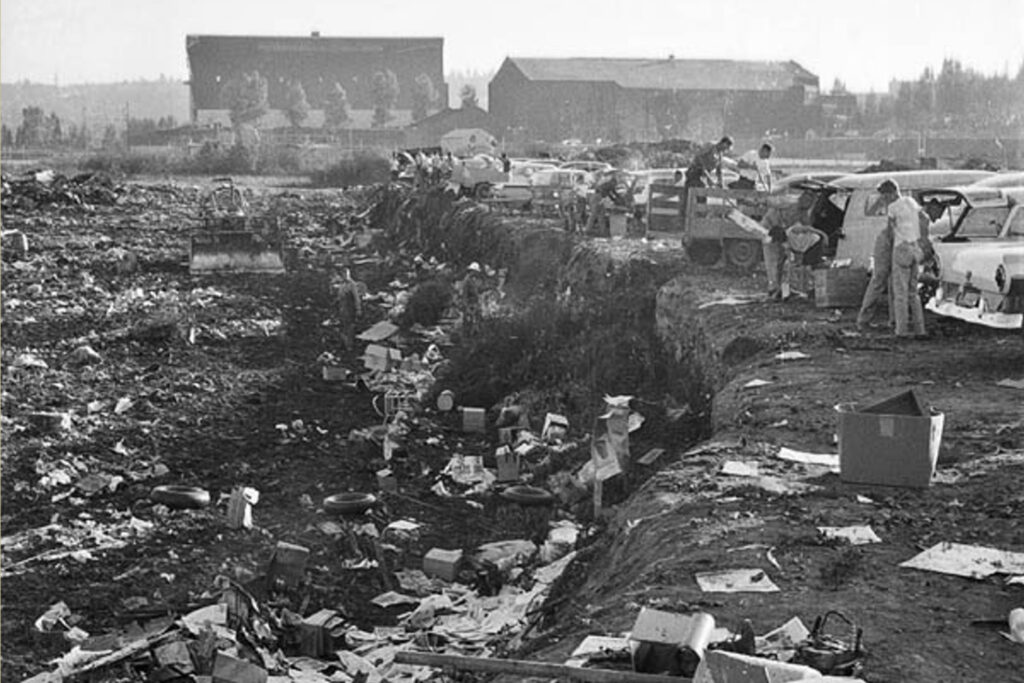
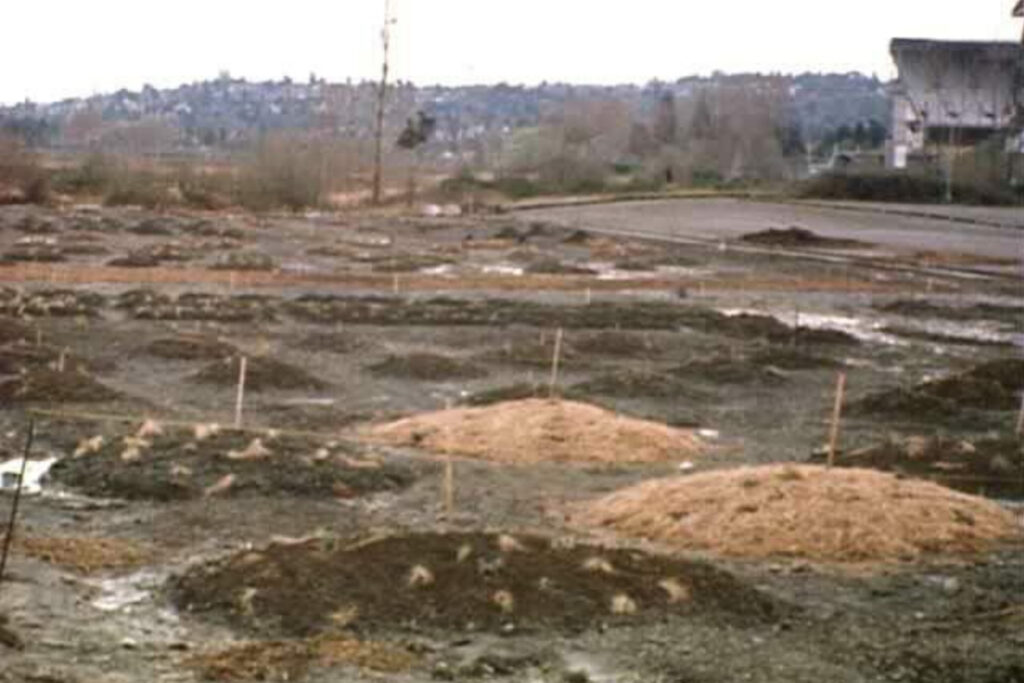
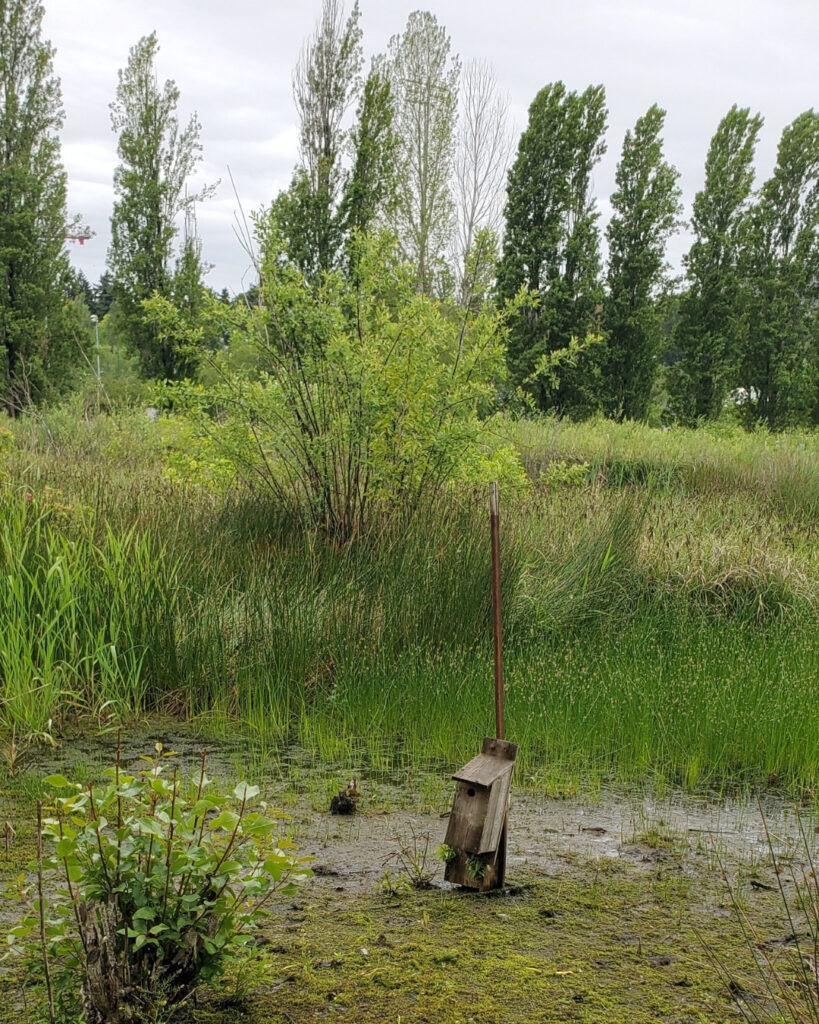
When Lake Washington was lowered due to the creation of the ship canal, over 1000 acres of wetlands dried up. Some were used as landfills, residential properties, and one airfield. They would have been home to many birds, beavers, river otters and young fish while acting as a natural water filter for the lake. The value of wetlands is better recognized now, and many restoration efforts along shore aim to create new wetlands to replace some of what was lost. Union Bay Natural Area transformed from wetland to landfill and back to thriving wetland again! Explore in-person or virtually at the UW Botanical Gardens website.
Q: Can you think of an area near you that could become a healthy place for human and non-human animals?