Salmon & People
All species, including humans, depend upon a healthy environment, including clean air, water, and abundant food for thriving.
Indigenous peoples especially depend upon salmon for food, culture, and spiritual practices. Reciprocity is a traditional ecological value that emphasizes our mutual connects and responsibilities between humans and other species in the natural world. The salmon rely upon us to be responsible caretakers of the environment, our shared home.
Satisfy your curiosity here! Follow your interests by exploring videos, photos, and writing all about the topics on each sign. Looking for a different page? Click here to explore all topics!
What’s on this page:
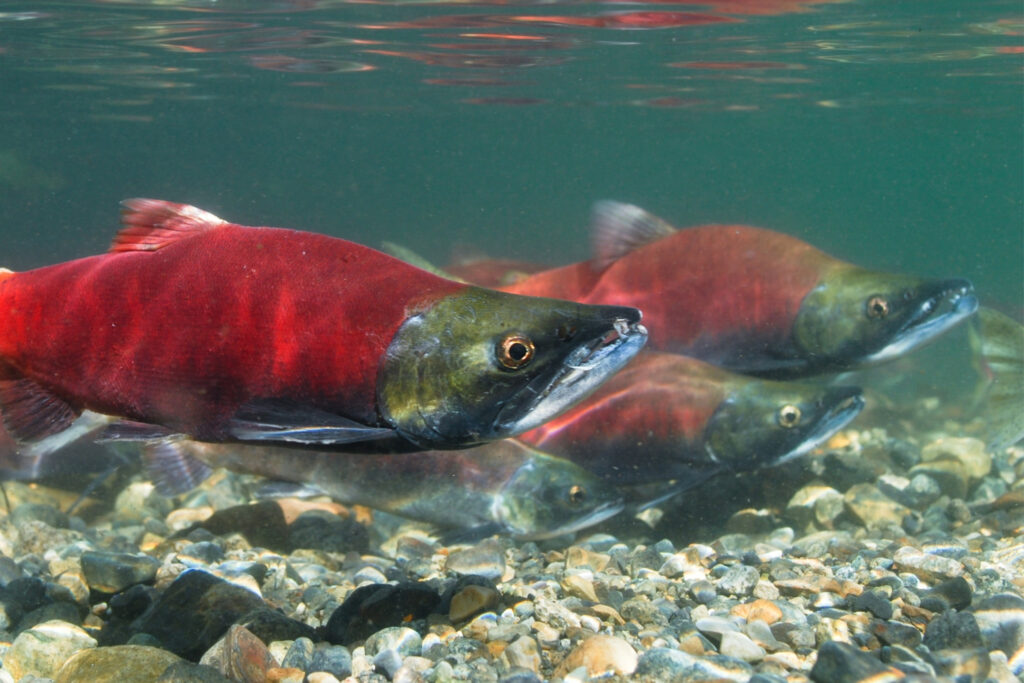
Indigenous and non-indigenous people alike depend upon a healthy environment for clean air, medicines, materials, connection to nature and beyond.
Indigenous peoples especially depend upon salmon for food, culture, and spiritual practices. The salmon rely upon us to be responsible caretakers of the environment, our shared home.
Food
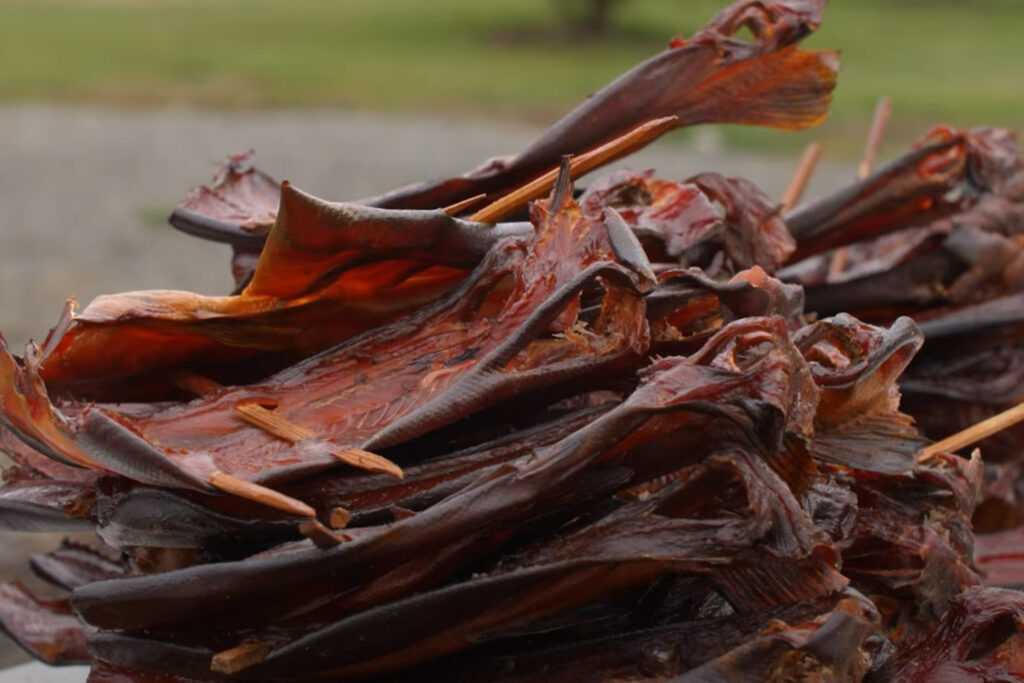
Have you ever eaten salmon?
Salmon are valued as a healthy food and have been an honored staple for Indigenous peoples of this region for as long as humans and salmon have co-existed– including today. How have you had salmon prepared? We are used to eating fresh or frozen salmon all year long, but Indigenous practices such as wind-drying and smoking preserve the plentiful migration harvests since long before refrigeration, and are still used today.
Check out the 4-minute video below, “Smoking Salmon and Preserving Tradition” from We are Muckleshoot to learn about this traditional Indigenous salmon preparation.
Healthy salmon means healthy people
Salmon live, grow, migrate, and spawn in the same rivers that run through our communities, and accumulate a wide range of pollutants in their tissues in these environments. Most salmon live and grow in the less-polluted ocean environment so they are still safe for humans to eat, but even low levels of pollutants can impact other species whose diet are comprised almost entirely of salmon, such as our southern resident orca populations. See where pollutants come from and how they move up the food chain at “Puget Sound Toxic Pollution” from State of Salmon.
How else can protecting the environment protect us too?
Culture & Spirituality
Like all Northwest Salish tribes, the salmon is a part of our culture, a part of our identity, a part of who we are.
W. Ron Allen, tribal chair of Jamestown S’Klallam tribe
Dependence upon and respect for salmon is deeply ingrained in many local Indigenous cultures and ways of being, knowing, and doing.
Creation Myth
“When the Creator was preparing to bring humans onto the earth, He called a grand council of all the animal people, plant people, and everything else. In those days, the animals and plants were more like people because they could talk. He asked each one to give a gift to the humans—a gift to help them survive, since they were pitiful and would die without all their help. The first to come forward was Salmon. He gave the humans his body for food. The second give a gift was Water. She promised to be the home to the salmon. After that, everyone else gave the humans a gift, but it was special that the first to give their gifts were Salmon and Water. When the humans finally arrived, the Creator took away the animals’ power of speech and gave it to the humans. He then told the humans that since the animals could no longer speak for themselves, it was their responsibility to speak for them.”
From the Columbia River Inter-Tribal Fish Commission.
First Salmon Ceremony
One ceremony, shared by many Indigenous peoples of the Pacific Northwest, is the first salmon ceremony. The ceremony honors a salmon with careful ceremonial treatment and the return of the bones to the water. Returning of the bones is symbolic of the reciprocal relationship between people and salmon and ensures future runs. Read about the legend behind the story from the Hibulb Cultural Center.
Watch the Lummi Nation’s First Salmon Ceremony below.
Salmon and the Economy
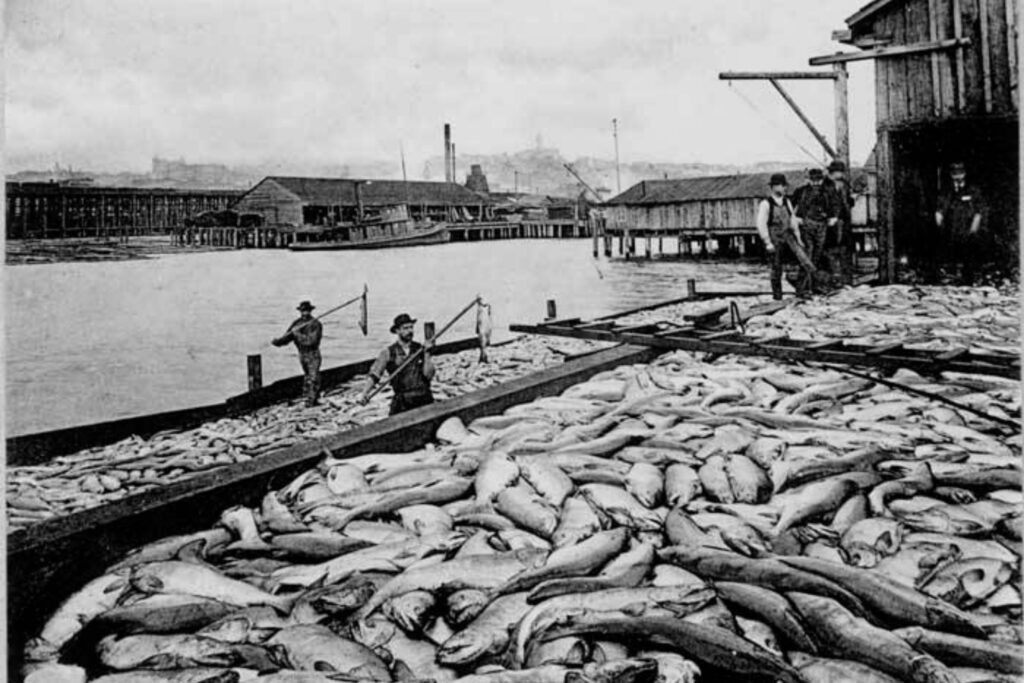
Fishing has always been a way of life in the Pacific Northwest and continues to be today. Not only do abundant salmon stocks support Indigenous lifeways, but, in addition, over 10,000 jobs currently depend upon fishing in Washington State. Salmon fishing in the Puget Sound alone contributes $100 million to the local economy.
Recreational, commercial, and subsistence fishing all depend on healthy, consistent salmon runs. Today salmon fisheries are co-managed by state agencies and local tribal governments. In 1974 in the case of United State vs Washington, Judge George Boldt upheld the treaty rights of local tribes to harvest fish within traditional fishing areas. This decision is often referred to as “The Boldt Decision,” and was an important case moving to uphold treaty rights and indigenous sovereignty in Washington State. The period preceding the Boldt Decision is often referred to as the Fish War, a series of civil rights protests and legal battles in Washington State where Native America tribes fought for their treaty-guaranteed fishing rights.
Learn how salmon support local industries from the Seattle Times: Disappearance of wild salmon hurts local economy.
How do we support our ability to keep fishing for generations to come?
Some of this large-scale commercial fishing alongside habitat loss caused by development and dams have led to massive declines in salmon runs. While dam removal sounds expensive, recent studies indicate that removing aging dams can help salmon recover, save taxpayer money, and boost salmon-based economies. Read a summary of the research at Save our Wild Salmon.

Environment
Why might a fish matter to a forest?
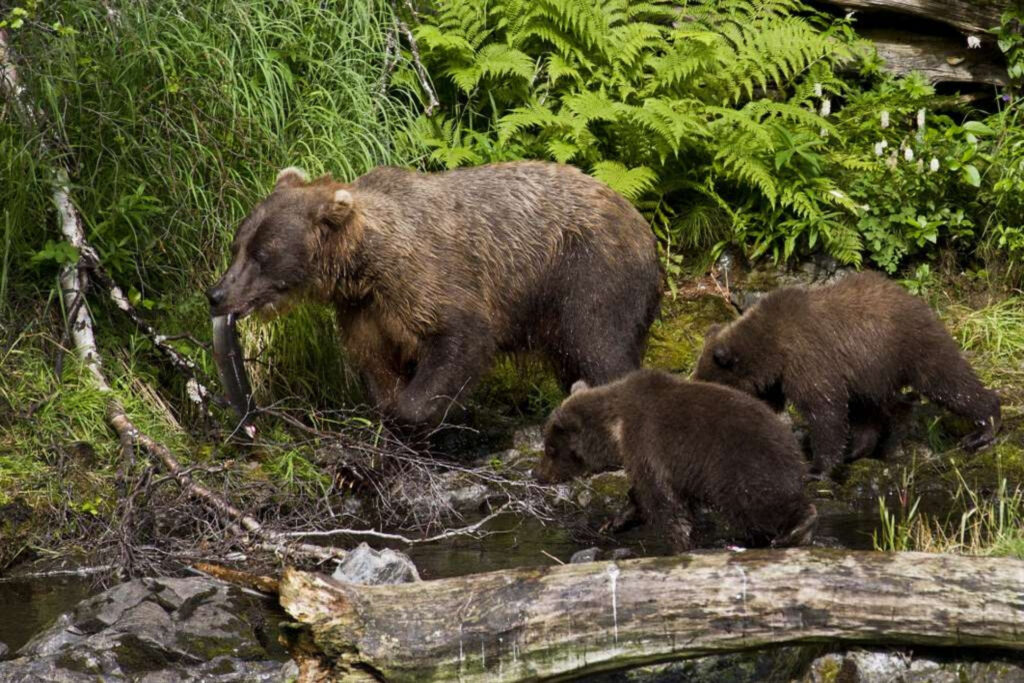
Pacific salmon species are keystone species, which are very important to the health of the ecosystem. We know salmon are an important source of food, not just for humans but also for hunters like bears, herons, and orcas and scavengers like coyotes and crows. Discover how many species are related to salmon in this interactive graphic from the Wild Salmon Center.
Salmon are also special because they feed the trees. Hunters kill salmon, and scavengers help scatter their remains. As they decay, they become fertilizer and bring rare but important nutrients and elements found mostly in the ocean into the forest. The fertilized trees grow, providing the stream conditions salmon need to thrive. Salmon feed the forest, and the forest provides a clean stream for the salmon and medicine, food, materials and healthy forest for people.
Q: Salmon feed us—what can we provide for the salmon in return?