International Doctoral Nursing Students from UW Seattle Experience Class at UW Bothell
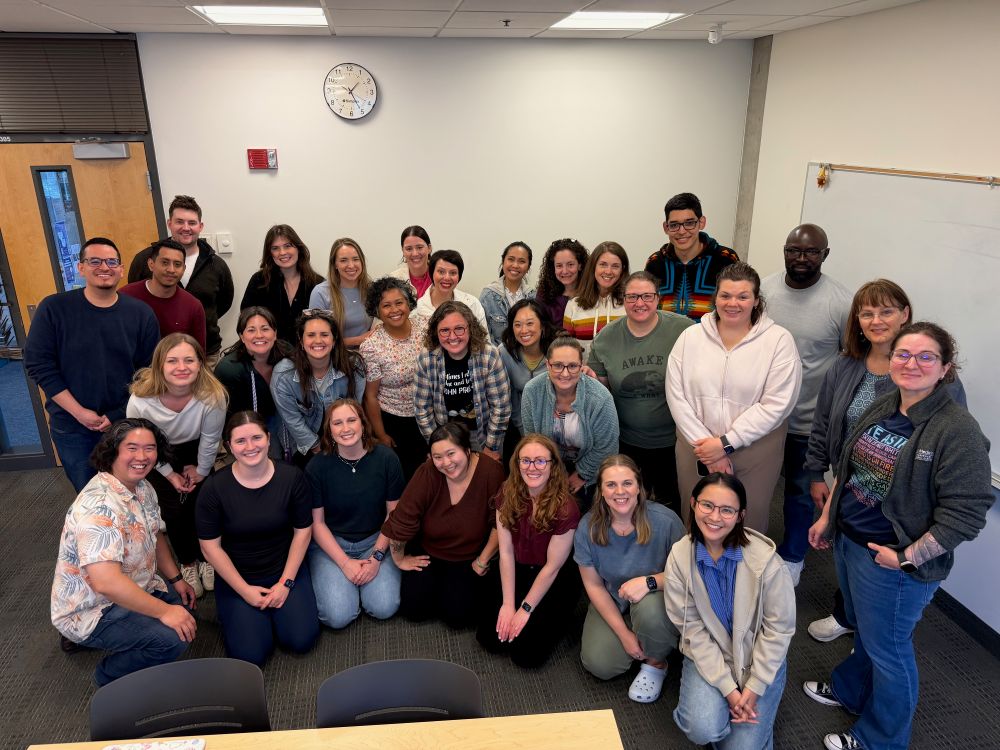
On Friday afternoon, June 5th, 2026, two visiting doctoral students from the School of Nursing at the University of Washington (UW) Seattle joined a class with graduate nursing students enrolled in the Master of Nursing program in the School of Nursing & Health Studies (SNHS) at UW Bothell. Paulina Pergol-Metko, MSC, MPH, is a PhD student at the Medical University of Warsaw in Portland. Yanisa Duangduen, RN, MSN, is a PhD student at the Mahidol University in Thailand. Paulina and Yanisa are visiting doctoral students hosted by and supervised by Dr. Basia Belza, de Tornyay Endowed Professor in the School of Nursing at UW Seattle and Director of the de Tornyay Center for Healthy Aging.
Paulina and Yanisa joined BNURS506: Advanced Pathophysiology, Pharmacology, & Health Assessment that Dr. Ko Niitsu, Associate Professor in SNHS at UW Bothell, taught in the Spring 2026 quarter. Before coming to class, they introduced themselves to UW Bothell students via Padlet, which is a visual and collaborative digital canvas where students can create and share content in real-time. It allowed the students in the course to meet the visiting doctoral students and interact with them online prior to the classroom visit.
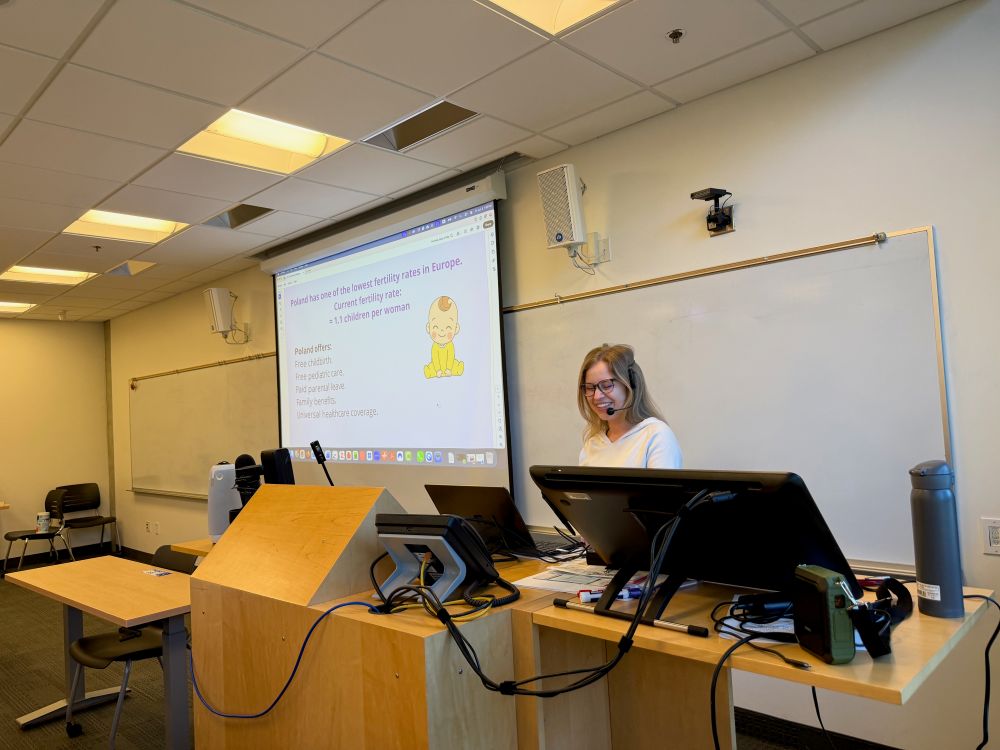
The reproductive and digestive systems were the topic of the class that day. Paulina delivered a presentation titled “Healthcare in Poland” (Photo 2). She described the advantages and challenges of the Polish healthcare system. For example, she explained that the Polish healthcare system is funded through mandatory health insurance contributions and that everyone has equal access to medical care, though long waiting times are usually the major issue. She also mentioned a statistic that Poland has one of the lowest fertility rates in Europe. Furthermore, she introduced Polish culture and food, such as Polish folk costume, Pierogi (dumplings), and Zurek (Polish sour rye soup).
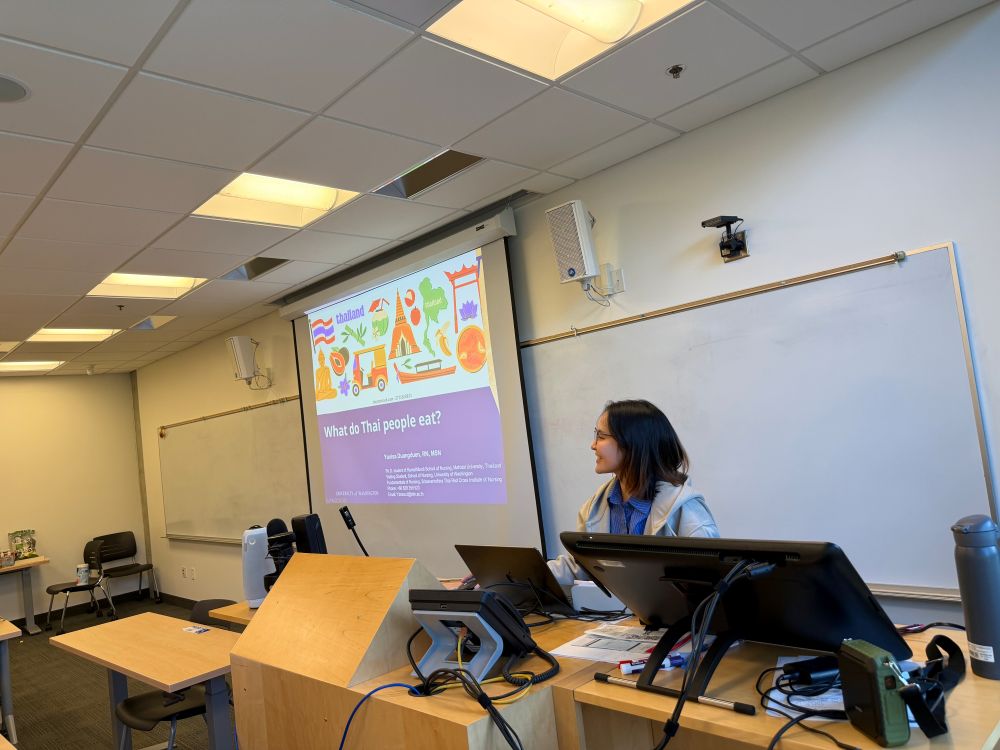
Next, Yanisa delivered a presentation titled “What do Thai people eat?” (Photo 3). After describing Thailand’s geography, she introduced the unique Thai foods and mapped them by region. She then explained common diseases influenced by dietary habits. For example, she taught that Thai people living in the Northeast tend to eat extremely spicy, sour, and salty food, such as Som Tam Pla Ra, Pla Ra, and Gai Yang. Consequently, diseases, such as hypertension and kidney disease, tend to occur more commonly in this region. She also described universal health coverage, which allows Thai people to access general dental services and denture benefits free of charge.
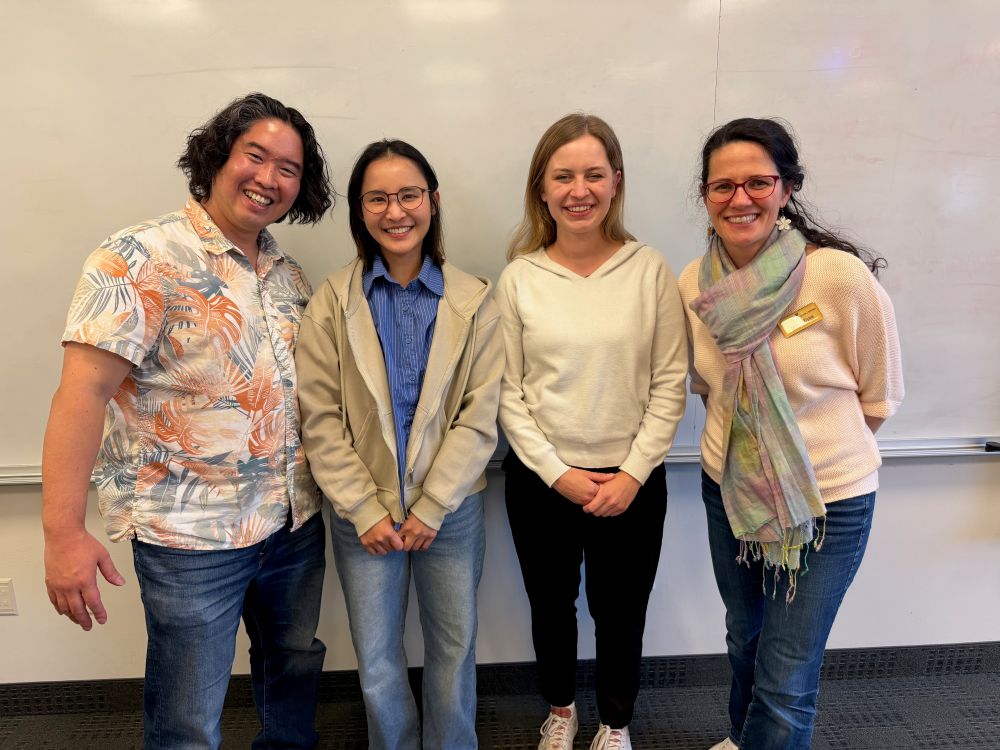
Natalia Dyba, Director of Global Initiatives at UW Bothell, also joined the class (Photo 4). As she is originally from Poland, she participated in the discussion and shared her personal experience regarding the Polish healthcare system with nursing students. She agreed with the long wait period for medical care; however, she also praised the much more affordable healthcare costs. Paulina expanded the discussion by suggesting ways to improve the workforce, nurses’ and other medical staff salaries, and related issues. Natalia trains COIL (Collaborative Online International Learning) fellows, including Dr. Niitsu.
Paulina reflected on her experience of visiting the classroom at UW Bothell and stated, “It was a great pleasure to participate in Dr. Niitsu’s class. I was truly impressed by his teaching approach, knowledge, and engagement with students. The supportive and interactive atmosphere he creates makes learning both meaningful and inspiring. I also really appreciated the opportunity to share my perspective and exchange experiences with such an open and curious group”.
Yanisa also reflected on her classroom visit experience and said, “I was grateful to be invited to participate in Dr. Ko’s class. The session started with soft music, creating a relaxed and engaging atmosphere with frequent laughter. Nurse students actively shared their experiences, and Dr. Ko summarized key points after each presentation. I also shared about Thai food and its relation to health and disease, as well as my colleague’s oral health issue, which led to a discussion about Thailand’s Universal Health Coverage and its coverage of essential dental care.”
Yanisa added that all Thai citizens with a national ID who are not covered by civil servant welfare or social security are included in the government’s Universal Health Coverage (UHC) scheme, which provides basic healthcare from birth. Hospital waiting times have long been an issue due to high patient volumes. However, many hospitals are now improving their systems to be more efficient. For example,
- Previously, at her hospital, patients had to pay before blood tests and pay again when receiving medications. About four months ago, the system changed so that patients now receive all services first and pay only once at the end of the treatment process.
- Thai patients often arrive early even for afternoon appointments, causing overcrowding. Hospitals have therefore changed the system so patients can take a queue number only at their scheduled time, helping reduce early arrivals and long waiting times.
- For patients who are unable to come to the hospital, they can consult doctors online, and medications can be delivered by mail.
Regarding nurses’ salaries in Thailand, civil servant nurses receive government-based salaries with a lifetime pension after retirement, while nurses in private or large hospitals usually earn higher base salaries and additional income from extra shifts, which tend to pay more in urban areas.
Dr. Belza noted, “During my own nursing education, one of the more memorable and influential learning experiences I had was the opportunity to engage with student nurses from other countries. I found these experiences built global understanding, improved cross-cultural communication, and broadened perspectives on health care in other countries. And now as faculty, I want to support and create similar experiences for this generation of nursing students. We are stronger together and these connections and experiences foster a better and brighter world for our nursing workforce, health care systems, and patients we serve”.