Master of Nursing Capstone Spring 2026
Capstone is the application of theoretical concepts in a real-world practice setting with a community partner and preceptor. The Capstone demonstrates the student’s achievement of personally identified professional competencies and the integration of the program’s learning goals and self-reflection on their professional development.


- Developing a Workshop Curriculum at the University of Washington Medical Center: Developed an advanced Evidence-Based Practice (EBP) 2.0 workshop at the University of Washington Medical Center (UWMC) to address gaps between EBP knowledge and clinical application among nurses. Guided by the Iowa Model of Evidence-Based Practice, the project produced a structured curriculum, participant workbook, and evaluation tools integrating interactive learning and mentorship. Expert review by the UWMC Nursing Professional Development found the program clear, feasible, and highly relevant for supporting quality improvement initiatives. This project establishes a scalable framework with strong potential to enhance EBP competency, promote practice change, and improve patient care outcomes.
- Recognizing Bright Beginnings: Implementing a Recognition Program to Foster Confidence in Transition to Practice Nurses: Focused on the design and implementation of a structured recognition program for transition-to-practice nurses at the University of Washington Medical Center–Montlake and Northwest campuses. The project addresses gaps in recognition during the first year of professional nursing practice, which may contribute to decreased confidence, delayed professional integration, and early turnover among new graduate nurses. By embedding intentional, peer and leader supported recognition into clinical practice, the initiative aims to strengthen nurse confidence, foster professional identity and belonging, and support retention. The project positions recognition as a practical, evidence-informed strategy for sustaining a resilient nursing workforce.
- A Structured Approach to Advancing Evidence-Based Practice: Development of a Champion Program Framework: A Champion Program Framework was developed to advance evidence-based practice (EBP) implementation on an inpatient unit. With an initial focus on oral care practices, the project aimed to empower nurses and CNAs as unit-based “champions”. Informed by a literature review, staff interviews, and a theory-guided design, the framework defines processes for selecting, preparing, and supporting champions. Designed for adaptation across diverse clinical topics and settings, the framework offers a structured approach to strengthening sustainable EBP implementation and staff engagement.
- Standardizing Nurse Mentor Support at UWMC: Development of a Mentorship Framework and Toolkit: Focused on improving inconsistent mentor support within the University of Washington Medical Center Transition to Practice Program through the development of a structured mentorship framework and toolkit. Feedback gathered from new graduate nurses, mentors, and nursing leadership showed differences in mentoring experiences and highlighted the need for clearer guidance and continued support. These findings were used to create practical tools such as discussion guides, reflective prompts, and suggested monthly mentoring topics. The completed toolkit offers a starting point for future implementation aimed at improving mentorship consistency, supporting new nurse transition, and promoting professional growth.
- Development of Standardized Patient Care Scenarios for Nursing Education on the Clinical Application of Chemical Restraint Regulations: Aimed to develop a clinical education tool for nursing staff, focusing on standardized patient care scenarios aligned with the units at Harborview Medical Center (HMC). A comprehensive literature review and an analysis of policies from other hospital systems were conducted to ensure a well-founded, evidence-based application of the Centers for Medicare & Medicaid Services regulations in clinical practice. Additionally, the bedside nursing staff at HMC were included in the development of the scenarios to ensure accurate representation of their patient populations. Evaluation findings indicate that the tool improved overall understanding of what chemical restraints are in practice.
- Investigating Staff Experience and Retention in Behavioral Health Ambulatory Care: Aimed to identify workplace components that affect provider satisfaction and retention in three ambulatory behavioral health clinics at Harborview Medical Center (HMC). Using a descriptive mixed-method design, including a project population of peer support specialists and licensed therapists/counselors, this project included the following activities: analysis of existing data through HMC’s 2024 Workforce Survey, creation and dissemination of a staff experience survey, and interviews. A needs assessment and recommendations report was composed to summarize the project findings and provide a list of interventions that could be implemented to improve staff experience.
- Developing a Standardized, Practice-Based Competency Assessment Approach in a Large Healthcare System: This quality improvement project addresses variability in nursing competency evaluation at UWMC by developing a standardized, practice-based assessment process. Using competency-based education principles and Donna Wright’s Competency Model, the project created a standard operating procedure and toolkit to guide competency development. A workshop with nurse leaders evaluated the process for usability and feasibility. Feedback highlighted strengths in structure, workflow alignment, and relevance to practice while also identifying areas of refinement for implementation. Findings support the need for a consistent yet flexible approach to competency assessment that also promotes meaningful nursing professional development.
- Empowering Nurse Preceptors: Development and Evaluation of an Advanced Preceptor Workshop: This quality improvement project developed, implemented, and evaluated an advanced preceptor workshop to enhance nurse preceptors’ skills in feedback, clinical judgment coaching, and learner support. Conducted with experienced preceptors at the University of Washington Medical Center, the workshop integrated evidence-based frameworks and experiential learning strategies. Pre- and post-evaluation showed increased self-reported confidence across core domains and high participant satisfaction. Qualitative feedback indicated greater use of structured feedback models and more intentional coaching practices. Findings support structured preceptor development as an effective approach to improving teaching practice, promoting psychologically safe learning environments, and strengthening clinical education and workforce sustainability.
- Assessing Barriers to Pediatric Bruise Screening in the Emergency Department at Harborview Medical Center: This quality improvement project examined barriers to completing pediatric bruise screening for children under 48 months of age in the Emergency Department at Harborview Medical Center. Pediatric bruise screening is a critical safety practice for early identification of physical abuse, yet it is practiced inconsistently in this context. Using a mixed-methods approach that included literature review, nursing interviews, surveys, and clinical observations, the project identified workflow constraints, limited access to pediatric gowns, documentation challenges, and variable staff awareness as primary barriers. Evidence-informed, context-specific recommendations were developed and presented to nursing leadership to improve screening consistency, reduce bias, and support equitable, standardized pediatric care.
- Reframing Remediation: A Holistic ICU Nurse Residency Toolkit: Addressed gaps in remediation practices within the Intensive Care Unit (ICU) nurse residency program at the University of Washington Medical Center. A literature review and interviews with ICU assistant nurse managers and nurse managers informed the development of an evidence-based assessment and remediation toolkit to improve consistency, clarity, and psychological safety for nurse residents. The toolkit was evaluated by ICU leaders and educators using a validated tool and received positive feedback for ease of use and relevance. It offers a structured, supportive approach to nurse resident assessment and remediation with potential application beyond the ICU setting.
- Salads or Sodas: Exploring the Influences of Workplace Environment on Healthy Eating Behaviors in Night Shift Nurses: Explored the relationship between night shift nurses’ lived experiences of their health and eating behaviors in the context of the workplace. Night shift nurses are at higher risk for multiple disease states, but report that maintaining a healthy lifestyle is challenging in part due to a lack of healthy foods in the workplace. The results of this cross-sectional exploratory study support previous findings that the food landscape of hospitals does not support night shift nurses’ in maintaining a healthy lifestyle. Urgent intervention from organizations is needed to protect this vulnerable population of workers.

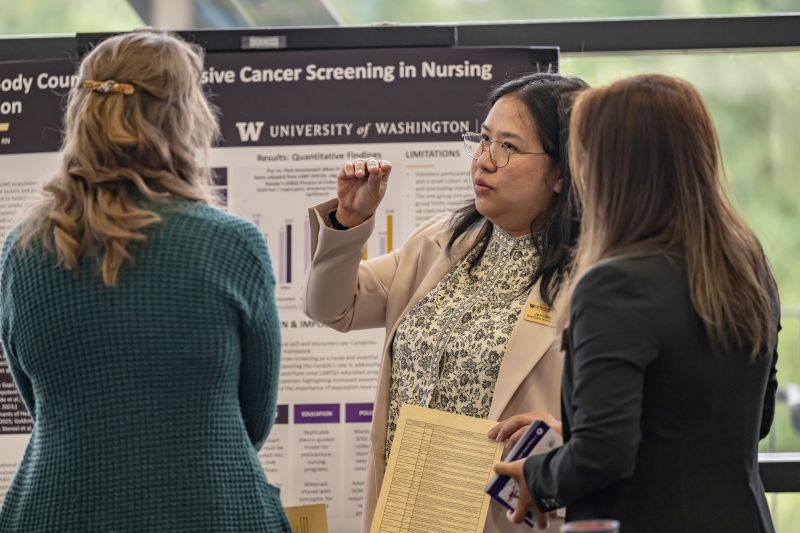
- Every Body Counts: Developing and Evaluating a Cancer Screening Educational Module for Sexual and Gender Minority Patients Among Prelicensure Nursing Student: Sexual and gender minority populations face significant cancer screening disparities due to provider knowledge gaps and systemic barriers. This project developed, implemented, and evaluated a 45-minute evidence-based educational module on inclusive, anatomy-based cancer screening for junior-level Bachelor of Science in Nursing students completing a Population Health Internship at Fred Hutchinson Cancer Center. Guided by Campinha-Bacote’s Process of Cultural Competence, the module was delivered to six students. Directional improvements were observed in five of six preparedness and competence measures, and the module received a perfect preceptor evaluation score (5.00/5.00). Educational materials were shared with the preceptor to support future cohorts.
- Increasing Student Utilization of School-Based Health Centers: A Rural Quality Improvement Project at Mount Baker High School: Aimed to increase student utilization of a school-based health center (SBHC) at a rural high school in Deming, Washington. Guided by the Wisconsin Logic Model, the project identified barriers limiting access to the SBHC. Through literature review and stakeholder input, three barriers were identified: lack of awareness, stigma, and limited understanding of access. To address these barriers, targeted outreach strategies, staff communication tools, and student educational materials were developed. This project provides evidence-based recommendations to increase SBHC utilization and promote health equity by emphasizing consistent messaging, trusted adult engagement, and collaboration between school and community partners.

- Improving the Transfer of Care Process Between Ashley House and Seattle Children’s Hospital: Ashley House and Seattle Children’s Hospital provide care for medically complex children in which children transfer back and forth between facility from inpatient to outpatient. This transfer of care process requires strong communication and a seamless process to maintain continuity of care for these children. Breakdown in communication can result in medication errors, delay in cares, and increase the risk of patient safety. This capstone project looks at transfer of care between both facilities to understand the current practices, the breakdowns of communication, and recommendations to improve this process.

- Developing a Competency-Based Nursing Curriculum to Bridge the Technology Gap in Diabetes Management: Developed a competency-based curriculum to improve nurses’ ability to manage continuous glucose monitoring (CGM) in an outpatient Kaiser Permanente setting. Guided by competency-based education and the Wisconsin Model, the project used needs assessment data to design modules, simulations, and job aids targeting CGM setup, data uploading, documentation, and patient education. While pilot implementation was not completed due to organizational constraints, the curriculum was fully developed and well-received by stakeholders. The project highlights the importance of structured training in digital health and provides a scalable framework to enhance nursing competency and support improved diabetes care delivery.
- Development and Evaluation of an Interprofessional Simulation Assessment Tool for an ADN-RN Program at Highline College: Developed and tested an interprofessional simulation tool to evaluate nursing students’ skills in communication, collaboration, critical thinking, and clinical judgment, aligning with the Interprofessional Education Collaborative core competencies. Conducted in a Highline College simulation lab during a respiratory distress scenario with nursing and respiratory therapy students, it aimed to identify assessment gaps, create a structured tool, and evaluate its feasibility. Faculty used it for real-time evaluation, debriefed, and provided feedback. Results showed the tool was practical, user-friendly, and improved assessment of interprofessional skills over traditional methods.

- Closing the Pediatric Clinical Gap: Developing a Novel Simulation-Based Experience for Accelerated BSN Students: Addressed an identified gap in pediatric content within Pacific Lutheran University’s (PLU) accelerated BSN (ABSN) simulation curriculum. A novel pediatric sickle cell disease simulation-based experience (SBE) was developed using INACSL best practices and guided by Tanner’s Clinical Judgment Model. By creating a high-quality SBE, this project aimed to strengthen PLU’s pediatric clinical curriculum. This work is significant to nursing education and patient care, as well-designed simulation experiences support the development of safe, competent nurses and may help mitigate clinical placement shortages – particularly in specialty areas like pediatrics – while promoting consistency and quality across nursing programs.

- Ready or Not: Advancing Pediatric Emergency Department Readiness through a Nurse-led Quality Improvement Program: Sought to advance pediatric emergency department readiness through the creation of a nurse‑led quality improvement program in a general emergency department. Conducted at a community hospital with medium pediatric volume, the project enrolled the department in the National Pediatric Readiness Quality Initiative and developed and implemented a nurse Pediatric Emergency Care Coordinator role with defined responsibilities and operational support. Chart abstraction and benchmarking identified evidence-based practice gaps and strengths. The project demonstrated that a nurse‑led quality improvement program and formal coordinator role was both feasible and effective in supporting safer, higher-quality pediatric emergency care.
- Improving Communication and Evaluation Between Undergraduate Nursing Students and Preceptors: Maximizing the quality of clinical rotations for undergraduate nursing students begins with improving communication between students and preceptors and refining evaluation processes. This project developed and implemented a standardized pre-shift communication guide and evaluation tool at a pediatric medical center. Both tools were user-friendly and promoted consistency in feedback and assessment. Preliminary findings support their integration into the Undergraduate Nursing Student Policy and adoption to clinical practice. Strengthening communication and evaluation during undergraduate clinical training is essential to preparing a competent nursing workforce and warrants the same level of intentionality and standardization as other areas of nursing practice.
- In Your Nurse Leadership Era: A Toolkit for New Nurse Leaders: This quality improvement project aimed to develop a toolkit of resources for new nurse leaders at EvergreenHealth. Experienced nurse leaders were interviewed and completed a needs assessment, looking at the gaps in their new leader onboarding and assessing their proficiency with AONL competencies. Top areas of needs were identified as resources in financial management and change management, with the interviews emphasizing the current lack of leadership development support and scarcity of resources. The results highlight the need for nursing leadership development resources, such as a toolkit, to support leader engagement and success.
- Nurse Manager to Senior Leader: A Qualitative Exploration of the Transition Experience: Explored the transition from nurse manager to senior leadership in a community hospital. Using qualitative descriptive methods, semi-structured interviews with five senior nursing leaders were analyzed to identify key themes: strategic mindset shift, professional identity realignment, experiential and relational development, and an organizational visibility gap. These findings informed the development of Stepping Forward, a practical guide for nurse managers preparing for senior leadership. This project highlights the need for more intentional leadership development and offers a resource to support succession planning and leadership readiness.

- Developing a Toolkit for Nurses Transitioning from Acute Care to Community Nursing: Aimed to develop a toolkit to support nurses transitioning from acute care to community practice, a shift often associated with culture shock, reduced confidence, and limited support. Using a descriptive qualitative design, a literature review and semi-structured interviews with experts in community nursing and related fields informed toolkit development. Key qualities, transition themes, and practical tools were identified to enhance role understanding and support successful adaptation. Evaluation findings were positive, with recommendations for future refinement. This project demonstrates the feasibility of developing an evidence-informed toolkit to facilitate role transition and support nurses entering community-based practice.
Updated July 2026