Iyer Featured in the Writing@UW Newsletter
Teacher Feature
by Jacob Wilson
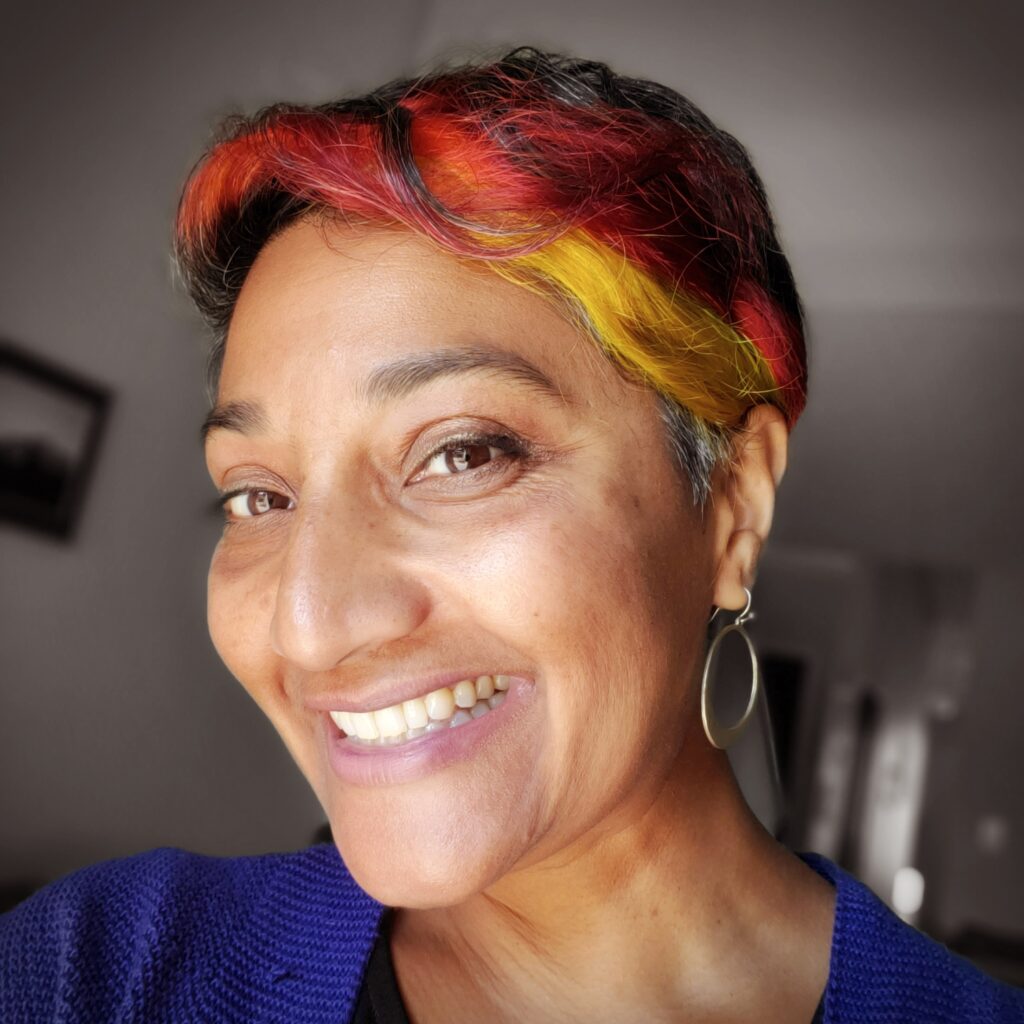
This quarter, the Writing@UW team would like to highlight the work of Dr. Sunita Iyer whose institutional home is in the School of Nursing and Health Studies at the University of Washington Bothell. I had a wide-ranging conversation with her in which she recounted her journey in and through writing pedagogy, what it means to be attentive to student literacies, and how to center diverse linguistic resources when designing writing projects. Dr. Iyer recently took part in a DEI initiative at UW Bothell during which she designed resources to support the writing processes of multilingual writers for faculty across UWB who teach W courses. The Writing@UW team hopes it will offer inspiration and showcase how Dr. Iyer is tackling pressing questions in the context of her teaching.
Dr. Iyer’s journey with writing pedagogy began over 10 years ago and grew out of her own personal relationship with reading and writing, which she described as essential to her identity. Her early experiences of reading and writing inspired her to incorporate writing into her professional life as an instructor of clinicians and nursing students. Over a period of time teaching in higher education, Dr. Iyer noted how her students’ relationship with writing was shifting. Students had different levels of preparedness when they came to Dr. Iyer’s courses and many were citing writing as a source of anxiety and stress. Because Dr. Iyer understood writing as an essential communicative practice in her field, she took it upon herself to begin evaluating how she approached teaching writing at multiple levels of instruction. Because Bothell’s student population is predominantly first-generation and multilingual, Dr. Iyer had to carefully think about how she could best support them. She began by asking how she might center student voices by building from what they already know and use in daily life.
As she described, this process came with a lot of discomfort. She had to navigate institutional and professional expectations about what kinds of writing students were expected to learn and do. She spoke about how challenging it was to confront how she had learned to write in her discipline, recognizing how many hoops she had to jump through to accommodate what “good writing” was. By challenging these barriers for her students, she found that students could think of themselves as capacious thinkers and learners. People who in her words could “translate health information in ways they and their communities could understand.”
In speaking about her teaching practices to support students’ knowledges in equitable and sustainable ways, Dr. Iyer stressed how important tangible and clear assessment criteria were to enact it. Instead of focusing on the lower-order concerns of writing (grammar, spelling, sentence syntax, etc.) she drafts rubrics that focus on the higher-order concerns (ideas and organization), how students present ideas and how are they interpreting health information. She also emphasized how important clear, guided assessment criteria were for engaging students in thoughtful peer review. She understood this to be essential to decenter her own authority in the classroom by again having students think more deeply about what it takes to write for community rather than just for the grade.
It was an honor to speak with Dr. Iyer about the ways she has approached writing pedagogy over her many years of experience. Her commitment to centering student voices in the classroom and grounding writing instruction in concrete practices demonstrates how, much like writing itself, the teaching of writing is a lifelong practice.