Master of Nursing Capstone Spring 2025
Capstone is the application of theoretical concepts in a real-world practice setting with a community partner and preceptor. The Capstone demonstrate the student’s achievement of personally identified professional competencies and the integration of the program’s learning goals and self-reflection on their professional development.

- Building Trust Through Standardization: A Nurse-led approach to handoff improvement: This capstone project addressed persistent communication breakdowns between Emergency Department (ED) and inpatient (IP) nurses at Swedish Cherry Hill Medical Center by standardizing the RN-to-RN patient handoff process.
- Change Burnout: Merging Healthcare Systems and the Costs of Transition: Mergers within healthcare systems have become increasingly common. While such organizational changes can offer benefits, they can also lead to a phenomenon known as change burnout.
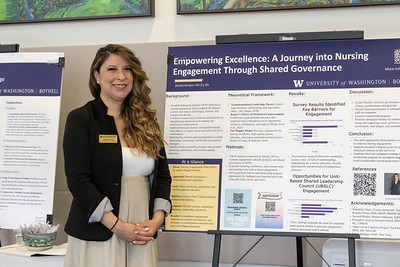
- Empowering Excellence: A Journey into Nursing Engagement Through Shared Governance: This project aimed to increase nurse engagement through shared governance, aligning with Magnet designation goals. The project identified barriers such as time constraints, unclear governance structures, and limited perceived influence.
- From Checklists to Competence: Standardizing Nursing Evaluation with the Donna Wright Model: As nursing roles grow in complexity, competency assessments must evolve to remain relevant and effective. This project presents the development of a standardized, skills-based competency framework for newly hired nurses across five Swedish Hospital campuses.
- Bloodborne Pathogen Exposures Reporting in Bedside Nurses: investigated the challenges and potential improvements in the reporting of bloodborne pathogen exposures (BBEs) among bedside nurses. This project was completed to attempt to understand bedside nurses’ comfort and confidence in BBE reporting

- Developing Curriculum for the UW Bothell Master of Nursing Program Using Competency-Based Education: preparing for reaccreditation in 2026, the UWB MN program must align course work with the 2021 AACN Essentials, which emphasize competency-based education (CBE). This initiative is designed to ensure graduates are prepared for the evolving demands of nursing practice.
- Developing a Policy Framework for Virtual Nursing Care at Harborview Medical Center: focused on the development and implementation of a Virtual Nursing Care Policy at Harborview Medical Center (HMC), designed to support two newly established hospital units and future expansions. As healthcare increasingly integrates technology to meet rising patient demands and workforce challenges, virtual nursing offers an innovative approach to optimize nursing workflows, enhance patient monitoring, and ensure safe, team-based care delivery.
- Elevating ICU Nurses: Building Self-Confidence Through Simulation-Based Training: This capstone project explored the integration of high-fidelity simulation (HFS) into Harborview Medical Center’s Critical Care Orientation (CCO) program to address declining self-confidence among newly hired ICU nurses. The project included detailed planning: simulation scenario development, facilitator training, and evaluation through the NASC-CDM tool.
- Enhancing Nursing Leadership through Meaningful Recognition: Developing an Orientation Framework for Assistant Nurse Managers: Leadership doesn’t begin with a title; it begins with support. Yet many Assistant Nurse Managers (ANMs) enter their roles lacking structured guidance. This capstone project set out to address that gap. The project explored how intentional, structured orientation can promote successful transitions into leadership.
- Experience & Explore: A Shadowing Program for Nurses: Developed to support experienced nurses at Harborview Medical Center, Experience & Explore: A Shadowing Program for Nurses offers compensated opportunities to observe clinical and non-clinical roles outside of one’s typical work area. By fostering cross-departmental learning and professional growth, the program encourages exploration, collaboration, and connection across the organization.
- Vascular Access Stewardship at Harborview Medical Center: Standardized protocols for the insertion and management of central venous access devices (CVADs) are well established; however, no standardized process exists for the removal of these devices. The Daily Vascular Access Device Assessment (DVADA) tool was developed to foster interdisciplinary collaboration during team rounds, bringing vascular access best practices to the bedside.
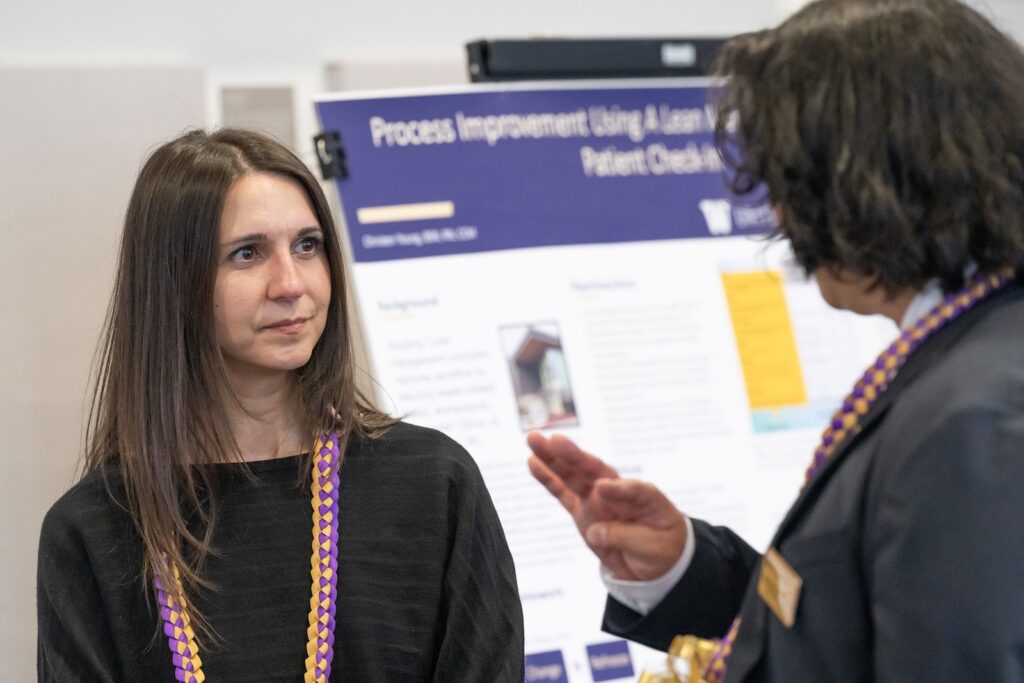
- Process Improvement Using a Lean Management System: Patient Check-In: The ultimate objective of this project is to conduct detailed observations of the patient check in-process at the HealthPoint Bothell Medical Clinic, in order to analyze the data collected to find areas that need improvement and create an appropriate process improvement plan.
- Guiding the Next Generation of Nurses Through School Counselor Education and Mentorship: The nursing shortage in the United States calls for improved strategies to promote the nursing profession. The project emphasizes the importance of early exposure and mentorship to sustain interest in nursing and provides the tools for school counselors to support prospective nurses.
- Increasing Clinical Placement Opportunities Across Washington: Utilizing Non-traditional Clinical Placements to Enhance Nursing Student Learning: Washington faces a growing demand for qualified nurses, but many nursing programs can’t expand due to a lack of clinical placement opportunities. This project examined current placement practices in Washington and explored strategies to expand utilization of non-traditional clinical sites. (Washington Center for Nursing)
- Making Space for Play: Experiential Learning Through Roleplaying in Leadership Education: Nurses face increasing hardship and ever-changing expectations in their modern roles. Looking for solutions to help ease the burden, the concept of play was unearthed as a technique for change.
- Nursing Education: Academia Compared to Clinical Settings: project focuses on how to best approach education creation and implementation regardless of setting and if teaching methods are applicable universally
- The Art of The Prebrief & Debrief: Creating Meaningful Learning Moments in Virtual Nursing Education: Simulation-based education is a powerful tool in nursing, yet it often induces anxiety and uncertainty for both learners and faculty—especially in virtual environments. My capstone project focuses on developing a faculty guide for prebriefing and debriefing in virtual simulation.
- Vaccine Hesitancy: Improving Child Immunization Rates Through Standardized Documentation: Pediatric immunization rates have not returned to peak levels noted before the COVID-19 pandemic. This project identified a knowledge gap for reasons parents and guardians refuse vaccines during a pediatric visit.
to nursing education.
Updated July 2026