Student and Alumni Highlights
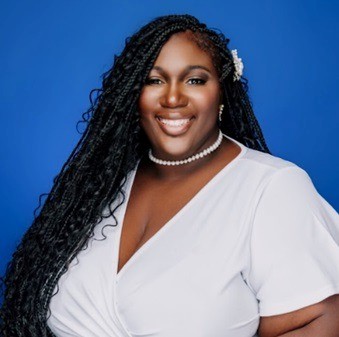
LaNiqua Bell, Student
What made you decide to pursue a MS in Community Health and Social Justice?
I decided to pursue this degree after losing my son in 2018. In the midst of grief, I realized that peace and acceptance, for me, required understanding. I needed to understand how we arrived at a world where “all” does not truly mean all, where I have to say and advocate that Black babies matter. At the same time, I’ve spent my career working in STEM and community engagement with students who have been historically underrepresented. I knew I needed more tools—how to research deeply, analyze systems, and understand the structural and systemic factors shaping our communities. This degree has helped me begin to connect those dots.
How do you plan to use your degree?
I plan to work in community engagement within a healthcare or education institution helping underrepresented students become physicians and step into leadership roles across healthcare. This isn’t about one role or one pathway. It’s about building representation across the entire system—clinical, administrative, research, and leadership. When more voices are present at every level, the decisions, priorities, and outcomes begin to shift in meaningful ways.
What is your favorite part about the program?
The professors. They genuinely care about the content, our learning, and who we are as people. They create space for lived experience, welcome feedback, and don’t shy away from difficult conversations. That matters and that was really healing for me as a bereaved parent trying to understand “the why”. I’ve also been incredibly grateful for my classmates. They too are thoughtful, driven, and deeply committed to this work. It’s been great to learn alongside them, and I’m excited to see the impact they will have.
What advice do you have for incoming students?
Hold on to your “why.” You will need it, especially on the days when the workload is heavy or you’re rereading the same article trying to make sense of it. Give yourself grace. You are worthy, you are qualified, and you belong here. Some things in your life may need to shift or pause for this season of grad school, and that’s okay. There will be days when you feel certain this was the best decision you’ve ever made, and other days when you question everything. Both can be true. Keep going. The work you’re stepping into matters, and the field needs you.
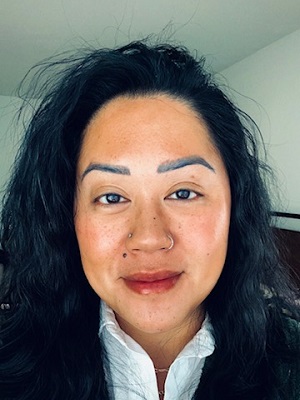
Pia Sampaga-Khim, Alumna, ’25
What made you decide to pursue a MS in Community Health and Social Justice?
I’ve spent many years in public health and always intended to eventually pursue my MPH. Over the past few years, I’ve focused on my equity journey, exploring ways to enhance community collaboration and develop programs that integrate equity and social justice principles. I was looking for a degree program that integrated public health education with social justice issues, discusses impacts on historically marginalized communities, and aims to dismantle systemic inequities – and I felt that this program offered that.
How are you using your degree?
As a current employee of the Snohomish County Health Department, I am eager to apply the knowledge and insights I’ve gained from this program to my work. This experience has not only enhanced my contributions to the department but has expanded professional growth opportunities within the public health field. By deepening my understanding of social justice principles, I am able to better serve my community and make a meaningful impact in my role.
What was your favorite part about the program?
This program helped me strengthen my voice in my work, advocating for our communities and ensuring they have a say in how we serve them in Public Health. I’ve learned the importance of being intentional in our approach and how essential it is to embed social justice into our values.
What advice do you have for incoming students?
Participate in meaningful discussions with your peers and instructors, support each other, and challenge yourself to step outside your comfort zone. Learning to embrace discomfort can deepen your understanding of diverse perspectives, enabling you to serve your community more effectively.

Rachel Allison, Alumna, ’25
What made you decide to pursue a MS in Community Health and Social Justice?
I decided to pursue a MS in Community Health and Social Justice because I spent the last several years learning and creating online content about the systemic problems in our country and across the world. I wanted to do my part in fixing these issues and restoring a sense of equity and justice. I became aware of this program, and it seemed like the perfect opportunity to move my activism offline and into a place of enacting more direct change.
How are you using your degree?
I am very excited to take the CHES (Certified Health Education Specialist) exam and go on to work for the state of Washington. I would love to work in a role where I can implement equity, anti-racism, and inclusion as praxis, while providing access to opportunities, power, and resources to reduce disparities and improve health outcomes in Washington state. I would also love to use my creativity and expertise to create different forms of content to spread awareness of how white supremacy, colonialism, patriarchy, and capitalism are having detrimental effects on the overall health of different communities across the globe.
What was your favorite part about the program?
Finding a community of like minded individuals who care as deeply about the issues we are facing in Public Health as I do. It gave me hope to see my fellow classmates speaking on these systemic issues and coming up with new, creative, and equitable solutions to reduce health disparities nationwide. Another part of this program that I really loved was how it challenged me both as a writer and an activist. My skills as a writer exponentially broadened by the classes. My portfolio now includes pieces I never could have imagined and my confidence as an activist has deepened with the knowledge I’ve gained.
What advice do you have for incoming students?
Take the leap of faith and do not listen to your imposter syndrome. You are meant to be here, and your voice is a necessary contribution to the conversations happening about health disparities and injustices faced by different communities here and across the globe.
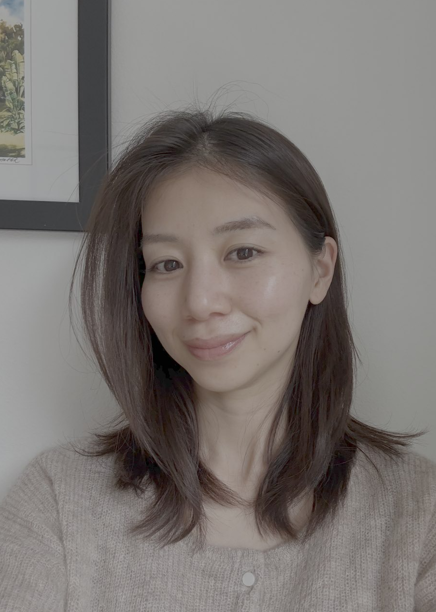
Haruka Furusho, Student
What made you decide to pursue a MS in Community Health and Social Justice?
I’ve been interested in immigrant health since living in Japan, and that passion only grew after I moved to the U.S. and became an immigrant myself. I experienced many challenges because of language barriers and unfamiliar systems. Those experiences motivated me to support others facing the same challenges, and this program felt like the perfect place to learn how to do that through a community centered lens.
How do you plan to use your degree?
I hope to contribute to immigrant communities—especially Japanese and broader Asian communities who are often overlooked. My goal is to help close the gaps in care and access that these populations face.
What was your favorite part about the program?
I love that this program gives you the opportunity to learn a wide range of skills and perspectives that promote social justice—from communication and education to research and advocacy, and the ways these pieces work together. As you learn, you get to explore your own interests, which naturally leads to a more refined capstone project and helps shape the direction you want to pursue after graduation.
What advice do you have for incoming students?
Take the leap of faith and do not listen to your imposter syndrome. You are meant to be here, and your voice is a necessary contribution to the conversations happening about health disparities and injustices faced by different communities here and across the globe.
Updated April 2026