Inside the UW Bothell MBA’s global approach to experiential learning
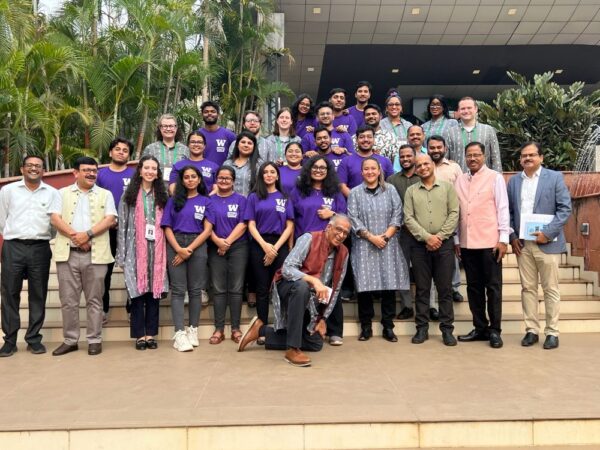
UW Bothell’s Global Study Tour brought MBA students and faculty to India for a 10-day immersion in global business practice. Through the School of Business’s ongoing partnership with the Kalinga School of Management (KSOM) at Kalinga Institute of Industrial Technology (KIIT), MBA students collaborated with international peers and delivered consulting recommendations to Aarti Steel, a fully integrated steel manufacturer.
For the UW Bothell School of Business, the Global Study Tour is more than an international trip. The tour combines academic credit with an active business challenge. Students work with international peers to develop practical, culturally informed recommendations for a client organization.
“This program gives students an immersive way to apply business knowledge across cultures,” Dean Sophie Leroy said. “They partner with students from local universities to form global teams and to work on real consulting projects with nearby businesses. That combination of cross-cultural collaboration and hands-on experience is unique in business education.”
A partnership years in the making
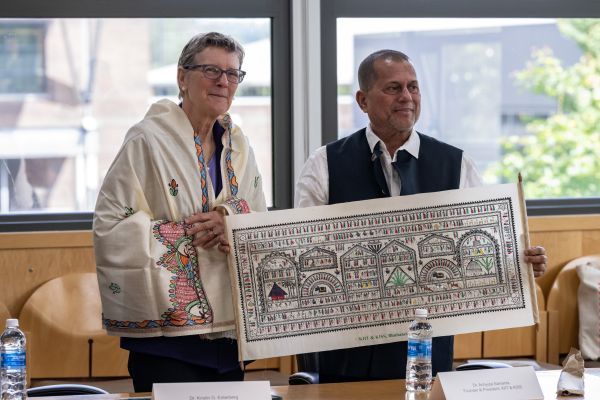
The relationship began when Indian Consul General Paraksh Gupta invited KIIT Founder and President Dr. Achyuta Samanta to Seattle. Samanta and UW Bothell Chancellor Kristin G. Esterberg later signed a formal partnership agreement, establishing the collaboration that supports the tour.
The Global Study Tour combines client engagement, international collaboration and co-teaching. Students enroll in a winter quarter course, complete pre‑departure research and then travel over spring break to work alongside KSOM MBA students on a consulting project.
“Students from both institutions jointly participate in a consulting project for a company located there,” part-time lecturer Dr. Akhtar Badshah said.
Inside the Aarti Steel consulting project
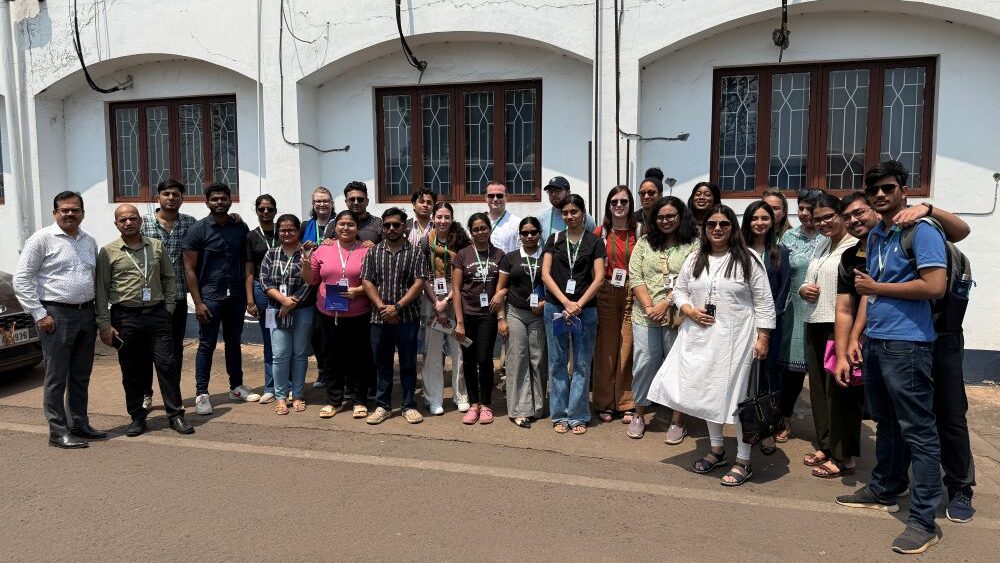
Long before arriving in India, students conducted industry research, analyzed comparable steel manufacturers and prepared interview questions for plant leadership and workers. Faculty guided students as they translated classroom concepts into questions, analysis and recommendations for Aarti Steel.
Students arrived in Bhubaneswar, India, to begin their consulting project alongside the KSOM students. They worked in two groups: one focused on using technology to improve production, and the other on strengthening workplace safety.
The technology group benchmarked Aarti Steel against global competitors and identified opportunities to improve capacity. The workplace-safety group examined ways to improve safety, communication and workplace practices.
Students also toured the steel plant, where they observed how operating conditions and workforce practices shape business decisions.
“I really liked touring the steel factory,” Andrea Kunz, UW Bothell MBA student and registered nurse at the U.S. Department of Veterans Affairs, said. “That’s something that I feel like you wouldn’t see here or maybe just not have the opportunity to see it.”
Dan Jacobsen, a UW Bothell MBA student and senior principal scientist at Pfizer, described Aarti Steel as smaller and more specialized than many global steel manufacturers. Its products are used primarily in automotive manufacturing, he said.
“This program gives students an immersive way to apply business knowledge across cultures.”
Dean Sophie Leroy
Corwin Dewey-Smith, a UW Bothell MBA student and head of sales at The Tea Heaven, emphasized the company’s openness.
“We got to ask questions of floor workers, managers, everybody,” Dewey-Smith said. “About every part of the process.”
That access gave students a fuller understanding of how decisions move through an organization from the production floor to management.
The technology-for-production group presented ideas for an enterprise resource planning (ERP) system to track and organize all levels of production and improve operational visibility.
The safety-focused group proposed practical, human-centered improvements: hydration stations, universal safety signage and shift-change safety check-ins.
“It was focused on the human aspect of the workers and how to increase productivity without decreasing safety,” Jacobsen said.
After four days of eight- to 10-hour workdays, both teams presented their findings to Aarti Steel executives and UW Bothell and KSOM faculty. The client appreciated the depth of insight students developed in such a short time and the practicality of their recommendations.
Cross-cultural collaboration and global perspective
Global business expertise requires more than knowledge of international markets. It also requires the ability to listen across differences, adapt communication styles and recognize how culture and context influence organizational decisions.
“What made the program special was the opportunity for students from different countries and backgrounds to work together as one team.”
Dr. Saroj Kumar Routray, professor and program coordinator at KSOM
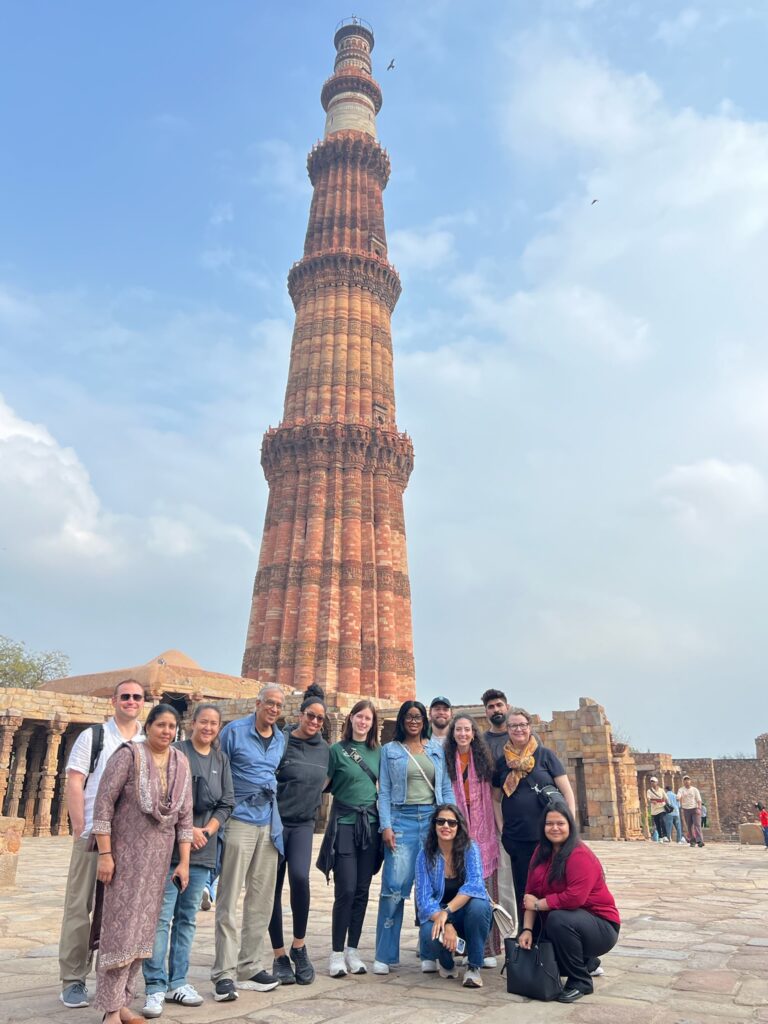
Time in Delhi and Bhubaneswar, including at KIIT, gave students a deeper understanding of the cultural and institutional context surrounding their consulting work. Working closely with KSOM students made those lessons immediate and practical.
“I think it’s just important for people to get different perspectives like that,” Dewey-Smith said. “And then it’s not just that, but then working with them as well, learning how they work, learning how they communicate.”
Dr. Saroj Kumar Routray, professor and program coordinator at KSOM, described the benefits for students at both institutions.
“What made the program special was the opportunity for students from different countries and backgrounds to work together as one team,” Routray said. “The UW Bothell students gained valuable insights into Indian industry and business practices, while KSOM students benefited from working closely with their international counterparts and understanding global perspectives.”