Beyond service: veterans grow, lead and contribute at UW Bothell
For Ben Studley and Will Graves, military service continues to shape how they learn, lead and support others.
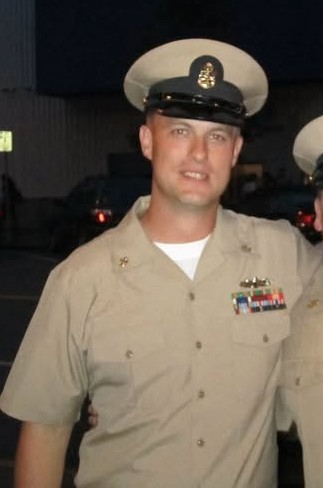
Military service does not end when a uniform is put away. For many veterans, it continues to influence how they solve problems, understand leadership and contribute to the communities around them. At the UW Bothell School of Business, Ben Studley and Will Graves found ways to connect their military experiences with a new stage of professional and personal growth.
Their paths are different. Studley spent nearly 16 years in the United States Navy, serving aboard three naval ships and deploying in support of Operation Iraqi Freedom, Operation Enduring Freedom and other overseas operations. Graves enlisted in 2008 as an aviation electronics technician and served in an expeditionary air squadron supporting special operations teams in conflict zones. His military career ended in 2011 with a medical discharge, after one overseas deployment.
Yet both veterans describe education at UW Bothell as an important bridge between the lessons of military service and the challenges of civilian leadership.
UW Bothell helps veterans build on the skills they developed in service, grow their careers after the military and find new ways to contribute as leaders and members of the community.
Studley pursued the School of Business MBA program after years of leading and developing younger sailors. As a chief petty officer, he took pride in helping others grow throughout their careers. That commitment remains central to how he approaches leadership today.

“The MBA program gave me an opportunity to look at leadership and organizational challenges from a different perspective,” Studley said. His professional experience was rooted in public service, where he helped people work through complex challenges. The MBA program helped him connect that experience to business concepts, organizational strategy and new ways of thinking about leadership.
Studley especially valued the cohort model. Learning alongside classmates with different professional and personal backgrounds challenged him to consider problems from multiple perspectives and reinforced the importance of bringing varied voices to the table. The smaller learning environment also made it possible to build meaningful relationships with faculty and classmates.
That sense of connection extended beyond the classroom. As a Vet Corps Navigator at UW Bothell, Studley worked with student veterans navigating the transition from military service to civilian life and higher education. He describes that transition as one of the most challenging changes a person can experience.
“UW Bothell was a place where I could unpack my own transitional issues, while also realizing I could still lead without my uniform,” Studley said. “That experience deepened my commitment to ensuring veterans have the resources and support they need to succeed.”
His military background continues to shape his understanding of education and public service. “I have always viewed education and public service as extensions of my military service,” he said. “My mission to serve others and make a difference has never changed.”
For Graves, the connection between military experience and education took shape through the Leadership MBA program. After completing an undergraduate degree in business at UW Bothell and gaining additional work experience, he returned to the School of Business because of its focus on leadership. His military training and professional experience had shown him that graduate education could be both attainable and practical.
During the program, Graves connected classroom concepts to situations from his military and private-sector experience. He used the process to examine his strengths and identify areas where he could continue to grow as a leader.
Many of the skills and perspectives veterans bring from military experience are lacking in the corporate world, and we have a special duty to model those behaviors.
Will Graves, Leadership MBA alum
“The combination of my noncommissioned officer leadership experience and the LMBA was a powerful combination that significantly advanced my career,” Graves said. The degree helped open the door to Amazon’s Pathways Program after graduation, creating an opportunity to apply his developing leadership model in a new professional environment.
At Amazon, Graves synthesized his military training, education and work experience into a personal approach to leadership that plays to his strengths and feels authentic. He continues to apply those principles in his personal life and family, grounded in the belief that continuous improvement and honest introspection are essential to growth.
“The holistic combination of military experience and graduate-level education is a truly powerful combination,” Graves said. “Many of the skills and perspectives veterans bring from military experience are lacking in the corporate world, and we have a special duty to model those behaviors.”
Studley and Graves represent two of the many ways veterans contribute to the UW Bothell School of Business. Some veterans continue serving in public-sector roles. Others move into private industry, support fellow veterans, pursue additional education or bring their experience into classrooms and mentoring relationships. For many veterans, the School of Business is also a place to grow professionally after military service and apply their experience in new ways.
Their stories also demonstrate how learning works in both directions. Military service gave Studley and Graves experience in accountability, teamwork, problem-solving and leadership under pressure. UW Bothell gave them a setting to examine those experiences, challenge their assumptions and translate them into new professional contexts.
The result is more than a degree. It is a community where veterans can continue to lead while learning from others, and where their presence strengthens the learning experience for everyone around them.