Transportation & Commuting
UW Bothell will promote and advocate for practical and sustainable transportation solutions to improve commutes to and from campus, support participation in campus life, and reduce transportation emissions.
Goals
- Improve parking access and affordability on an ongoing basis.
- Reduce SOV rate by 10% by 2036.
- Improve micromobility availability and support by 2034.
- Continue to electrify fleet and support commuters’ transition to electric vehicles.
- Promote tools and best practices to reduce air travel by 2029.
Equity and Resilience Connection
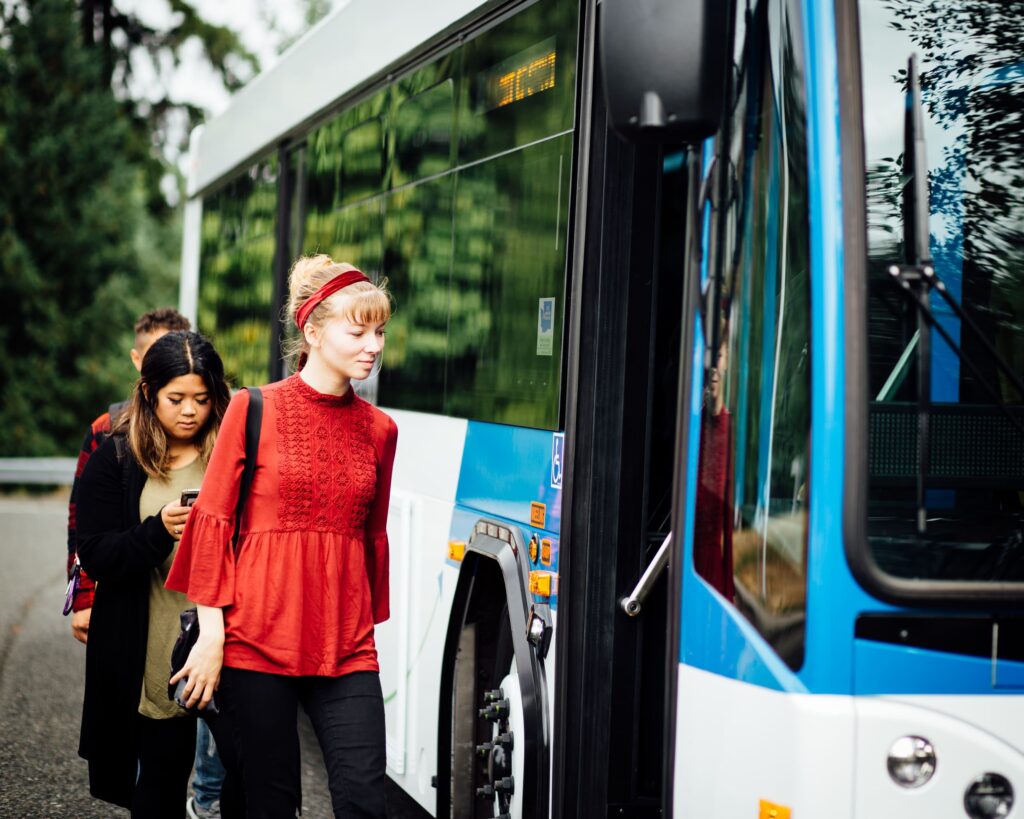
Students and employees get to campus through a mix of transportation modes from King County, Snohomish County, and beyond. Transportation barriers can limit access to campus, hinder participation in community life, and disrupt academic success. By improving access to and increasing awareness of diverse transportation modes, UW Bothell can reduce inequities that influence who can reliably reach campus so that all can fully participate in campus life.
Alignment
- UW Diversity Blueprint Goal 1
- Washington State Executive Orders 21-04* and 20-01
- Washington State’s goal of net-zero emissions by 2050.
- STARS OP-6: Greenhouse Gas Emissions, OP-13 Vehicle Fleet, OP-14 Commute Modal Split, IL-47: Fleet Sustainability Recognition
*While EO 21-04 directs State executive and cabinet agencies, UW Bothell voluntarily aligns its fleet electrification targets with the order to support statewide climate goals.
Supports Targets
1. Decarbonize campus operations by 2050.
3. Equip all graduates with sustainability skills and knowledge by 2040.