How to land your summer internship — from students who made summer count
With the job market becoming increasingly competitive, the internship recruitment season has become a daunting process for college students. Three students at the School of Business are proving that preparation and persistence can make all the difference.
Build your network early
Networking can sometimes feel like a buzzword rather than actionable steps that help you grow your connections. But building your network is a skill — and like any skill, it can be developed through intentional practice, outreach and curiosity.

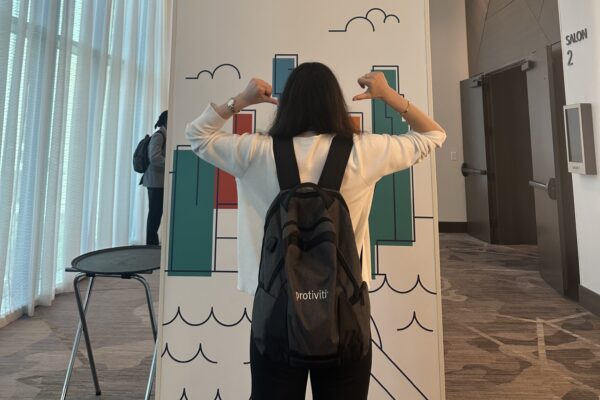
Kaylie Heshmati, senior in Marketing and Technology & Innovation Management, found her summer internship through LinkedIn research. Using different filters on LinkedIn’s job search allowed her to zero-in on roles based on her preferences, whether it be marketing, digital or startup-based project work. This approach helped her discover and secure her Digital Intern role at Protiviti.
“I followed a lot of people who were in ideal positions that I could see myself in the future,” Heshmati said.
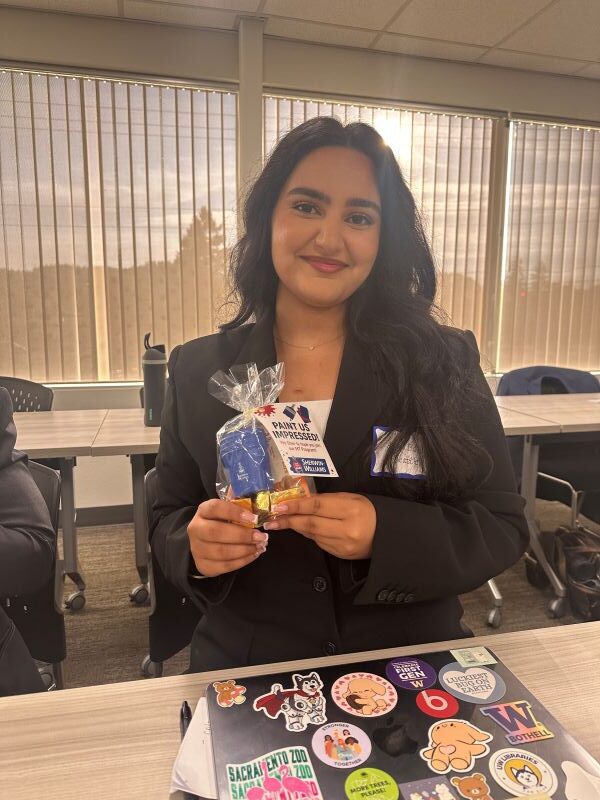
Career fairs serve as an opportunity for students to explore a variety of companies and make meaningful connections. Agam Sidhu, a senior in Marketing and Management Information Systems, attended a UW Bothell career fair and met a recruiter from Sherwin Williams. After chatting during the event, Sidhu sent them a follow up message on LinkedIn to maintain that connection. She later secured a role as Sales & Management Intern at the company.
“Networking is super important, knowing people, being able to put yourself out there and being comfortable with having those conversations,” Sidhu said. “Cold messaging on LinkedIn as well!”
Even after securing her position, Sidhu continued to cultivate her network of professionals through her professors’ contacts. When guest speakers attended courses, Sidhu made an effort to introduce herself and speak with them after class for deeper connection.
Start sooner than you think
Though the recruitment timeline varies per industry, the finance and accounting space, for instance, begins recruiting as early as a year and a half in advance.

“I’m on LinkedIn every day,” said Kaiden Otaguro, a senior in Accounting and Finance who worked as a supply chain intern at Boeing over the summer.
Heshmati used her entire junior year to search for internships, submitting over one hundred applications and juggling an inbox overflowing with responses. She stressed the amount of effort and time it took to land an internship, or even hear back, but starting early assisted with this.
“I was constantly updating my resume, working on my cover letter and applying to as many opportunities as possible,” Heshmati said.
Sidhu began applying for summer 2025 internships in August 2024 after learning that some companies began their recruitment far in advance. Some roles were only open for a few weeks — nearly a year and a half before the position would begin. Starting earlier gave her a head start and access to more opportunities.
Preparing for interviews
While advancing past the application phase is a feat of it’s own, the interview process presents new challenges that students must prepare for.
Otaguro’s participation in the Mentorship EDGE program played a key role in aiding his interview preparation. He met with his mentor to practice small talk and interview questions, helping him eliminate filler words and craft impactful narratives of his experience.
“He helped me create stories that appealed to different questions, leadership and conflict,” Otaguro said, “We tackled different questions, such as behavioral, and helped me have a story already prepped out.”
Others mentioned how they made use of current technology, like AI or social media, to prepare for interviews. Understanding the general cadence of questions helped Sidhu feel more confident entering the next stage of the process. Using resources like YouTube and TikTok helped her recognize interview patterns and anticipate questions. She used this knowledge to prepare examples so she had a bank of experience to draw from.
“They’re going to ask you, tell me a little bit about yourself. Where do you see yourself? What are you planning on doing? Give me a situation where you’ve had to deal with x, y, z,” Sidhu said.
With the rise of AI, many students are turning to chatbots like ChatGPT and Microsoft Copilot as interview resources. Beyond basic tasks like scheduling or drafting emails, AI can become a personalized interview coach to help refine answer quality and boost confidence.
To practice for her interview, Sidhu used AI chatbot Gemini. The repetitive nature of an AI bot helped her refine her tone, timing and delivery before facing recruiters.
“If you give information on what to interview for, it can give you a prompt,” she said. “This helped get the nerves out of the way and allowed me to become more professional in time for the actual interview.”
When coursework and clubs create opportunity
Students noted that their involvement on campus and through coursework played a significant role in shaping the stories discussed in resumes and interviews. Heshmati credited her on-campus job with the Campus Events Board and her participation in the UW Bothell chapter of Women in Business in helping her build resume-ready experiences.
Otaguro credits BBUS 340: Operations & Project Management, especially his final project, for teaching him specific language to utilize in interviews to establish credibility. This industry-specific terminology later came up during his internship at Boeing.
“I used lots of keywords and terms that I learned from that class during my interview. It made it easier to answer some questions,” Otaguro said.
Standing out amongst hundreds of qualified student applications is difficult, but Sidhu found that taking a variety of LinkedIn Learning courses and highlighting it in conversation with recruiters helped create a lasting impression.
“I took a lot of data analytics courses!” Sidhu said. “I think it really sticks out as well when you talk about it with the recruiters. You have to do something a little bit different to stand out from other students.”
Advice and untapped resources
The throughline message from all three students — the impact of connections is immeasurable. They emphasized the value of reaching out to people, professors and even opportunities that seemed out of reach.
“Reach out to ten companies you’d like to work at and ask about how people like the company or role there,” Otaguro said. “It can be anyone, your LinkedIn connections, alumni or simple cold messaging.”
Otaguro noted how he wished he had sought more help from professors as they’re already well-versed in the industry. He further recommended discovery programs — opportunities to explore a variety of roles within one company — as a valuable entry point into competitive fields.
While business internships are competitive and require a lot of commitment in order to land one, Heshmati emphasized balance throughout the process.
“Try not to stress too much — overthinking doesn’t always work in your favor,” Heshmati said.
With peak internship searching season approaching, our students at the School of Business are busy polishing up resumes, portfolios and cover letters. They’re meeting with professors, mentors and maybe even cold messaging on LinkedIn. They’re tapping into every available resource, from career services to AI tools, to prepare for that summer opportunity that will not only grow their skill sets, but contribute to their long-term career success.
There’s no single path to landing a summer internship, but there are consistent habits that can turn application season into a summer well spent.