Spring 2026 Mosaic
Mosaic is a quarterly newsletter published by the School of Interdisciplinary Arts and Sciences.
Reflections from the Dean
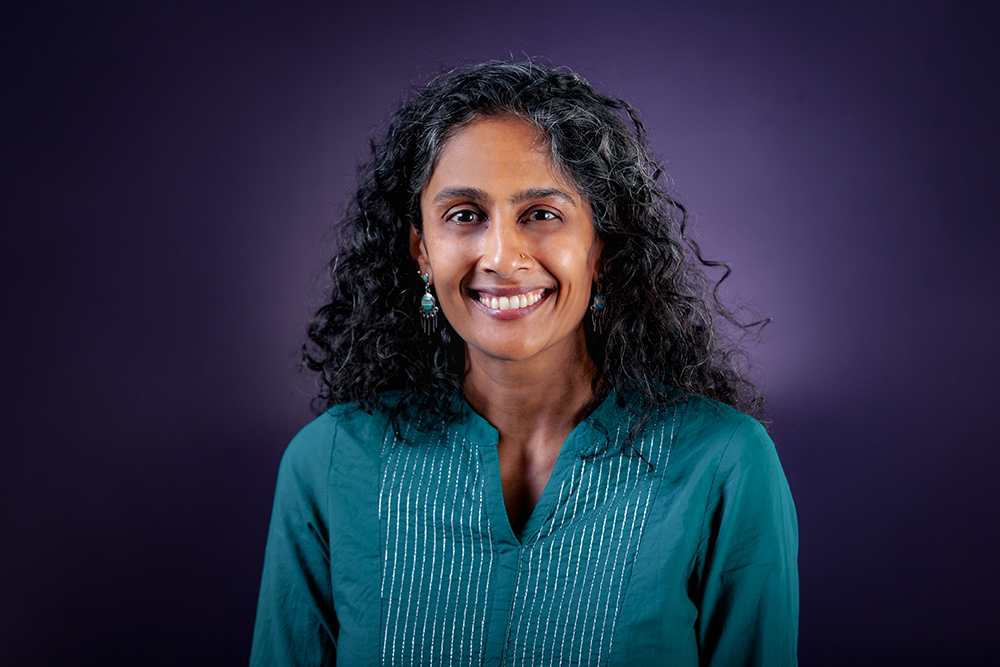
As we approach the close of another academic year and gear up to celebrate our graduating students, I find myself reflecting on what it means to learn and labor together. In a time marked by uncertainty, rapid change, and profound interconnection, I have been repeatedly reminded that the collective work of IAS is not abstract.
We live and practice our commitments to teaching, mentorship, scholarship, and to one another, in classrooms, studios, wetlands, archives, community partnerships, research labs, and public spaces.
Across this issue of Mosaic, we see students and faculty engaging urgent challenges with rigor, creativity, and care: restoring local ecosystems through capstone research, experimenting with new forms of storytelling and artistic expression, advancing conversations around health, technology, justice, and sustainability, and building collaborative relationships that extend well beyond the university itself. What ties these stories together is not a single discipline or method, but a shared commitment to inquiry across difference and complexity.
At IAS, interdisciplinary education is not simply “skill building for employment.” In IAS, we seek to strengthen the resilience of our already capable and adaptable students. By grappling with uncertainty, inconvenient truths, and ongoing social and ecological disruptions, we encourage our students to meaningfully engage in the world: to navigate ambiguity, ask difficult questions, communicate across perspectives, and imagine and enact more just, humane, and sustainable futures.
Graduation marks both a culmination and a beginning. Our students leave IAS carrying knowledge for sure, but also habits of mind that will continue to matter long after commencement: intellectual curiosity, ethical reflection, collaborative problem-solving, and the courage to remain open to learning and transformation.
As higher education is increasingly strained by political polarization, the chilling of academic freedom, austerity measures, and unprecedented AI acceleration, I remain grateful for a community of students, faculty, staff, alumni, and partners who continue to demonstrate the value of public, interdisciplinary education in practice and, in short, a community that celebrates being human.
The stories in this issue offer powerful antidotes to cynicism, and remind us of what becomes possible when we harness creativity, critical inquiry, and community engagement in collective practice, for the common weal.
With gratitude for all that we continue to build together,
Brinda Sarathy
Dean and Professor, School of IAS