Exploring Housing Inequality and Mental Health: A Psychological Perspective by Verisha Bhatti
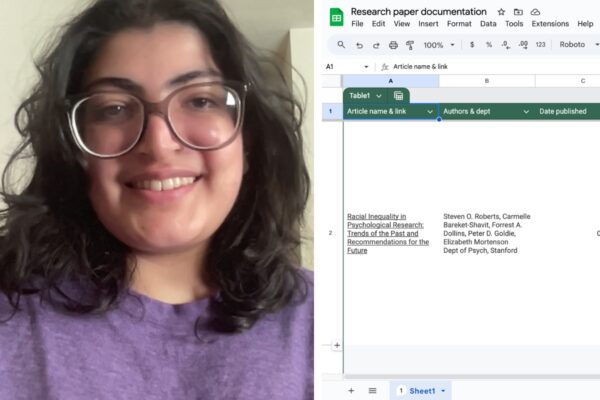
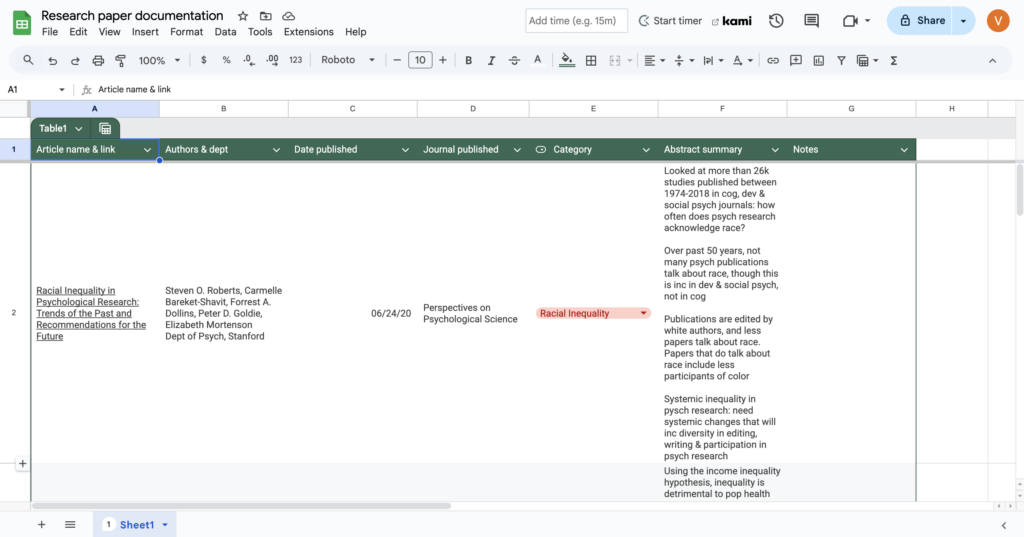
This summer, I did research about inequality, specifically focusing on how the psychology field defines, measures, and examines inequality. I focused on social inequality, studying how different social classes have unique beliefs on income inequality, with Dr. Charlie Collins. Finding different studies in psychological journals helped me understand the wide range of inequalities, how this impacts people, and what solutions we need to solve this.
By the end of summer, my team and I created our research question: How does housing inequality impact our mental health, and what community housing interventions effectively reduce mental health disparities? The end goal of my project is to create a literature review, which is a type of paper that summarizes previous research on a specific topic. We will look at papers from 2009 to 2025, with a focus on adults or families impacted by housing inequality and community housing programs dedicated to improving mental health. This research is important because the psychology field has a research gap in inequality research. Our paper will provide a resource for future researchers to build their knowledge on housing inequality and supporting people experiencing homelessness.
One of the biggest lessons I learned is that the psychology field needs research focusing on interventions dedicated to solving inequality or helping those who are impacted by the inequality. Several of the papers I read over this summer only focused on the inequality itself but did not spend much time explaining how to mitigate the effects of this inequality.
Furthermore, I learned that there is so much more that goes into the research process than you think. I did not foresee it taking the entire quarter for my team and me to come up with a research question. However, this is what makes research so special: every small step is meaningful and is a part of the greater whole, in this case, the literature review paper.
Also, you will always have gaps in your knowledge. This does not mean that you are a “bad” researcher. The most useful skill in research is to be open to learning (and sometimes unlearning) anything.
I did this Summer Research Fellowship along with taking summer courses, which was a significant challenge. I had to develop strong time management skills to ensure that I am giving enough time towards my research while also not having any missing assignments. Some weeks, I spent more time researching, meaning that I had to catch up on my homework over the weekend. This also caused me to experience burnout, and I had to step back from both research and academics for a day.
An important resource to use is your professors. If you plan on taking summer courses along with this fellowship, share this with your professors! They will not only be impressed with your research but may even be open to giving you an extension on assignments (if they allow late work).
Through this experience, I learned how much I enjoyed doing research and learning about other people’s research. My cohort was a great resource, and I loved hearing about their research experiences, which seem so different yet similar to my own. I learned how important research is in our world: to discover solutions, identify problems, raise awareness, and more. There is so much research being done every day with passionate people working to make a difference in our world.
As for my professional path, this research experience led me to take a step back to understand what exactly I want to do after graduating. Before this summer, I was planning on jumping into graduate school immediately after graduating. However, I realized that I want to learn more about what the public health field has to offer. I want to learn more about the population impact of housing inequality and understand what makes a health program effective. Personally, I realized that I love interdisciplinary research. Being in my research group made me realize there are so many connections between the STEM and social sciences fields, especially when looking at the health of people or animals.
One of the skills I gained was communication skills. I am usually a nervous person, especially when talking to professors. However, this fellowship challenged me, as I had to communicate with my mentor to create a mentoring plan, and I learned the important role of a mentee in mentorship.
To those who are starting out, I want you to know that it is not your technical skills that decides if you are “good enough” for research, but your passion for learning and adding knowledge to your field. You are fully capable of being an excellent and impactful researcher, and you deserve to be here. Since this project was my first research experience, I was unsure exactly how to navigate the research environment. This is why I recommend the Office of Connected Learning. This is a great place to talk about your research experience and ask advice from someone outside of your situation. It is okay if you are unsure exactly what you want to do in your field. I suggest looking at research published in your field and finding anything that catches your eye. Remember, the people who wrote papers often have their emails listed, so you can email them any questions you have!
I hope this letter was helpful to understand more about what this fellowship has to offer.
You will do great things here!
Learn more about the Research & Creative Projects for Undergrads at UW Bothell.