Books Beyond Words: Designing Visual Tools for Inclusive Learning by Max Simpson
This summer I devoted my time on a good variety of tasks, all relating to the building of an interactive library for the Collaborative for Socio-Ecological Engagement (CoSEE) under my mentor Maddie Iem, the CoSEE Project Manager. My work first involved researching the values CoSEE sets out to embody in their design work. My research began with reviewing their core values, focusing on family and community, so that these values may be applied later in researching new additions to the library.
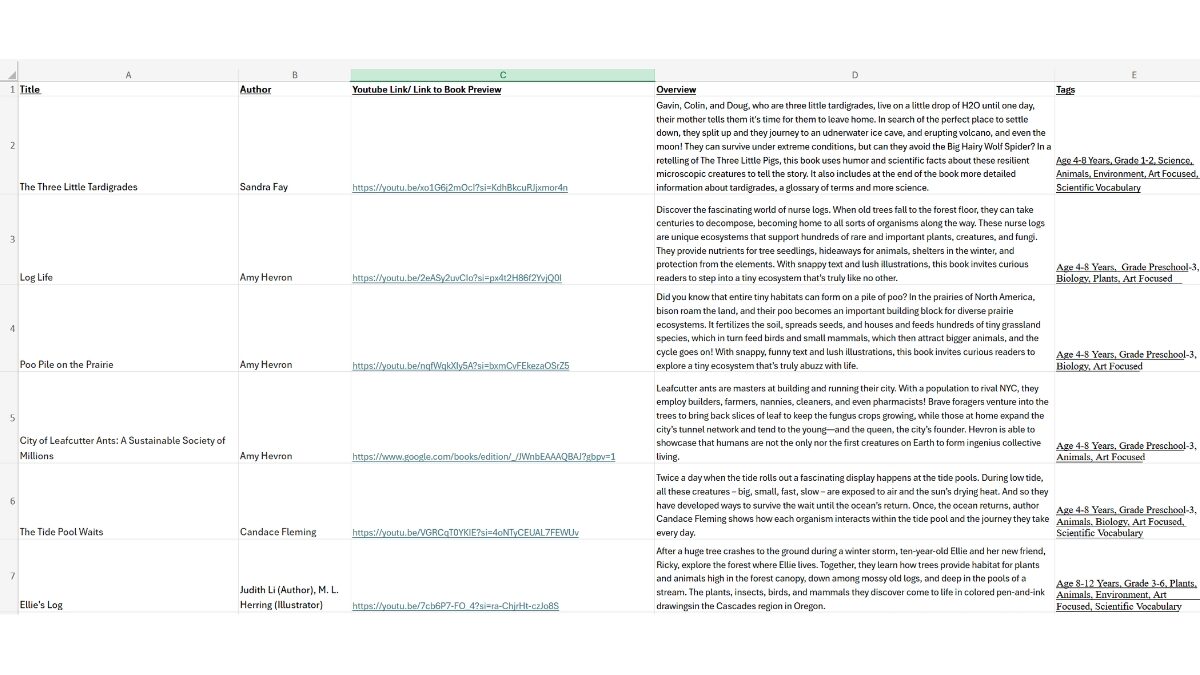
The next big part of my work was pretty team-based with other interns, in researching and figuring out ways to catalogue these books, both online and physically. The process of this work was pretty fun, as I tried to apply the values CoSEE wanted me to apply from earlier, and helped create a set of genres for their books that divided them up into categories anyone could pick and choose from.
The next part of my research was to actually find the new books to add to this library. It was fun looking for new additions, and as someone majoring in Computer Engineering, I tried my best in research to find books that a younger version of myself would want to read, so books focused on computer science. Despite that being my focus, it was a struggle to find books in that vein as I did my work, but I hope as my internship goes on into the end of the summer I’ll be able to find more.
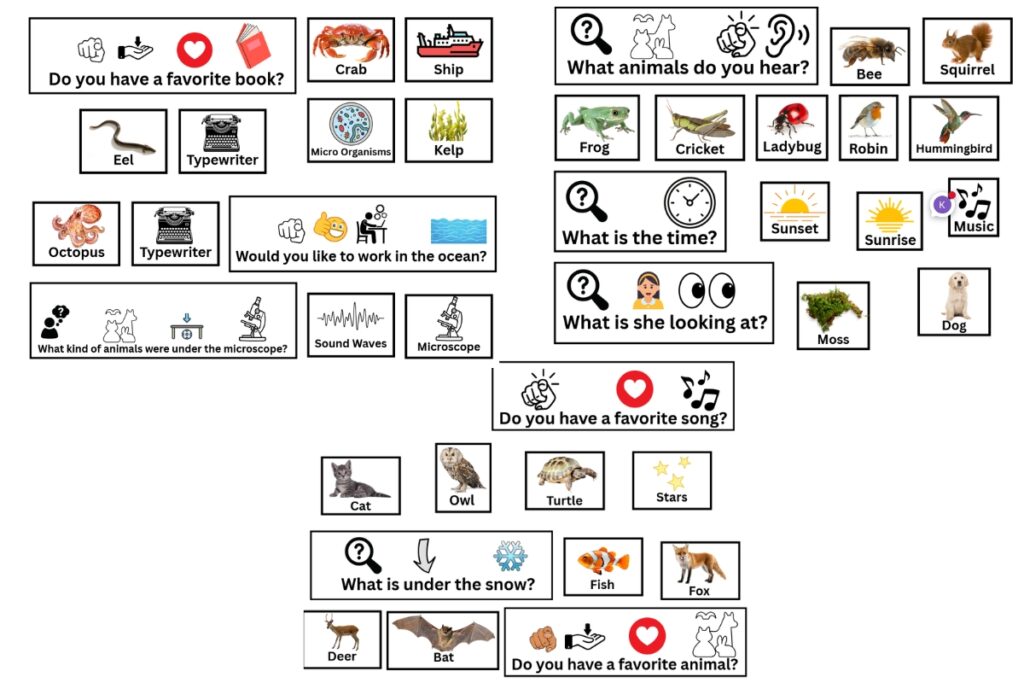
Finally, I am now continuing to research how to create visual boards for these books we have found. By visual boards, I’m referring to an app that allows anyone, primarily non-verbal kids, a way to communicate visually. My work will be applying the key parts and words of our different books to these boards, and creating new functions, or features to add to them. This way I hope to contribute to a growing accessible library that kids of any age, or stage of development, no matter who they are, can read and learn and enjoy a book.
I’ve always been super interested in Computer Science, but one other field I always found equally interesting was Education. Up until college, I was always schooled online. In this online format I learned how hard it was to communicate and teach kids visually with just visual materials, and how scarce it was to find good materials in that manner. I faced the same problems, both in finding quality resources and in organizing them in a way that made their role in a child’s education clear. Through work with my peers and with my mentor, we were able to come up with solutions that both addressed the problems, and taught me how rewarding it can be to participate in the education of others. I don’t know how my future will look one way or another, but I do know, and hope, that no matter where I go I’ll be able to help others learn as well.
Through this whole experience, I learned countless little skills, not even regarding the subject I researched! Working with a mentor, and other interns is a super invaluable experience, and no matter where you’re at in your journey or no matter what it is you want to research, if it’s something you’re passionate about (or even if it’s not!) just try your very best, and work with those around you. Communicate where you’re struggling, and trust the process. Research and projects like this never have a “perfect” or “tidy” timeline. There’ll always be setbacks and challenges, but how you get around them is the real excitement and challenge of this work, and what you learn from surpassing those challenges will be some of the most valuable lessons you can get. It’s an experience I could not recommend more, and if you have even a mild interest in it, you should just go for it!
Learn more about the Research & Creative Projects for Undergrads at UW Bothell.