Wings and Windows: Protecting Birds Through Campus Research by Jahnavi Vibhuthi
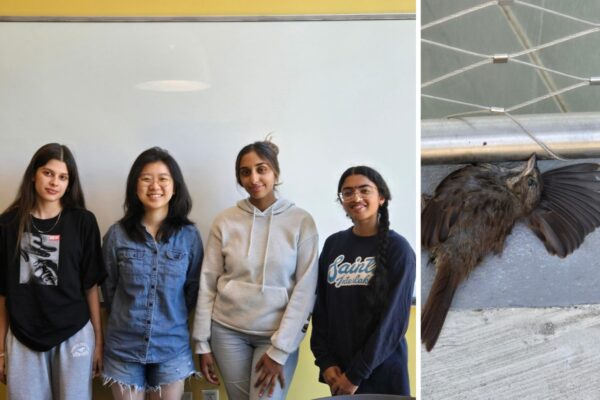
The Bird Window Collision Prevention, lead by Dr. Ursula Valdez and Dr. Jeffrey Jensen, project aims to determine whether campus windows are bird-friendly by assessing the frequency and locations of bird-window collisions. I became involved with this project because I always wanted to do something impactful on campus. When I got an opportunity to participate through the Biology club, I filled out the application. I love nature, and it’s really sad to see birds or any other creatures dying. My team noticed some dead birds near the windows, so we wanted to see if that was consistent, and see if we could add stickers to break up the reflection, so the birds could identify it was a window and don’t try to fly through.
Focused research questions are “What is the number of bird collisions with windows on the UW Bothell campus?”, “Are there any locations where strikes are most prevalent?”, and “What trends in numbers change as seasons change?”. Our team has come up with a protocol to survey the Library, UW1, Innovation Hall, and the ARC. We spent a few hours surveying the campus buildings, collecting the bird type, location, weather, window type, time, and other data wherever we found a fallen bird. We plan to continue this for the next few months until we have sufficient data. Our main long-term goal is to convince UW Bothell to use bird-friendly stickers on windows. We hope to reduce bird collisions on campus over time.
I took an Ecology class at St. Edward Park, but working in the field for research is definitely a challenge and a new experience. I started to know more bird types as I worked on this project. I learned how to organize and record data for every bird we saw. The advice I would give to other UW Bothell undergraduate researchers is to make sure to communicate their goals for the research project early and set up frequent times to meet with their mentors and team members. Take notes of all your research, as it is very important to analyze the project when you have to come to a conclusion. These are crucial to working on a project together and to recognize progress.
Initially, there were some challenges we faced as a group. We did not know where to start. Our mentors were busy with other commitments, so it was hard to figure out what to do to move forward. But we eventually had an opportunity to meet our mentor and come up with a plan, and everything fell into place. Thus, I realized how important it is to communicate with your mentors and group members to work on a project. Finding time to meet was difficult as we did not see each other in class.
I remember there was a research workshop about Active Listening and Communication. I thought I was a good listener because my friends and family said so, but after that workshop, I learned that there were some things I could fix about my listening and communication skills. For example, while listening to someone’s story, I say “okay,” “yeah,” and such. But I should keep in mind what the other person expects from us while listening. I plan to work in healthcare, so this skill is essential for me to take forward. I really enjoyed the workshops and my research project this summer, and learned a lot. These experiences will continue to shape my growth as a researcher and future healthcare professional, inspiring me to make a lasting, positive impact in my community.
Learn more about the Research & Creative Projects for Undergrads at UW Bothell.