Finding My Path in Stem Cell Research by Davis Liu
Dear future researchers,
For 11 weeks last summer, I spent my time exploring research at the Institute of Stem Cell and Regenerative Medicine (ISCRM). I had matched into Dr. Marcinek’s lab, studying aging and its effect on mitochondria. Growing up in my parents’ acupuncture clinic, I found an interest in both nerves and muscles of those who sought treatment. Many patients would come in with pain associated with aged muscle. This made me fascinated by the changes that occurred as people aged.
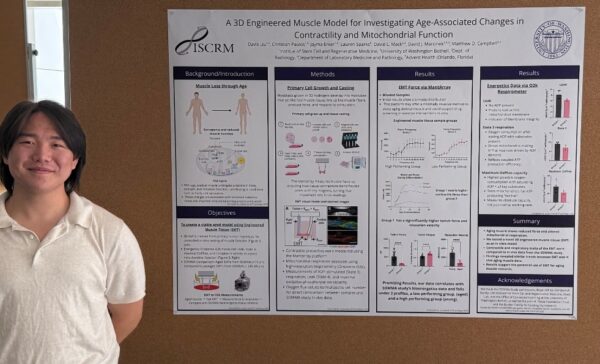
In my project, I grew primary human skeletal muscle cells and cast them into an engineered muscle tissue. Using this engineered muscle tissue, we tested contractile strength through electrical stimulation and compare young and aged skeletal muscle cells. The Study of Muscle Mobility and Aging (SOMMA) kindly sent us 20 human skeletal muscle samples for our blinded study. By comparing our results of muscle strength and cell energetics, we could determine the reliability of our engineered muscle model.
It was a great learning experience when our new tissues began to break apart after casting. After spending many weeks of effort growing these cells, seeing them break apart and become unusable was frustrating. We stopped plating new cells and focused our efforts on finding the issue with our procedure. After narrowing it down, we replaced the casting stocks, and our new tissue has no problems. I really enjoyed getting creative in finding solutions for procedures. Though frustrating, problems often occur, wasting both time and lab resources. It is normal for things to go wrong.
Starting research, one piece of advice I always got was to ask many questions. Whether it’s something you think you should already know or just a curiosity, asking questions helps you not only make sure what you are doing is correct, but also to understand how something works or why it’s being done.
The most important thing in lab-based research is to find the right lab. The type of research you do should align with what you are interested in, whether that’s the overall topic or a specific procedure using a piece of equipment. Finding something you’re passionate about will motivate you to perform at your best. The people in your lab also contribute to your success, as finding a good mentor who is willing to teach you everything you need to know is essential. To get a good grasp of what a lab does specifically and if it suits you, read research published previously, and meet with members to see who may be looking for an undergraduate.
Finally, you’re meant to be where you are. The road you took to reach where you are looks different for everybody, and helps provide creativity and diversity to the area you’re researching. My experience at the ISCRM showed me that research looks different for everyone, and with curiosity, resilience, and mentorship, research can be both meaningful and rewarding.
Learn more about the Research & Creative Projects for Undergrads and at UW Bothell.