CoSEE: Research as participation
CoSEE’s mission is not only to conduct research about socio-ecological systems, but to ask a more fundamental question: What does it mean to build a research center for change, and who gets to participate in creating the knowledge that change requires?
Traditional university research centers often organize research around faculty expertise, graduate training, and scholarly production. At CoSEE, we are working toward a different model. We understand research as a form of participation: a way of observing our shared environments, asking questions about the systems that shape our lives, making sense of evidence, and imagining and testing possibilities for more just and sustainable futures. These practices should not belong only to people with advanced degrees. The work of understanding and transforming socio-ecological systems requires many forms of knowledge, experience, expertise, and relationship-building.
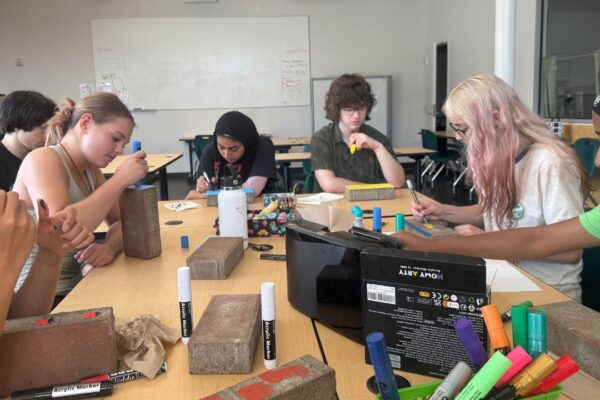
For this reason, undergraduate and community participation in research is not an extension of CoSEE’s mission; it is central to it. Our programs and organizational structures are intentionally designed to broaden opportunities for participation in learning, inquiry, and knowledge creation. Undergraduate students work alongside faculty, environmental professionals, community organizations, schools, municipalities, and residents as researchers and contributors to knowledge production. They collect and interpret data, use state-of-the-art research tools, investigate questions emerging from community priorities, communicate findings publicly, and develop projects intended to have tangible consequences for the places and communities with which we work.
Community members and partners are similarly understood not simply as audiences for university research or sites from which data are collected, but as collaborators whose knowledge, questions, histories, observations, and priorities help shape the research itself. Place-based environmental challenges are embedded within lived social and ecological systems. Understanding issues such as habitat connectivity, restoration, environmental accessibility, climate resilience, and environmental justice therefore requires knowledge that exists both within and beyond the university.
This is often where the most interesting questions emerge. When one of our undergraduate interns set out to remove invasive blackberry, the questions that shaped the work did not come only from the scientific literature. They also came from park visitors who stopped to talk, whose strong feelings about the plant pushed the research toward a more nuanced understanding of what “invasive” really means and how we talk about it. Knowledge, in this case, lived as much on the trail as in the university setting.
This approach also reflects our commitment to undergraduate education. Research participation can profoundly shape how students understand themselves and what they believe they are capable of contributing. Rather than waiting until graduate school to be invited into consequential intellectual work, CoSEE undergraduates encounter research as something they can do, shape, lead, and use in service of their communities. Students develop technical and disciplinary expertise while also learning how to collaborate across differences, work in partnership, communicate knowledge to multiple audiences, and understand the ethical and social dimensions of environmental decision-making.
Community partners play a central role in this work as well. Rather than serving only as audiences for university research or locations where data are gathered, they help shape the questions we ask and the directions our work takes. Stronger research emerges when multiple forms of knowledge come together, particularly when addressing complex challenges that cannot be understood from any single perspective.
Ultimately, CoSEE treats the co-construction of knowledge as a shared endeavor. Creating more sustainable, resilient, and just socio-ecological systems requires collaboration across communities, institutions, and sectors. By bringing undergraduates, faculty, educators, community members, agencies, and organizations into meaningful research partnerships, CoSEE is working toward a model of research in which participation is not only a means of generating knowledge, but also part of building the conditions for socio-ecological thriving.