Finn Hill middle schoolers tackle invasive blackberry at Saint Edward State Park
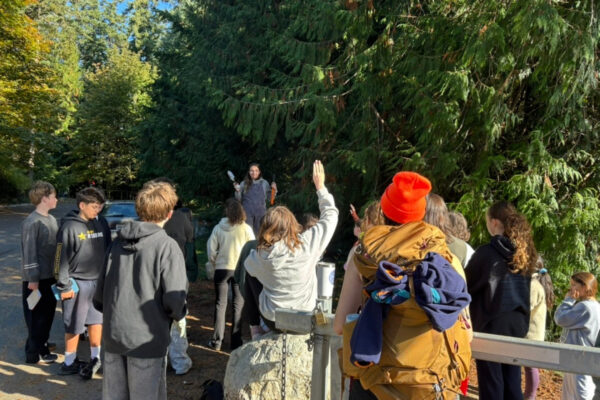
This week, students from the Finn Hill Middle School Environmental Adventure School returned to Saint Edward State Park to get their hands dirty, literally. Over three days, they took on some of the park’s most persistent invasive species: Himalayan blackberry, cutleaf blackberry, and English ivy.
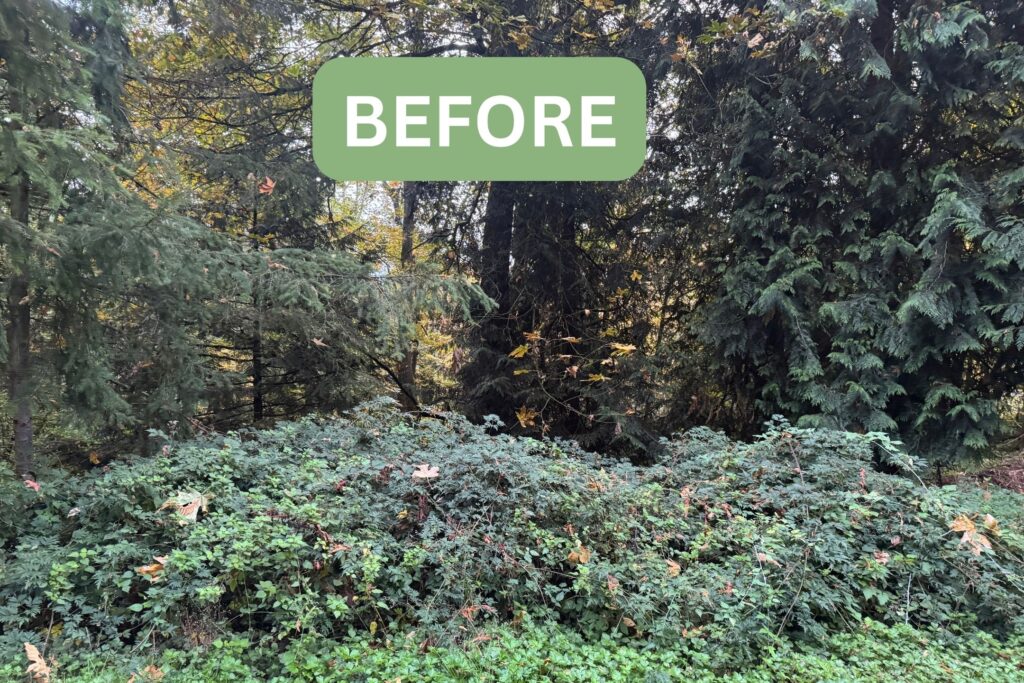
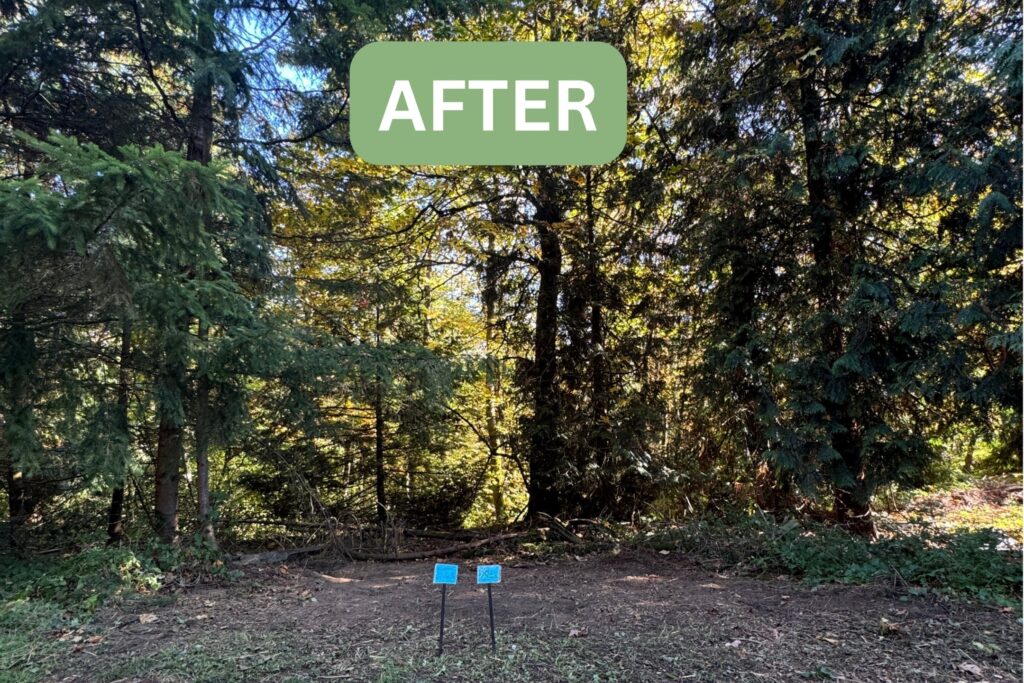
It was the third time students from the program have partnered with CoSEE. This visit was part of their Community Service Project (CSP), which connects students with local organizations and gives them the opportunity to contribute to real work in the field. At Saint Edward State Park, that meant rolling up their sleeves and joining CoSEE staff in ongoing restoration efforts.
As Ms. Holck, the students’ teacher, expressed, “Our students worked hard at Saint Edwards Park to remove invasive Himalayan blackberries and English ivy, and they did so with care and curiosity,” in which by focusing “on stewardship and service in the park, helping students understand that caring for a place takes both action and learning”.
Teamwork in the thicket
Blackberry doesn’t come out easily. Students quickly discovered that successful removal takes more than brute force. It requires strategy, the right tools, and plenty of teamwork.
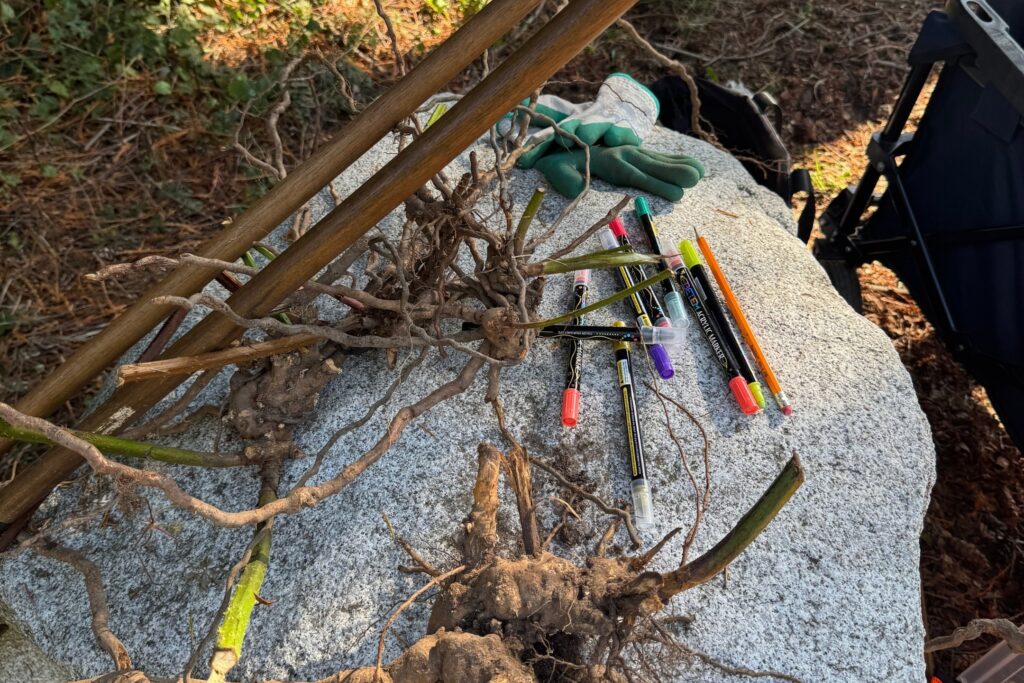
Working in groups, students problem-solved their way through dense thickets, experimented with different tools, and learned how to remove the tangled root crowns that allow blackberry to return if even part of the root system remains.
That challenge quickly became a point of pride. Students compared the size of the root balls they uncovered and the length of the roots they pulled from the soil, turning one of the hardest parts of the work into one of the most satisfying.
Why this work matters
While Himalayan and cutleaf blackberry can provide a welcome summertime snack, they also pose significant challenges for local ecosystems. These invasive species grow rapidly and form dense thickets that crowd out native plants, limiting access to sunlight, water, and nutrients. Left unchecked, blackberry can reduce habitat diversity, impede wildlife movement, and suppress the smaller plants that help sustain a healthy forest.
Removing blackberry creates space for native species to return and supports the long-term health of the ecosystem.
The students’ experience extended beyond plant removal. Throughout the project, they explored how plants, animals, and people are interconnected, and how humans are part of the ecosystems they inhabit. Together, they reflected on what it means to care for a place and support the native species that call it home.
They also wrestled with a more nuanced question: how should we think about invasive species? Blackberry is not harmful by intention. It is simply thriving in conditions where it now outcompetes many native plants. The challenge lies not in the plant itself, but in the ecological imbalance it creates. Students discussed how many invasive species arrived through human activity and considered the role people play in shaping ecosystems, for better and for worse. Further summarized by one of EAS’s students, Nouriyah stated, “Invasives aren’t evil they are just the right plant in the wrong place”. It was exciting to watch students engage thoughtfully with the complexity of environmental stewardship.
A lasting mark
The next time you visit Saint Edward State Park, keep an eye out for a pair of hand-drawn signs marking the areas where these students worked. They are a small reminder of a meaningful contribution.
As Giselle, one of the EAS students, stated, “This was such a fun experience getting rid of invasives and helping out the ecosystem at this park despite getting caught in thorns from those blackberry bushes. I hope our work will benefit from this place. We really did our best!”
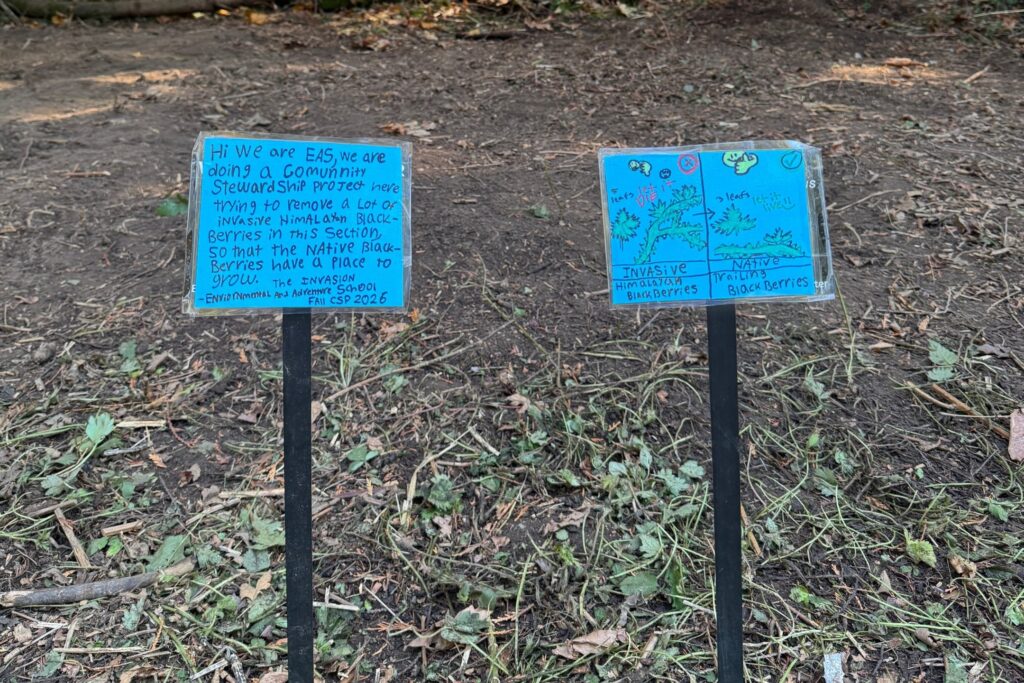
We are grateful to the students of Finn Hill Middle School’s Environmental Adventure School for their time, energy, and hard work. Restoration is often slow and physically demanding, and this group met the challenge with curiosity, determination, and care for the places they helped restore.