Wildlife in Your Neighborhood: Discovering the clues animals leave behind
Reading the signs
You don’t always have to see wildlife to know it’s there. A print pressed into the mud, a feather caught on a branch, a scratch along a log. Parks are full of clues like these, if you know how to look for them.
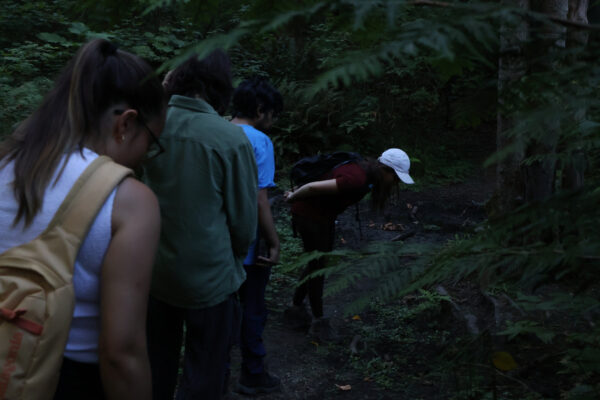
That was the idea behind Wildlife in Your Neighborhood, an evening walk through Saint Edward State Park on Aug. 20, 2026. CoSEE intern Ash Putzke, a double major in Earth System Sciences and Biology at UW Bothell, guided participants through the park in search of signs left behind by animals, including tracks, feathers, scat and feeding marks.
The premise was simple: owls, raccoons, deer and other wildlife move through our neighborhoods every day, often without being noticed. Ash wanted to give people a new way to experience the outdoors. Their work with Dr. David Stokes has focused on wildlife research and habitat connectivity, making wildlife tracking a natural topic to share with the community.
“What I wanted to do was share with people a new way to enjoy and look at the outdoors,” Ash said.
Paying closer attention to signs of wildlife, they added, changed the way they experienced local parks and forests. They hoped others would leave with that same perspective.
No animals appeared during the walk itself, but that wasn’t unusual. Wildlife cameras stationed throughout the park have captured everything from owls to bobcats, a reminder that much of the park’s activity happens out of sight.
A night of exploring and curiosity
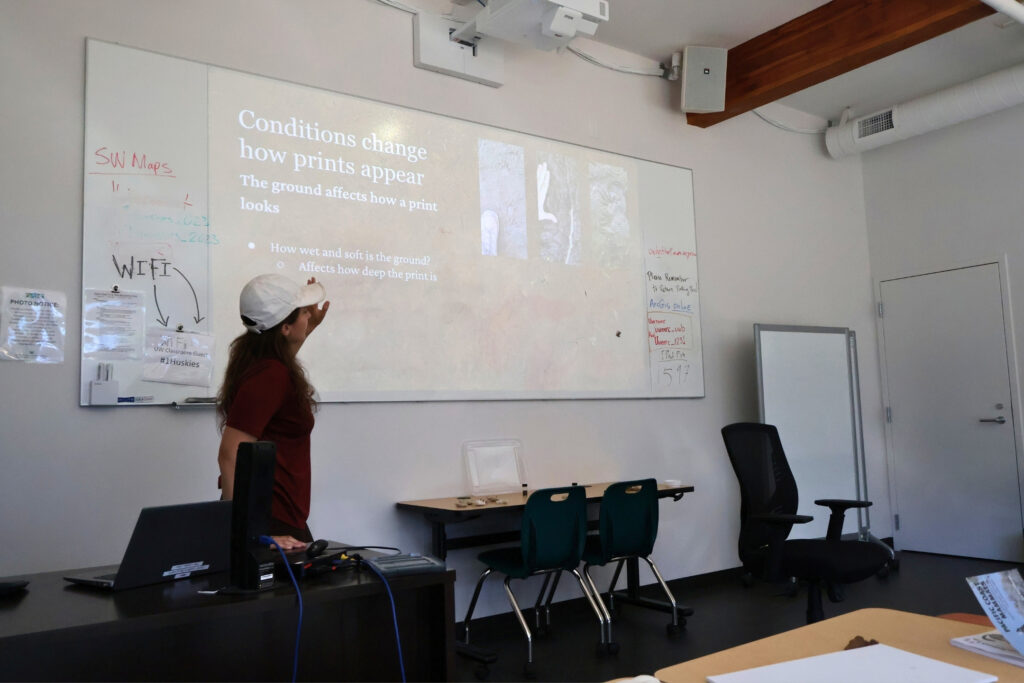
Ash opened the evening with a discussion about Saint Edward State Park and the wildlife that lives there. Rather than presenting a list of animals, they invited participants to consider an open question: Who lives here?
From there, the group learned how trackers and researchers look for evidence of animal activity. Ash introduced different types of clues, including tracks, scat, feathers and feeding marks, and explained how each can help tell a story about the animals moving through an area.
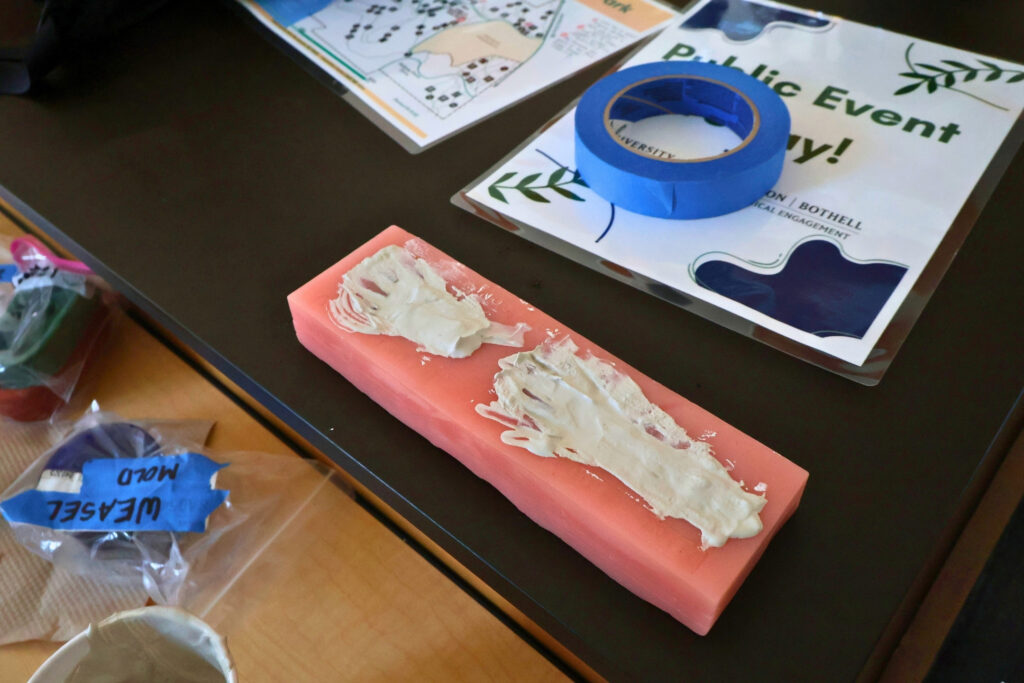
The lesson quickly became hands-on. Participants examined model animal paws and replica scat from species found in the park, using their new skills to identify which animals might have left them behind. They also experimented with making tracks of their own, pressing model paws into different materials including mud, sand, dirt, dust and even Styrofoam “snow” to see how the same paw can leave different-looking prints depending on the surface.
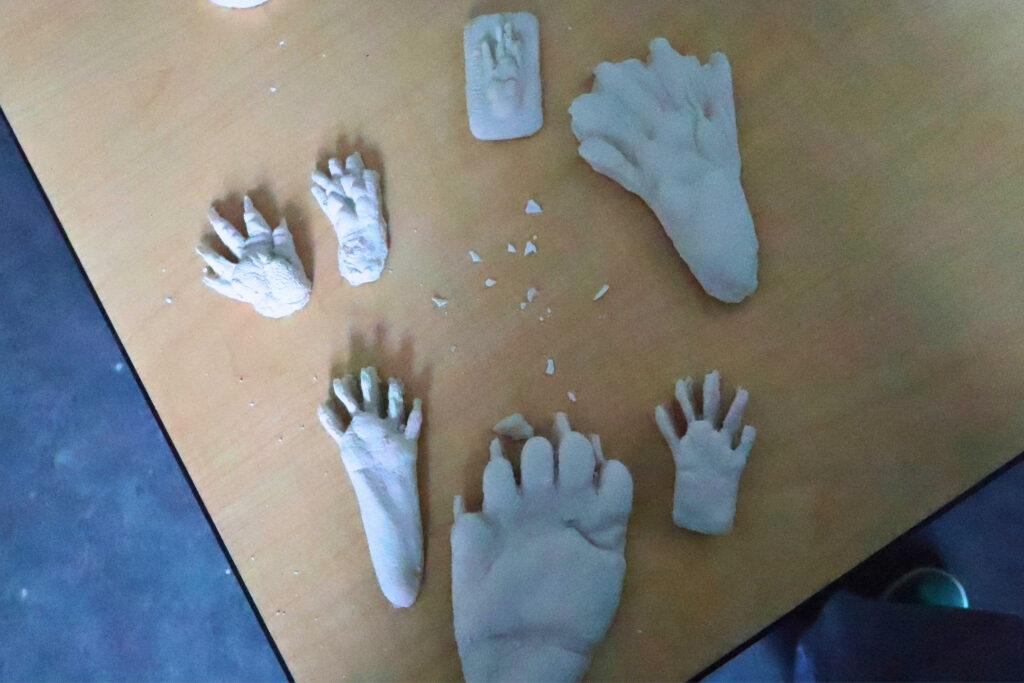
Participants then created plaster casts from tracks they had made or from prepared molds. While the casts hardened, the group headed out into the park to put their new knowledge to use.
Getting excited about animal prints
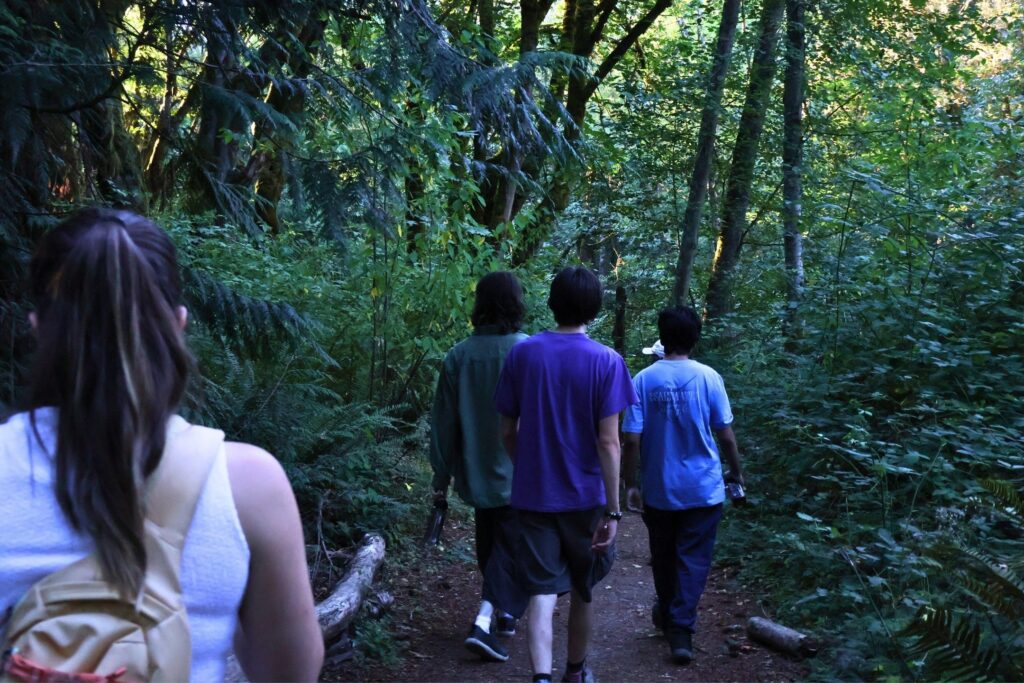
Armed with a better understanding of what to look for, the group set off along the Arrowhead Trail in search of evidence left behind by wildlife.
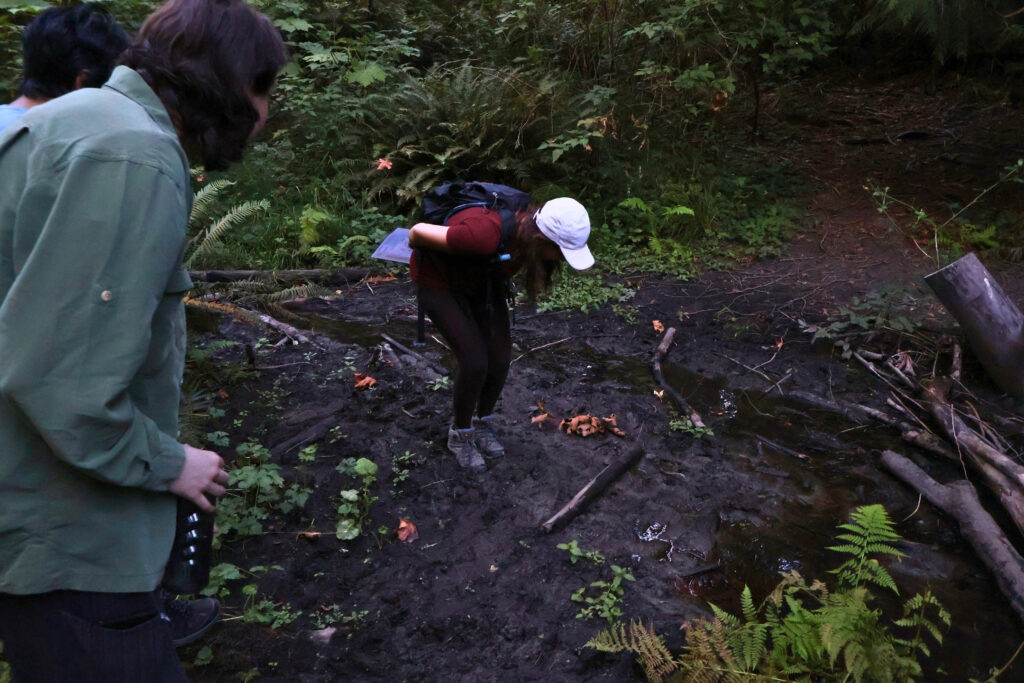
“We went to several mud pits in the park. It hadn’t rained in a while, but we still managed to find raccoon and deer prints out in the park on our last little bit there,” Ash said.
Participants also found coyote tracks and feathers along the trail, comparing what they discovered to the examples they had examined earlier in the evening. The walk became an opportunity to test their new skills and see how animal signs appear in real-world conditions.
For Ash, the most rewarding part of the evening was watching participants start to apply what they had learned.
“Seeing people’s enthusiasm is always my favorite part,” Ash said. “They’re really determined to identify the prints correctly.”
Some discoveries surprised people. Raccoon tracks can look remarkably like tiny human hands, while cat tracks typically leave no claw marks at all. Details that are easy to overlook quickly became points of discussion as participants compared clues and debated which animals had passed through the area.
After returning from the walk, participants collected their finished plaster casts to take home. Each cast served as both a keepsake and a reminder of the skills they had practiced throughout the evening.
What people carry home
Through studying wildlife tracks and leading programs like this one, Ash has developed a deeper appreciation for the animals that share local parks and forests. They hope events like Wildlife in Your Neighborhood encourage people to slow down, look more closely and discover the wildlife that surrounds them every day.
The program also reflects Ash’s broader interests. Their academic and research experiences have centered on wildlife, and they hope to continue combining research and public engagement after graduation.
Learning to recognize tracks and other signs can transform an ordinary walk into an opportunity for discovery. Even when wildlife stays hidden, the clues are often right under our feet.