Preparing students early for green careers
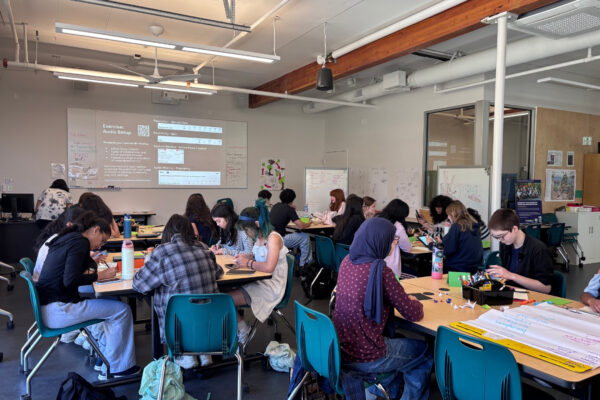
This summer, the Environmental Careers Preparedness Program (EnCAP) returned to the EERC for its third year, running three weeks from June 29 to July 17. One of CoSEE’s largest programs, EnCAP is funded by a grant from the Department of Education and is free to participants, with the purpose of introducing high school students to environmental career pathways by connecting classroom learning to real work in the field.
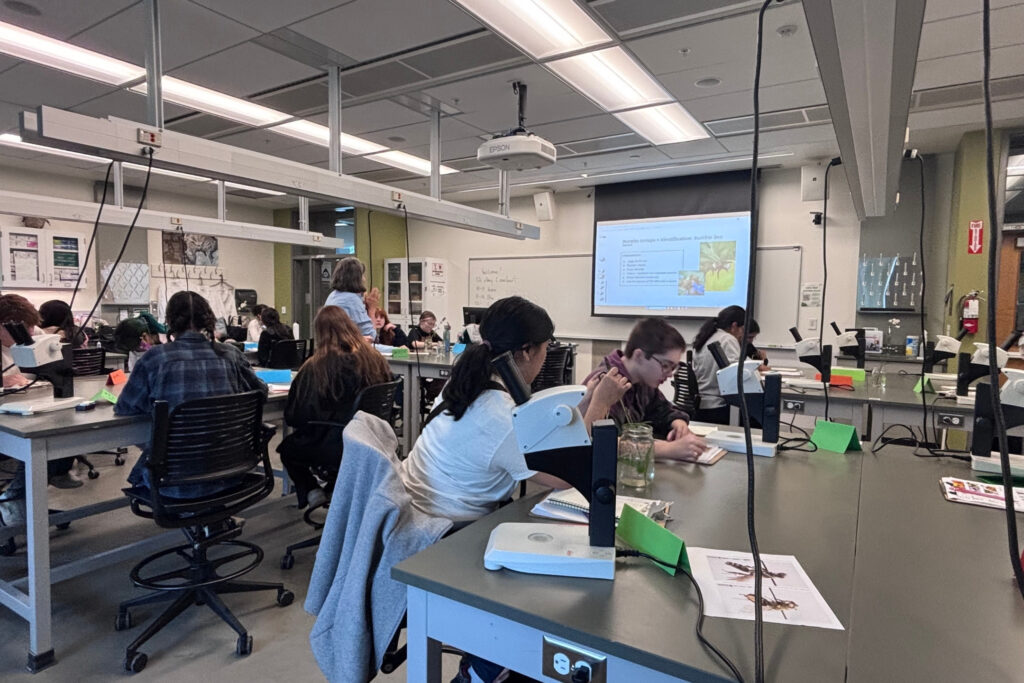
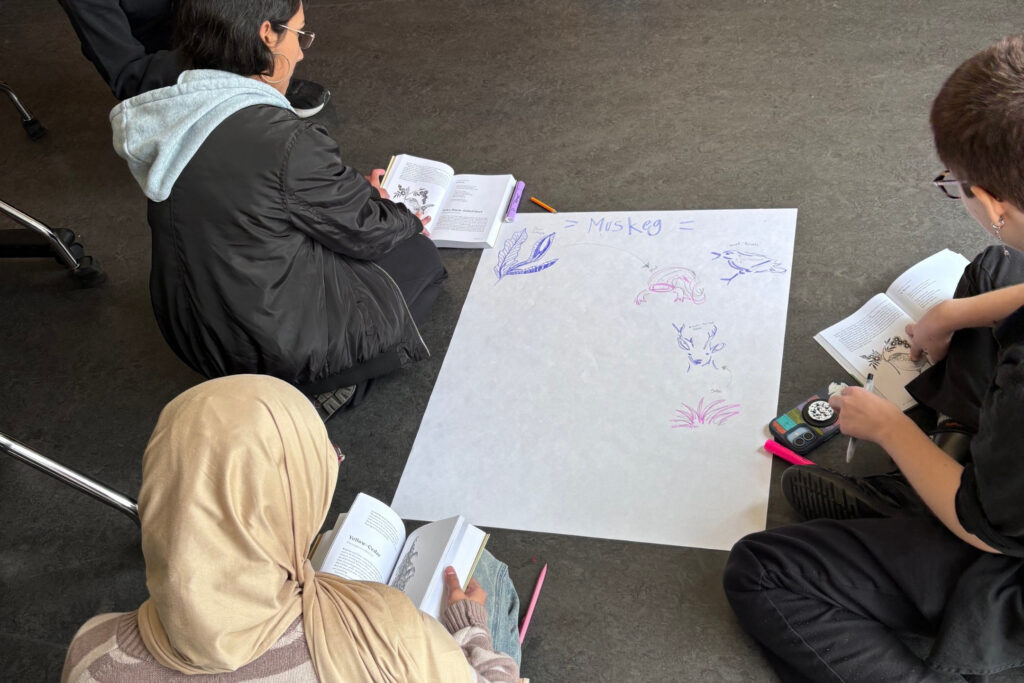
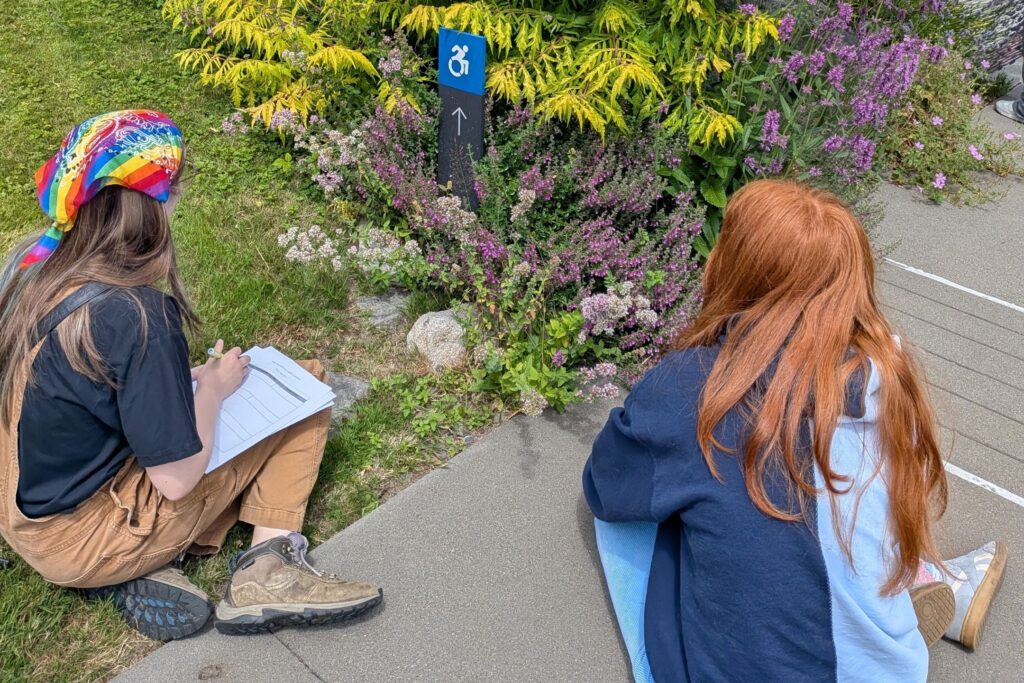
At the center of the program is the High School Scholars Program, a cohort of 25 students who spent three weeks learning from a rotating group of UW Bothell faculty. Rather than following one instructor through a single subject, scholars moved between disciplines, mapping invasive species one week, writing with the land the next and building a broad picture of what a career in the environment can look like.
As CoSEE director McGowan notes about the program design, “A lot of times when students think about environmental careers, they might think about solar panels or engineering,” she said. “But we want students to think about green careers very broadly, to include communications, education and arts, as well as GIS, ecosystem monitoring and restoration.”
The scholars didn’t learn alone. CoSEE’s undergraduate teaching assistants Dan Nguyen (Salmon Conservation & GIS) and Ash Putzke (Habitat Monitoring and Evaluation) supported the program throughout the summer, mentoring high school students and leading work alongside faculty. EnCAP also reached beyond students through CoSEE’s Summer Teacher Learning Institute, K–12 educators across Washington took part in workshops in GIS, pollinator monitoring and creative writing.
Cross-disciplinary learning
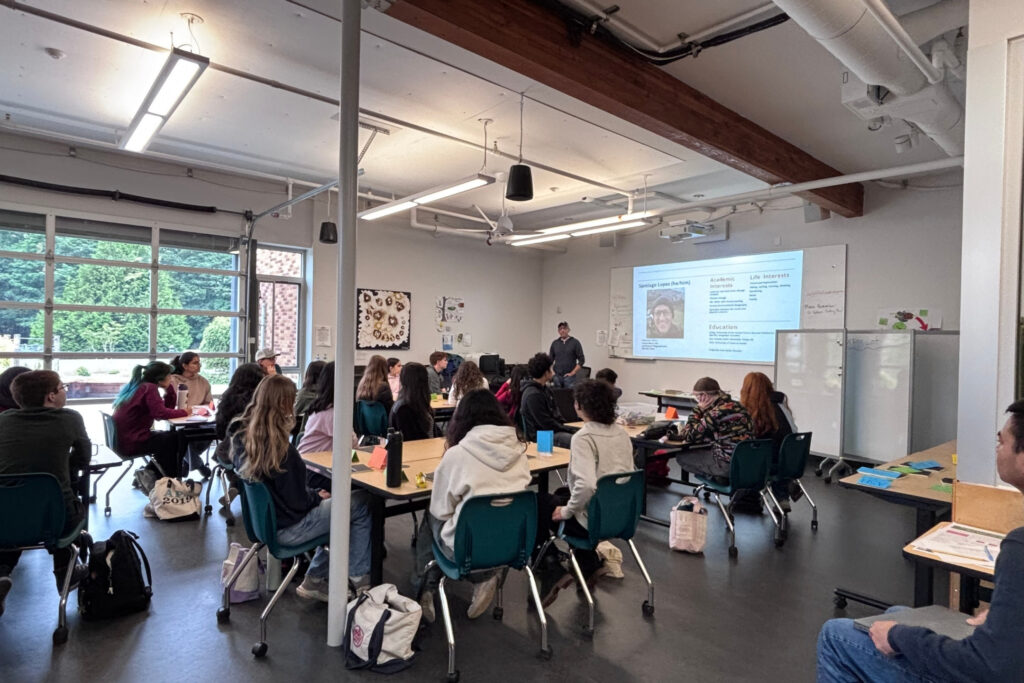
Six UW Bothell faculty taught across the three weeks, each bringing a different discipline to the cohort. The breadth is deliberate. As McGowan noted, no one person could teach the full range of what students explored.
- Science through Story with Dr. Cynthia Chang (Plant Ecology & Storytelling): Learning disciplinary science through children’s stories, with a focus on science communication and writing.
- Writing with the Land with Dr. Ching-In Chen (Creative Writing): Engaging in critical, land-based writing practices.
- Carbon Time with Dr. Amy Lambert (Restoration Ecology & Visual Arts): Field-based explorations of how carbon moves through ecosystems, with a focus on climate, equity and justice.
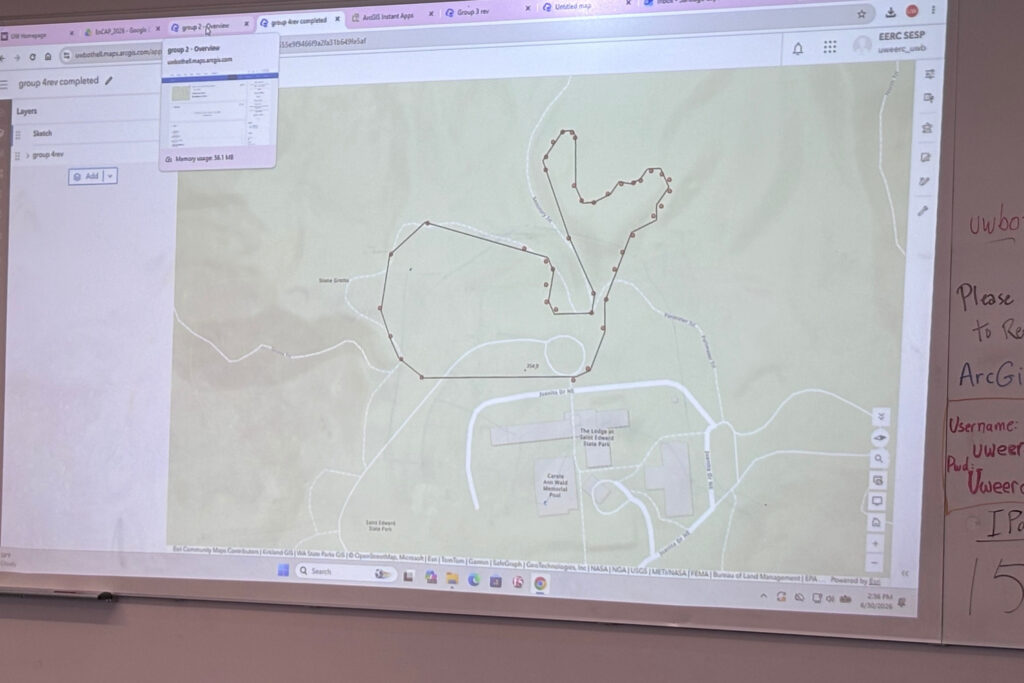
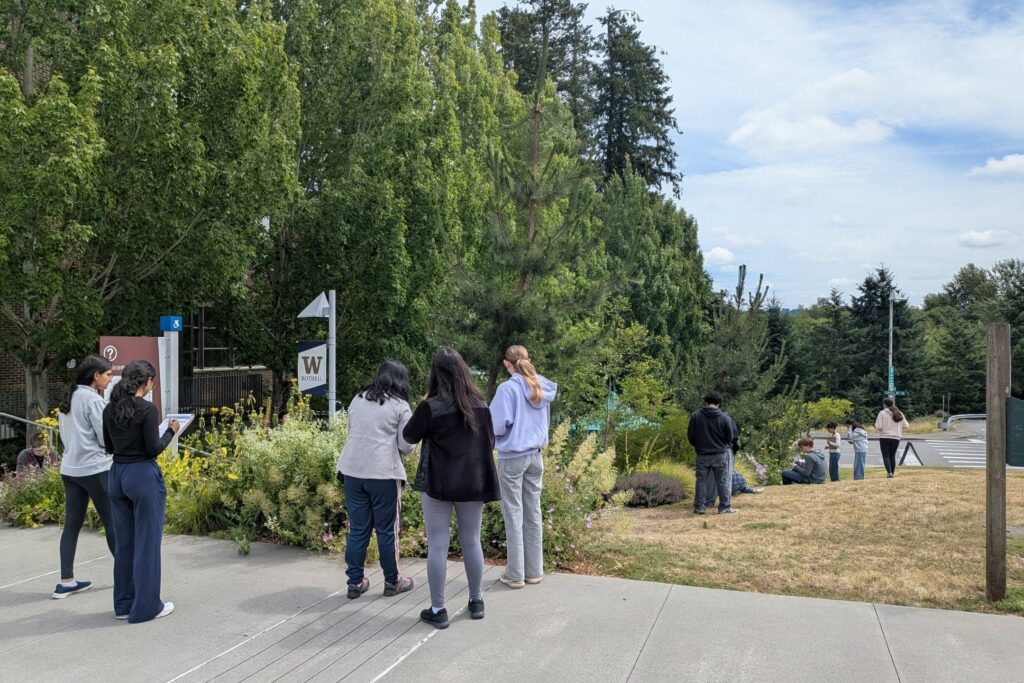
- Invasive Species and GIS with Dr. Santiago Lopez (Geography, Remote Sensing & GIS): Field-based explorations and hands-on GIS tools and practices for mapping invasive species.
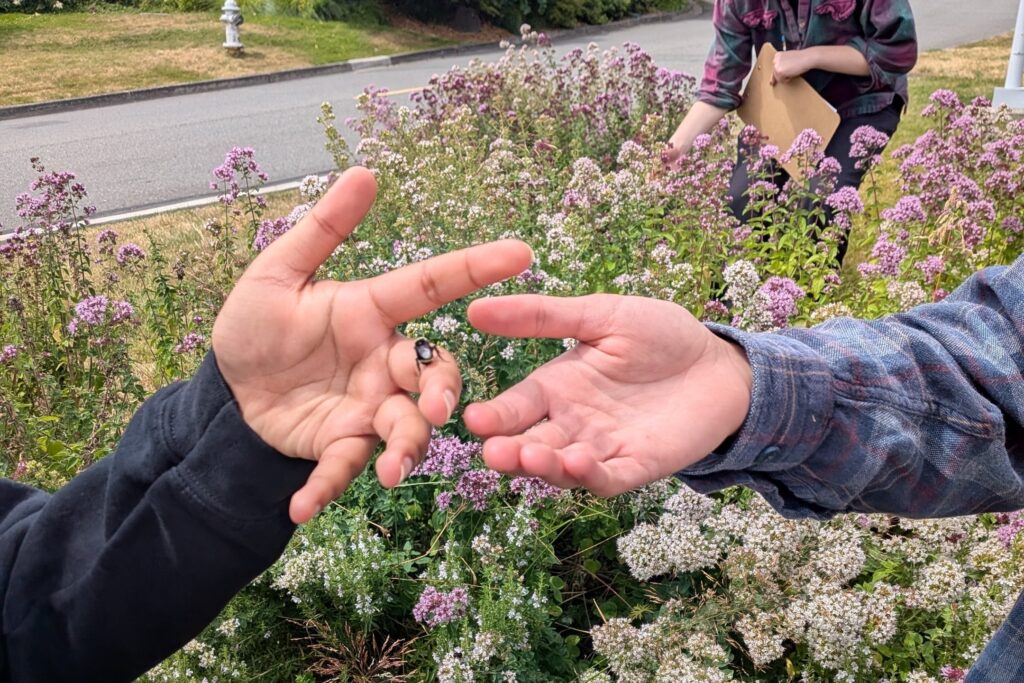
- Insect Biodiversity with Dr. Michele Price (Entomology, Insect Biodiversity): Field-based explorations of insects and their connections to other forms of life.
- Biomimicry and Ecology with Dr. Veronica Cassone McGowan (Learning Sciences and Science Education): Exploring the intersection of human health, ecological thriving and design.
Students used authentic tools throughout, with the same software and field equipment working scientists rely on. When they mapped invasive species with Dr. Lopez, they learned ArcGIS itself, not a simplified version of it.
What students gained from EnCAP
EnCAP connects directly to CoSEE’s goals: hands-on learning rooted in place, guided by mentorship and research. High school scholars can earn college credit, and undergraduate teaching assistants earn both seminar and independent research credit for their work.
For McGowan, the most powerful outcomes haven’t been the ones the grant was designed to produce. In fact, the most powerful outcomes have been the relationships formed. She points to this summer’s salmon work as an example: an undergraduate who once did research with Dr. Jeff Jensen returned to help teach salmon conservation, while a few high school scholars who love salmon began one-on-one work with Jensen and joined his community projects.
“The most powerful thing, is the sustained relationships between faculty and students,” she said. That kind of chain, from high schooler to undergraduate to faculty, is something most undergraduates nationally never experience, let alone high school students. “Being able to pair undergrads and high schoolers with those opportunities can be really transformative for how students see their capabilities.”
Those connections tend to last. CoSEE’s very first intern, who discovered GIS through Dr. Lopez during an early cohort, is now finishing a master’s in the field.
Three weeks isn’t long. But for 25 students who spent it knee-deep in a creek, mapping invasive species, and writing science into children’s stories, it was long enough to see themselves in a future they might not have pictured before. EnCAP returns in 2027.