CoSEE invites community into the classroom to learn about student innovation
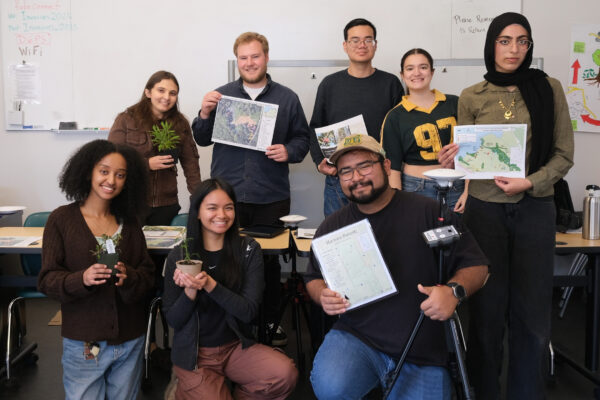
For Earth Day this year, CoSEE opened its classroom at the Environmental Education and Research Center (EERC) at Saint Edward State Park and invited the community inside. As part of the City of Kenmore’s Earth Day celebration, visitors came to see what CoSEE interns have been working on and to talk directly with the students doing that work.
The room filled quickly. Posters went up, materials were laid out, and conversations started almost immediately. Questions ranged from native plants to wildlife movement to mapping work happening across multiple parks. For many visitors, it was their first time seeing how much student‑led research and restoration is happening at Saint Edward and throughout the watershed.
Eight tables, eight stories
Each intern hosted a table, giving visitors the chance to move through the room and hear about a wide range of projects, from field restoration to GIS mapping to education resources.
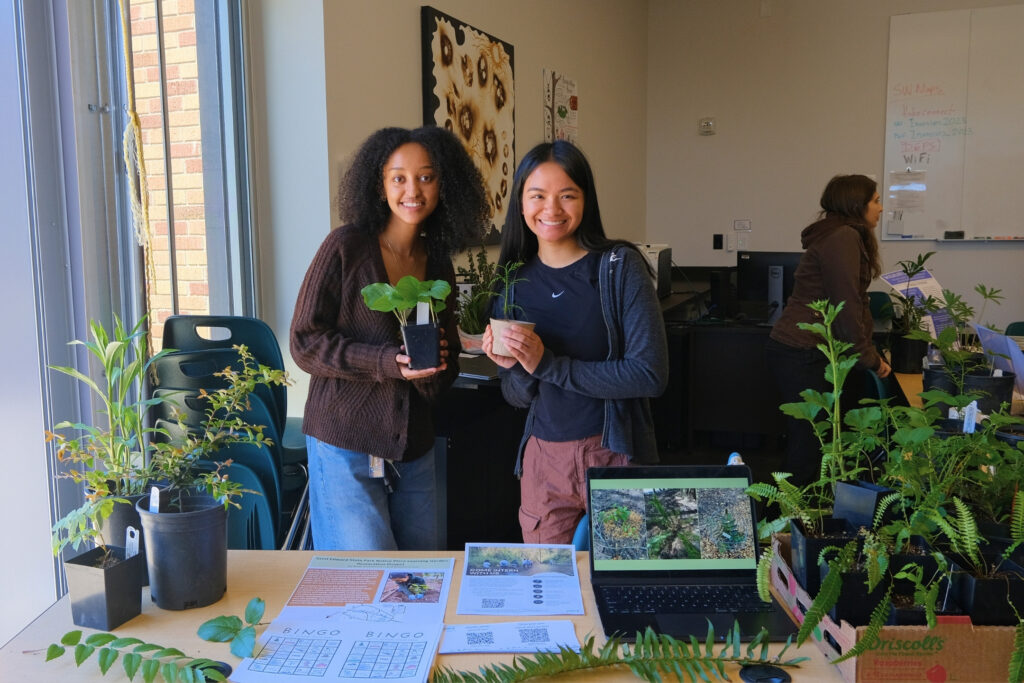
Tiana and Ruth shared a table focused on the Native Plant Learning Garden. Tiana walked visitors through the day‑to‑day work she has been leading at the EERC, including trail maintenance, soil restoration, and accessibility improvements she has been developing for visitors. Ruth shared the planting plan she created for spring 2026, along with the native plant education work she has been doing and the new plants scheduled to go into the ground this week. Together, they showed how the garden has grown through steady student care and long‑term planning.
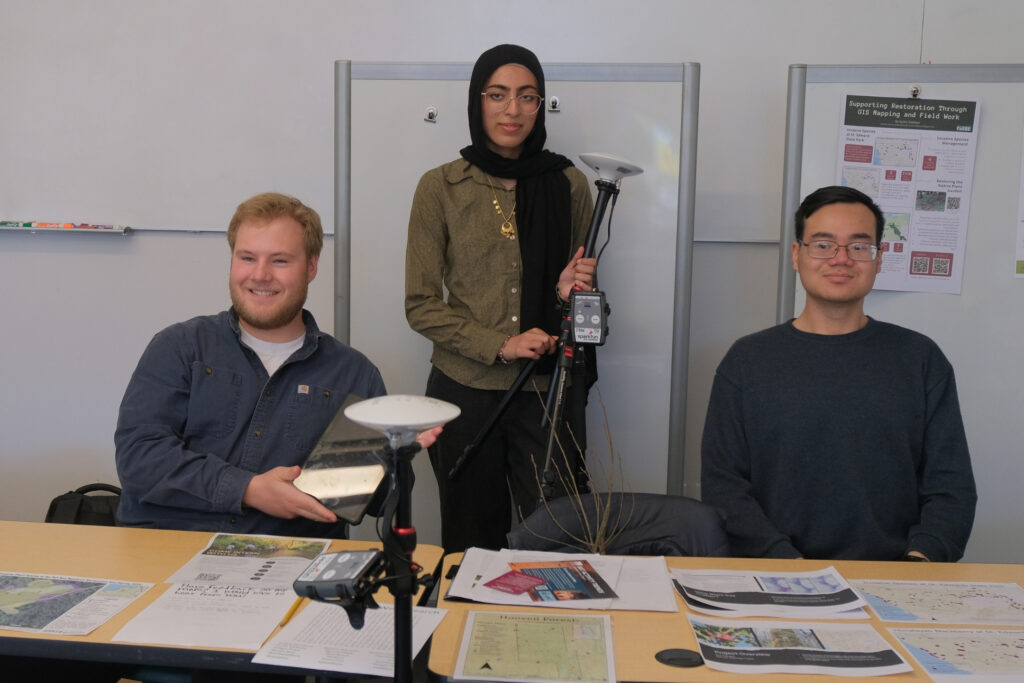
Dan, Max, and Aysha shared GIS and mapping work spanning both Saint Edward and Lake Sammamish State Parks. Max documented the quantity and location of invasive and native plants within active restoration zones at Lake Sammamish. Aysha created a large‑scale map showing past and current restoration sites around the lake, giving visitors a clear picture of how that work fits together over time. Dan shared his collaboration with Dr. Santiago Lopez to install new light and temperature sensors throughout Saint Edward, adding to CoSEE’s ecological monitoring network.
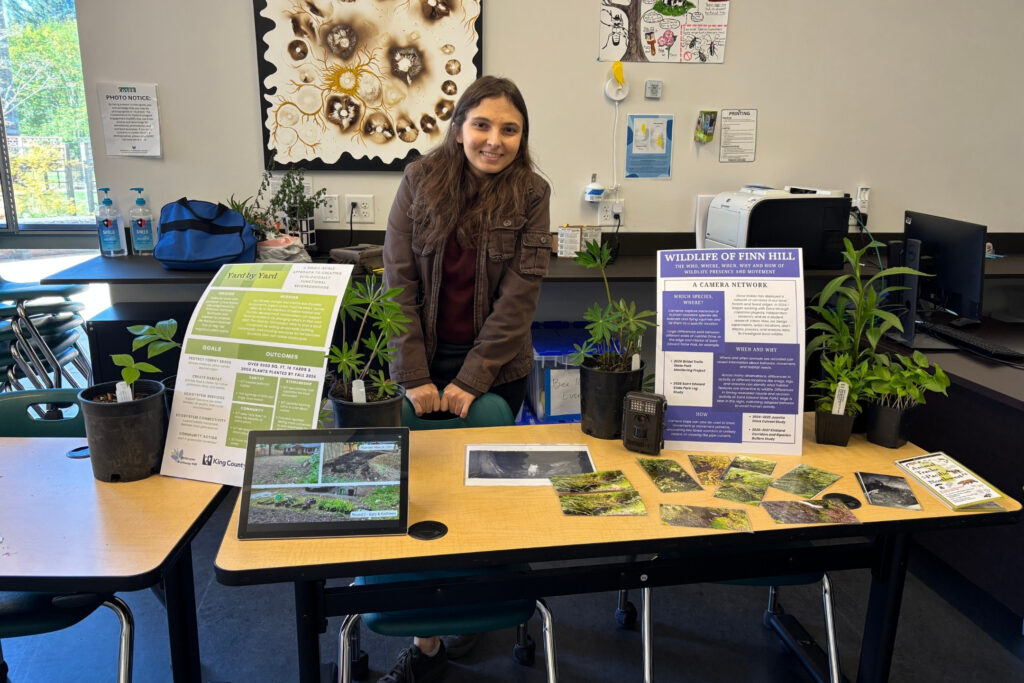
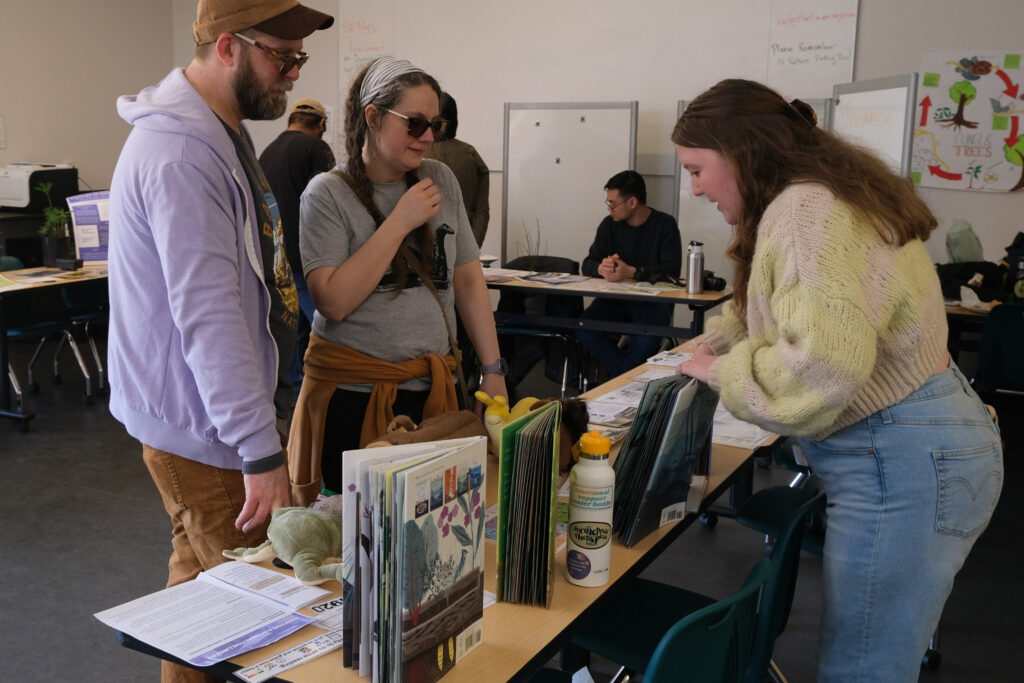
Ash’s table focused on wildlife research in Finn Hill. Working with Dr. David Stokes, Ash deployed wildlife cameras across the area to better understand how animals move through the landscape. One focal point of the project was a culvert beneath Juanita Drive and how it shapes wildlife movement through that corridor.
Kaylin highlighted CoSEE’s growing collection of education kits and resources available for community checkout, including bird‑watching kits and mason bee house kits. She also shared adaptive library books CoSEE has been developing and explained how these resources support hands‑on learning in and around the park for people of all ages and abilities.
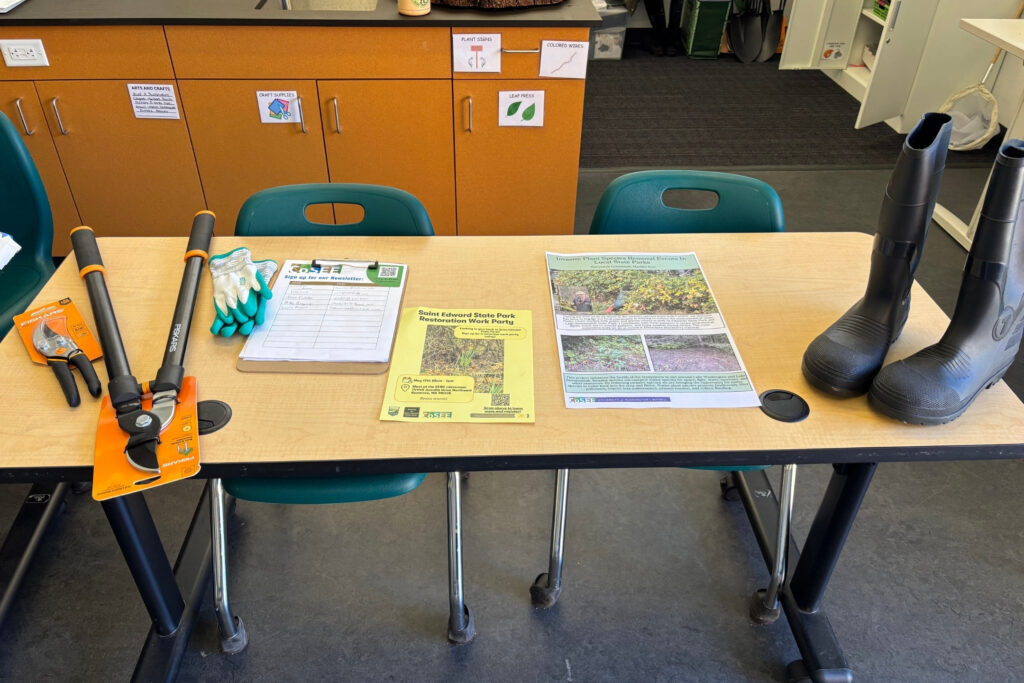
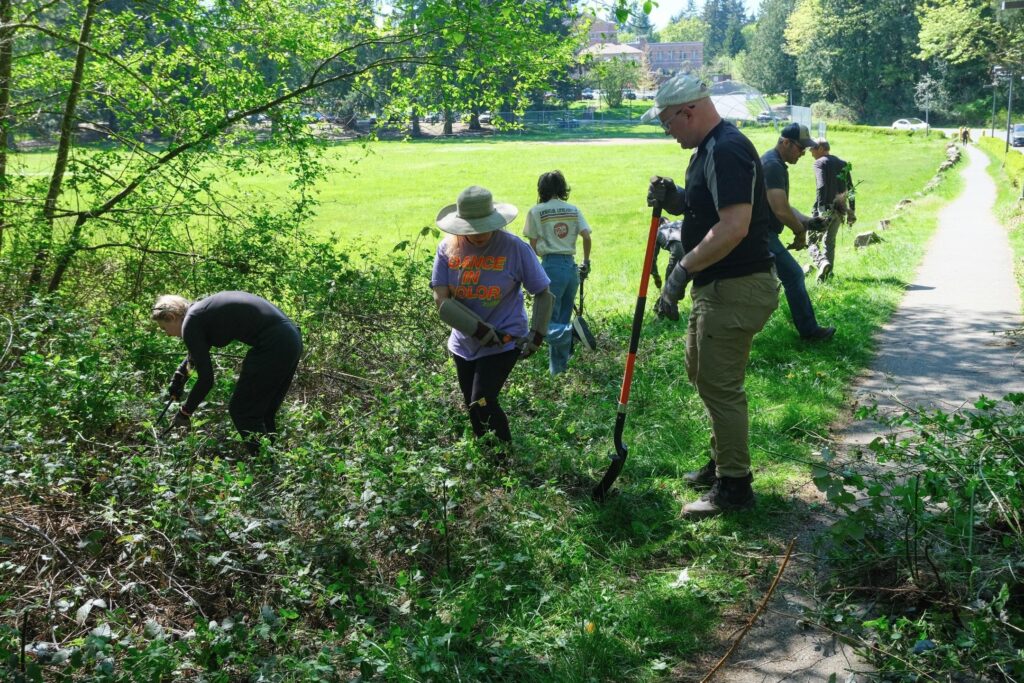
Savannah shared hands‑on restoration work happening at both Lake Sammamish and Saint Edward State Park. Alongside talking through what the field work has looked like this season, she invited visitors to sign up for a restoration event scheduled for later that afternoon, turning interest at the table into a plan to head outside.
Savannah’s table did not just talk about restoration. It helped make it happen. By the end of the tabling event, nearly 20 volunteers had signed up to participate in a restoration project that same afternoon. Led by CoSEE invasive species intern Sydney, the group gathered outside and got to work removing invasive Himalayan blackberry at the park. By the end of the day, they had cleared far more than expected, showing what a focused group can accomplish in just a few hours.
For many visitors, the afternoon offered a clear view of the range of work CoSEE interns take on and the different ways students contribute to the health of these parks.
A program built on experience
The Earth Day event also marked two years of CoSEE’s Internship Program.
Program Manager Maddie Iem launched the program when she joined CoSEE nearly two years ago. Since then, the program has supported more than 70 students working alongside researchers, educators, and partner organizations across the region on projects rooted in real places and real needs.
The variety of tables in the room reflected that approach. As one intern put it, “We all had such different interests, and we were able to accomplish our individual goals while still contributing to CoSEE’s overall mission.”
Another intern shared, “It felt great to feel like I was working on something that was meaningful to myself and others.”
A community that shows up
CoSEE’s work at Saint Edward State Park depends on people showing up, students bringing curiosity and commitment, volunteers giving their time, and community members asking questions and getting involved.
This Earth Day put all of that in the same room and then sent it back out into the park.