Advancing Invasive Species Removal at Saint Edward State Park
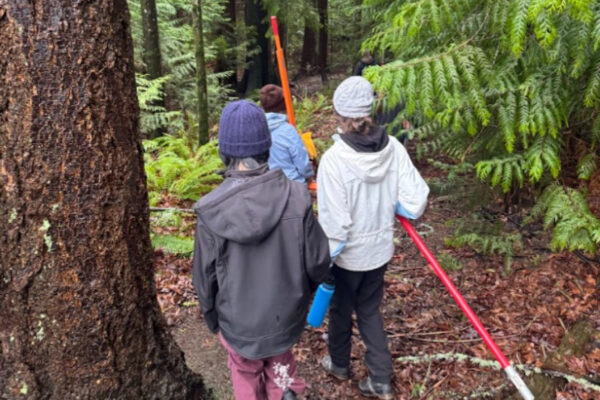
The UW Bothell Collaborative for Socio-Ecological Engagement (CoSEE) has been partnering with community members and Washington State Parks to support restoration efforts at Saint Edward State Park. In mid-March, one such event introduced new approaches to invasive species removal, offering participants both hands-on experience and opportunities for shared learning.
Sydney Nielsen, a Biology major at the University of Washington Bothell and an invasive species intern with CoSEE, helped organize and support the event alongside fellow interns, park rangers, and community volunteers. Together, the group contributed to a collaborative restoration effort focused on improving the health of the park’s ecosystem.
New Removal Techniques in Practice
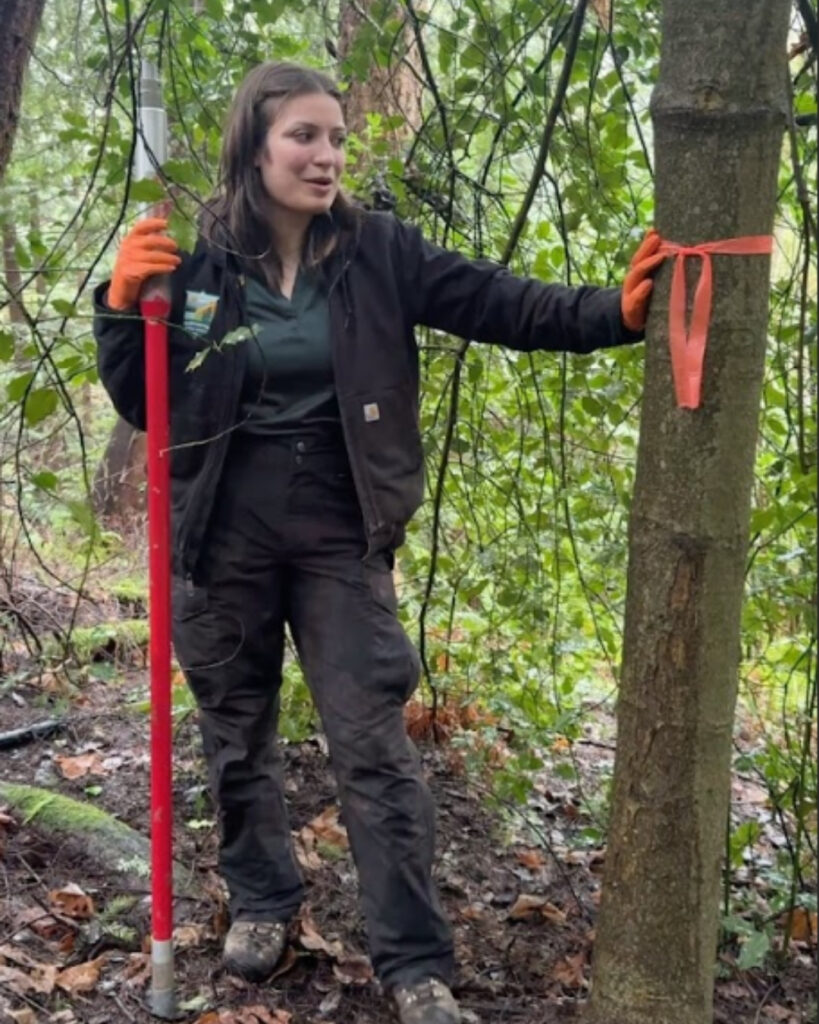
On March 19, participants gathered and were guided off trail by park rangers to a densely populated area of English holly in the park’s northwest section, between the Seminary and North Trails.
English holly presents a persistent ecological challenge. It is shade-tolerant, grows densely, and can regenerate through both roots and shoots, making it particularly difficult to manage using traditional removal methods alone.
During the event, participants were introduced to a new removal technique using specialized tools known as lances. Under the supervision of a certified park ranger, volunteers learned how to safely inject herbicide directly into the base of holly trees. This targeted method allows the herbicide to move through the plant system, gradually affecting the trunk, branches, and foliage. Compared to conventional approaches, this technique requires less time and labor while reducing the likelihood of regrowth.
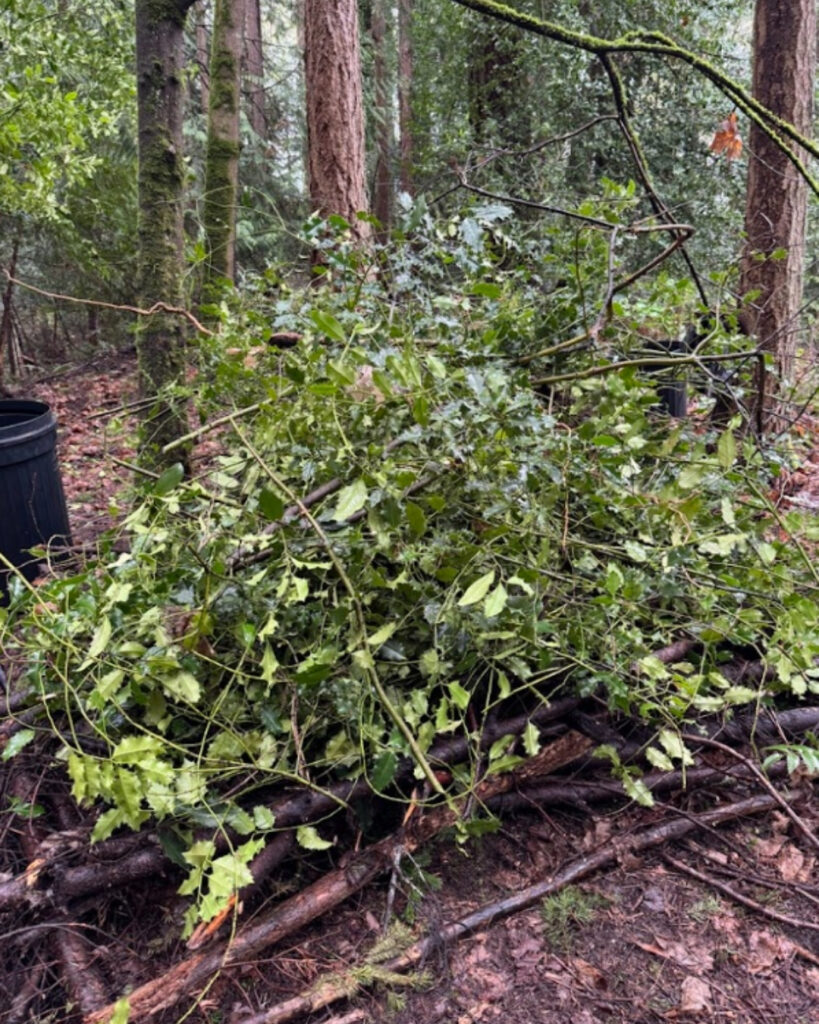
In addition to using lances, participants practiced another strategy to prevent regrowth. After cutting back low-hanging branches, volunteers created what is known as a “raft” by layering branches and placing holly trimmings on top. This method keeps plant material off the ground, helping prevent re-rooting and allowing it to decompose naturally over time.
Together, these approaches expanded participants’ understanding of effective and sustainable restoration practices.
Learning Through Community Action
This event reflects CoSEE’s commitment to integrating restoration, education, and community engagement. By bringing together park rangers, UW Bothell students, CoSEE staff, and community members, the project created a shared learning environment grounded in hands-on experience. The group made a meaningful impact on the park in just a few hours.
Removing invasive species like English holly creates space for native plants to thrive, which in turn supports local wildlife and overall ecosystem health. Events like this demonstrate how community-based restoration efforts can lead to tangible, visible outcomes.
For Nielsen, the experience provided an opportunity to connect academic learning with real-world applications. Through her coursework and internship, she has developed a foundation in ecological principles that she was able to apply directly in the field, while also gaining new technical skills and insights.
More Work To Be Done
Reflecting on the event, Nielsen emphasized the importance of community in restoration work. “Working with other community members and learning about why this work was important to them was my favorite part,” she shared.
Participants also observed firsthand the scale of English holly growth within the park. While the group made significant progress in clearing the targeted area, the experience underscored the ongoing nature of restoration work. Continued efforts will be needed to address invasive species and maintain the health of the ecosystem over time.
Looking ahead, sustained collaboration between Washington State Parks, CoSEE, and the broader community will remain essential. By combining technical knowledge, shared learning, and a commitment to stewardship, these partnerships continue to support the long-term resilience of local ecosystems.
CoSEE and Washington State Parks host monthly restoration events open to all. Next month will feature a special restoration event in celebration of Earth Day. Learn more and get involved!