Embodying Community in Action: Reflecting on a Year of Growth for CoSEE
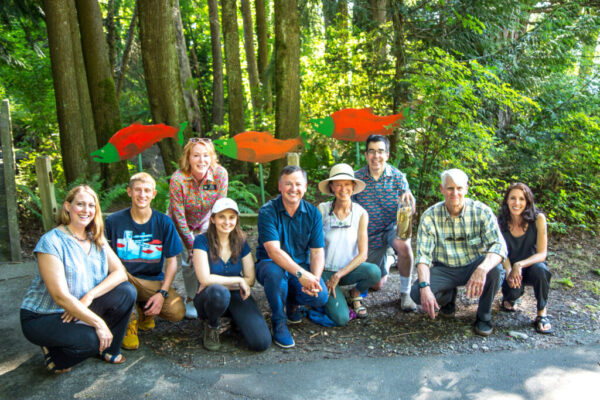
“On our own, without a community, we cannot do much. We need a community of like-minded friends and colleagues to help us realize our deepest dreams… Our community can become a source of support and a place of refuge for many people. We nourish our community in our lifetime, and it carries us forward into the future.”
Thich Nhat Hanh, The Art of Living
Thich Nhat Hanh reminds us that our most profound achievements are rarely solo endeavors; they emerge from the shared voices, talents, and efforts of people united by a common purpose. At the University of Washington Bothell’s Collaborative for Socio-Ecological Engagement (CoSEE), this idea is not only acknowledged, it is practiced daily.
Over the past year, CoSEE has continued to grow as a space where students, faculty, and community partners come together to explore the interconnected challenges facing both people and the planet. The work happening through CoSEE reflects the belief that meaningful change is rarely the result of a single effort. Instead, it grows through collaboration, shared curiosity, and relationships built over time.
A Community-Driven Beginning
CoSEE was founded through a community-driven desire to establish a hub of environmental research and learning in one of the few remaining patches of mature forest in our region. The University recognizes that environmental and social challenges are deeply interconnected, and that addressing them requires collaboration across disciplines and in partnership with surrounding communities.
Rooted at the Environmental Education and Research Center (EERC) in Saint Edward State Park, CoSEE serves as a hub where students, faculty, educators, local organizations, and residents come together to co-design research, education, and outreach that support thriving social and ecological futures.
The setting itself reflects this collaborative spirit. Surrounded by forest, trails, and the broader ecosystem of Lake Washington, the EERC provides a place where learning happens both indoors and outdoors, where academic inquiry meets lived experience, and where community partnerships shape the direction of new ideas.
Advancing Sustainability Across Boundaries
CoSEE’s mission to advance sustainability, ecological literacy, and community resilience connects people across academic, cultural, and geographic boundaries. Whether through participatory research, inclusive education initiatives, or creative place-based practices, the center nurtures a community where ideas are shared and efforts are multiplied.
This sense of community extends into real-world experiences for students. CoSEE’s internship programs and educational pathways invite students to immerse themselves in meaningful work- from invasive species management and native plant conservation to environmental education and public communication.
Through these opportunities, students gain more than technical skills. They become part of a growing network of mentors, partners, and neighbors who are working together toward shared environmental and social goals.
Over the past year alone, CoSEE has supported more than 60 undergraduate research assistants this past year, many of whom have contributed to ongoing restoration work, educational programming, and community-engaged research projects. These experiences help students develop the tools and perspectives needed to address complex environmental challenges while also building relationships that extend far beyond the classroom.
A Year of Growth and Collaboration
Throughout 2025, CoSEE’s programs and partnerships continued to expand across the University of Washington Bothell campus and throughout the surrounding community.
Students and faculty collaborated on projects that explored ecological restoration, environmental storytelling, community science, and inclusive environmental education. Community members participated in restoration days, workshops, and environmental learning opportunities that connected people more deeply with the landscapes of Saint Edward State Park.
At the same time, new partnerships with regional organizations, schools, and public agencies strengthened CoSEE’s role as a collaborative space for environmental learning and action.
What unites these efforts is a shared understanding that environmental challenges are not isolated problems. They are complex systems that require collective thinking, creativity, and care.