A passion for pollinators
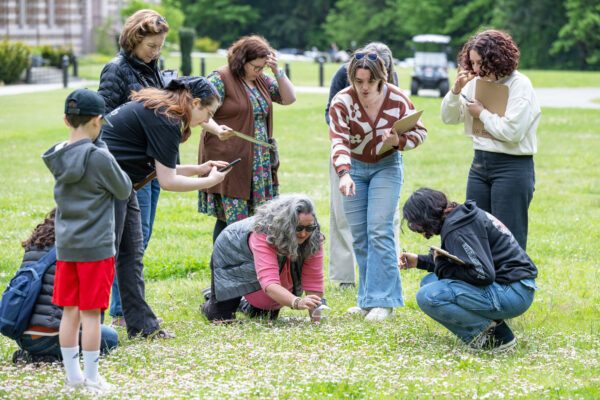
In her capstone project, senior Katrina Briggs blends citizen science and a love of pollinators in “Bee Monitoring 101.”
In healthy, functioning ecosystems, every species has a role to play. From the clams that filter ocean water to the predators that keep prey species in check, biodiversity is what makes life on Earth possible. And there is perhaps no job more integral than that of the pollinator.
Pollinators are animals such as bees, birds and small mammals that travel between plants and carry pollen on their bodies. In doing so, they play a crucial role in the reproductive cycle of flowering plants. Without them, entire ecosystems — and our global food supply — would collapse.
“As a society, we tend to overlook the little things,” said Katrina Briggs. “Pollinators affect everything in our life. The study and protection of these creatures is a field that needs to be expanded more, and people need to know more about it and how it connects to their lives.”
A senior majoring in Conservation & Restoration Science at the University of Washington Bothell, Briggs’ passion for pollinators first developed during a class on pollinator diversity taught by Dr. Amy Lambert, associate teaching professor in the School of Interdisciplinary Arts & Sciences.
As her undergraduate education now comes to a close, Briggs recently presented her capstone project, which focuses on the most emblematic pollinator of them all: bees.
Read the full blog over on UW Bothell News!