Disability & Empowerment!! Exploring Our Connection to Global Narratives Through Digital Story Maps
A Discovery Core Experience
May be taken as BCORE 107 (Social Sciences) or BCORE 104 (Arts & Humanities)
About this Course
How are disability activists re-shaping the world around us, and why should we care? How do our own experiences within the spaces and communities here at UW Bothell meaningfully relate to stories that unfold in seemingly distant places, spaces, and settings?
In this class we work with digital mapping tools to explore how disability empowerment takes shape across global contexts. We will draw from theories in cultural geography, disability studies, and the digital humanities to help us construct story maps that reveal how identity, place, and power interact to shape understandings (and misunderstandings) about disability. Our storytelling journey will begin as a collaborative exploration of UW Bothell services and activities located in Husky, Founders, Horizon, Forest, and Innovation Halls, the Activities and Recreation Center, the Commons, and the outdoor spaces around our campus grounds. You will work in groups to explore and map these campus spaces, investigate disability accessibility features here at UW Bothell, and reflect on and share what areas are most meaningful to you, and why. Once you have pinpointed campus spaces and shared your individual reflections on your digital story map, you will expand your investigation by researching a global disability organization selected from a list provided by your instructor.
Why Digital Story Maps?
Through the research and digital mapping process, and by engaging with the stories told by disabled people and movements around the world, you will develop new and more diverse understandings about disability empowerment as a global social justice issue. Working with digital mapping tools as a research methodology will help us to examine and illustrate how race, gender, sexual identity, ethnicity, socioeconomic status, religion, nation, and geography meaningfully interact with disability empowerment and social justice. In short, story mapping is a research method that offers an engaging, accessible way to explore global disability empowerment through visual, narrative, and reflective practices. You will look for and analyze a wide range of cultural materials—social media posts, global news stories, film, digital media, art, scholarly, and other works created by disabled people—to form a better appreciation for the ways in which disabled individuals and movements represent their lives, (re)claim their autonomy, build intersectional communities, and express their empowerment.
Learning Outcomes
By the end of this course, you will be able to:
- Create an interactive digital story map using Google MyMaps that integrates multimedia materials, deep narratives, and reflective learning.
- Become familiar with our campus spaces that support student activities, community learning, recreation, community gathering, reflection, health, scholarship, and research.
- Analyze disability perspectives from outside the ‘Global North’ and evaluate how these perspectives influence conversations about disability, justice, and empowerment.
- Examine disability through an intersectional lens, recognizing how race, gender, sexual identity, ethnicity, geographic location, religion, and socioeconomic status shape disabled people’s experiences.
- Locate, interpret, and contextualize media created by disabled people, including social media, news coverage, artwork, and digital content.
- Collaborate effectively with peers to develop digital mapping strategies, share insights, and support collective learning.
Dr. Ronnie Thibault (she/her/ hers)
- School of Interdisciplinary Arts & Sciences
- Part Time Lecturer, University of Washington Seattle Disability Studies
About Dr. Thibault
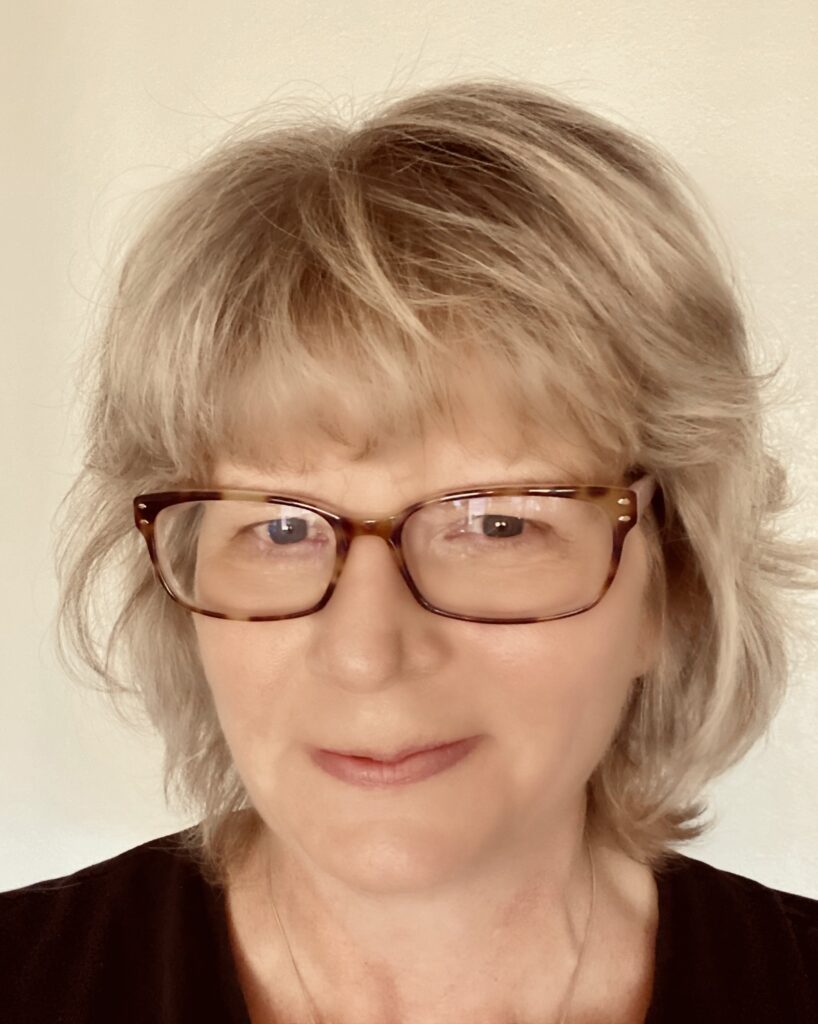
Ronnie earned her PhD in the UW Interdisciplinary Individual PhD Program, with support from the departments of Geography, History, and Disability Studies. She completed her MA in Cultural Studies and her Bachelor of Arts at the University of Washington Bothell, where she focused on the social and political histories of disability and global development. In her current teaching and research, Ronnie explores the cultural politics of global development and histories of disability in the United States through comparative history, cultural studies, and postcolonial and transnational disability studies frameworks.
- B.A. Society, Ethics & Human Behavior, University of Washington Bothell
- M.A. Cultural Studies, University of Washington Bothell
- Ph.D. Interdisciplinary Individual Ph.D., University of Washington
Contact
- Email: ronnie22@uw.edu