The Word and the World: What does it mean to be literate in the 21st century?
A Discovery Core Experience
May be taken as BCORE 117 (Arts & Humanities).
About This Course
What does it mean to be literate? In this course we will explore the changing definitions, possibilities, and limitations of literacy in an increasingly interconnected, diverse and digitized world. Students will be asked to familiarize themselves with a range of perspectives on social, cultural, and political issues that impact the ways we both make and exchange meaning through shared texts and shared communities. In other words, what shapes the ways we read and write both the word and the world.
To facilitate this exploration, we’ll explore both popular texts and scholarly perspectives on learning and knowing, as well as the role of the symbolic tools we use to communicate and express that learning. We’ll also explore the role of historicized power differences in what we come to know. For example, who has determined the language/s we have access to in order to understand the world? Who or what shapes the knowledge we can access or the art we create? What social dynamics impact how we understand our bodies? How do the needs of the economy impact the ways we are taught or the tools we are encouraged to use?
Students will be asked to engage in ongoing reflection about the significance of course texts over the meaning of their educational pasts. And by the end of the course, they will be asked to articulate a tentative plan for their educational futures. In other words, a final project that addresses what it means to consider themselves “literate” in the 21st century.
Why Should I Take This Course?
Take this class if you are interested in:
- Ideas about learning and knowing, and the ways different forms of literacy encourage different forms of knowledge.
- How the relationship between literacy, language, and power impacts the ways we communicate and the forms of knowledge we are able to access, develop, and share.
- Contemplating what you may need to know and/or understand to develop the literacies you’ll need to meet your current educational and/or life goals.
Professor Mira Shimabukuro
School of Interdisciplinary Arts & Sciences
About Dr. Shimabukuro
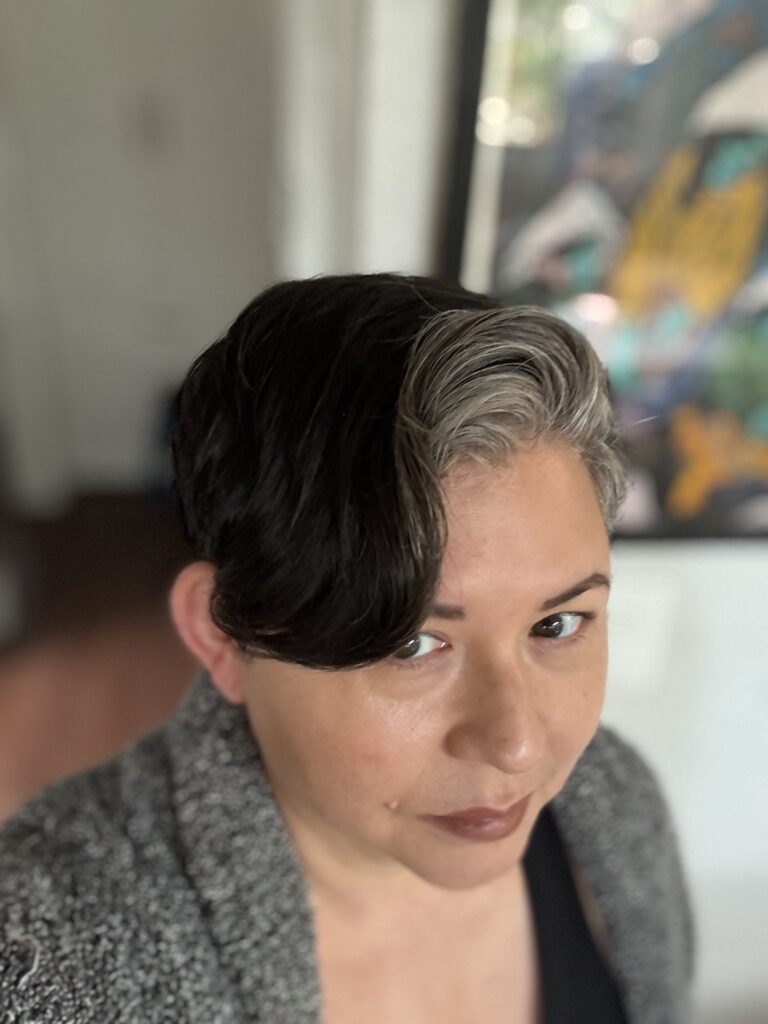
Mira Shimabukuro is a Teaching Professor in the School of Interdisciplinary Arts and Sciences at the University of Washington Bothell, where she teaches classes on First-Year Composition and Interdisciplinary Writing; Japanese American Incarceration; Rhetorics of Redress and Resistance; and the intersections between Race, Language, Literacy, and Identity. With academic backgrounds in both Creative Writing (MFA) and Composition and Rhetoric (PhD), Dr. Shimabukuro maintains both a creative practice and a scholarly interest in the ways people use both public and private forms of writing to survive and resist the wrongs of their oppression. Her 2015 book Relocating Authority focuses on the ways imprisoned Japanese Americans used writing to respond to their community’s mass incarceration during World War II. Her creative work—both nonfiction and poetry—addresses themes of diasporic, indigenous Okinawan identity; racialization of mixed Asian Americans; and the family politics of intergenerational activist families. Dr. Shimabukuro also served as the School of IAS’s first Associate Dean for Diversity and Equity.
Contact
- Email: mshima2@uw.edu