In commerce, keeping up with the latest trends and technologies is a vital part of meeting the needs and desires of consumers. So, at the University of Washington Bothell’s School of Business, it only makes sense that the curriculum would do the same.
Dr. Sophie Leroy, School of Business dean and professor, is now focusing on the latest advancement to shake up commerce and beyond: artificial intelligence.
“AI is here, and it is transforming the world of business,” she said. “If we want to lead in this domain and help organizations with these transformations, we also have to embrace it ourselves — and make sure students are ready for what’s to come.”
Business meets technology
Leroy was named the dean in May 2025, but her interest in integrating AI into the curriculum began a year before then while serving as the associate dean for the school.
“I was hearing people talk about AI, and felt like it was going to have a real meaningful impact on business,” she said. “We are a school that generally has been at the intersection of new technologies and business, and while we may not know everything ourselves, we have to be part of the dialogue.”
Her approach is two-fold: infusing AI into existing curriculum and creating new AI-specific courses. The school is currently developing programming at the graduate level, with new courses starting in autumn 2026. On the undergraduate side, a new concentration in Business Analytics & AI will also be available in the fall.
“I have a business background — from before entering academia — and so I’m approaching it in the same way I would have advised my clients to do it,” she said. “I believe in consistency, and if you truly believe in a vision, it needs to infuse everything you do across all different facets.”
Apart from new curriculum, Leroy’s vision includes faculty and student training as well as events and other opportunities to engage the greater UW Bothell community in AI integration and discussion.
An intentional approach
While AI presents a lot of opportunity, it doesn’t come without its challenges and risks. Leroy said she aims to be very deliberate in how she incorporates AI across the school.
“We are very intentional about when to bring in AI tools,” she said. “It’s absolutely essential that students understand the foundations and have enough expertise before they engage with AI tools. They should be able to think critically to discern when it is helpful — and when they’re actually going to be worse off by using it.
“Because of the environmental impact, for example, let’s leverage the power of AI responsibly where it can help solve difficult problems.”
Dealing with issues like this is why new programming is important across both graduate and undergraduate education, she added. Her aim is for undergraduate students to gain the critical thinking skills they need to engage with the technology before really diving deep.
“We want students to think about the responsibility that comes with it and to make sure they are also keeping their own creativity and their own individual thoughts,” Leroy said. “The more we empower people in making their own, educated decisions around the usage of AI, I think the better off we’ll be.”
Conversation leaders
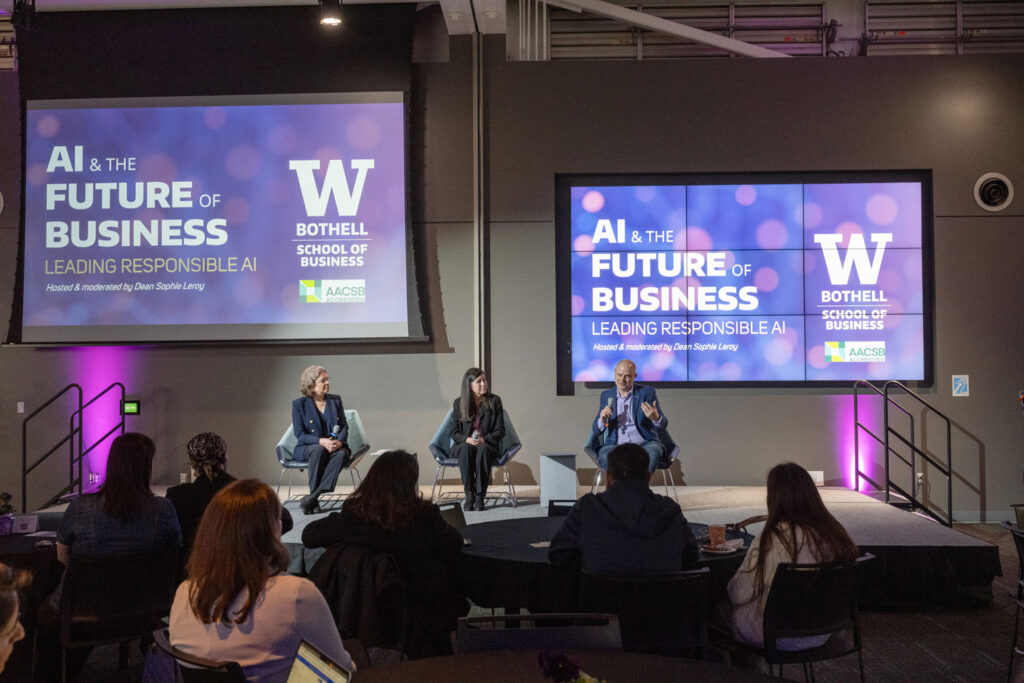
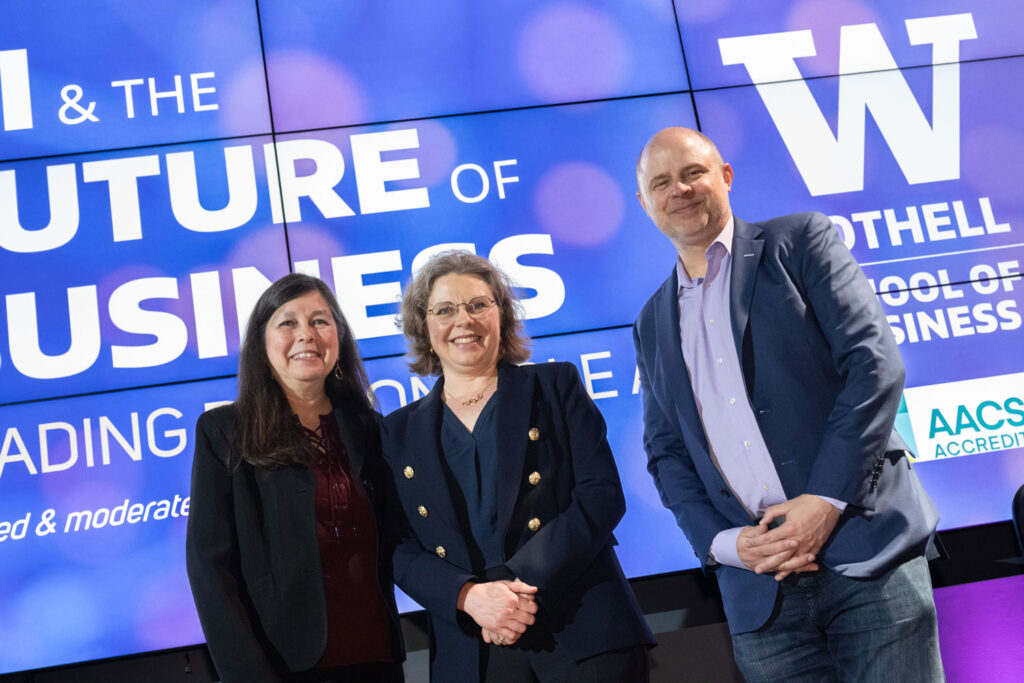
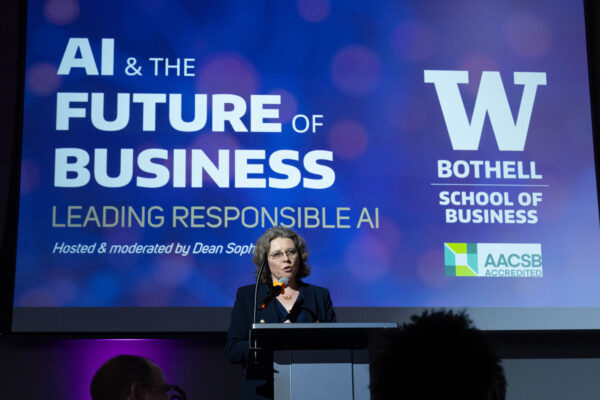
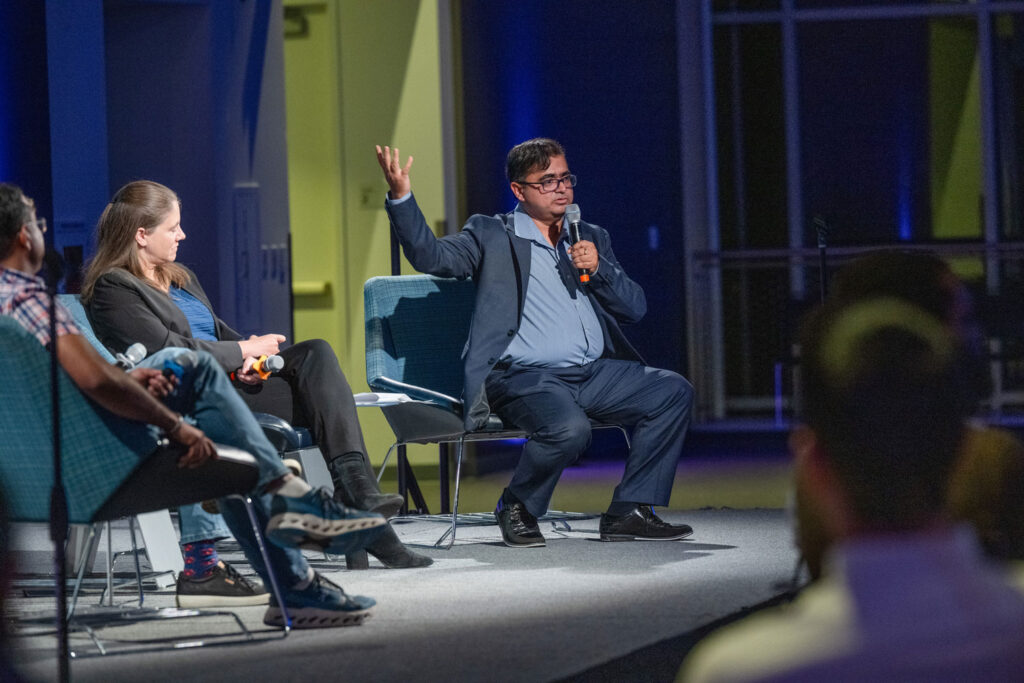
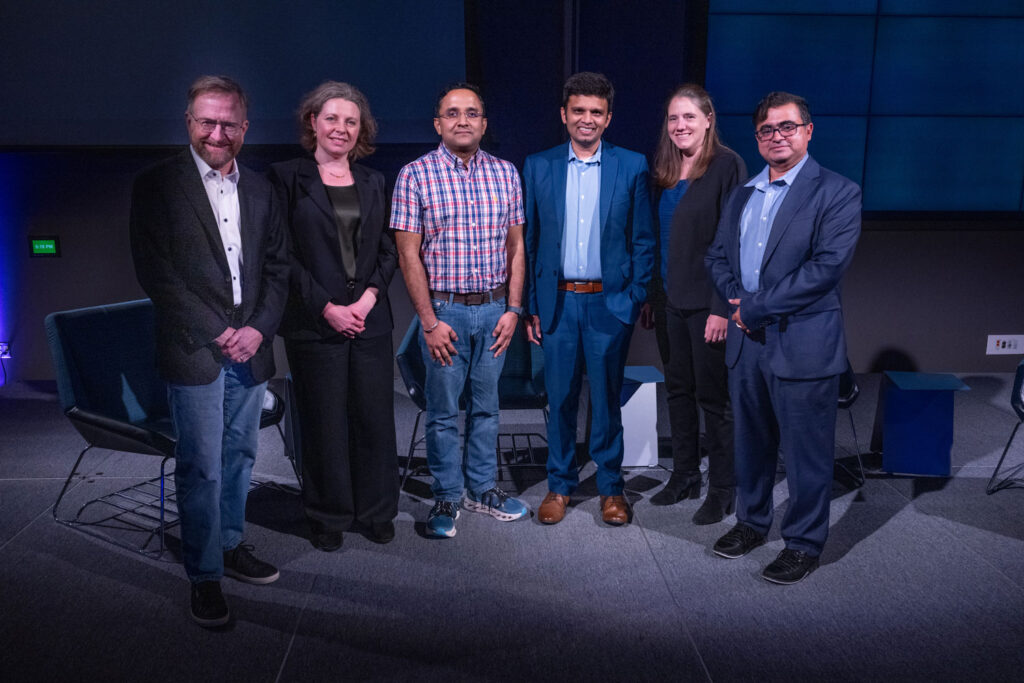
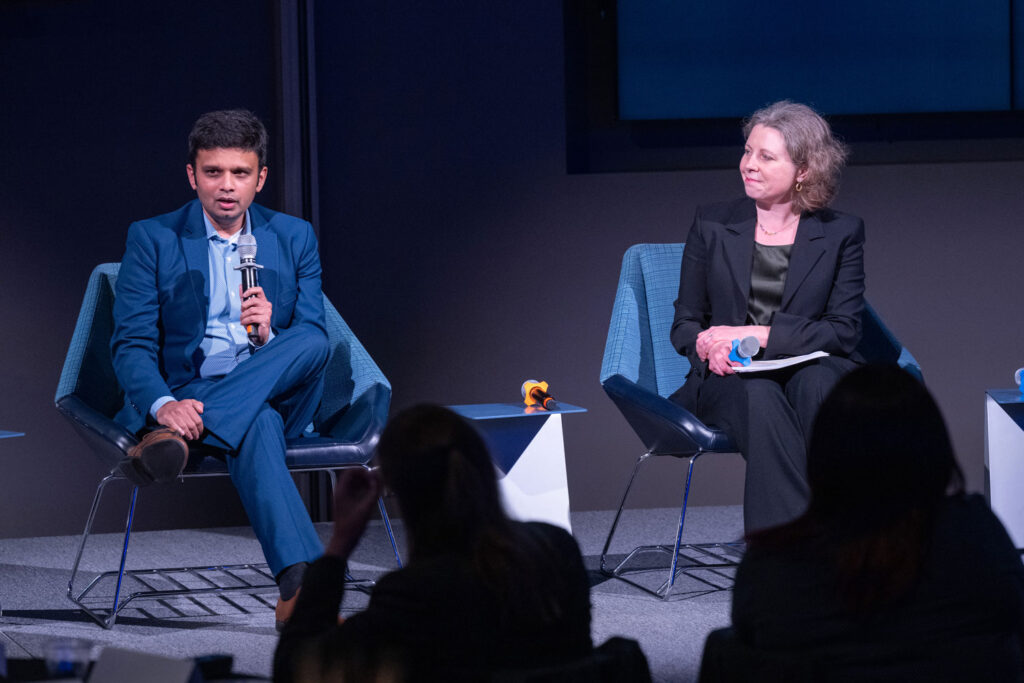
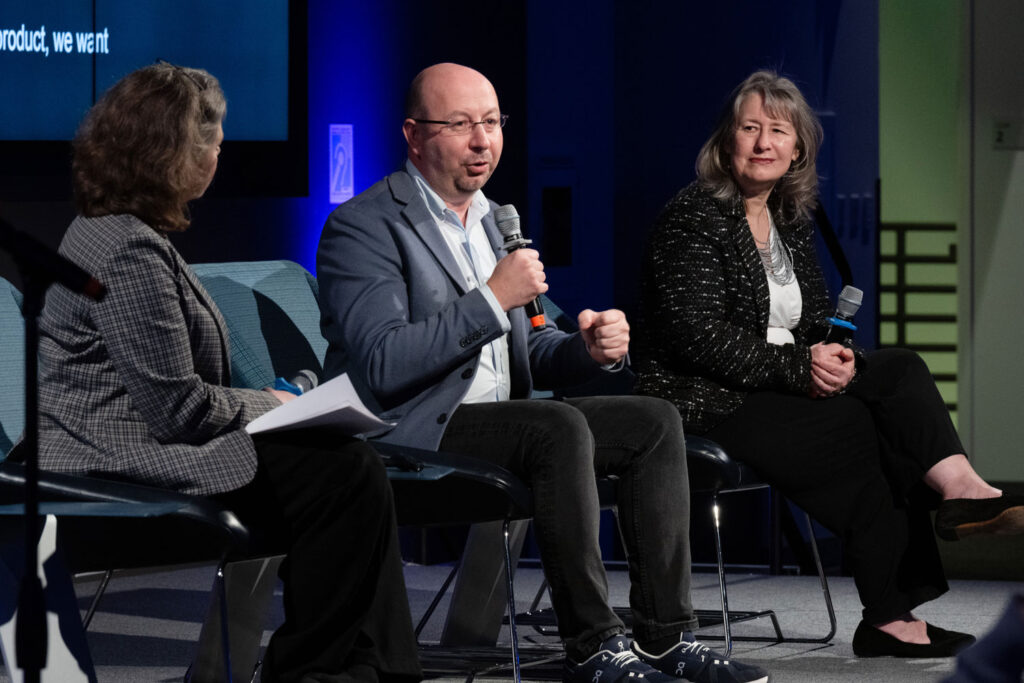
Wanting to create a space where students, faculty, alumni and industry partners could come together to further discuss AI and related topics, Leroy launched a quarterly speaker series, “AI & the Future of Business,” in fall 2025.
“I think what’s important is that this series is really intended for the larger community, not just students,” she said. “We want to be a place where people feel like they can come to learn, to explore and to gain insight that they can bring back and use in their own roles.”
The series is also a way to move beyond the “big umbrella” of AI and contextualize it to look more closely at specific areas of use, Leroy said. This year’s events included discussions on “The future of marketing in an AI-driven world,” “How AI is revolutionizing the retail industry,” and “Leading responsible AI.”
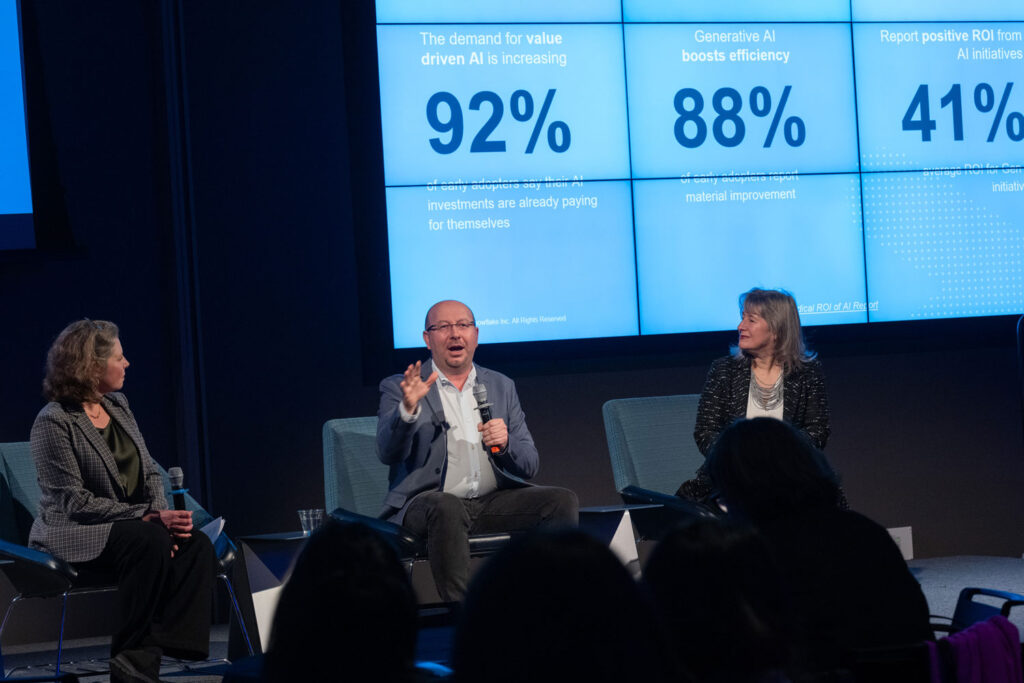
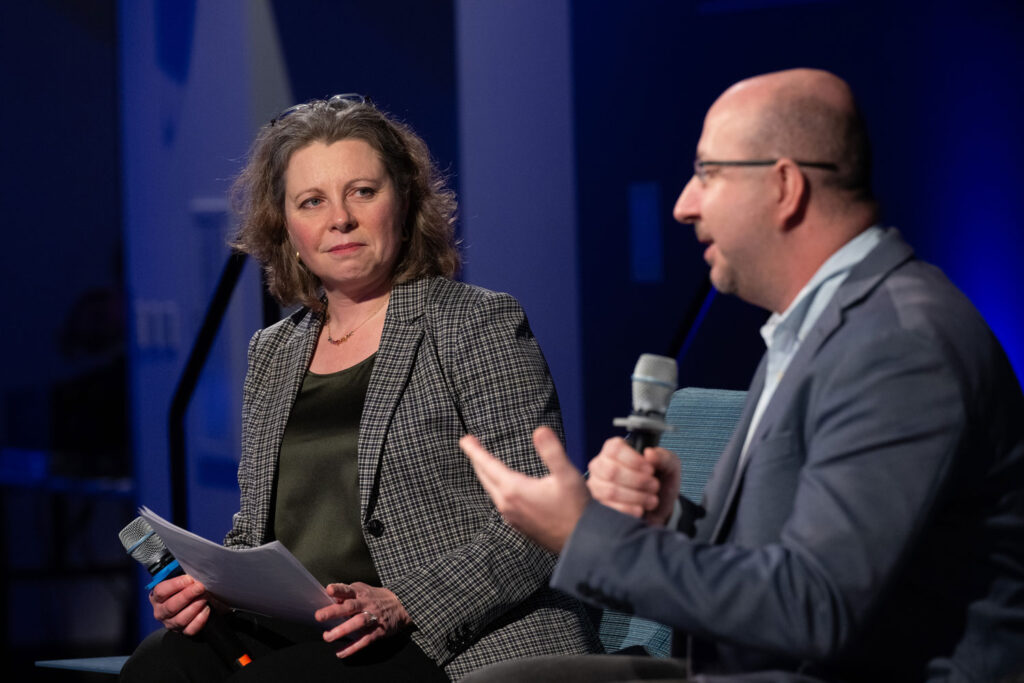
Speakers have included tech experts from companies such as Amazon, IBM, Microsoft and Starbucks, with faculty moderators. In the first event, panelists explored how AI is changing the customer journey in retail settings. At the second event, Leroy moderated a discussion around how AI is transforming customer engagement, campaign strategies and marketing analytics. The spring 2026 quarter event looked at what it means to integrate AI responsibly amid growing concerns around governance, safety, fairness and transparency.
“We want to lead this conversation in collaboration with industry,” Leroy said. “This is a forum where we bring together people who are experts in their domain around AI and add our perspective as a university.”
“This is a forum where we bring together people who are experts in their domain around AI and add our perspective as a university.”
Dr. Sophie Leroy, dean and professor, School of Business
Engaged for the future
Leroy plans to continue the speaker series in fall 2026 and host other events and opportunities to engage the community around AI in business.
Even while her vision is still coming to fruition, Leroy is already looking ahead for the next big thing that will shake up the business world, she said. Whether it’s robotics or quantum computing, she wants students to be prepared.
“We want to be the business school of the future,” she said. “I want us to be a place where people come to be empowered and to gain the knowledge and expertise to lead with a future mindset.
“I don’t know what tools and technologies students will have in the future, but I need to make sure they know how to engage and adapt to know how to interact with whatever they face.”
For more information and the latest updates about the school’s work around AI, visit the AI in Business webpage.