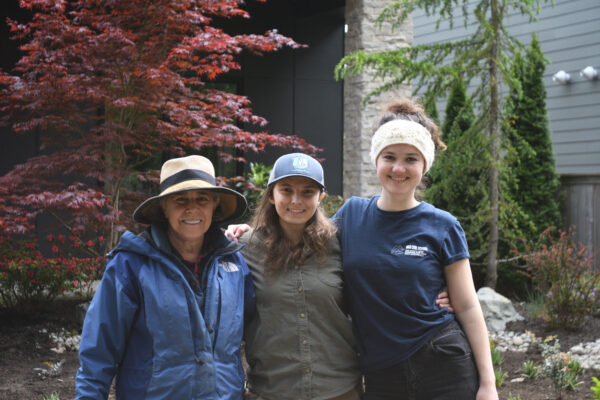
When Lynne Robins moved to the Finn Hill neighborhood in Kirkland, Washington, in 1999, she fell in love with the forested slopes and verdant landscape. Over the years, however, she saw native plants replaced by chemical-dependent lawns due to development.
“Watching these changes was heartbreaking,” said Robins, professor emeritus in the Department of Biomedical Informatics and Medical Education in the University of Washington’s School of Medicine. “I began to wonder what one person could do to make a difference.”
Inspired to act, she decided to embody the words of award-winning landscaper Mary Reynolds, who said, “If you want to help nature, you’re going to have to start with your own patch of it.”
In 2024, the “Yard by Yard” project began with support from a King County WaterWorks grant.
“The project is built on a simple but powerful belief,” Robins said. “When many people choose to integrate native plants into their own yards, together we can create healthier habitats, support pollinators and wildlife, and strengthen our local ecosystem — one yard at a time.”
Robins collaborated with Pollinator Pathway Northwest and the Finn Hill Neighborhood Alliance on the early work for the project. In 2025, she welcomed a new partner: UW Bothell’s Collaborative for Socio-Ecological Engagement.
Finding an institutional home
One of Robins’ goals in creating the project was to ensure its future didn’t depend on any one person. She wanted to find not just a partner but a place for the project to call home.
“Having spent years in academia, I saw how many good projects ended when the grant funding or principal investigator moved on,” she said. “That’s why partnering with CoSEE has been so important. The project now has an institutional home that provides continuity and long-term support.”
Leading CoSEE’s efforts in the project is Dr. Veronica Cassone McGowan, faculty director for the collaborative, and Ash Putzke, CoSEE intern. For Putzke, who graduated with degrees in Earth System Science and in Biology in June 2026, the project served as a culmination of their UW Bothell experience.
“I was drawn to the project because it related to making actual and immediate change in the neighborhood where I live,” Putzke said. “Being a part of a restoration project from start to finish was really appealing to me. This project has enabled me to take advantage of everything I’ve done and learned about through my classes and CoSEE, and pushed me to be better and learn more, too.”
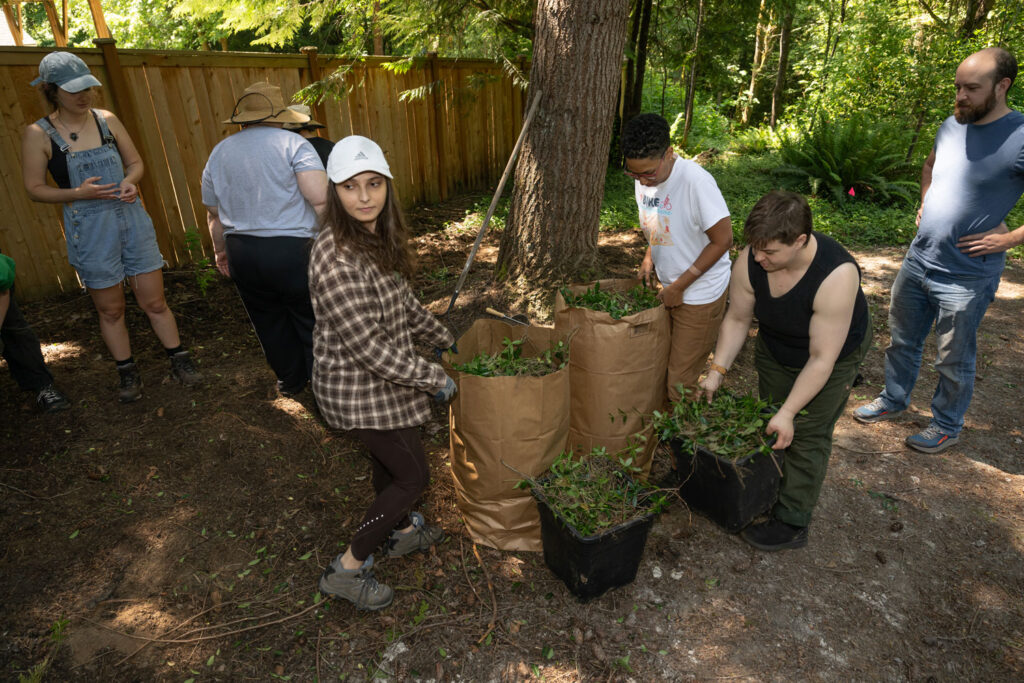
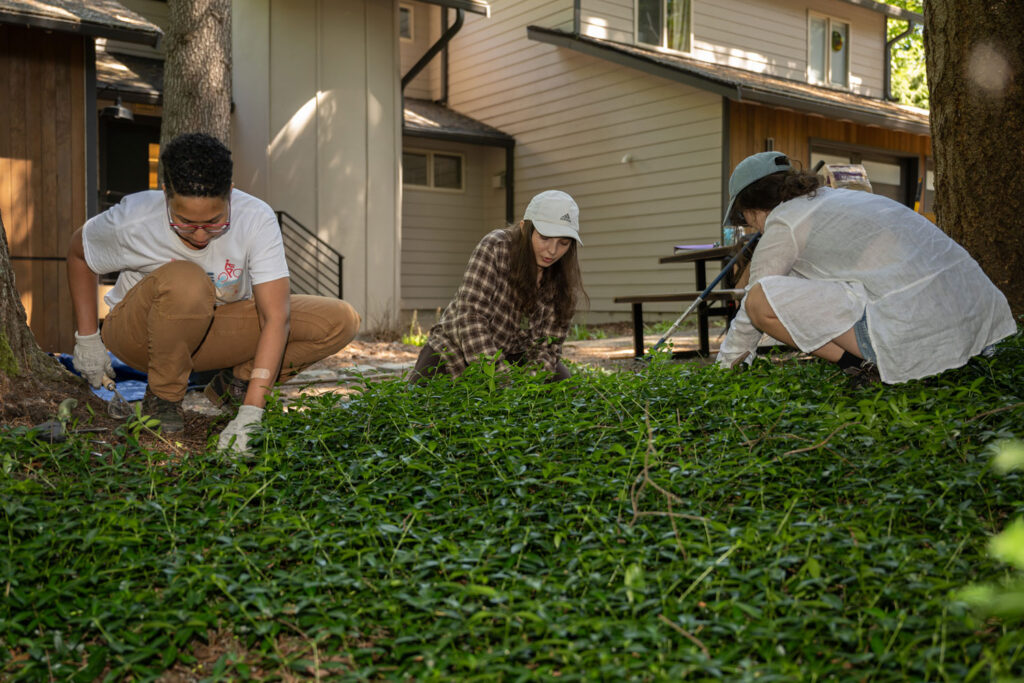
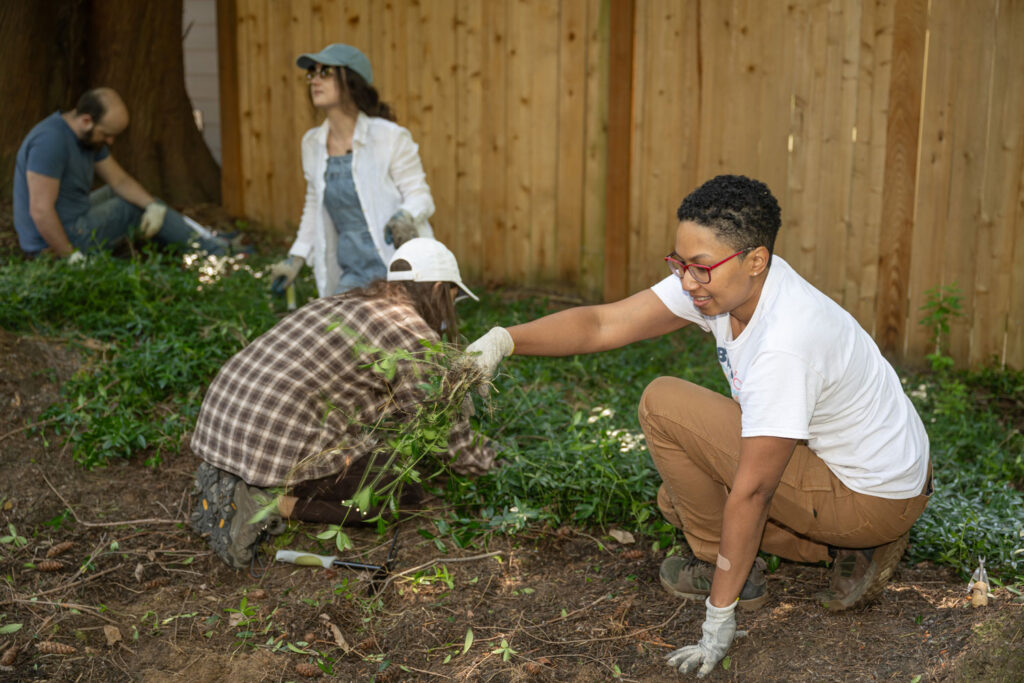
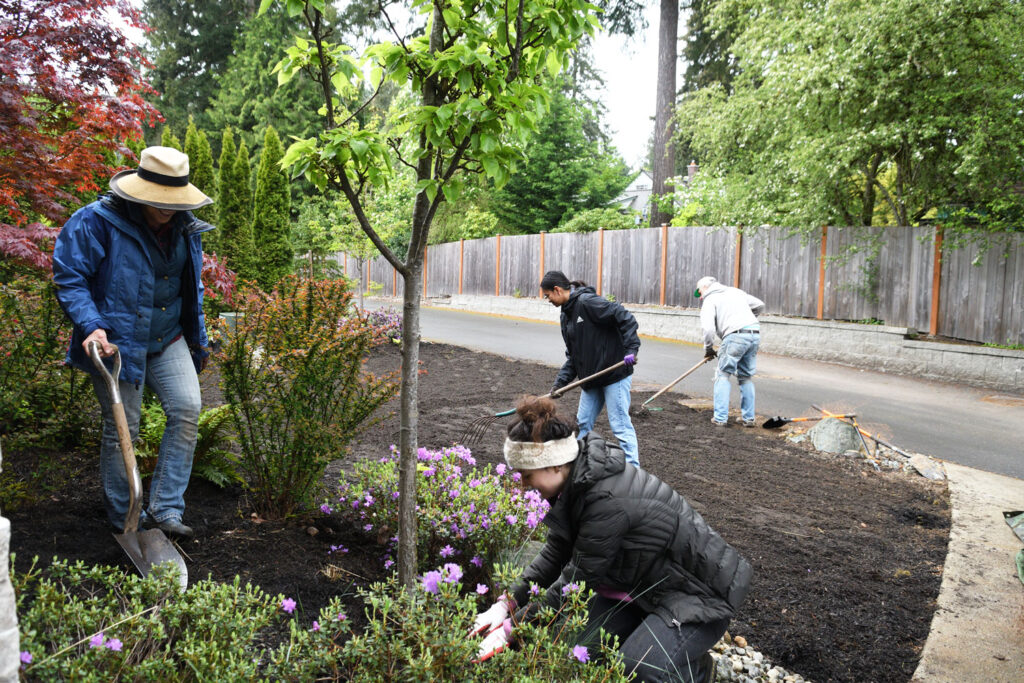
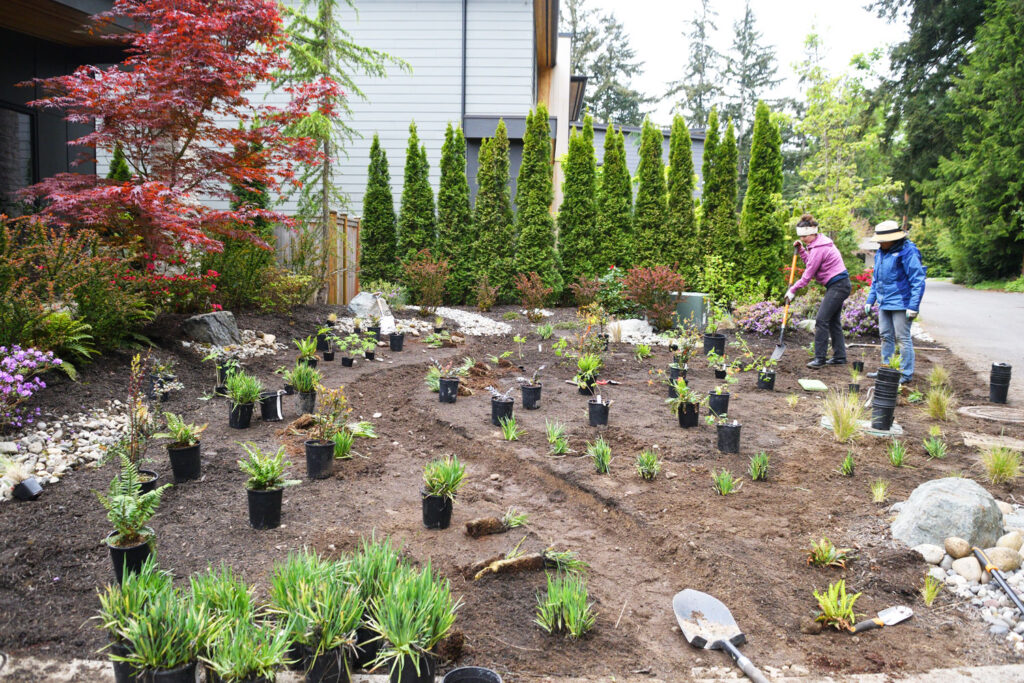
Putzke said they serve as “a bit of a multi-tool” in the project. From planning and community organizing to surveying and data collection, Putzke has been involved at every stage — including hauling dirt and picking up plants.
Creating wildlife connectivity
Robins’ vision for the project centers around three steps: education, installation and celebration. Through workshops and hands-on activities, the team helps residents understand how their landscaping choices affect pollinators, water quality and ecosystem health. Then, participating residents receive practical support, including garden design assistance, planting guidance and ongoing coaching.
Lastly, Robins said, they celebrate their accomplishments and share success stories to build community pride, maintain momentum and inspire others to participate.
For this latest round of the project, Putzke worked with the team to help decide what the priority should be — beyond the overarching goal of growing native plants.
“I was drawn to the project because it related to making actual and immediate change in the neighborhood where I live. This project has enabled me to take advantage of everything I’ve done and learned about through my classes and CoSEE.”
Ash Putzke, Biology and Earth System Science ’26
“My background is mostly in wildlife, and especially wildlife connectivity, so we decided that we would bring that into this round,” Putzke said. “We focused on areas that would help reconnect existing fragments within Finn Hill or even create new crossover points for wildlife.”
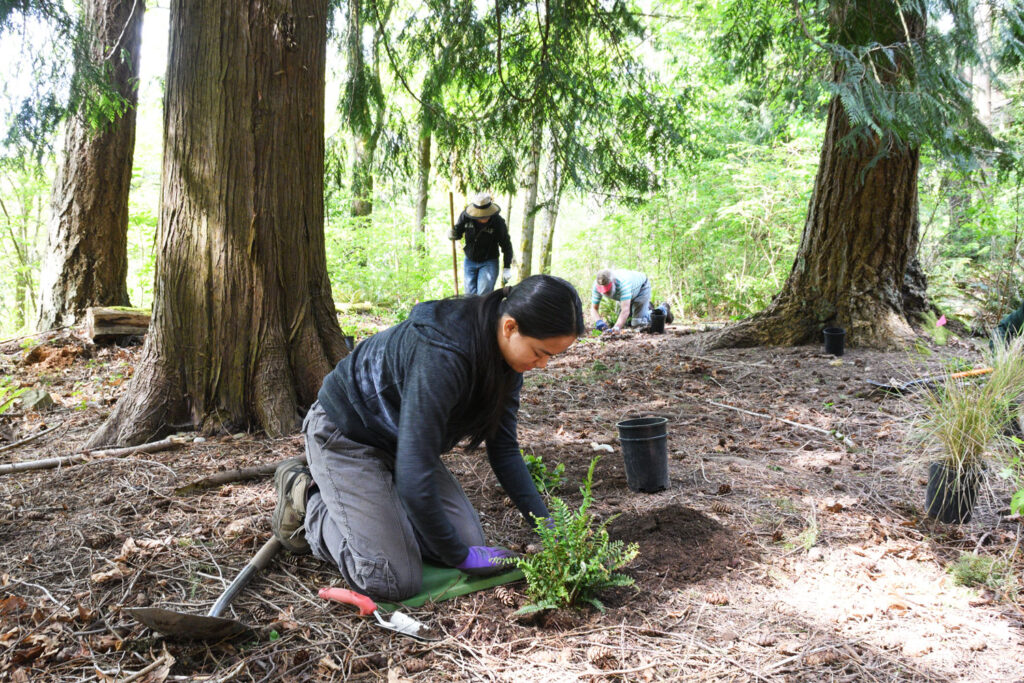
Putzke surveyed the area and identified key areas that fit those parameters. Then, they got the word out to see who might be interested in participating. Through the selection process, they found several applicants located in the areas they were looking to reinforce and create wildlife connectivity.
During the spring quarter 2026, Putzke planned and organized work for three of the homes. Also involved in the planning was UW alumna Hadley Maisel (Landscape Architecture, ’25), who served as the landscape architect for the project.
Fostering peer-to-peer learning
Homeowner Ben Luety first heard about the project from one of his neighbors.
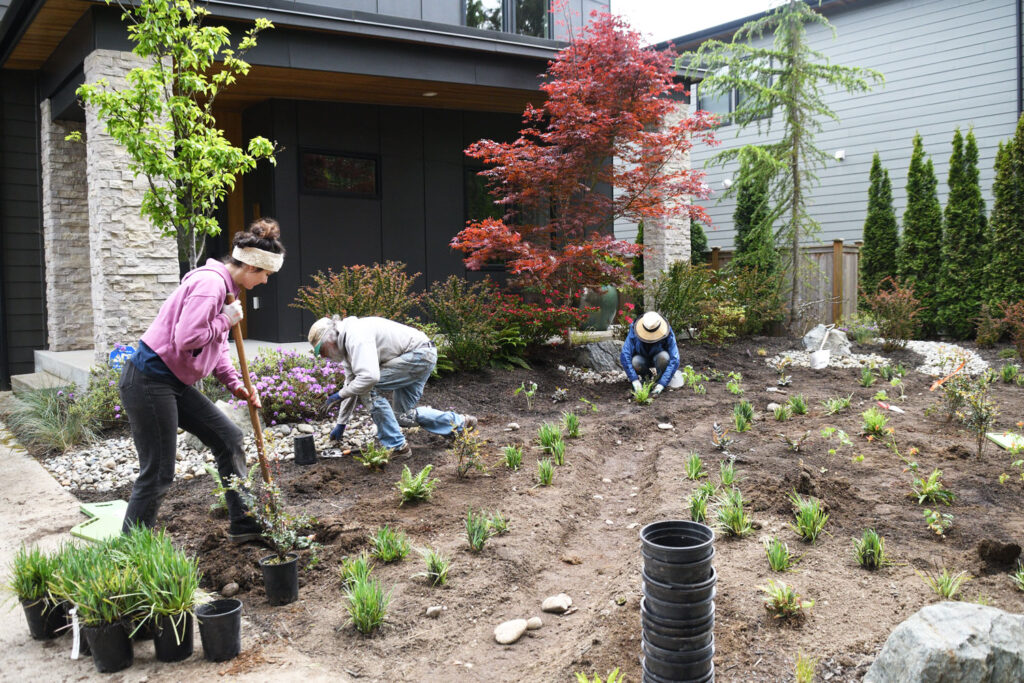
“I liked the idea of using native plants because it helps the entire ecosystem, environment and the many birds, bees and other critters that we co-exist with in our neighborhood. After all, they’re all just trying to live like everyone else,” he said. “The project exceeded my expectations in all respects. The team went above and beyond, and the entire yard looks exceptional!”
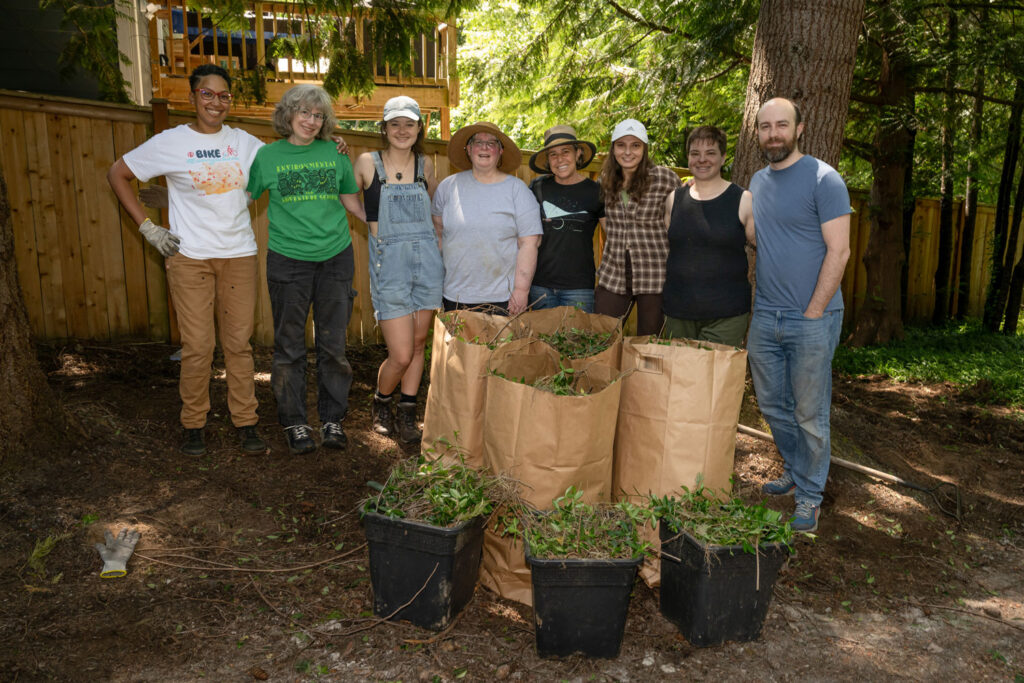
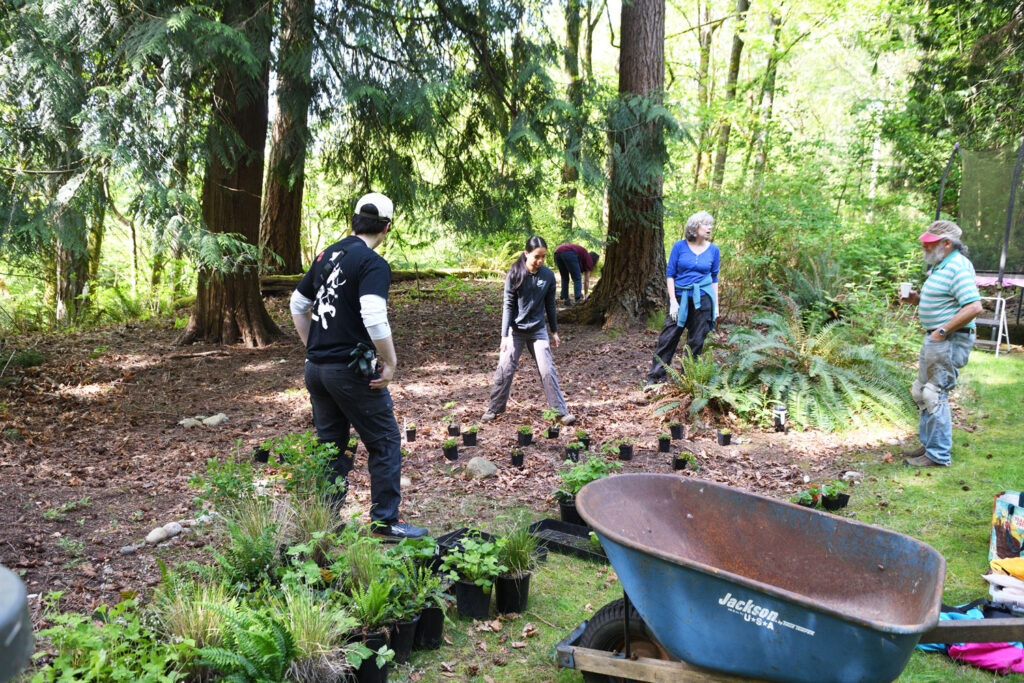
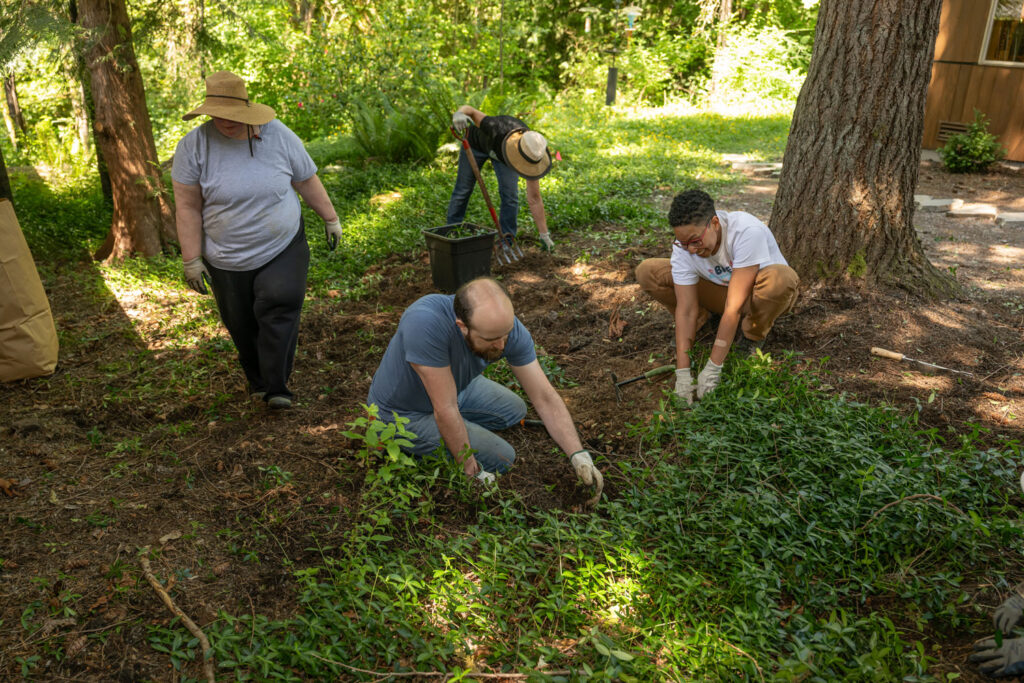
One of the most exciting outcomes, Putzke and Robins agreed, has been seeing how the project brings people together. Homeowners volunteered to support plantings and invasive species removal on each other’s properties, and they’ve been proud to show others their yards. For some, this was the first time they had interacted with their neighbors.
“By selecting clusters of neighboring properties, we’ve been able to strengthen habitat connectivity while fostering peer-to-peer learning and stewardship,” Robins said. “Participants aren’t just changing their own yards — they’re inspiring their neighbors to do the same.”
Now, when a new bird or pollinator shows up in their yard, the neighbors also email the team and share their excitement.
“It’s been really inspiring to see how many people locally are interested and motivated but just didn’t feel like they had the tools,” Putzke said. “It gives me a ton of hope for the future to know how many people are on board and just need a little bit of help getting there.”
Making changes in the neighborhood
Thus far, the Yard by Yard project has helped transform 16 residential yards — with nearly 2,000 native plants installed, creating 7,000 square feet of habitat.
“The partnership with CoSEE has taken the project further than I imagined. It has been the fulfillment of a long-held hope and gives me confidence that the work will continue to grow beyond my own involvement,” Robins said. “Students, faculty and community members can build on previous work, maintain relationships with homeowners, and continue monitoring and expanding restoration efforts year after year.”
Although she plans to remain actively involved, Robins added that CoSEE will increasingly serve as the project’s hub. A key part of the next phase will include bringing more paid undergraduate interns into the work.
“Looking further ahead, I hope Yard by Yard becomes a model that others can replicate — one that combines homeowner education, hands-on habitat restoration, student engagement and community storytelling,” she said.
“Ultimately, I want it to demonstrate that meaningful environmental change can begin at the neighborhood level.”