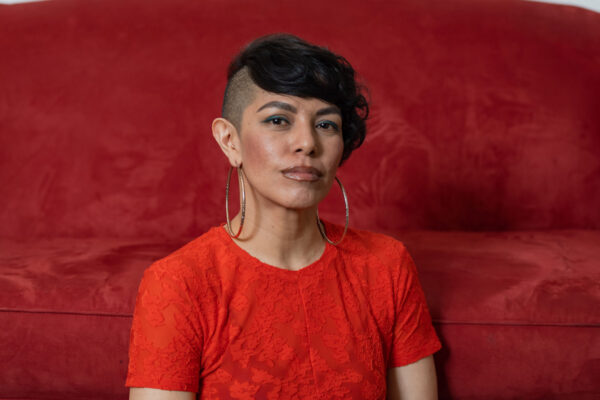
Whether moving to the big city for a job or to a new country in search of a better quality of life, migration has long been a means for people to chart a new course and expand what is possible for them and their families.
And when we talk about migration, Dr. Naomi Macalalad Bragin said, it is important to understand that we are also talking about grief. New opportunities often come with a cost — the culture, the people and the sense of place that we leave behind.
“Yes, mourning is a part of it, but there is also beauty in that mourning,” said Bragin, an associate professor in the University of Washington Bothell’s School of Interdisciplinary Arts & Sciences. “There is joy. Grief can look like celebration — an altar we build or the way we dance or a song we sing together. It can look like a collective rhythm, where we stomp our feet and clap our hands.”
In her latest project, Grief Rituals, Bragin and fellow artist-collaborators will be rolling out a series of arts practice workshops and community ceremonies in and around Seattle’s Chinatown International District throughout 2026. These events, she said, aim to create a space for people to hold feelings of loss, find places of connection and share their migration stories.
A migratory spirit
Bragin grew up in an affluent racially segregated suburb of Los Angeles. A queer mixed-race woman born to a Jewish father and a mother who immigrated from the Philippines, she often questioned where “home” was.
“I have a migratory spirit,” she said. “I love to travel and I find myself in spaces where English is not the primary language spoken.. I would actually say that what I carry with me is my home. Wherever I am, I learn how to make home with those who I am connecting with in that space. But home is also, in some ways, something I leave behind.”
As a dancer, Bragin added, movement is also her practice and the foundation for her art. It is its own kind of migration.
“A lot of the work I’ve done as an artist is about wondering and wandering,” she said. “I have this spirit in me that I call my unsettled wild spirit, who I’ve learned to love. Sometimes being unsettled in that way can be very discombobulating because you don’t feel super rooted, but I’ve learned to embrace that feeling, utilize it as a superpower and channel it into my artistic expression.”
Much of Bragin’s work around migration is grounded in the creative partnerships she has formed with other local artists. In 2018, she launched Little Brown Language, a trans-disciplinary performance collaborative of leading local artists and organizers.
A tidal wave of grief
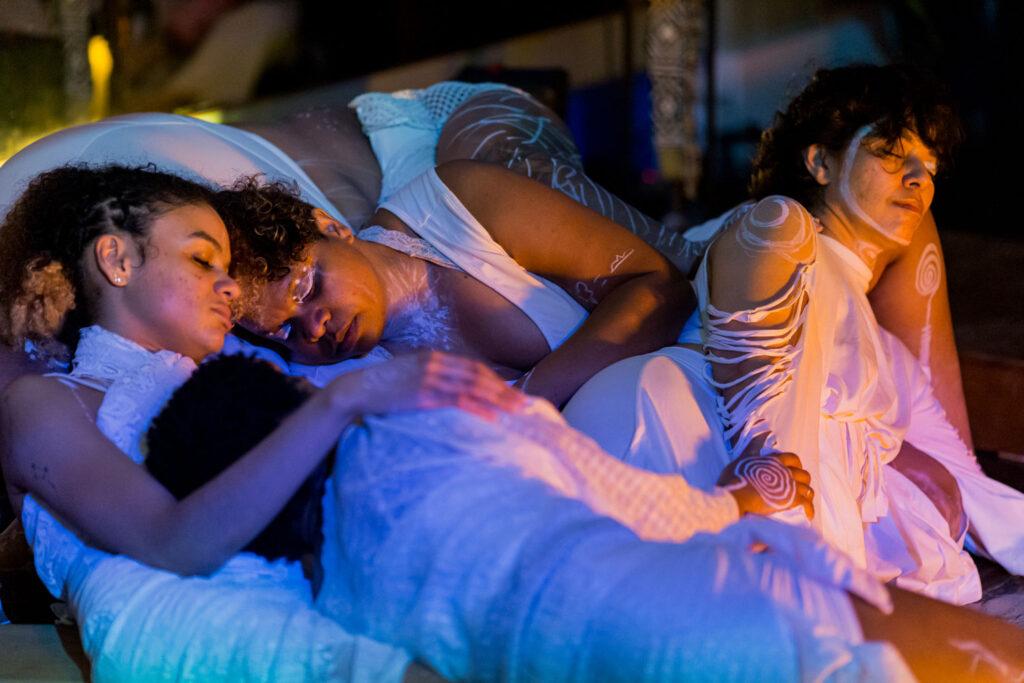
Serving alongside her as a co-artistic director of the Grief Rituals project is Milvia Pacheco Salvatierra, a dancer and community organizer who works with Movimiento AfroLatino Seattle. The pair began performing together in 2019 and conversing around ideas of intercultural encounter, language loss and ancestral healing — Pacheco is Afro-Venezuelan — and questions about their homelands and cultural identities.
They began to look at migration through the lens of grief in 2024, when they began partnering with Derek Dizon, founder and steward of A Resting Place, a grief and loss cultural resource center in the Chinatown International District.
“I was moved by the way Derek created space for people to grieve collectively,” she said. “I got very interested in thinking about migration through that framework of grief because it was such a powerful way to reflect on the hidden histories within our communities.
“As I began to make those connections and apply them to my artistic process,” she said, “it was like my community of artists who were interested in entering the conversation with me suddenly grew.”
Then, in 2025, growing political rest contributed additional context to their exploration of grief and migration. Grief Rituals was created to address the theme of migration through collective experiences of grieving and healing from a place of community.
“Grief can’t just be viewed as a private, individualized experience,” Bragin said. “Because of the ongoing tidal wave of grief that we’re experiencing in this political and cultural moment, I knew that it was important for me — as someone who connects my artistry to what is happening in the moment — to address grief as a practice that can bring people together and create solidarity.”
A storytelling collection
The Grief Rituals project is supported by funding from King County’s 4Culture and city of Seattle’s Office of Arts & Culture initiative, “We Still Dream a Future.” Community collaborators include Nia-Amina Minor, co-founder of Black Collectivity, Derek Dizon, members of Black Collectivity Nia Amina Minor, Akoiya Harris and marco farroni, poet Jasminé Smith, and artistic consultant Ellen Sebastian Chang.
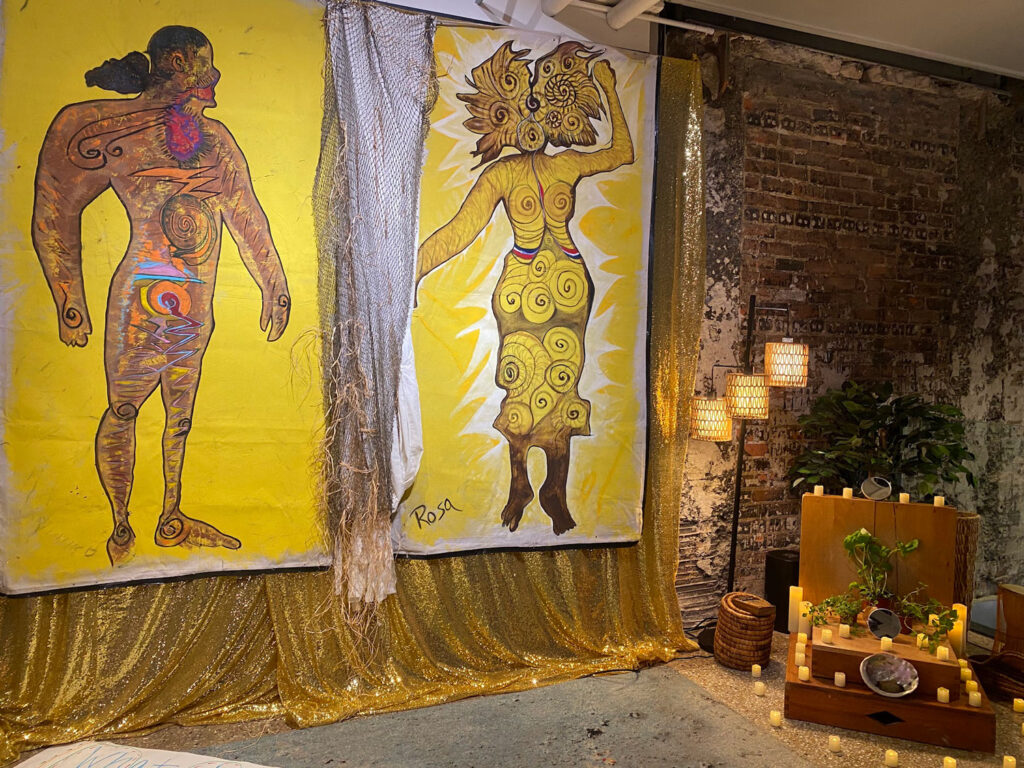
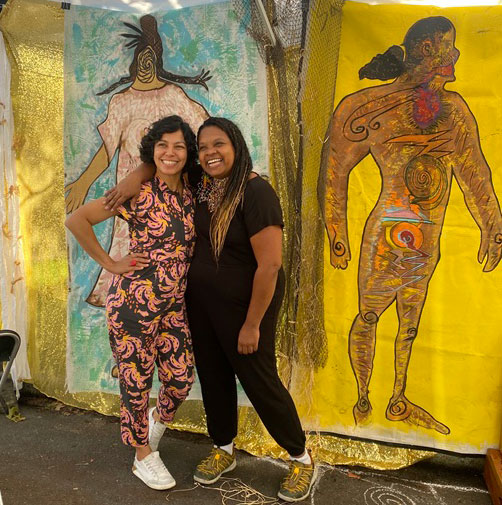
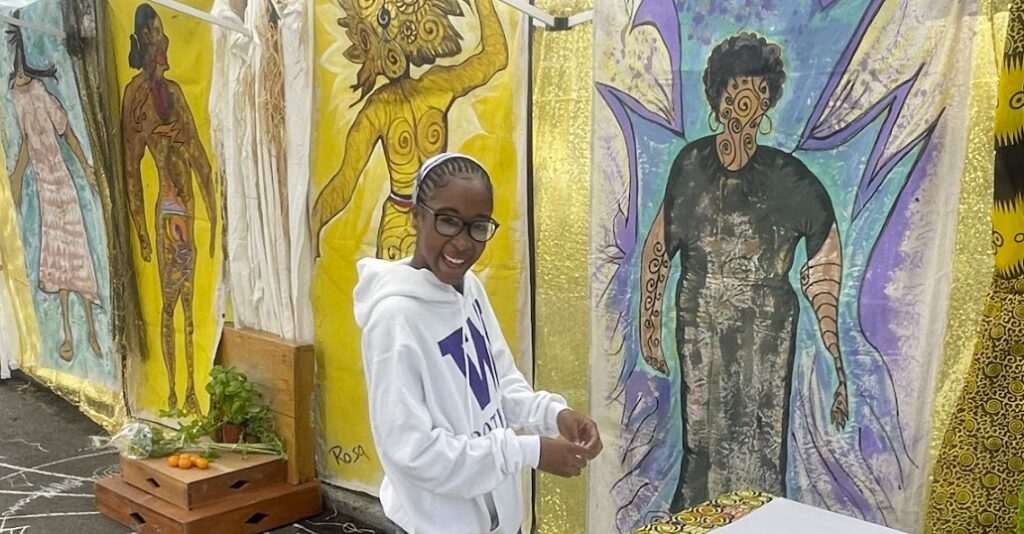
To launch the project, Little Brown Language created a pop-up installation called the Migration Story Station, which traveled to different community events in Seattle last fall. Visitors to the pop-up station were invited to share their migration stories to inform the artists’ creation of a dance-activation that will be offered to the community as a free public event in the spring. The artists asked visitors to respond to two questions to prompt their thinking around migration and grief: “What do you carry with you?” and “What do you leave behind?”
Mariyah Hicks, a sophomore Media & Communication Studies major at UW Bothell who is serving as a research assistant to the project, helps to collect and record these stories.
“Creatively, it’s inspiring to watch people pour out their lives into one sheet of paper through words, symbols, shapes, mottos and more,” Hicks said. “I love the process of creating a path for people to properly heal from the past so that they can live in the future with peace of mind. And ultimately, once their stories are shared, they’re not just disposed of but are transformed into a new way of expression.”
As her goal is to someday become a news anchor and to have her own talk show, Hicks said she found the opportunity to listen to different stories and perspectives especially valuable.
“This project helps me to open my eyes and realize that everyone has their own stories. Everyone is carrying something with them and having to leave behind something,” she said. “So, as I narrow down my message that I want to share with the world, I want to keep that perspective in mind.”
A shared space for healing
Throughout the year, the Grief Rituals project will unfold through a series of community workshops, performances and opportunities for community sharing. The project will culminate Saturday, Oct. 3, with a processional migration from A Resting Place to King Street Station and on to Migration Stage, a sculptural installation created by artist Buster Simpson that faces the Seattle Ferry Terminal.
“We are very much interested in adding our artistic expressions to conversations about the hidden histories of these specific locations in Seattle, and learning ways we can support transformative healing of our communities through art,” Bragin said.
“It’s really an honor and a gift to be able to do this work. It’s challenging in many ways, yet I feel in this moment that this project gives us a place to pour our grief into this collective container,” she said. “There’s something about being invited to share our stories, to have them witnessed and reflected back to us, that allows for healing to happen.”
“This project helps me to open my eyes and realize that everyone has their own stories. Everyone is carrying something with them and having to leave behind something.”
Mariyah Hicks, sophomore, Media & Communication Studies