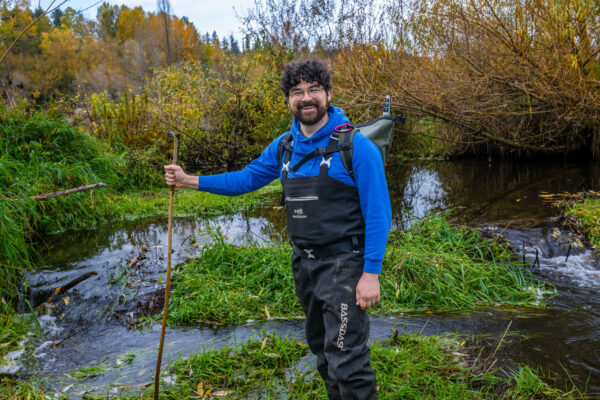
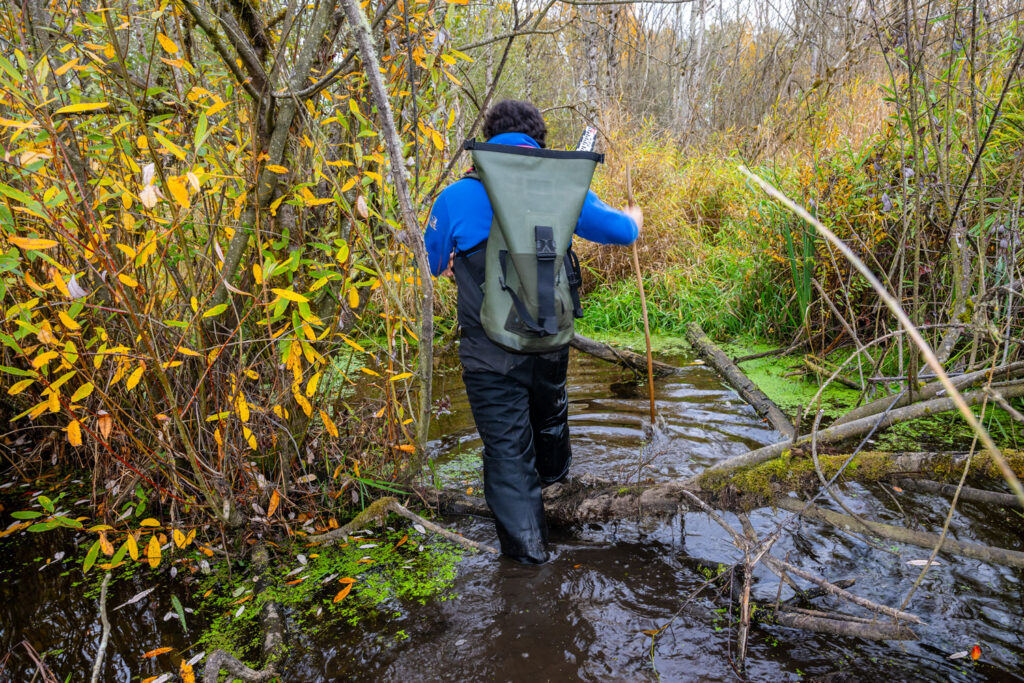
In fall 2023, as an Earth System Science major at the University of Washington Bothell, Dashiell Paulson wandered into the North Creek wetland on campus one day, looking for ideas for a capstone project, when he noticed the water levels were much higher than they’d previously been.
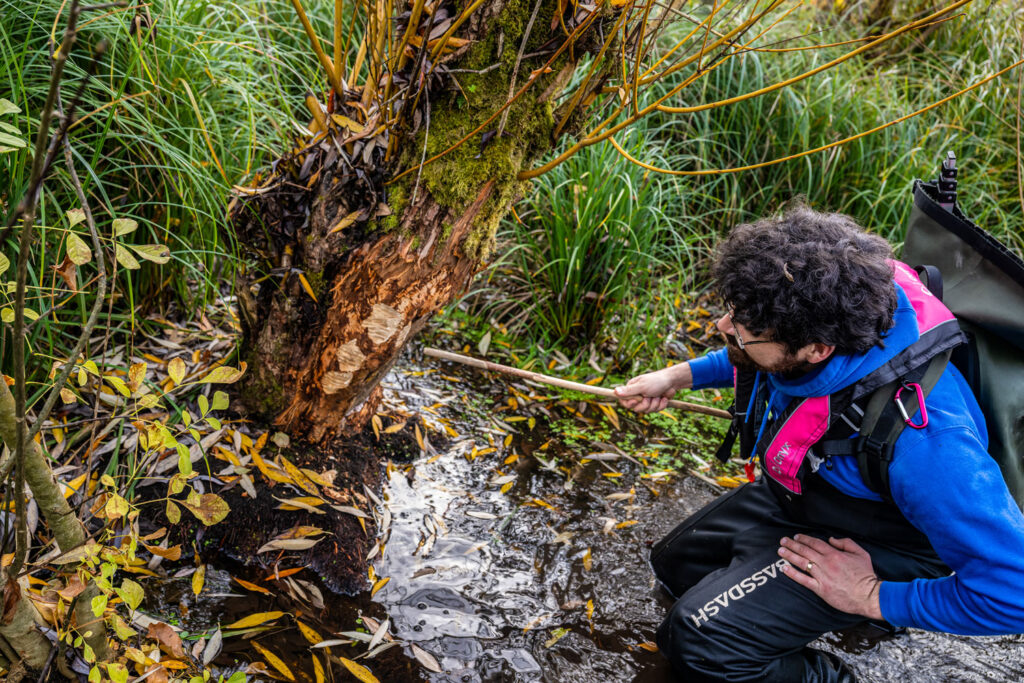
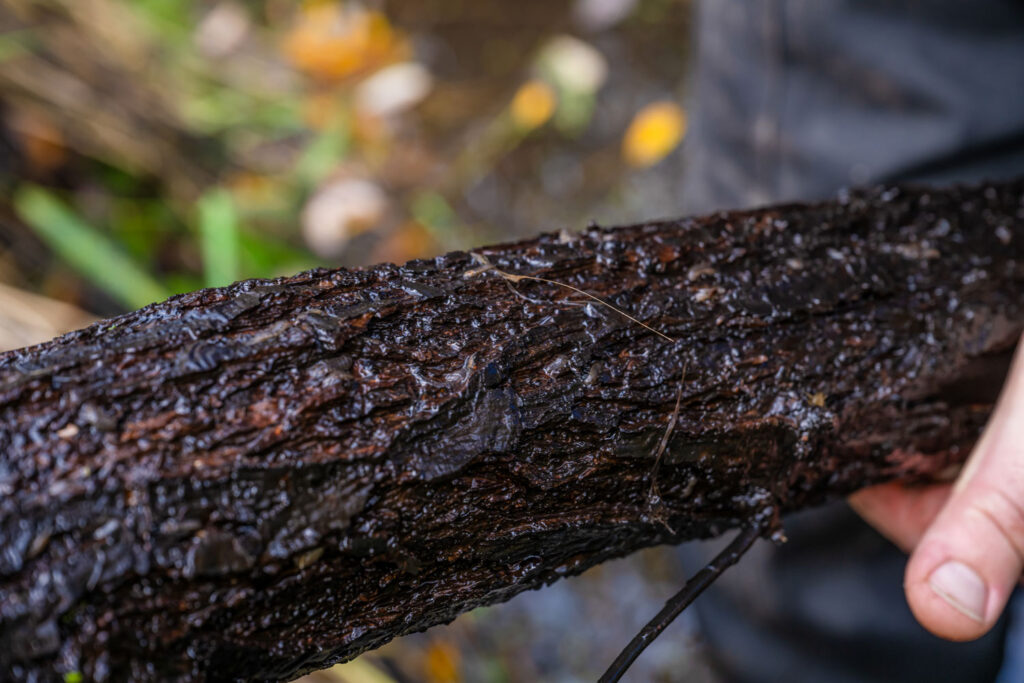
“I made my way over to what I discovered was a beaver dam, which was causing the increased water levels,” he said. “I thought, ‘Oh, this is interesting. There are beavers in here. I’d never seen a beaver in the wetland before, but the evidence was obvious.’”
He approached members of the grounds team about its plans for the dam. As it was salmon spawning season, they didn’t want to knock it out completely and risk washing out the gravel nests where salmon lay their eggs. They gradually notched it back instead to release more water.
Paulson offered to monitor the dam and the beaver’s activity for them as his capstone project.
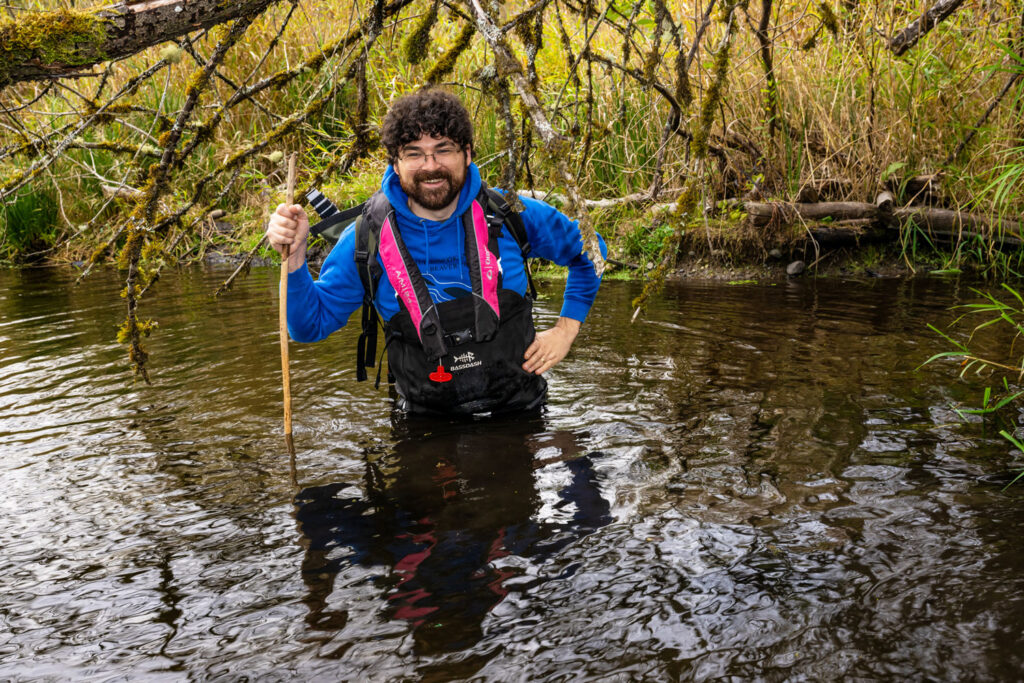
“I spent the next two years monitoring those beavers,” he said. “It started with just trying to count them and find more dams, but then the research evolved from there.”
Now a wetland scientist, the alumnus recently shared what he’s learned in “Beaver Habitat Best Management Practices,” a report for the Washington Department of Fish & Wildlife.
Launch of a new career
Paulson didn’t always know he wanted to be a wetland scientist. In fact, it’s something of a third career for him, he said.
In 2015, he graduated from the University of Oregon with degrees in history and journalism. He then worked as a reporter. It was a time when many newspapers were struggling, and the industry at large faced contraction. About a year in, he lost his job in a round of layoffs.
When his then-girlfriend, now wife, got into a master’s program in London, he decided to go with her on a student visa. He went to culinary school and after returning to the U.S., worked in restaurants across the country — from Los Angeles to New York City.
He was a chef de partie in New York when nearly every restaurant in the city closed the week of March 14, 2020, at the start of the COVID-19 pandemic. He again decided to pivot to a new career. This time, in environmental science.
“If it weren’t for the pandemic, I might still be hustling in kitchens in New York,” he said. “I think this change happened for the better, because one of the reasons I got into environmental science is because I want to make a difference in the world in my lifetime.”
One-of-a-kind living laboratory
After returning to the Pacific Northwest, Paulson enrolled in Cascadia College. It was during a wetland ecology class there that the idea of working in wetlands first piqued his interest. The following year, he went to a Society of Wetland Scientists conference in Spokane, Washington, and that cinched it. He enrolled in the UW’s Wetland Sciences and Management certificate program and, at the same time, transferred to UW Bothell as an Earth System Science major.
Already familiar with the North Creek wetland from his time at Cascadia, he knew it was an ideal research setting for his capstone project.
“North Creek is a really amazing wetland and campus resource — a one-of-a-kind living laboratory,” he said. “I feel like a lot of the times it gets forgotten because it’s this wet, dark, forested place on the edge of campus. But I want people to know how useful it is for research and how they can get their start in environmental science there.”
“North Creek is a really amazing wetland and campus resource — a one-of-a-kind living laboratory. I want people to know how useful it is for research and how they can get their start in environmental science there.”
Dashiell Paulson, Earth System Science ’25
Following his talk with the grounds team, Paulson got his adviser, Dr. Avery Shinneman, teaching professor in the School of Interdisciplinary Arts & Sciences, on board and began work on his beaver project. He set up wildlife cameras and used pictures of their tails to try and identify individual beavers and get a sense of how many were calling the wetland home.
From there, more projects in the wetland sprang up — from using drone footage to get an aerial sense of the water’s boundaries to temperature monitoring.
A case for coexistence
In 2024, Paulson went to BeaverCon in Boulder, Colorado, where his knowledge and passion for beavers caught the attention of his future employer. Shortly before graduating in winter 2025, Paulson began working as a wetland scientist for an environmental consulting firm, Compass Ecospatial.
Putting what he knew about the little critters into writing in the best management practices report was his first job. He served as the lead author on the document, in conjunction with Beavers Northwest.
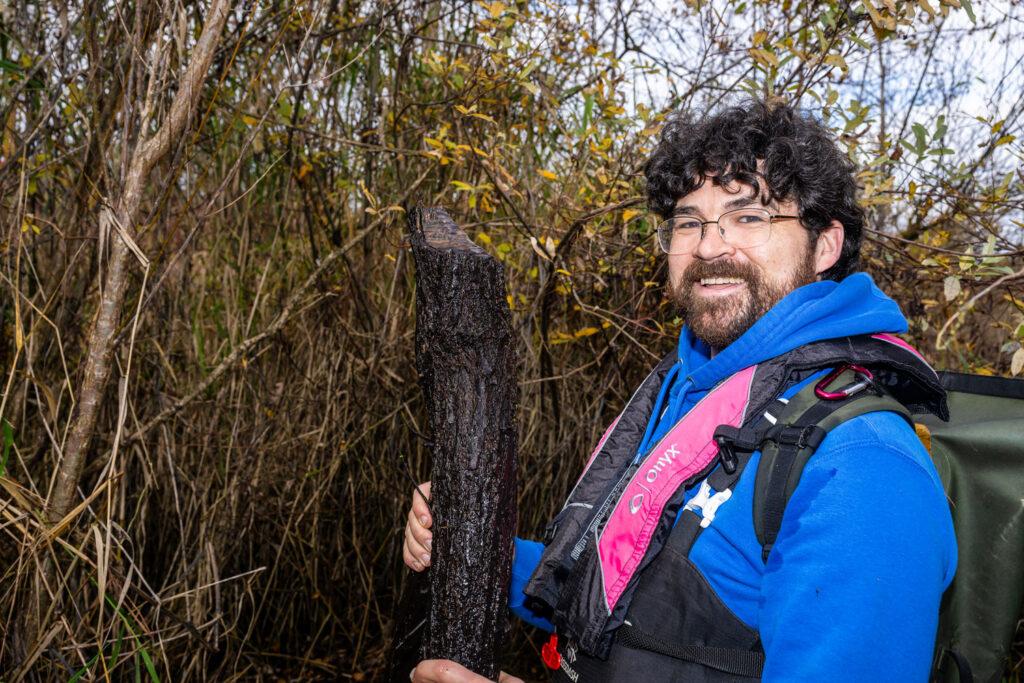
“The most important takeaway from this report is that beaver coexistence is very possible, and they bring an awful lot of benefits,” he said. “This document itself kind of goes against the paradigm of seeing beavers as a nuisance — a pest to be removed. Instead, it makes the case for beavers and why they should stay on the landscape, as well as different pathways for how that can work.”
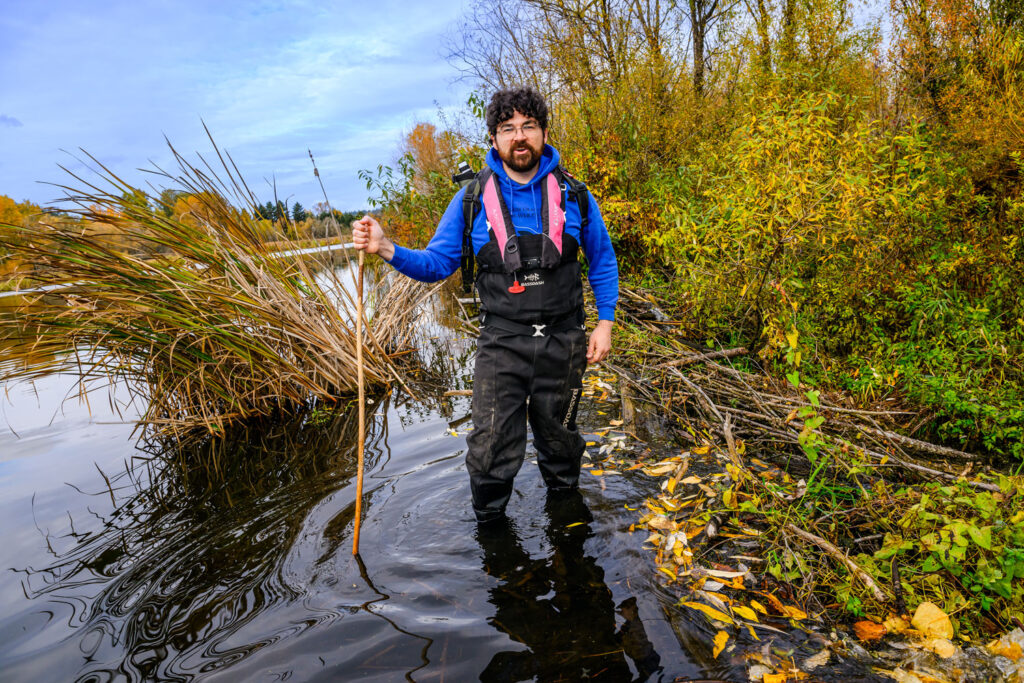
Paulson drew on his own experience witnessing the restoration powers of beavers firsthand in the North Creek wetland.
“What they’re doing is actually super natural, and I think they’re making the environment a lot healthier,” Paulson said. “They’re making it more resilient by spreading the water out over that wetland, which is what it kind of wants to do. And at the UW Bothell campus, they have the room for it — and the grounds team has the patience to watch things change and embrace a different, but still functional, version of the wetland.”
Room for climate protectors
Now, as an alumnus, Paulson plans to continue volunteering his time on campus to help shape the future of the wetland.
“I want it to be a space where people can come hundreds of years into the future and do really great research,” he said. “I want to help where I can. It’s still a young wetland, and I want to help nurture it into the best version of itself that it can be as it matures.”
While the North Creek wetland holds many opportunities for undergraduate research and regional vitality, it can also offer insights into how best to navigate the climate challenges ahead, he added.
“Climate change is going to make life a lot harder for people and animals, and I want to do whatever I can to lessen that burden and make us more resilient against climate risks,” he said. “I think beavers hold the key to that.”
Through their efforts, beavers create habitat for other species and improve water quality, he said. They can also increase resilience when it comes to drought, wildfires and floods.
“They do a lot just through beavering,” he said. “I’d like to spend my career hopefully making more room for them — and for wetlands on our landscapes — because I feel that wetlands are going to be critical to protecting our society against climate change.”
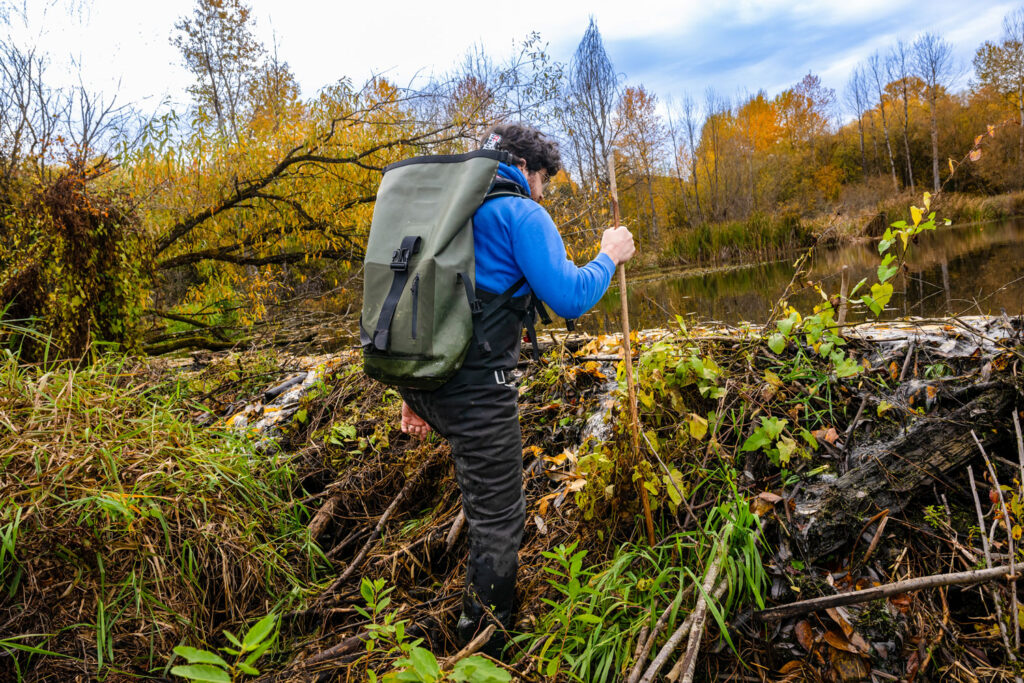
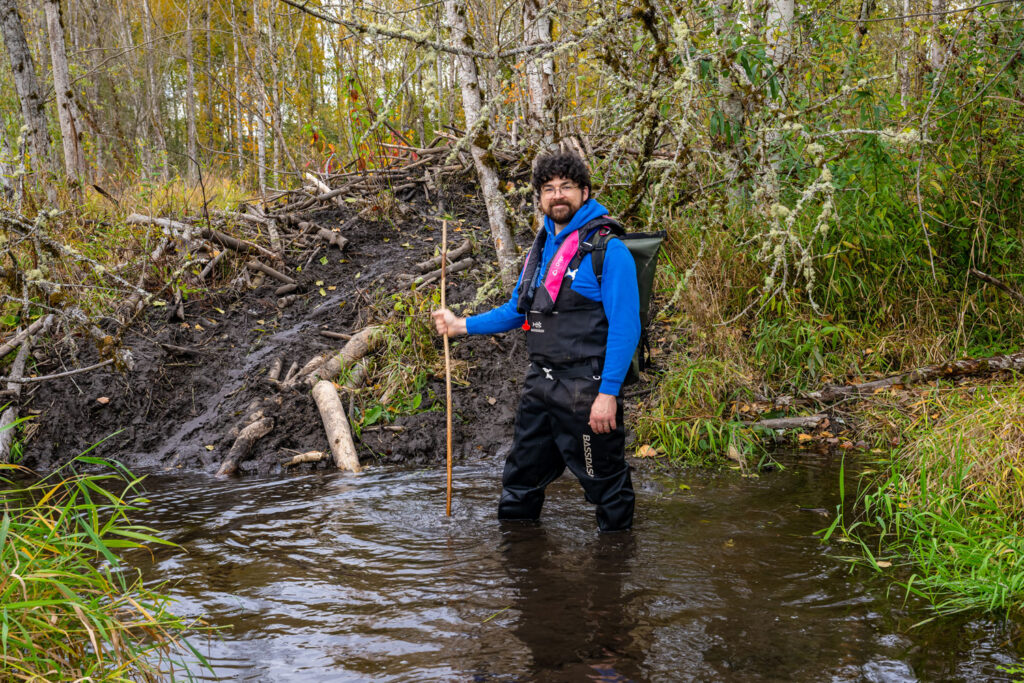
Through all his work with the beavers, Paulson became something of a resident expert for the campus. His enthusiasm for the industrious little builders was contagious — and caught the eye of the campus videographer, Kenny Katz. Together, the pair worked on a documentary, “Betting on the Beavers: UW Bothell’s Nuisance Turned Neighbor,” released this fall. The documentary follows Paulson’s investigation into how beavers reshape landscapes, support wetlands and help us withstand a changing climate.