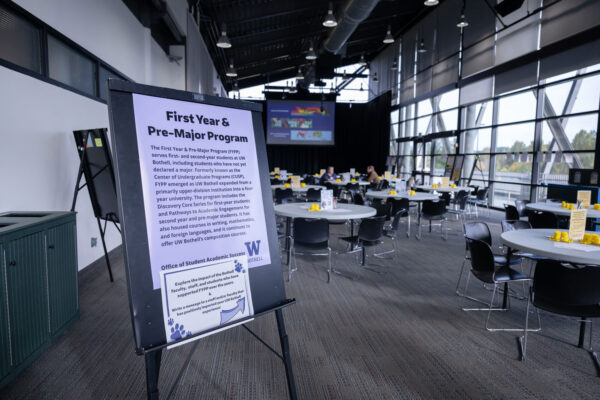
At the University of Washington Bothell, the first year for incoming students is designed to be its own unique experience — offering not only a foundation for the following years of study but also an opportunity for exploration and discovery.
In 2006, when it launched, the Center for University Studies & Programs served 136 incoming first-year students. Now known as the First Year & Pre-Major Program, it continues to serve incoming first-year, pre-major students and transfer students. In September 2026, it welcomed an incoming first-year class of 1,152 students.
“I think FYPP is a life-changing experience for students,” said Dr. Cinnamon Hillyard, associate vice chancellor and dean for student success. “So many students come in as first-generation on our campus and maybe believe there’s only one path for them. I think FYPP — the Discovery Core classes it includes — provide lots of opportunities for students to just explore… to see that there are so many different paths to get to their goal, and that’s really exciting for students.”
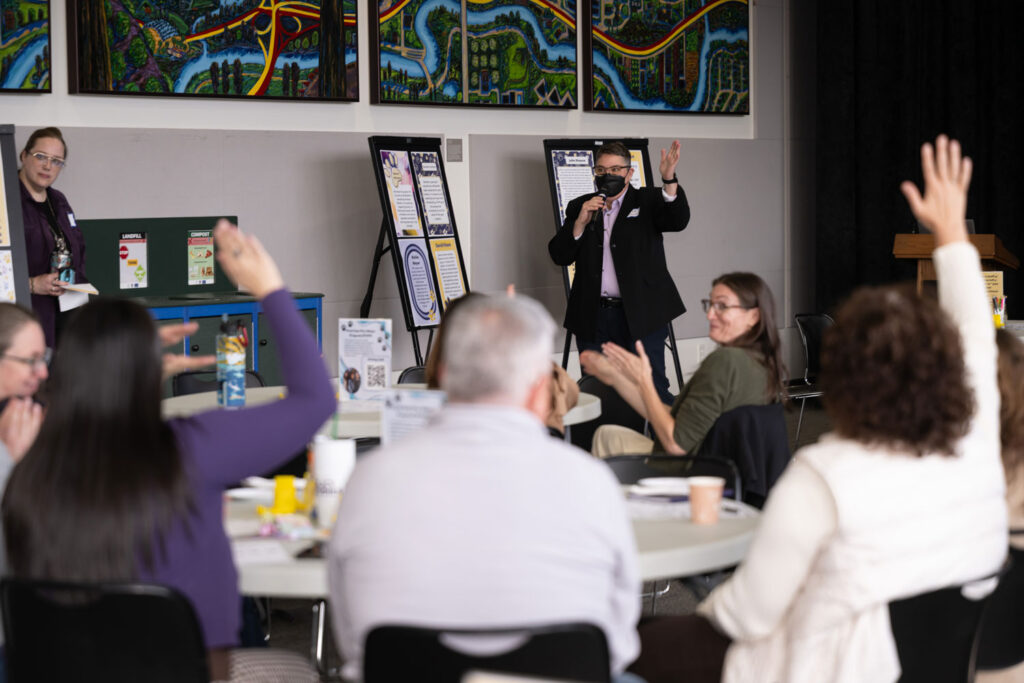
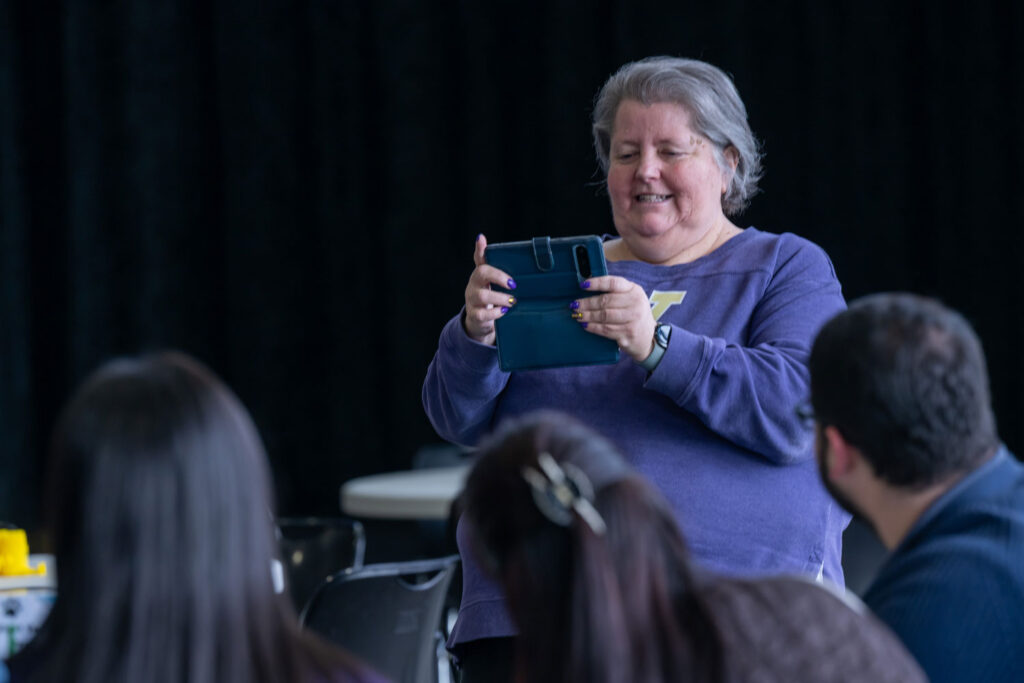
The inaugural class
Leading the charge on the new program was its inaugural director, Dr. Gray Kochhar-Lindgren. He built out the signature course offerings that represent the innovative structure of general education at UW Bothell today.
“It was an extraordinary opportunity to collaboratively develop a brand new interdisciplinary and pedagogically inventive co-curriculum that would lay the foundation for students, faculty members and an institutional identity that takes a regional and national leadership role in interdisciplinary higher ed,” he said. “It provided a creative portal into the University in which students were able to practice making connections across disciplines and topics vital to their own and to the world’s flourishing.”
The first cohort of students also served as early ambassadors for the University, he added, and were actively engaged in providing input to help improve the program for the next cohort.
Now 20 years ago, Hillyard was also among the faculty who helped design FYPP, or CUSP as it was then called. In its original inception, it was created to function much like an honors program with a select class of about 100 students. But as the University grew, so, too, did the program.
“We decided we were going to grow, and we had to adapt to think about how we were going to do this thing at scale,” Hillyard said. “How would we provide that honors experience and that experimentation for a larger class?”
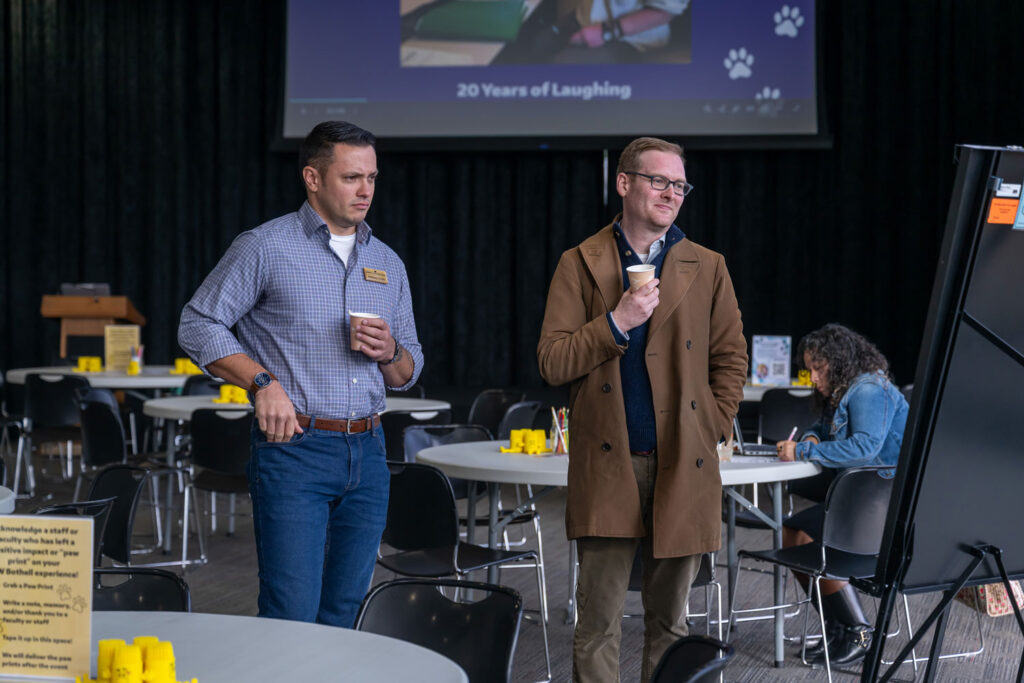
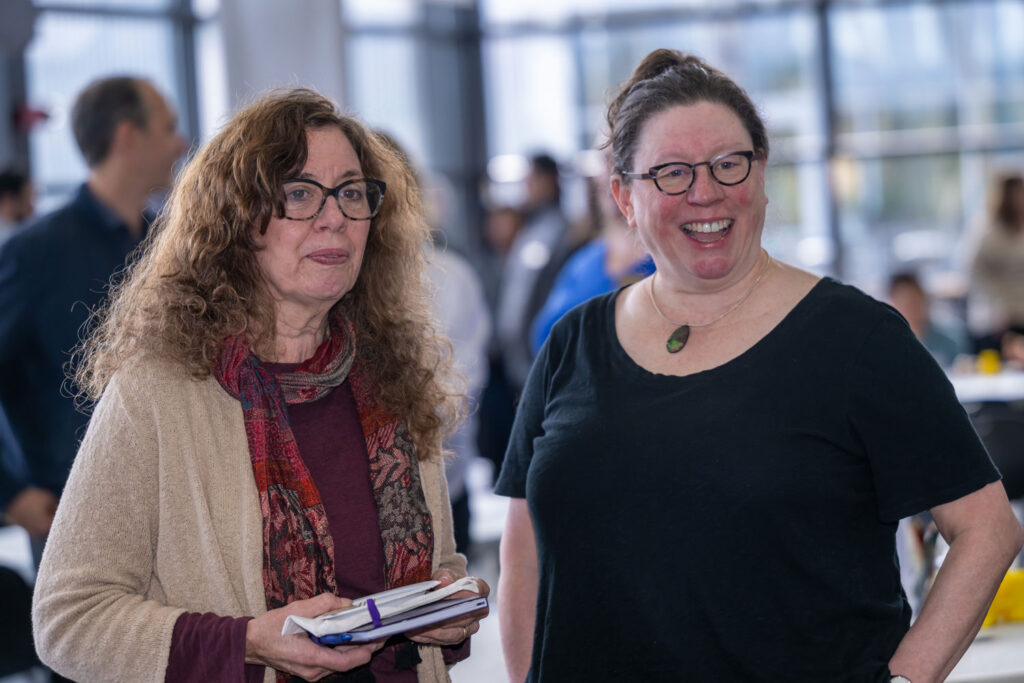
Growth and adaptation
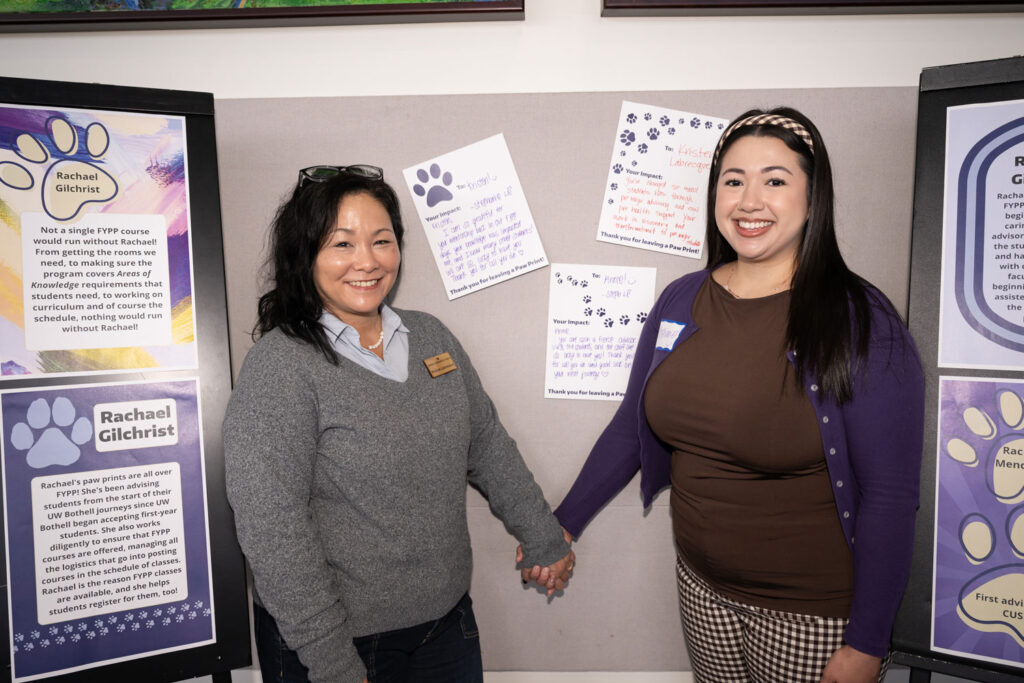
Now an assistant director for pre-major advising at UW Bothell, Rachel Gilchrist was an early adviser. She started in November 2007 and, in addition to her advising duties, quickly became a “Swiss army knife” for the program, managing course scheduling and helping to create structure as it grew.
In 2008, UW Bothell began accepting pre-major students who were not first-years, and Gilchrist was on the front lines managing the change.
“I love supporting young people and their dreams,” she said. “It feels like I’m a piece in helping move that student along in whatever direction they want to go.”
Her role as an adviser also put her in the perfect place to hear and respond to student input. When students started asking about the possibility of studying abroad, Gilchrist began planting the seeds for a study abroad program that Natalia Dyba, director of global initiatives, would later launch.
CUSP’s continued expansion led to further cross-campus collaboration, and in 2011 the program welcomed Dani Rowland as the inaugural first-year experience librarian. The program also housed — and continues to be the home for — all composition courses.
“The library wanted to work with as many first-year students as possible,” Rowland said. “Because all incoming first-year students were directed into the Discovery Core, and most majors on campus required 10 composition writing credits, we were able to build in information literacy instruction in a scaffolded way by reaching the same students twice in their first two years of college.”
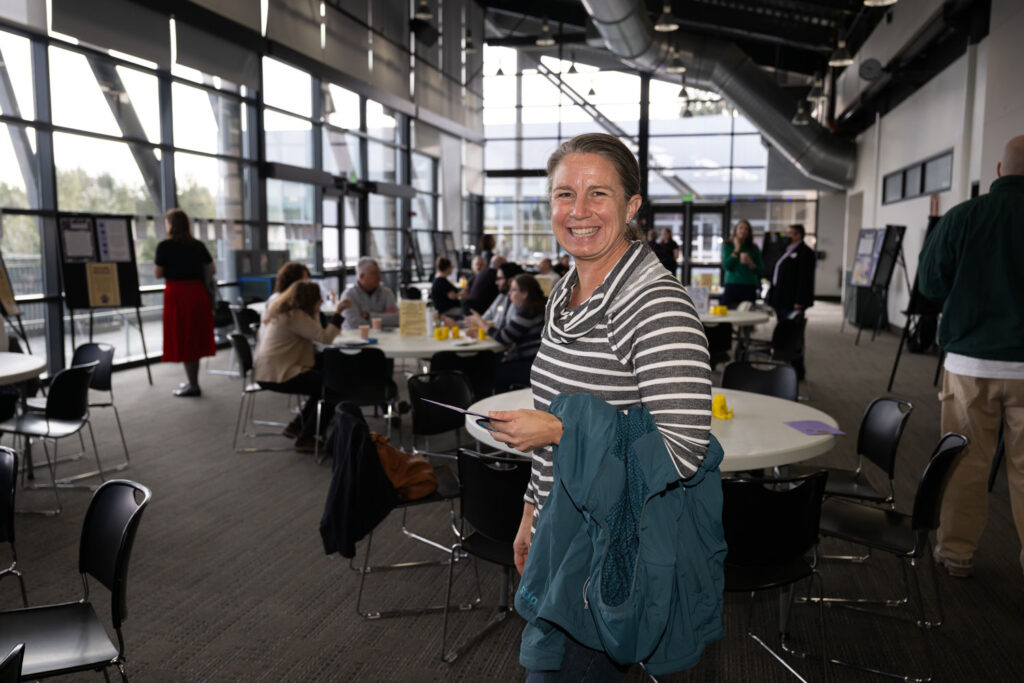
Experimentation and discovery
Interdisciplinarity sits at the heart of the Discovery Core experience for both students and faculty.
“Clearly, students always need to be the center of the focus of such programs,” Kochhar-Lindgren said, “but such an organizational design also provides for a collaborative enlivening of teaching and research for faculty members.”
For Dr. Avery Shinneman, a teaching professor in the School of Interdisciplinary Arts & Sciences, her interest in Discovery Core courses evolved over the years from teaching them to taking on the role of co-director — twice.
“I like the faculty development part of this work,” Shinneman said. “I get to see all the different things our faculty are doing and the interesting classes they’re teaching in a big picture way —and see at a high level how our courses are helping to shape opportunities for first-year students.”
“I get to see all the different things our faculty are doing and the interesting classes they’re teaching in a big picture way — and see at a high level how our courses are helping to shape opportunities for first-year students.”
Dr. Avery Shinneman, teaching professor, School of Interdisciplinary Arts & Sciences
When the program first launched, it offered five DCX courses. In autumn quarter 2026, the program has 35 offerings for students. Driving this expansion, Shinneman said, has been the creativity and enthusiasm faculty show.
“Faculty really can run with their own ideas in these courses. The curriculum they provide sits at an intersection of something they’re passionate about that also really hits that interdisciplinary mark of being interesting and engaging across multiple schools,” she said.
“The first requirement, though, is that they have an interest in first-year students as a group of people who are in a transitional moment and need faculty guidance to get to the place where they can be sure of their pathway.”
For student success
The success of FYPP is evident not only in the enjoyment that both faculty and students alike experience in these courses, Hillyard noted, but also in student retention rates. For the past decade, first-year retention at UW Bothell has remained above 85% — 5% higher than the national average for public four-year institutions.
“The reason we still require these courses for students is because we have the data that shows students who take them discovered more and were more likely to persist and graduate on time,” Hillyard said. “We also feel that it provides a really safe space for students to start and feel like they belong.
“It’s not uncommon for me to see students at graduation standing in line with friends they met in their Discovery Core classes. So it’s about more than just the academics. It’s a place where they can build friends and find community.”
Always looking to grow and improve in how the program serves students, Hillyard added that FYPP plans for the future include providing more opportunities for students to engage in experiential learning and career readiness as well as redesigning its tutoring centers to support lifelong learning skills for an ever-changing world.
To learn more about some of the courses taught in the Discovery Core Experience, read another recent feature on the program.