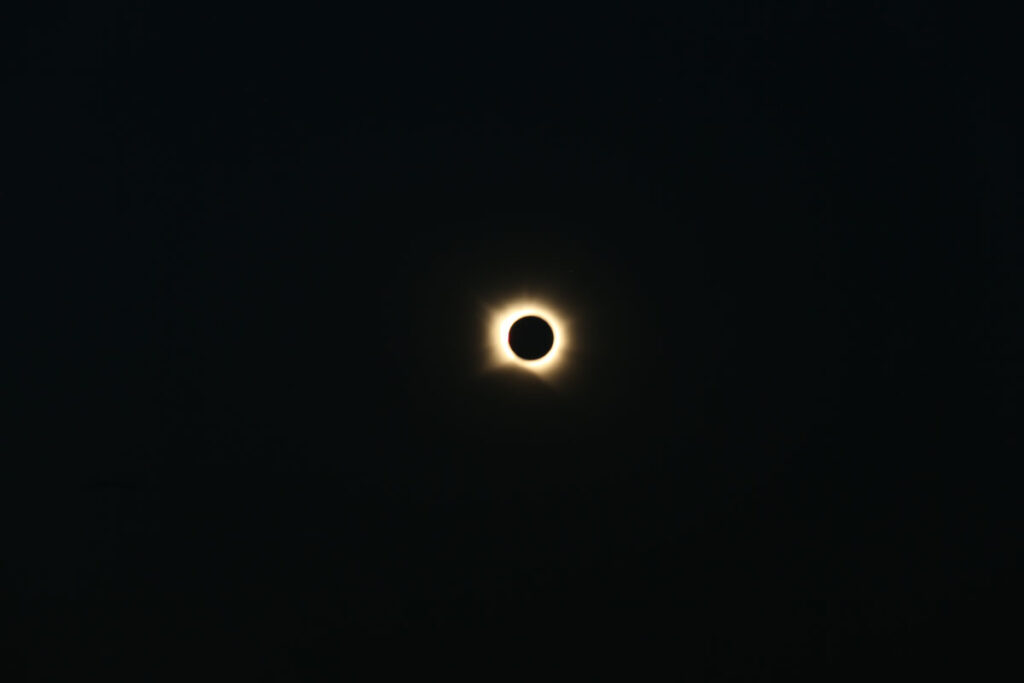
Dr. David Goldstein saw his first total solar eclipse in 2017 and knew then it wouldn’t be his last. He yearned to experience the celestial event again.
So when he saw the University of Washington’s León Center in Spain was on the path of totality for the 2026 solar eclipse, he decided a study abroad trip might be his chance.
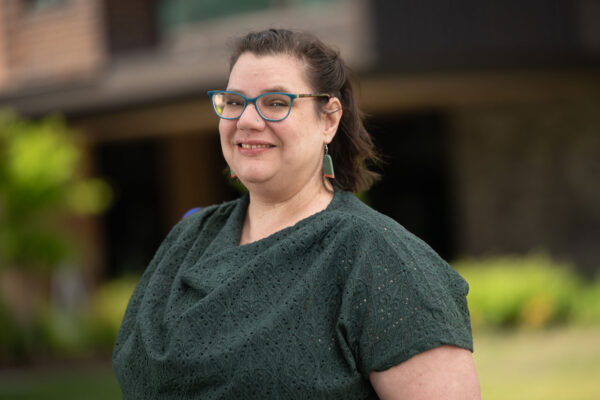
A teaching professor in UW Bothell’s School of Interdisciplinary Arts & Sciences, Goldstein’s area of expertise lies in the humanities, not the sciences, so he approached the plan with a slightly different lens.
“My idea was that the eclipse is obviously a natural scientific phenomenon, but what most struck me in 2017 was the communal feel of experiencing this amazing thing with other people in a small town in Oregon,” he said. “It was really emotionally moving, and I wanted to bring that lens — the emotional meaning of witnessing a total solar eclipse — to a study abroad course on art and literature.”
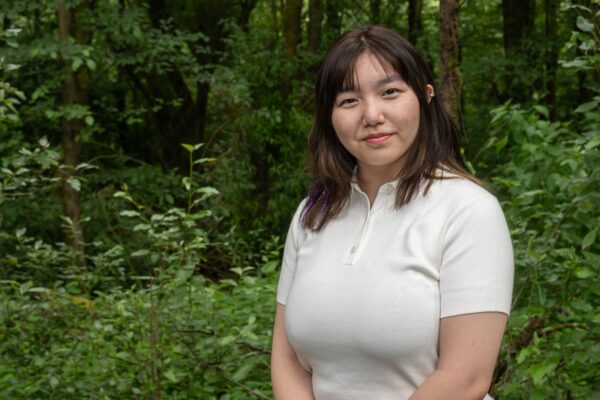
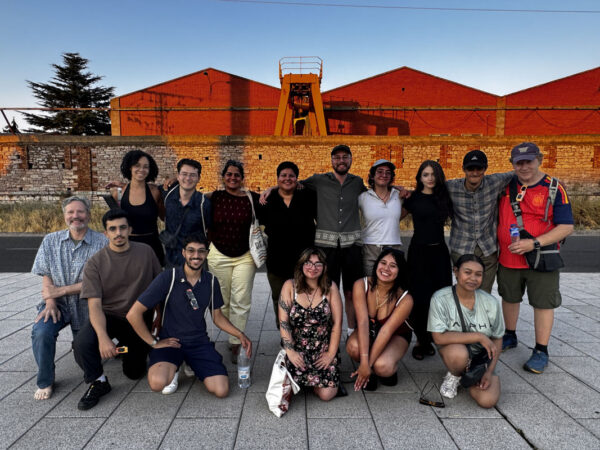
To cover the science aspect, he turned to his friend and colleague Dr. Paola Rodríguez Hidalgo, associate professor in UW Bothell’s School of STEM. Together, the pair led a new study abroad program, “Spain: The Science and Art of Solar Eclipses,” during the summer 2026 session.
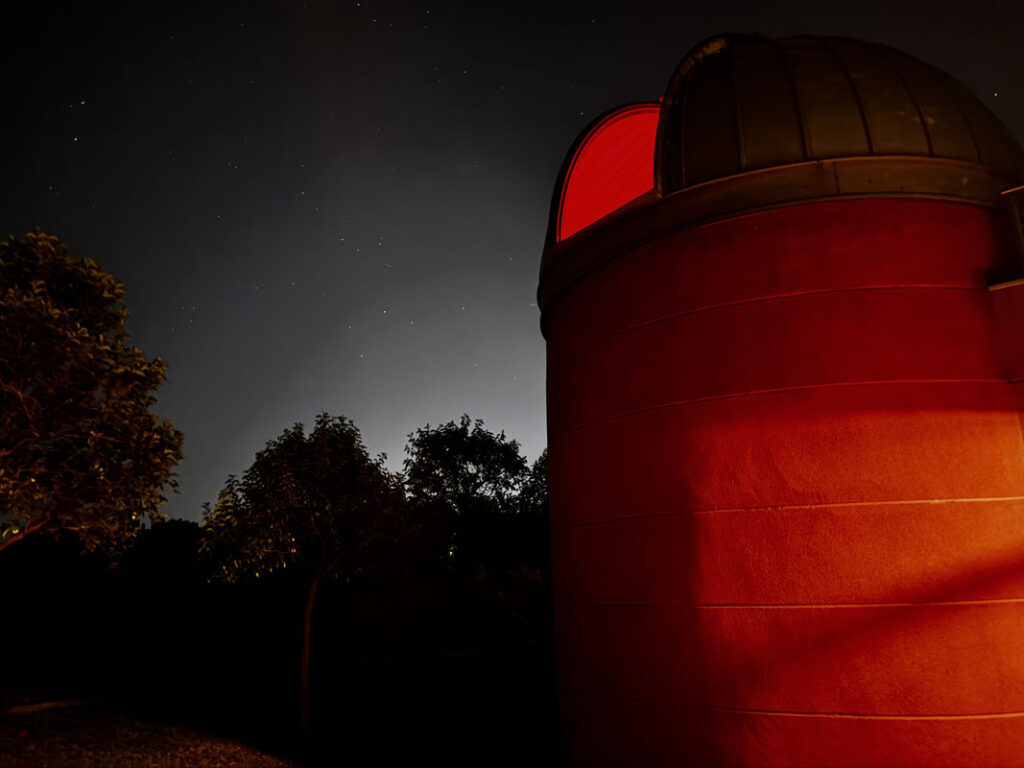
A study of the cosmos
The 12-credit program included three separate courses, including a Spanish class that began in late July and culminated at the solar eclipse on Aug. 12.
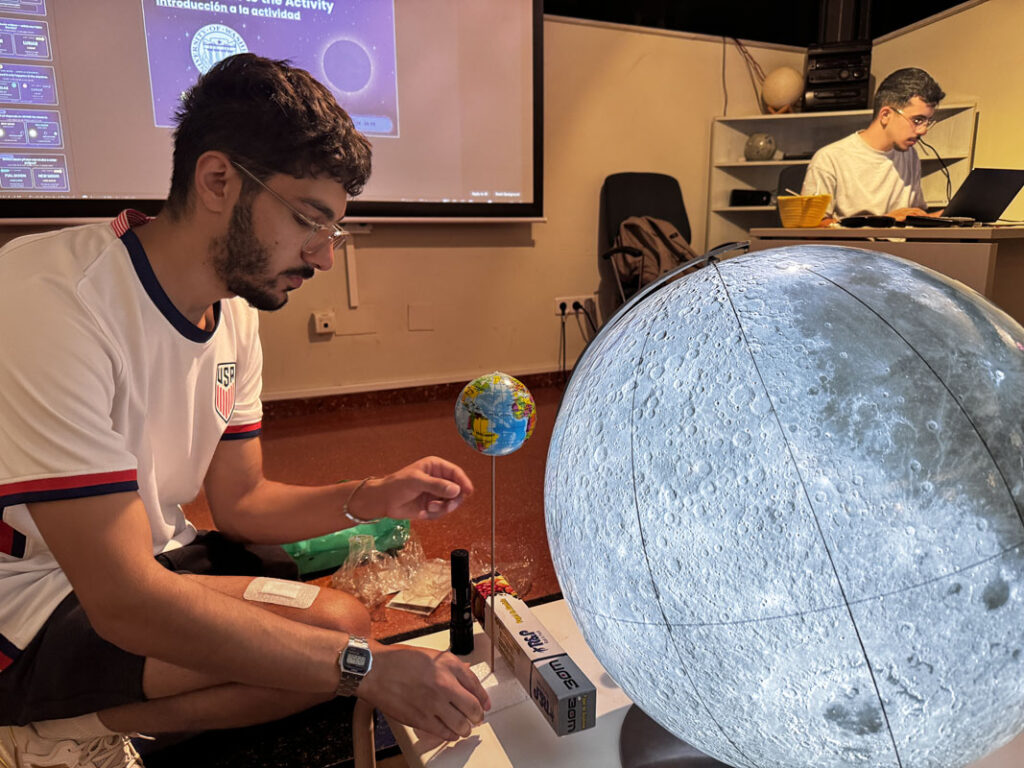
Rodríguez Hidalgo, for her part, offered a condensed version of her “Introduction to Astronomy” class with an emphasis on the science of eclipses. Students used 3D visualizations to gain an understanding of distance and the size of the universe before zoning in on the solar system and the types of eclipses seen from Earth and why.
“We’re extremely lucky to be living in this time period because the moon is little by little getting farther away from us and there will come a time when there will no longer be total solar eclipses seen from Earth through our moon,” Rodríguez Hidalgo said.
Rae Candelaria-Stoner, a senior on the trip who is majoring in Physics and minoring in Mathematics, plans to become an astrophysicist. As one of Rodríguez Hidalgo’s mentees, they were encouraged to join the trip.
“I had never seen a total eclipse before, and I thought it would be a really neat experience,” Candelaria-Stoner said. “To go beyond the math and learn more about basic astronomy — and to just see your place in the universe and the solar system — was really cool.”
Rodríguez Hidalgo, who was born in Colombia and raised in Spain, she also was excited to share her country of origin with the students. “I love showing Spain to people. I think it’s a way of sharing myself,” she said. “Being able to combine the love of astronomy with the joy of sharing my home with others was really fulfilling.”
Through a human lens
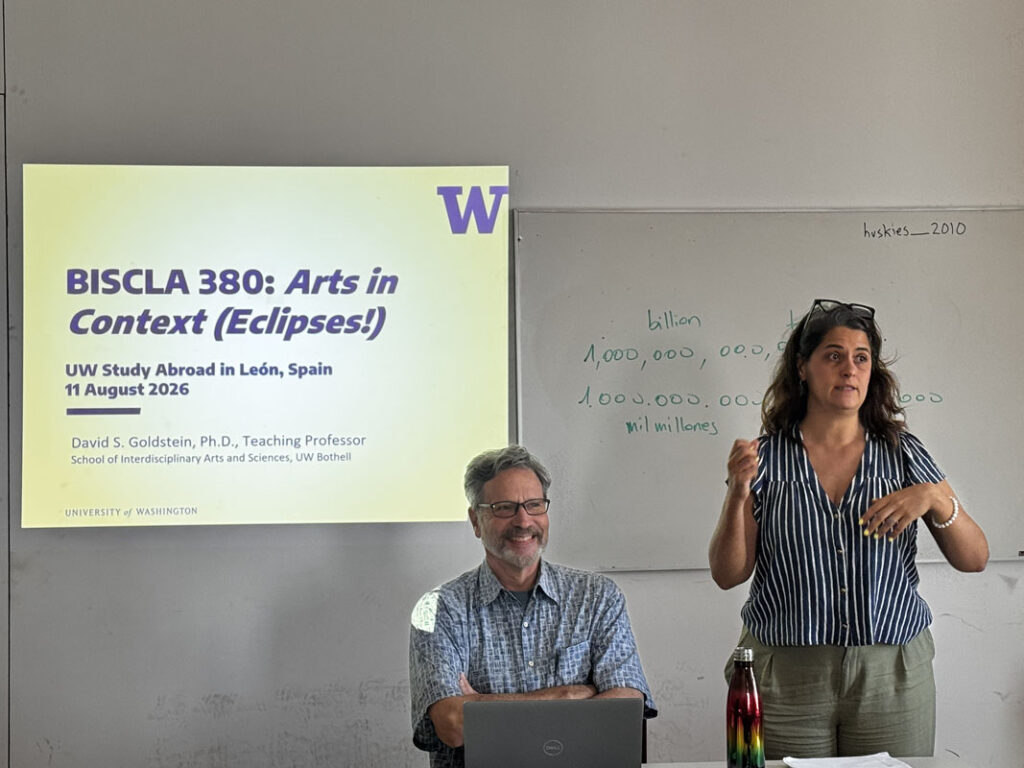
In Goldstein course, “Arts in Context,” students examined the eclipse through the lens of literary, visual and performing art forms and traditions across sociopolitical, historical, religious and philosophical contexts.
“Teaching the humanities is always a joy because everyone brings their own humanity and their own experience to it,” he said. “After the eclipse, we discussed what sorts of depictions of mythology, painting, literature and poetry the students resonated with and what fell short. They all had different opinions, which was a really wonderful thing to witness.”
I came to understand more deeply how life as we know it revolves around cycles within cycles, and there is so much to learn from them. To witness something like that, collectively, encourages me to dedicate more of my life to protecting the Earth.
Maddi Gregory, Physics ’26
For Maddi Gregory, who graduated with a degree in Physics in August, the opportunity to blend art with science brought a new perspective to the discipline she had been studying.
“It was super fascinating. I didn’t expect to enjoy the humanities as much as I do science, and I really loved it,” she said. “Learning about the fear, the excitement, the fascination, the hope — all these different feelings associated with the eclipse and how humans interpret these events — are things I wouldn’t have paid as much attention to before, coming from a scientific background.”
Next, Gregory plans to pursue a master’s degree in electrical engineering with a focus on autonomous spacecraft systems.
A communal event
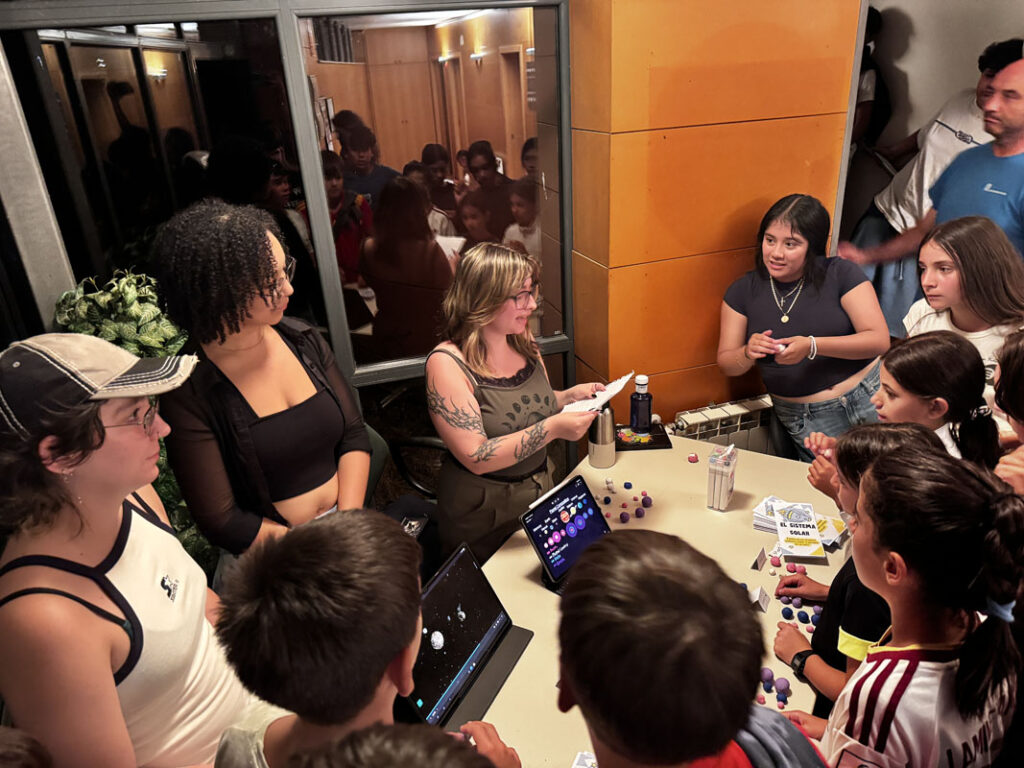
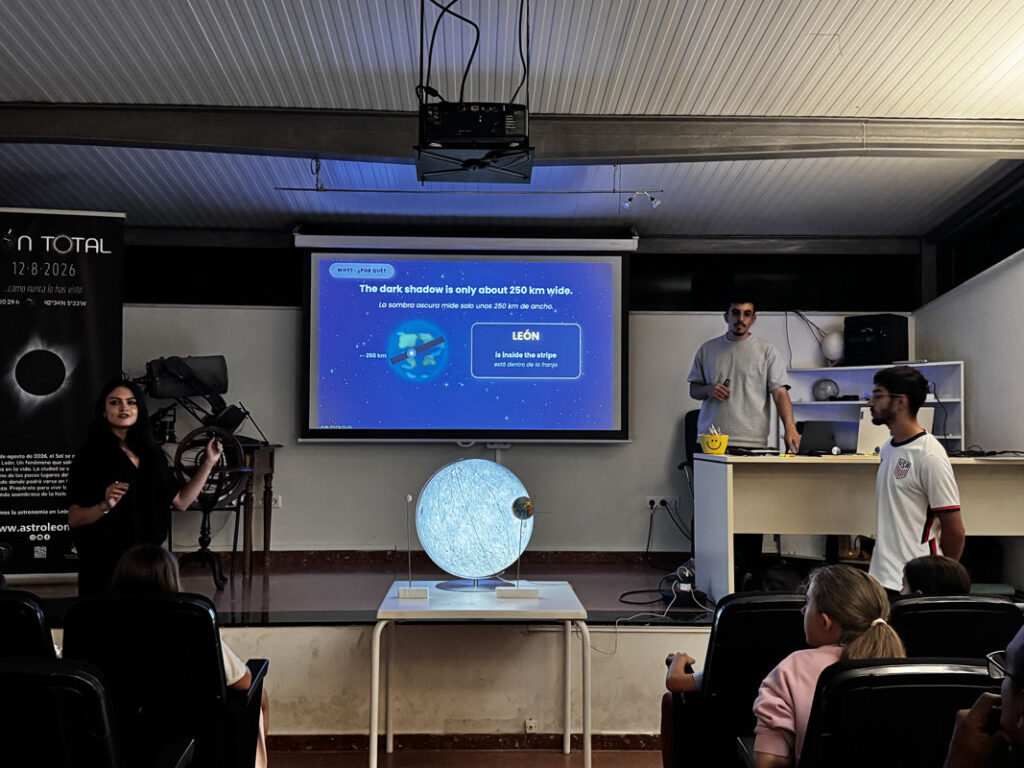
A week before the eclipse, the group visited a children’s camp at a municipal observatory in León. Rodríguez Hidalgo then gave her students a week to prepare and design activities to teach the children the basics of astronomy and what they would witness at the eclipse.
Including a community-engaged learning and teaching component is central to her pedagogical philosophy, Rodríguez Hidalgo said. “The way to teach, for me, is for students to listen, learn and then teach others what they’ve learned.”
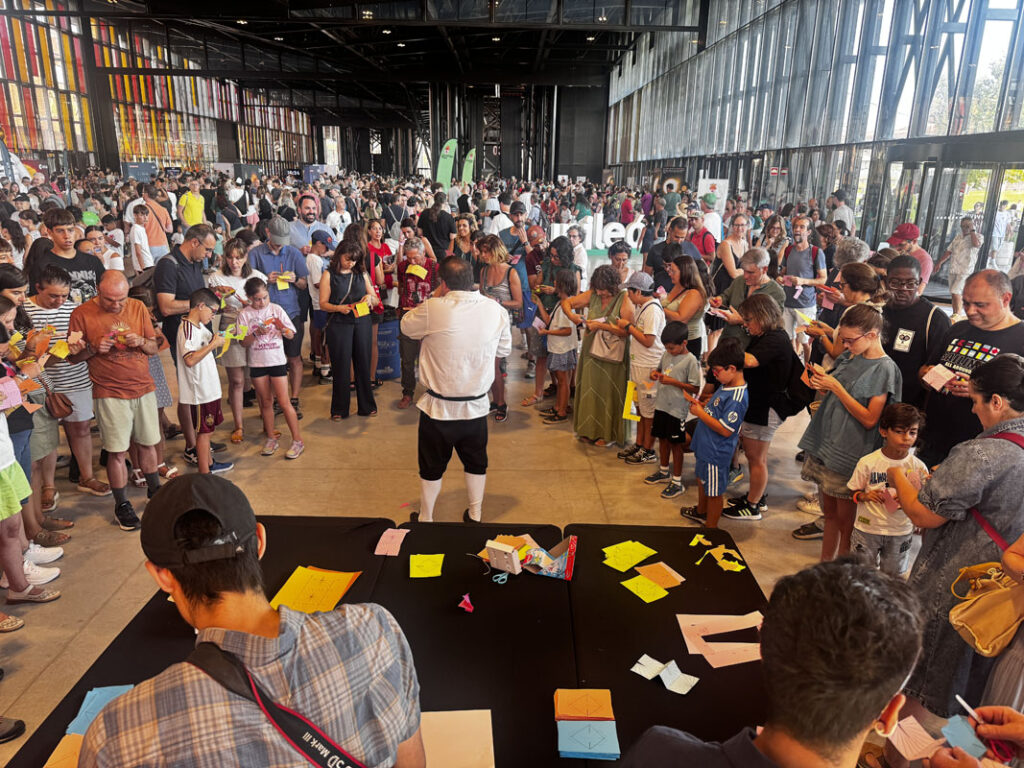
The camp also served as a test run for the following day, when the UW Bothell students presented at a major public viewing for the eclipse. Hosted by the European Space Agency, the event was attended by thousands.
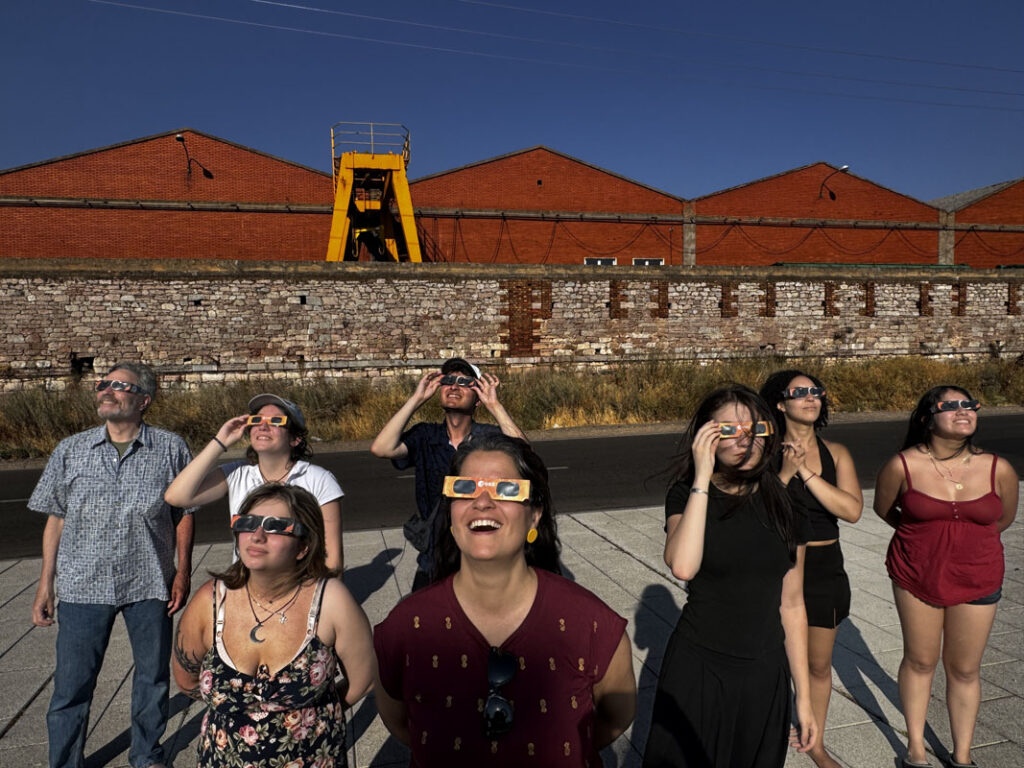
“Witnessing the eclipse, it was awe-inspiring to think that in other times throughout history it had this foreboding, ominous symbolism, and for a lot of ancient poets and writers it was used as a metaphor for oncoming disaster,” said Chris Lake, a junior majoring in Culture, Literature & the Arts who plans to become a librarian. “But then to actually see it at full totality was incredible, and after it passed, everyone cheered and applauded.”
The event held a profound impact for the students and professors alike. As many agreed, an eclipse is an event that can be described in many ways but cannot truly be understood or felt except in experiencing it firsthand.
Cycles of the universe
“I came to understand more deeply how life as we know it revolves around cycles within cycles, and there is so much to learn from them,” Gregory said. “Earth, the moon and the sun each operate on these cycles that scale from days to hundreds of thousands of years, and we exist in just the right time of life to be able to witness it.
“To witness something like that, collectively, encourages me to dedicate more of my life to protecting the Earth,” she added.
Rodríguez Hidalgo and Goldstein plan to co-lead a second study abroad program next year, as the path of totality for the 2027 solar eclipse will again cross Spain, this time in the Southern region. The trip is open to all majors and, as Rodríguez Hidalgo said, the eclipse is an event everyone should experience.
“Though I am an astronomer, I study other far-away galaxies. This was for me the first time I felt what it means to live on a planet,” she said. “I think that everybody should have that feeling at least once.
“And to do it through a study abroad program where you’re getting 12 credits; experiencing an amazing new culture; and learning Spanish, art, literature and science — I can think of no better way.”