While a degree may mark the end of an academic chapter, education has no end point. It’s a journey rather than a destination. In honor of the continuous necessity to seek and gain knowledge, the University of Washington recognizes a faculty member each year for his or her dedication and innovation in fostering lifelong learning for nonmatriculated working adults and other nontraditional students.
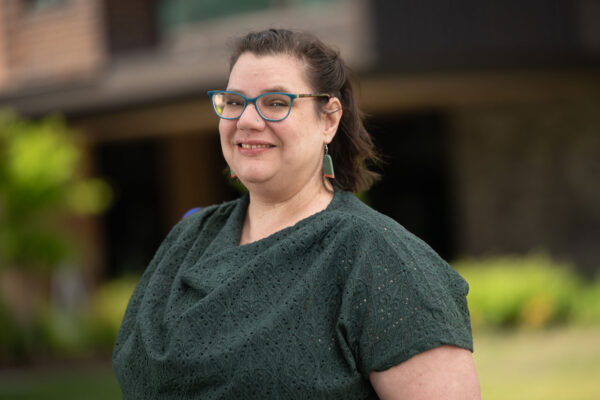
Dr. Rebecca Price, professor in the University of Washington Bothell’s School of Interdisciplinary Arts & Sciences, was recently named the 2026 recipient of the Distinguished Contributions to Lifelong Learning Award.
“I have had the opportunity to observe Dr. Price’s sustained and deeply principled contributions to lifelong learning — contributions that reflect not only an abiding commitment to innovation and student and faculty well-being but also a coherent and enduring educational philosophy centered on mentoring, reflection and inclusive practice,” wrote Dr. Brinda Sarathy, School of IAS dean, in her letter of support for Price’s nomination.
“At the heart of Professor Price’s work is a belief that lifelong learning flourishes when educators create intentional spaces for adults to practice connection, inquiry and growth.”
Stepping up
Price joined the faculty at UW Bothell in 2006. An evolutionary biologist by training, she, like many faculty, is all too familiar with the challenges of being a teaching academic. Faculty in higher education may be experts in their fields, but their own educational journey may not have included learning how to teach.
For Price, however, this aspect of the job was something she felt passionate about and eager to understand better. Her scope of research over time grew to include not just paleobiology, her specialty, but also how people learn and how people learn to teach. When she discovered that the Department of Biology at the UW in Seattle was looking for someone to take over the Future Faculty Fellows teaching apprenticeship program, she jumped at the chance to put her research into practice.
“I recognized the bones of a really exciting professional development program,” Price said.
She not only took the program over — she reimagined it into something new: the Science Teaching Experience Program. Today, STEP continues to help postdoctoral researchers learn how to teach undergraduate courses with the support of a mentor, and also provides training and practice in evidence-based teaching techniques.
“There’s already so much known about what good instruction looks like. The challenge is that it’s usually saved for K-12 education,” Price said. “In higher education, professors are trained in their field but not necessarily in how to teach. And that’s why we have STEP — to give the training on how to teach and pull from what we know about K-12 education and then implement those techniques.”
Fostering future faculty
STEP-WISE (Working in Science Education) is specifically designed for postdocs who want additional training in how to teach in higher education but who also have full-time research appointments.
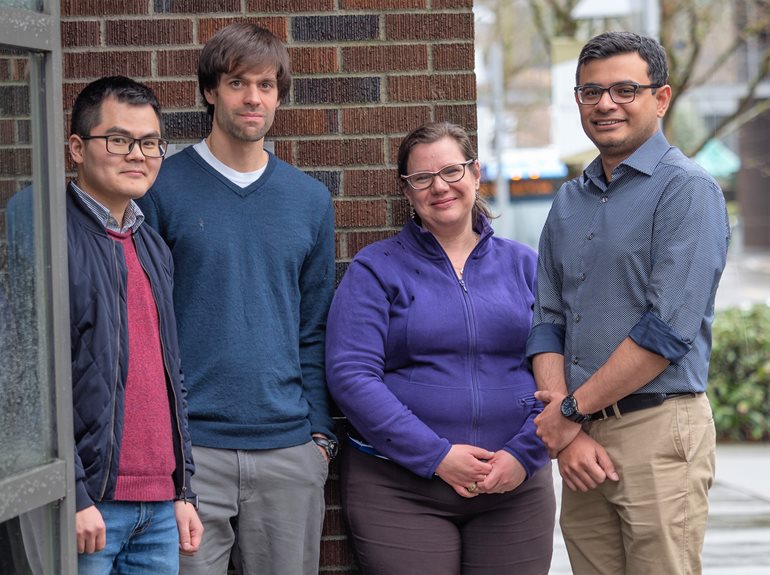
Program participants engage in evening training sessions to learn evidence-based teaching techniques. Then, they collaborate in teams of three to co-design and co-teach a 10-week special topics seminar course. Mentors track their progress, observe the classes and regularly meet with them to offer feedback.
Since 2011, STEP has served more than 250 postdoctoral scholars. Price has directly mentored 143 of those participants — many of whom have gone on to obtain faculty positions at UW and other institutions.
In his letter supporting Price’s nomination, her former mentee Dr. Tao Ye wrote: “The impact of Dr. Price’s lifelong learning efforts is clearly evident in my own teaching practice. The active learning–based approaches I learned through STEP-WISE now form the foundation of all the courses I teach. I intentionally design my classes around structured active learning, reflection and inclusive participation — methods that I first practiced and refined under Dr. Price’s mentorship.
“Her mentorship did not simply influence how I taught one course, it permanently transformed how I think about teaching, learning and educational impact. … I can think of no one more deserving of the Lifelong Learning Award.”
Ye is now an assistant professor in the Department of Civil, Environmental and Ocean Engineering at Stevens Institute of Technology.
An ever-evolving approach
Price also continues to exemplify her commitment to lifelong learning through her scholarship, and her mentees benefit from her iterative learning and teaching process. In her recently published paper, “Using the Paleobiology Database to Teach Scientific Practices: An Approach Aligned to Relational Culture Theory,” she describes how she teaches students to think and work like scientists.
“In this paper, I emphasize how I’ve adapted Relational-Culture Theory to teaching a class and how I ground the instructor-students relationship,” Price said. “Each time I teach a course, it’s different because the people in it are different. My learning objectives for the course might stay the same, but the way we navigate toward those objectives is always unique.”
Dr. Eva Ma first participated in STEP-WISE in 2011. She now serves as an associate teaching professor in UW Tacoma’s School of IAS and in 2017 returned to STEP as a faculty mentor. In 2024, she became a co-director for the program.
“I find myself constantly learning from Dr. Price. Whether co-facilitating workshops, engaging in one-on-one discussions or participating together in the UW Biology Learning and Teaching Community seminar series, her insight and deep knowledge on inclusive, evidence-based teaching have been invaluable,” wrote Ma in her letter of support. “Her impact can be seen in not only her peer-reviewed papers but also in the work of the many instructors she has mentored. Dr. Price has profoundly influenced my development as an educator, scholar and leader, and I know that my experience is shared by countless others who have benefited from her mentorship.
“She is an outstanding educator and leader whose contributions have strengthened teaching and learning across UW and beyond.”
“At the heart of Professor Price’s work is a belief that lifelong learning flourishes when educators create intentional spaces for adults to practice connection, inquiry and growth.”
Dr. Brinda Sarathy, dean, School of Interdisciplinary Arts & Sciences
A compounded investment
Collectively, postdocs have taught at least 720 UW undergraduates through the program. More than 40 STEP graduates are employed faculty at local institutions, including the UW, Bellevue College and Washington State University.
“Dr. Price clearly impacted my growth and career, and I saw her also support and develop my co-teachers in STEP-WISE,” wrote Dr. Renee Geck, assistant professor at Gonzaga University, in her letter of support. “I am certain that though STEP-WISE, she has been crucial for the development of many other lifelong learners and teachers. Her efforts in creating and running the program, and mentoring so many aspiring educators, have broad impacts on biology education through all of her students and mentees.
“I enthusiastically support her as a deserving recipient of the Lifelong Learning Award to recognize her wide-reaching impact and deep care in teaching and learning.”
As a lifelong learner herself, Price advises all those who wish to embark on the lifelong pursuit of knowledge to “embrace curiosity, because curiosity leads to answering questions — which leads to asking more questions.
“And that,” she said, “is what learning is.”