For lifelong soccer fan Dr. Ron Krabill, the 2026 FIFA Men’s World Cup being co-hosted by the city of Seattle is exciting on a personal level — but also a scholarly one.
As a professor in the University of Washington Bothell’s School of Interdisciplinary Arts & Sciences, Krabill studies mass media, politics and cultural studies. His early research was particularly focused on South Africa. So, when it was announced that the 2010 World Cup would be hosted by the country, he knew he had to go.
As his passions collided in that moment, it forever changed the trajectory of his research. Now, soccer plays an important role in his work, serving as a unique lens from which to further explore global politics.
At an event at Town Hall Seattle on May 19, 2026, Krabill will share his expertise on the topic in his talk, “Five Ways to Watch the World Cup.”
‘Critiquing what you love’
“So many people feel so passionately about sports that it can be an entry point for thinking about culture, power and politics in a different way,” Krabill said. “People used to say that sports and politics are totally separate, but more and more I think they’ve come to understand how politics factor into their experience of sports.”
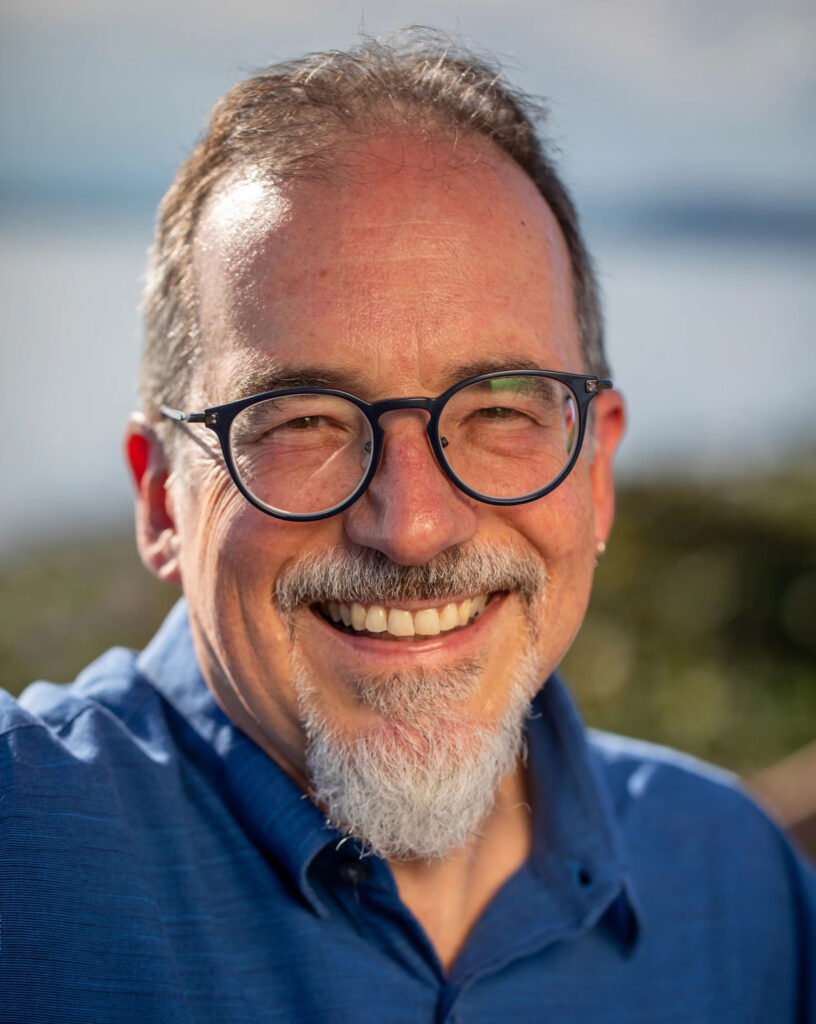
In several classes, Krabill teaches his students to see the multidimensional aspects of soccer beyond the pitch.
He also led a UW study abroad program to South Africa during the 2010 World Cup. Through a partnership with the Seattle Sounders, Cape Town Community Television, the University of Cape Town and local media activists, Krabill and his students produced and broadcast short documentaries of the tournament’s impact on the region.
The project reflected his own conflicted feelings about the event and the cognitive dissonance of “critiquing what you love,” he said.
“I thought about what it meant to actually bring a critical eye to something you love — to care about South Africa, while having these questions about the kind of expenditures that were being put into hosting the World Cup, while also just being really excited to be there and knowing that many of the people in South Africa were really excited as well.”
A global sport, revisited
Since the trip to South Africa, Krabill has directed six other study abroad programs focused on the politics of soccer, including trips to UW’s León Center in Spain, France during the 2019 Women’s World Cup and Rwanda in 2023. In Rwanda, the students focused on “sportswashing,” or how a country uses sports for development and to improve their standing as a nation.
The U.S. is now preparing to co-host this year’s World Cup tournament alongside Canada and Mexico — and Krabill is again immersed in all things soccer. This time, he’s also serving in a new role as the inaugural director of UW’s Global Sports Lab.
The Henry M. Jackson School of International Studies at the UW in Seattle first launched the lab in 2024 in anticipation of this year’s tournament, which will mark the largest sporting event ever to take place in Seattle.
In his role, Krabill is expanding UW’s public programming and civic engagement around the intersection of sports and social justice. Among his efforts is a weekly speaker series he is moderating throughout the spring quarter titled, “The World (Cup) Comes to Seattle,” in which experts discuss the geopolitical, local and sporting implications of the cup coming to Seattle.
The lab also created “World Cup: The Syllabus,” a curated list of critical readings for people interested in the history and politics of the World Cup as well as the current and past controversies that surround it. The syllabus is designed to stand the test of time, Krabill noted, adding that it will also be relevant to next year’s Women’s World Cup in Brazil.
“So many people feel so passionately about sports that it can be an entry point for thinking about culture, power and politics in a different way.”
Dr. Ron Krabill, professor, School of Interdisciplinary Arts & Sciences, and director, Global Sports Lab
Beyond the pitch
This year’s World Cup is set to take place in one of the most politicized and polarized times in U.S. history, so it’s almost impossible not to consider the larger context for these games, Krabill said.
“Given the political atmosphere right now in the United States, more and more people are willing to use the term ‘sportswashing’ to describe what’s going on here,” he said. “Historically, the term applies to covering up or deflecting attention from human rights abuses, and that’s a really significant change from what people would have expected even five years ago to have that term apply to the U.S.”
The war with Iran has also created controversy and uncertainty around this year’s tournament, as FIFA recently rejected Iran’s request to move its games to Mexico. Yet even before the conflict with Iran escalated, the ongoing immigration crackdowns that began in early 2025 raised concerns among athletes regarding the safety of traveling to the U.S.
From nationalism and colonialism to the economic burden and benefit, Krabill will unpeel the various layers of the tournament’s political and cultural impacts in his May 19 talk.
A different way to watch
People watch sports in a variety of ways, Krabill said. Some are deeply loyal to their home country — rooting for their team until the very end. Others may support a specific country based on what the nation stands for, politically.
But even those who watch the game for the simple act of enjoyment with no allegiance to any one team are still part of something bigger that is influenced by global culture and politics, he said.
“The idea behind this talk will be to offer different lenses through which to watch the World Cup. I want people to think about these issues and the larger socio-political and cultural questions that come to mind as they watch.”
The Town Hall Seattle event, “Five Ways to Watch the World Cup,” presented by the UW’s Office of Public Lectures, will take place on May 19 at 6:30 p.m. Learn more and register for the hybrid event.
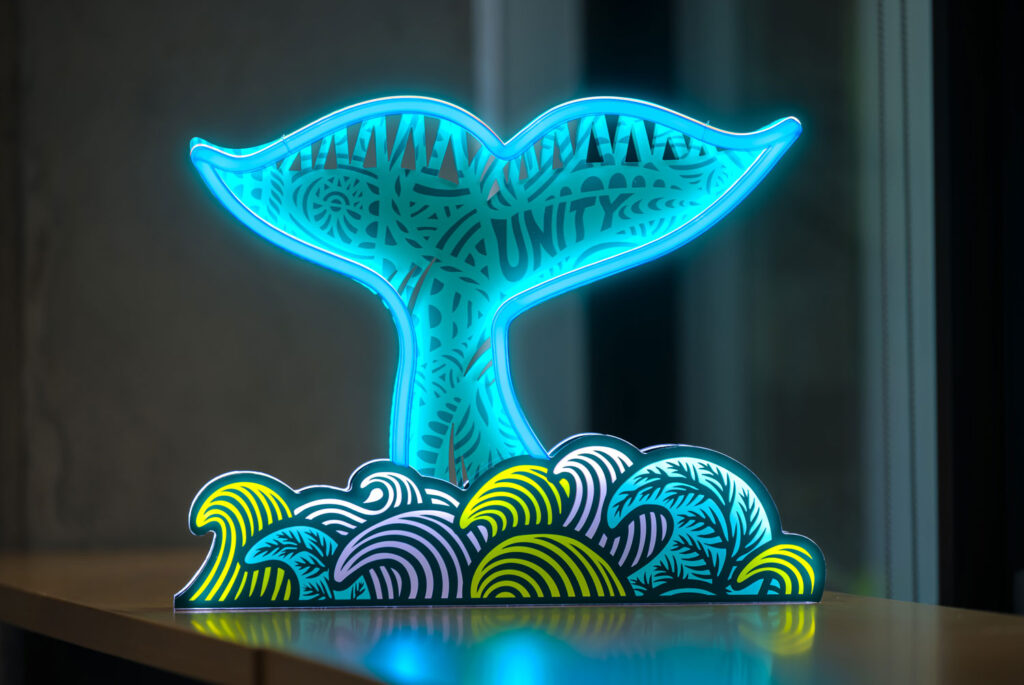
UW Bothell is proud to host one of the “SEA Beacons,” illuminated art installations designed to serve as beacons of connection throughout the region during and beyond FIFA World Cup 26™ in Seattle.
The SEA Beacon at UW Bothell symbolizes connection — between communities, between people and between local impact and global moments. While the FIFA World Cup will bring international attention to the Pacific Northwest next month, institutions such as UW Bothell help define what makes our region unique every day: collaboration, access to opportunity and a commitment to building a stronger future together.
The UW Bothell SEA Beacon is located in Horizon Hall, in the lobby window facing Beardslee Boulevard, providing a visible connection point between the campus and the community.