At the University of Washington Bothell, undergraduate students have the opportunity to apply the skills and knowledge they gain in the classroom to real-world projects and research.
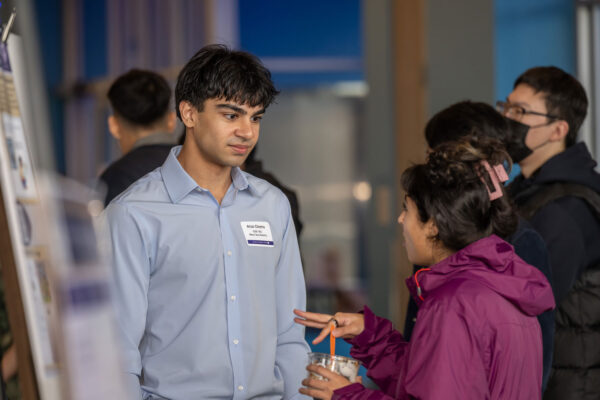
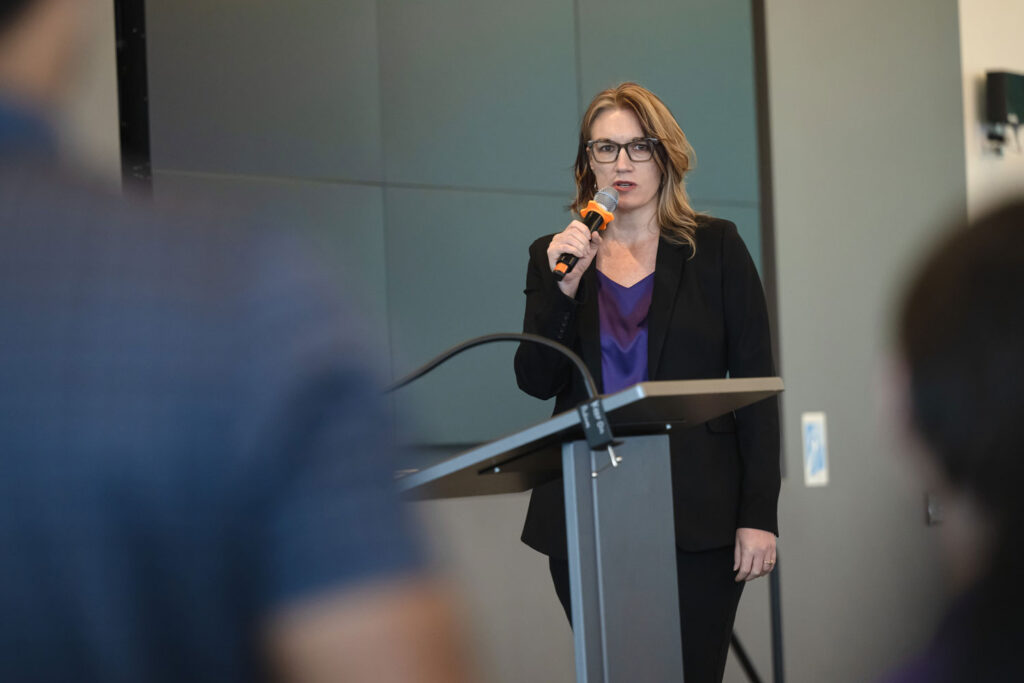
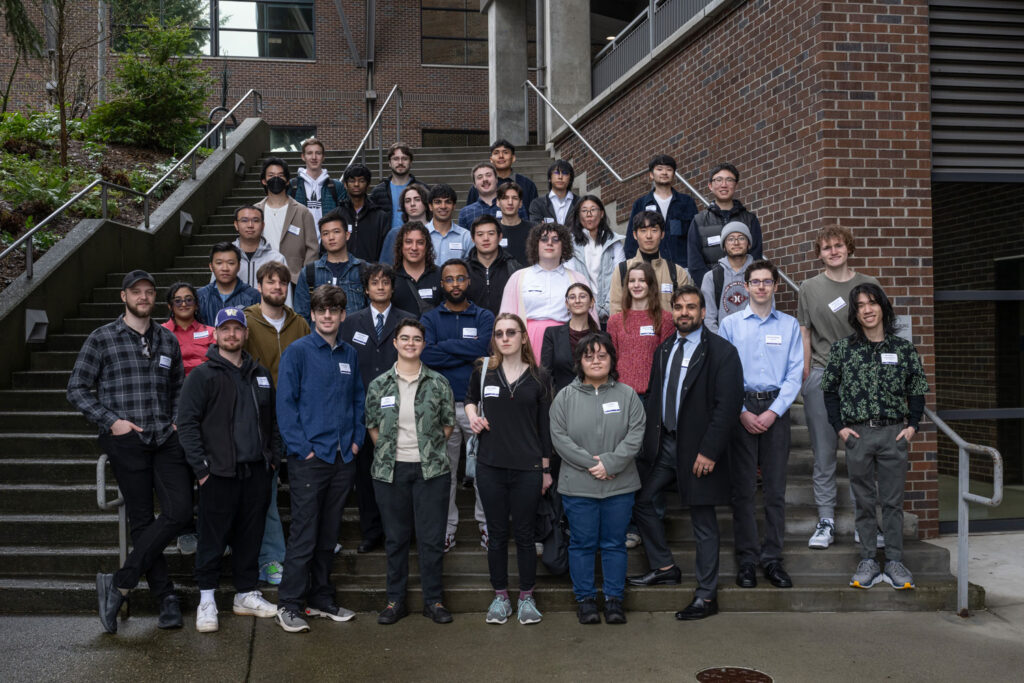
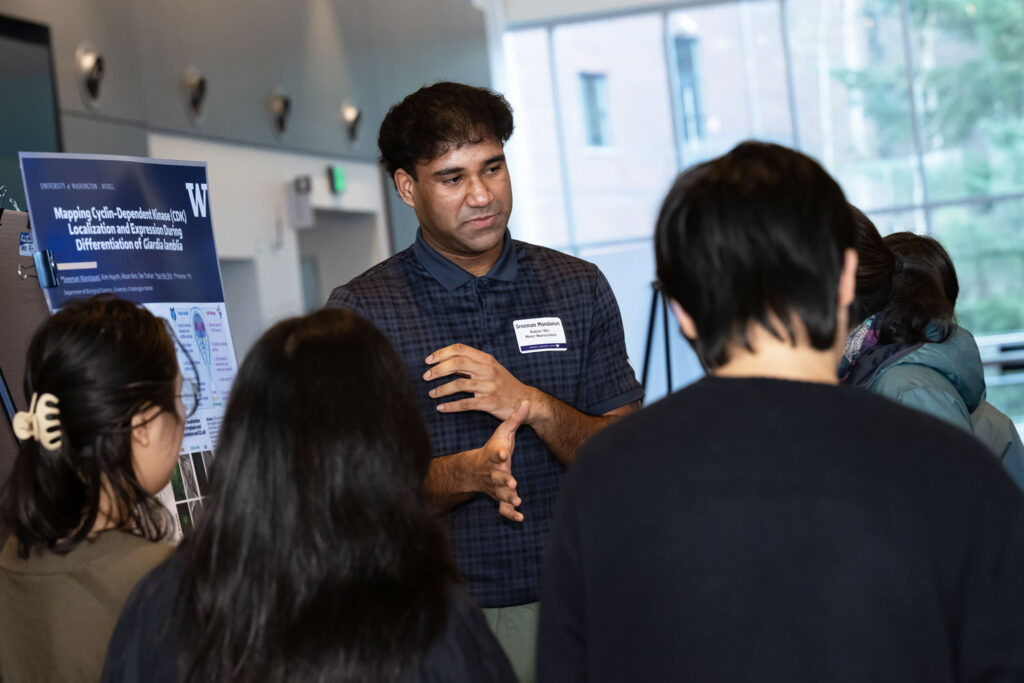
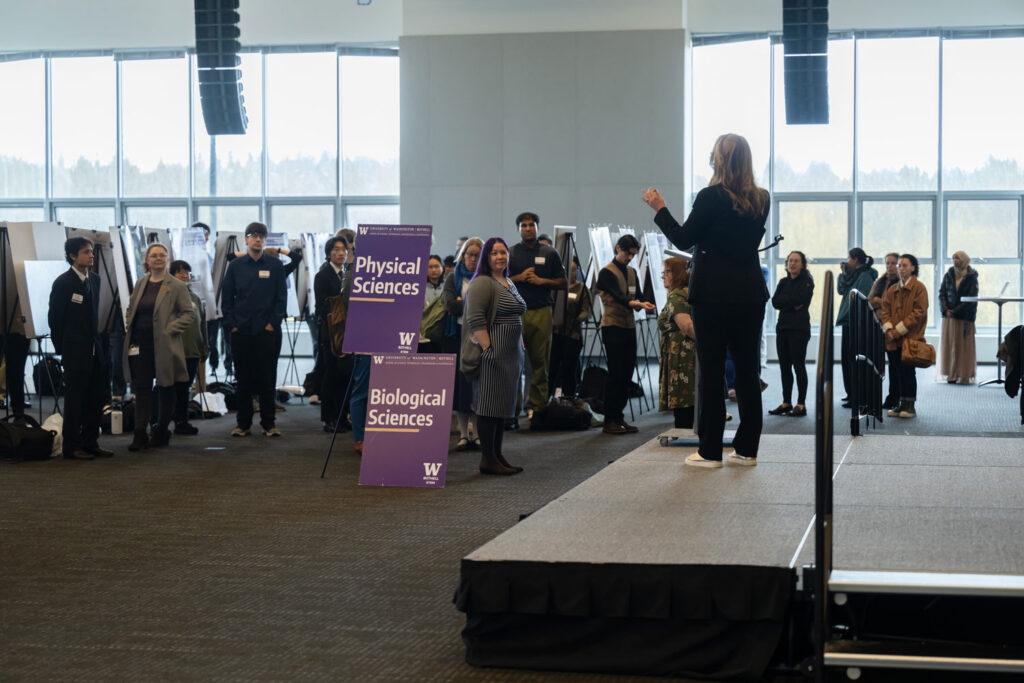
Each quarter, the School of STEM showcases this work at the STEM Symposium. This winter, students majoring in biological and physical sciences, mathematics, and computing and software systems share their research and projects through oral, poster and panel presentations.
The latest presentations at the winter quarter 2026 ranged from video game and app development to soil analysis and research into diseases.
Supporting healthy aging
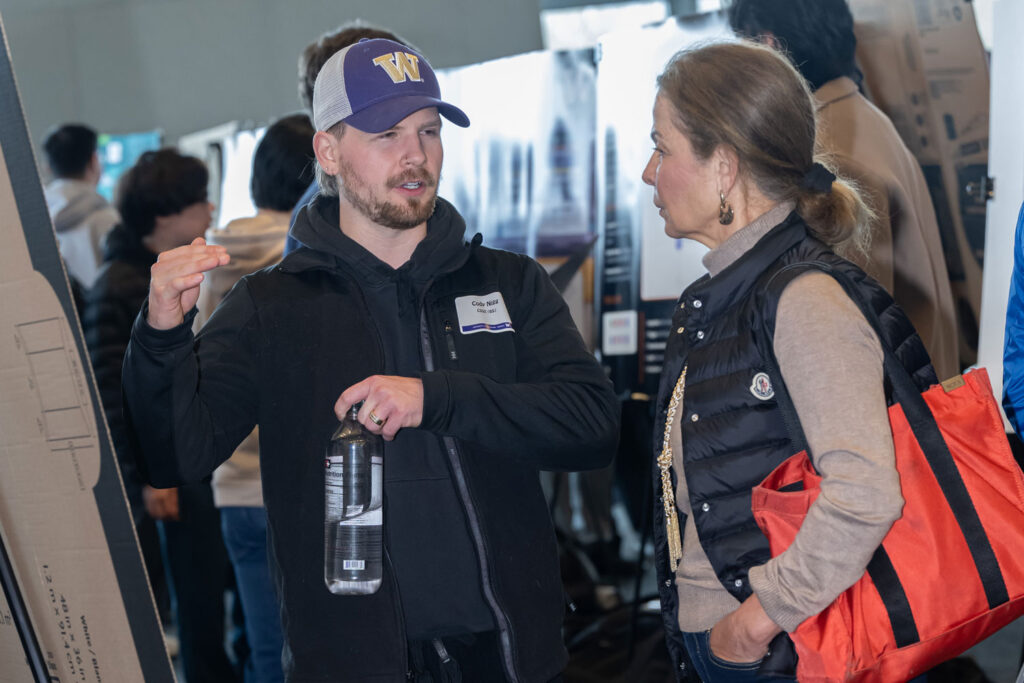
Cody Nigg, a senior majoring in Computer Science & Software Engineering, had been working on a health tracking app of his own, similar to a Fitbit, when he discovered one of his professors was working on a similar app tailored for older adults. An assistant professor in the School of STEM, Dr. Annuska Zolyomi is an expert in human-computer interaction and the design of inclusive user experiences. Nigg asked to join Zolyomi on her latest project.
While new technology is often geared toward younger users, older adults are sometimes overlooked, Nigg said. Zolyomi’s app “HealthMate” aims to improve fitness accessibility by supporting the unique user interface and cognitive needs of that population.
Zolyomi and her team conducted interviews in a retirement home to get a better sense of what was lacking or in need of improvement in other apps. Overall, they found that simplifying the app to include less complicated visuals, fewer choices and larger fonts significantly improved usability.
Nigg was especially drawn to the user interface work of Zolyomi’s project. “As much as I like being a computer nerd, I also enjoy the aesthetics and getting to design things and make them useful,” he said. “I like to make things look a little better and easier to use, and the design process is just fun.”
Another distinct feature in the app is the ability for other users to access and monitor detailed health data from afar — which is ideal for adults looking to track and support their aging parents’ health.
Nigg wrote in his capstone abstract: “We want our application to show that personalized health tracking can empower older adults to maintain personal autonomy over their own well-being through an easy, simple to use design.”
As an analyst at Boeing, Nigg said he has also been able to bring the skills he’s learned from the project into his work. He will be graduating with a bachelor’s degree in CSSE in June and plans to return in the fall to begin UW Bothell’s Master of Science in CSSE program.
Exploring cancer treatments
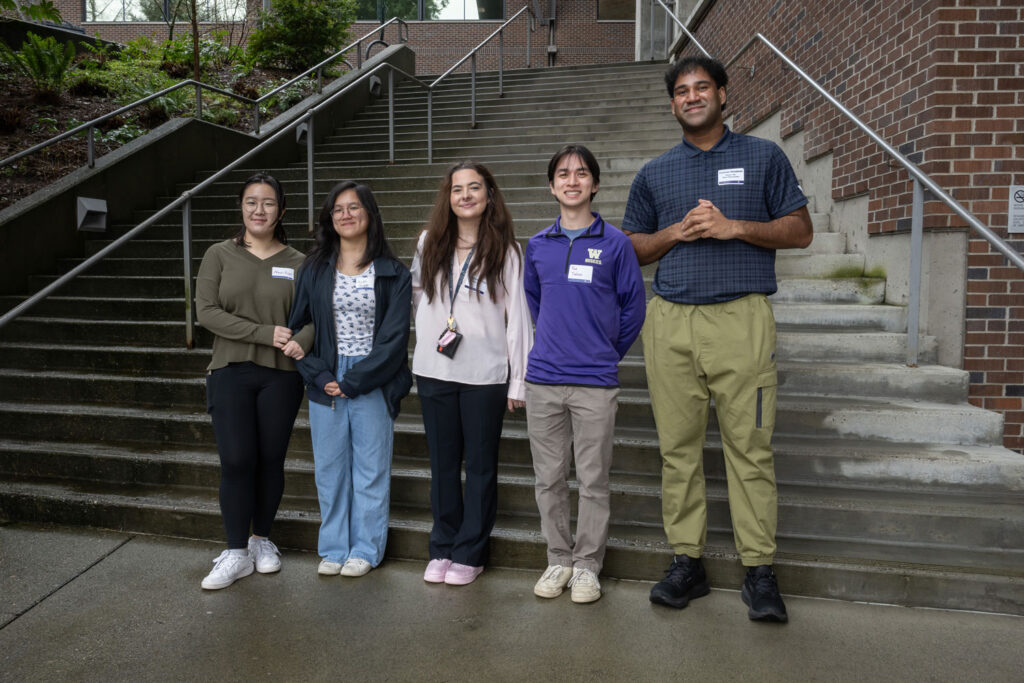
In her project, “Engineering CAR T-Cells Targeting CD90 Using De Novo Mini Binders,” Elizabeth Norris, a senior majoring in Biology, researched cancer treatment therapy.
“The idea behind my project is to give us a framework for CAR T-cell therapy use for cancer,” she said. “I want to work as a cancer biologist in a lab, so this gave me an idea of what my future could look like.”
Norris’ passion for cancer research stems from her own childhood experience with brain cancer. “I want to research how to help others who are in the same situation I was once in,” she said, adding that her neurologist played an important role in sparking that interest as did her older sister, who majored in biochemistry.
“I want to work as a cancer biologist in a lab, so this gave me an idea of what my future could look like.”
Elizabeth Norris, senior, Biology
Chimeric Antigen Receptor T-cell therapy is a personalized form of immunotherapy. It uses a patient’s own T-cells and genetically engineers them in a lab to target certain cancer antigens before growing them and infusing them back into the patient’s body.
Under the mentorship of Dr. Hans-Peter Kiem, professor and deputy director of the Translational Science and Therapeutics Division at Fred Hutch Cancer Center, Norris aimed to develop CAR T-cells that recognize and target CD90-expressing cells, a gene associated with cancer.
Norris made several attempts to transform the cells using de-novo designed mini binders — small, stable and customizable proteins that target and bind to the gene. While the first two attempts did not successfully yield sufficient cloned cells, the project still provided a framework for future advancement in this work.
“This project reignited my desire to work in cancer research,” she said, noting that she plans to pursue a doctorate in cancer biology and work in a lab after she graduates.
Meaningful contributions to STEM
Through research and capstone projects, UW Bothell students have problem-solving experiences and develop the skills they need to move on to their next chapter, whether they continue with their education or enter the workforce.
The STEM Symposium projects represent not just a culmination of everything they’ve learned but also the real-world impacts their work can have. Under the mentorship of faculty advisers and community partners, these undergraduate projects contribute meaningfully to the diverse field of STEM — providing solutions to pressing problems and pushing the needle on what’s possible.
A complete list of the winter 2026 presentations can be found on this Winter 2026 STEM Symposium webpage. These quarterly presentations are open to the public and can be found on the UW Bothell events calendar.