A new study abroad program in Rwanda led by two University of Washington Bothell faculty members takes international and interdisciplinary collaboration to the next level.
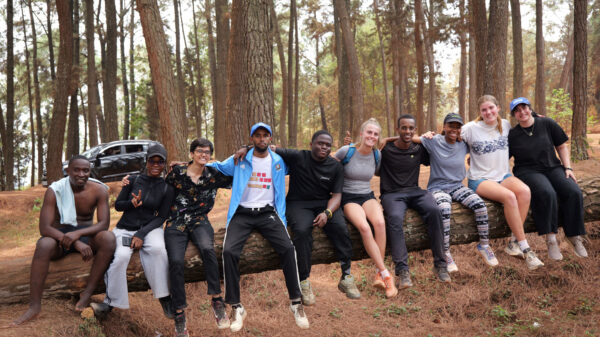
Instead of visiting the country of 14 million people as a cohort just from UW Bothell, 17 UW students recently spent four weeks studying, traveling and researching alongside 16 counterparts from across Africa.
Their focus: leadership and nation building.
Why Rwanda? Notorious for the 1994 genocide in which one million Tutsis and moderate Hutus lost their lives, the country is now seen as a model for smart 21st-century development.
“Thirty years since the genocide, Rwanda has become a global story in that it’s one of the fastest growing economies and most secure countries in Africa,” said Dr. Ben Gardner, program co-leader who first visited in 2022 for a teaching stint at the African Leadership University.

Grounded in partnership
Determined to facilitate genuine connections between American and African students, he partnered with the same university to anchor and energize the study abroad program.
“ALU recruits students who want to make a difference and solve big problems,” said Gardner, associate professor in the School of Interdisciplinary Arts & Sciences. About half of the ALU student body hails from Rwanda; the other half is drawn from more than 30 African nations.
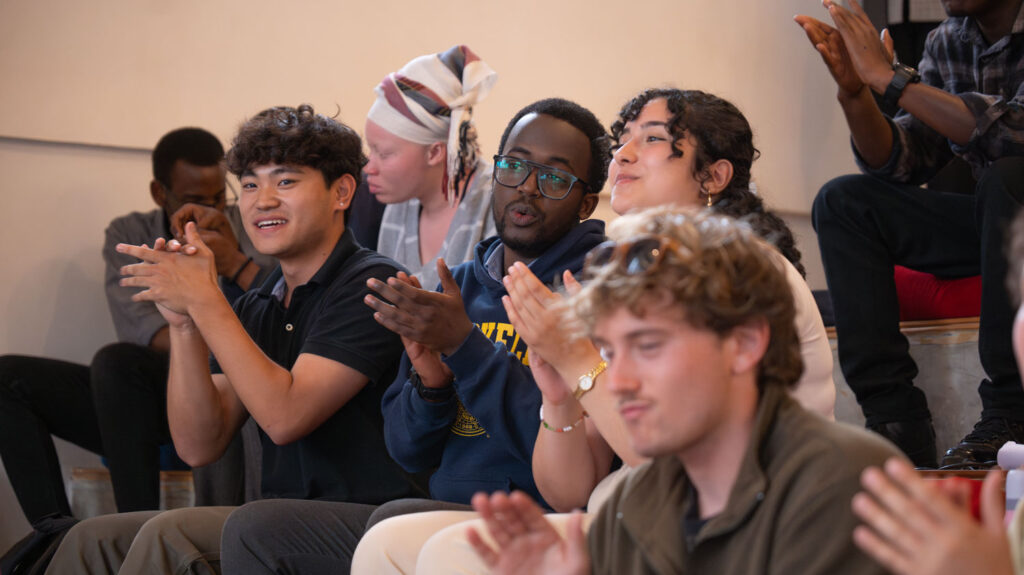
ALU chose 16 students from across the continent — Burundi, Cameroon, Cotê d’Ivoire, Democratic Republic of Congo, Nigeria, Rwanda, Somalia and Zimbabwe — to study alongside the 17 visiting Americans. Each day, all 33 students convened for classes and workshops at the ALU campus in the capital city of Kigali.
“The opportunity for our students to work closely in collaboration with students from ALU was special and really a highlight,” said Dr. Ron Krabill, co-leader and professor in the School of IAS.
The richness of the learning community came as a pleasant surprise to at least one UW Bothell student. “I thought I would get along with maybe one or two people,” said Kalkidan Kabeto, a junior majoring in Psychology, “but during my trip I was able to connect with almost all of the students from the African Leadership University, even walking away with friendships I hold dear to my heart.”
Pillars of nation building
Together, the multi-country cohort delved into a curriculum that covered topics from theories of power and representation to applied ethnography. They also formed research teams to investigate how the Rwandan government approaches nation building in the wake of the genocide.
They zeroed in on four themes: global health, ecotourism, sports development and human rights. The teams’ research culminated in proposals tackling a range of issues, from youth participation in sports to the need for a grassroots approach to human rights issues. The ecotourism research group conceived a buddy system for African American travelers visiting Rwanda to connect directly with local people.
“The research presentations were interesting because the groups mixed American, Rwandan and other African students,” said Krabill. “The perspectives were varied, and the students could all bring things from their countries.”
A recipe for entrepreneurism
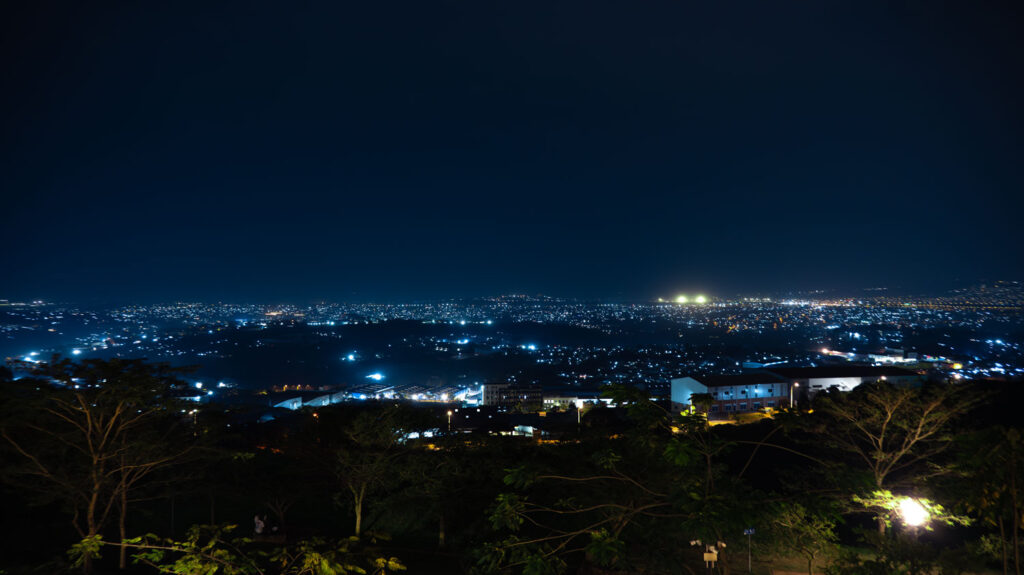
Outside of class, wide-ranging field trips and casual conversations showcased Rwandans’ entrepreneurial drive.
Layan Arrabi, a UW Bothell senior majoring in Mathematics, noticed this quality early on, when she shared Middle Eastern shortbread cookies with other students. The buttery treats were a hit, especially with the Rwandans. When someone asked for the recipe, insisting it could be the foundation of a lucrative new business, Arrabi laughed off the request.
But, after meeting the heads of Rwandan businesses and non-governmental organizations on field trips over the next four weeks, she came to see the cookie conversation in a new light. “Throughout our trip, over and over again, Rwandans referenced turning their humble beginnings into great projects,” she said, noting that many people pointed to strong government support for entrepreneurial efforts.
Mulling these interactions later, Arrabi connected them to the bigger political picture: “This cultural push for entrepreneurship ties to the government’s push for economic development and growth, as opposed to, say, liberal democracy.”
Road testing big questions
Arrabi’s insight points to several larger questions that the study abroad program raised: What are the perceived tradeoffs between prosperity and democracy? Are the economic benefits worth it?
Gardner put it like this: “What do people need, and what can the state deliver? This teeny African nation becomes a really important site to think about nationalism and state development and power.”
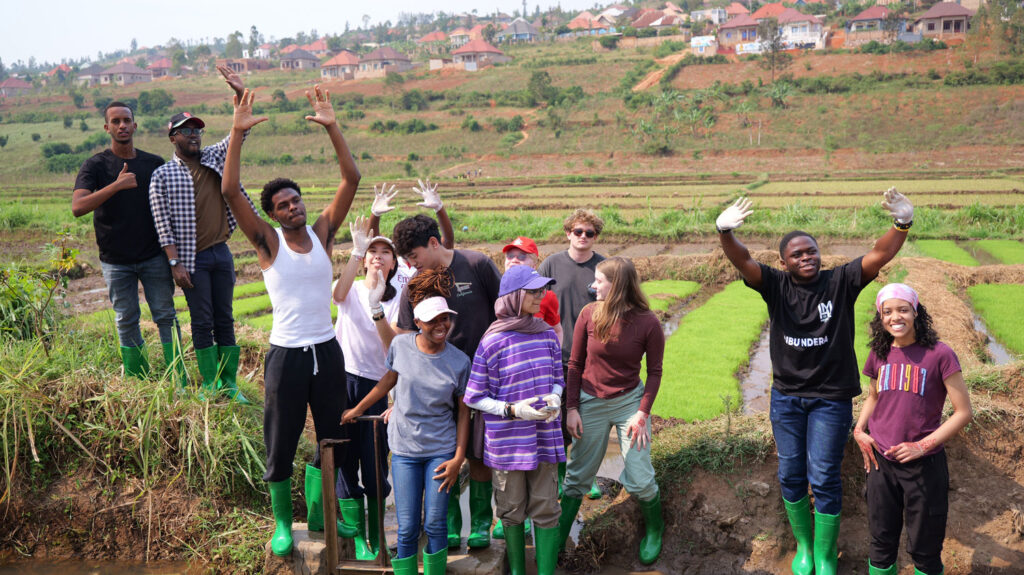
Students road tested these themes as they soaked in the sights, sounds and tastes of Rwanda. Their travels took them to the national girls’ soccer championship in Kigali, the Meza Malonga culinary innovation village, a Partners in Health clinic and Solid’Africa, a farm-to-fork program that serves food to people in hospitals and schools.
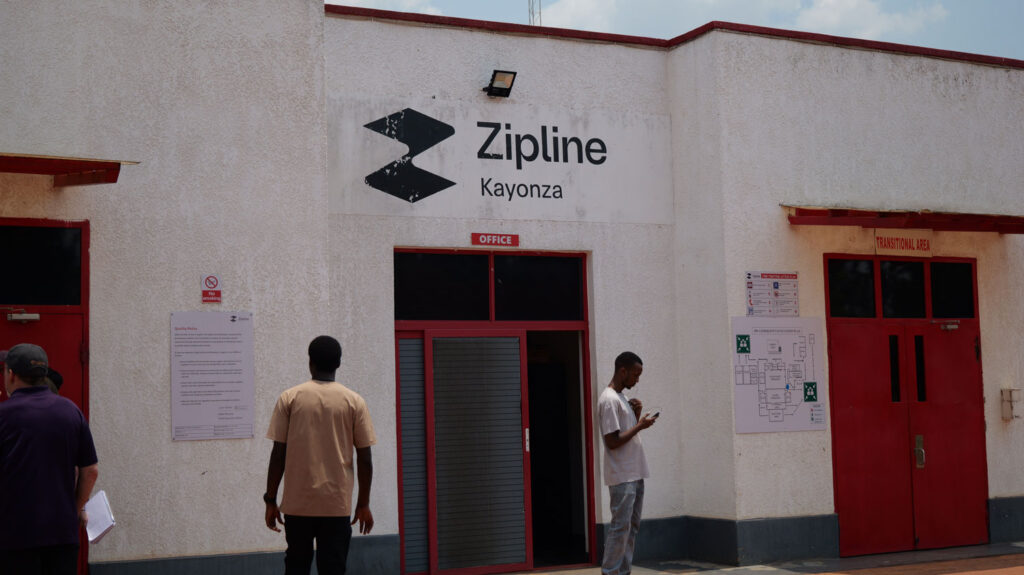
In between, they played ultimate frisbee with the locals, hiked in Volcanoes National Park and visited businesses such as Zipline, a drone delivery service that ferries medical supplies anywhere in the country within an hour. The Rwandan government was Zipline’s first customer.
“This trip and these experiences have definitely made me think about the role of government — and where and how it should have power,” said Arrabi.
A sustainable program
Future study abroad participants will pick up where she and her peers left off.
Gardner and Krabill intend to make “Leadership and Nation Building in Rwanda” a long-term, sustainable project. To do so, they plan to recruit a cadre of professors who will rotate into leadership roles each year. For the inaugural program, they were joined by Dr. Sunila S. Kale from the UW’s Jackson School of International Studies.
“This is a way to show that the UW is committed to keep showing up and offering a program that benefits ALU students as much as it benefits UW students,” said Gardner.
Krabill credits the enthusiastic, risk-taking student cohort with the 2025 program’s resounding success so far.
“We always like to say that we can create a structure that can make something magical happen,” he said, “but the students have to make the magic happen. They really did it.”
“This trip and these experiences have definitely made me think about the role of government — and where and how it should have power.”
Layan Arrabi, senior in Mathematics
The next Leadership and nation building in Rwanda Study Abroad program will be held in late summer 2026. UW students can learn more about application deadlines on this webpage.