Home to both the world’s longest mountain range and the largest rainforest, Peru is one of the most biodiverse countries on the planet. The South American country is populated with unique wildlife and a rich culture, from the coastal desert drylands and Andes mountains in the west to the eastern lowlands and lush forests of the Amazon.
For Dr. Ursula Valdez, Peru holds a special place in her heart as not only her home country but also as a point of fascination for her research as a tropical ecologist. Valdez is a lecturer in the University of Washington Bothell’s School of Interdisciplinary Arts & Sciences and has shared her passion for Peru with her students, even leading study abroad experiences for them to immerse themselves in the country’s natural wonders right alongside her.
“Peru is filled with opportunities to explore environmental issues,” Valdez said. “For a study abroad experience, it’s an opportunity to not only visit another country but to also see the natural world and the wild places that can’t be found anywhere else. It has a little bit of everything.”
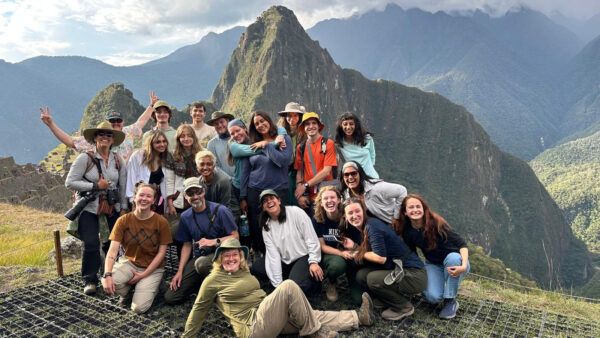
In the latest study abroad trip, “From Andes to Amazon: Biodiversity, Conservation and Sustainability in Peru,” Valdez took a class of 19 students on a 21-day journey.
Observing wildlife in remote places
Valdez first brought a group of students to Peru while she was still working on her doctorate in Biology, with an emphasis on Ecology and Conservation, at the University of Washington in Seattle in 2008. Co-leading the trip was Dr. Tim Billo, a lecturer in the UW’s College of the Environment, who also had experience working and living in the tropics. Since then, Valdez has co-led a total of 14 Exploration Seminar trips with Billo and other faculty.
Although open to all majors, this year’s seminar was of particular interest to UW students in environmental-related degree programs. Molly Beecher, a sophomore majoring in Aquatic Conservation and Ecology at the UW, was excited by the chance to gain firsthand field experience.
“I was drawn to this opportunity because I’ve always loved nature and currently hope to work with it in the future,” she said. “As someone who hopes to be a biologist and conservationist, I think it is really important to see and understand a wide variety of the ways that people interact with the living world around them since it is through these relationships that the world needs to work to solve many of the largest problems we face.”
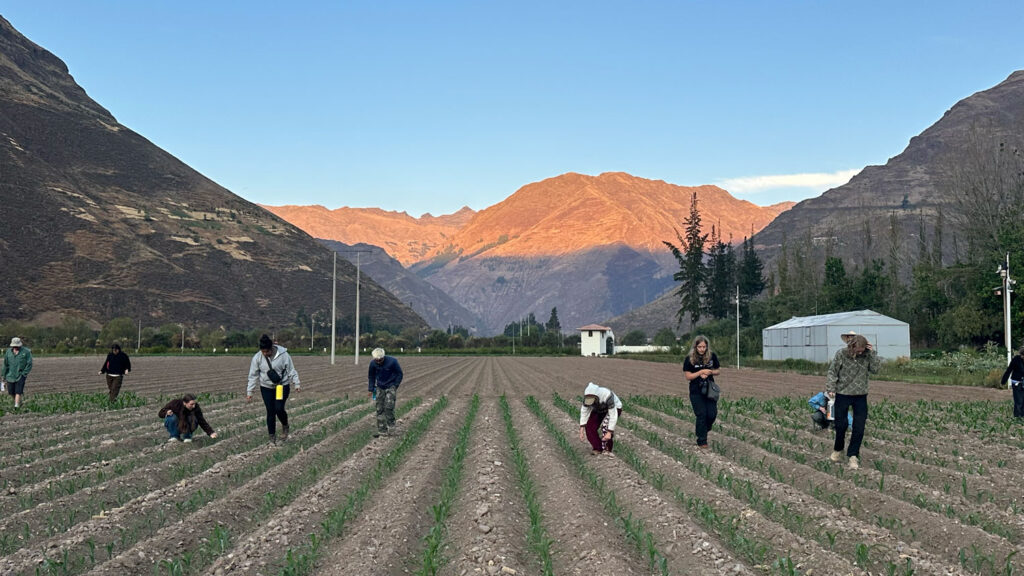
During the trip, students were fully immersed in the outdoors, moving from one field base to another, often in remote areas away from human activity — perfect for viewing wildlife in their natural habitat.
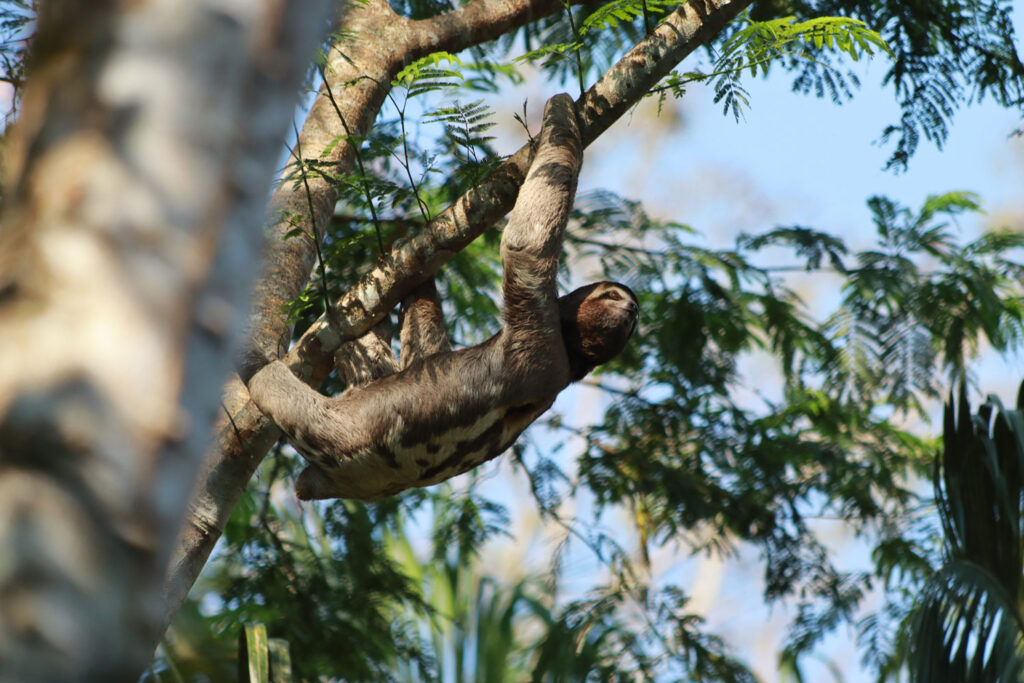
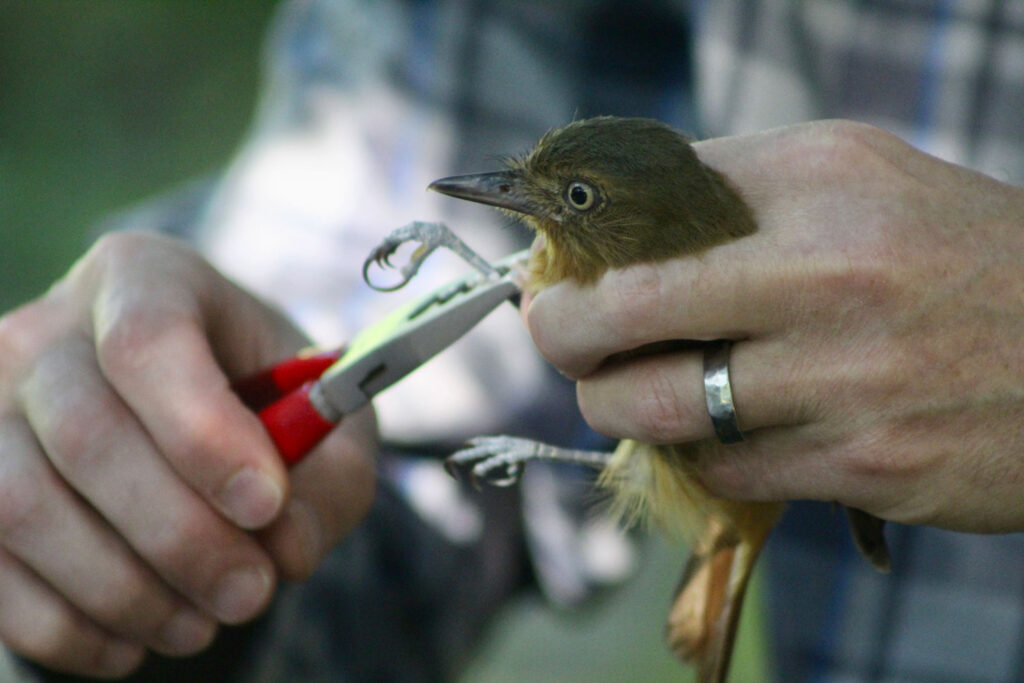
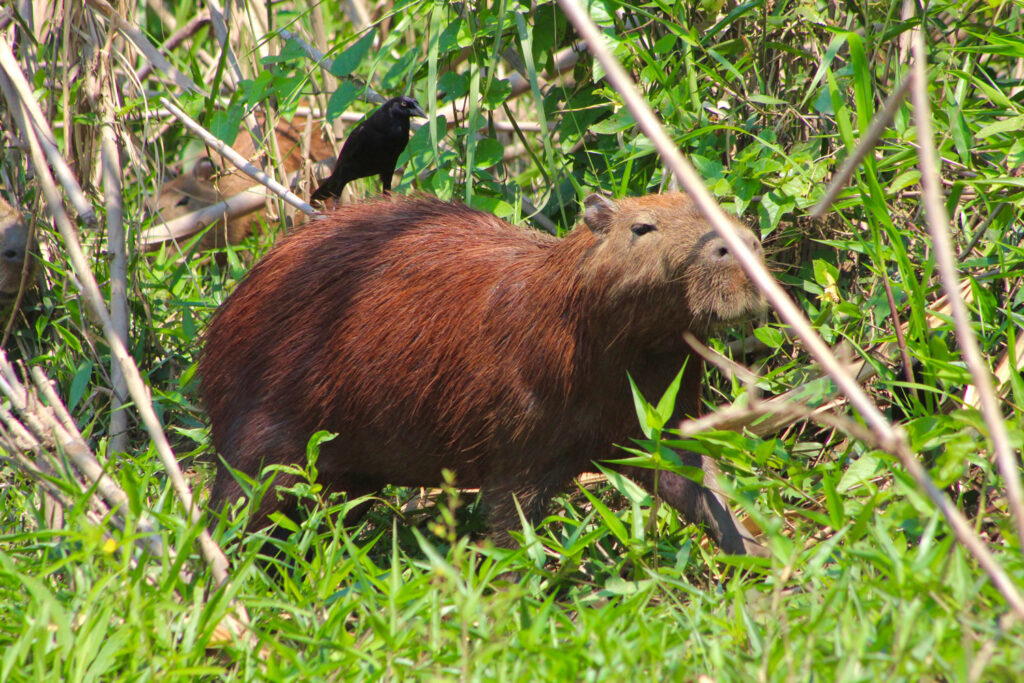
“It’s such a unique experience, being in a field station in the Amazon talking about mammals, and then we step outside and there’s a sloth right there,” Valdez said. “We had all these close encounters with wildlife, seeing monkeys and capybaras and macaws just doing their thing. We go to these places where life is happening in front of our eyes without intervention. They’re not in a zoo, and I think that’s pretty important and remarkable for students to see these things outside a textbook or a video.”
Examining layers of conservation challenges
The students experienced the natural beauty and wildlife of the country as well as Peru’s conservation challenges — such as environmental impacts from deforestation and gold mining.
For Maxwell Davis, a senior majoring in Conservation & Restoration Science at UW Bothell, the trip was a great way to apply what he’d learned about ecology and conservation in a new environment and share that experience with like-minded people.
As part of the seminar, students worked in groups on a final research project relating to the topics they’d studied. For their project, Davis and his group researched conservation issues, including road building, drought, logging and climate change.
Learning about conservation efforts in other parts of the world is important to my future career because it gave me new perspectives on how to approach our challenges at home.
Maxwell Davis, senior, Conservation & Restoration Science
“I witnessed conservation challenges, such as illegal gold mining and deforestation, firsthand and got to talk to local people who are making a difference by creating alternative livelihoods through ecotourism,” Davis said. “Learning about conservation efforts in other parts of the world is important to my future career because it gave me new perspectives on how to approach our challenges at home.”
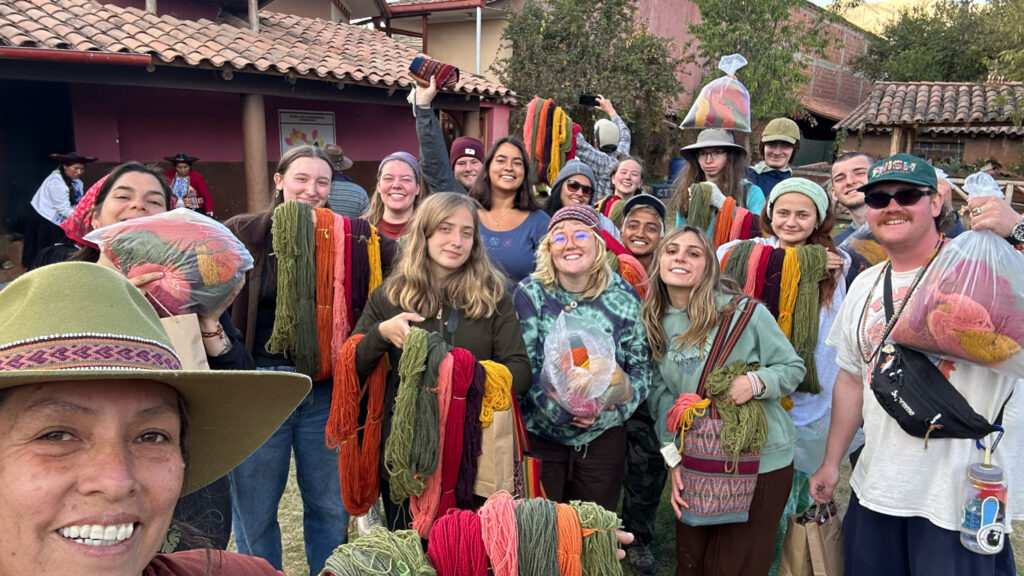
The UW students also interacted with local residents — including Indigenous Mestizo communities, farmers, textile workers, artisans and others. Through interviews and tours, these community connections helped the students learn about local environmental, social and economic challenges.
The interactions were especially valuable for how they revealed the various layers behind conservation challenges, Valdez noted, including the role that the U.S. and other countries play in them.
Making small choices with big impact
“When you talk to people who live in these places and who may be part of the processes, such as the gold mining or deforestation that are degrading and polluting the ecosystem, it can be easy to judge what they do as morally wrong,” Valdez said, “but then you learn that these people have needs and few alternatives for how to meet those needs. You also have to understand that these resource demands are coming from outside these communities and that many times they’ve been pushed into those activities.”
Often, the responsibility lies more with the consumers of these resources and the government policy and corporate practices that allow these activities to continue, Valdez added. “It’s important for students to understand their own role in these challenges.”
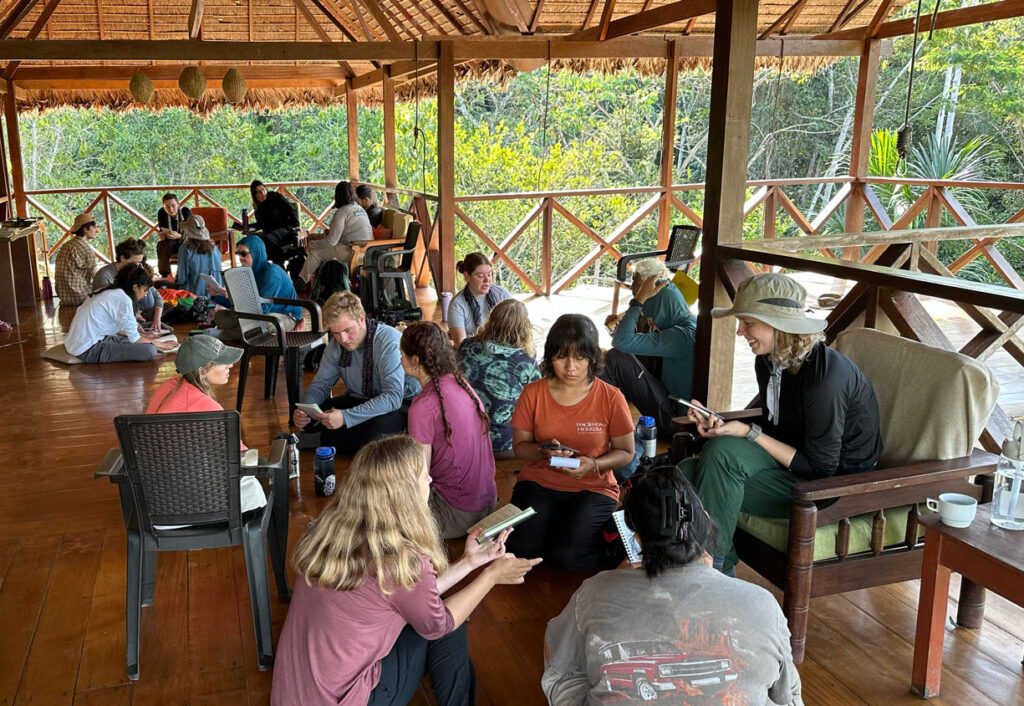
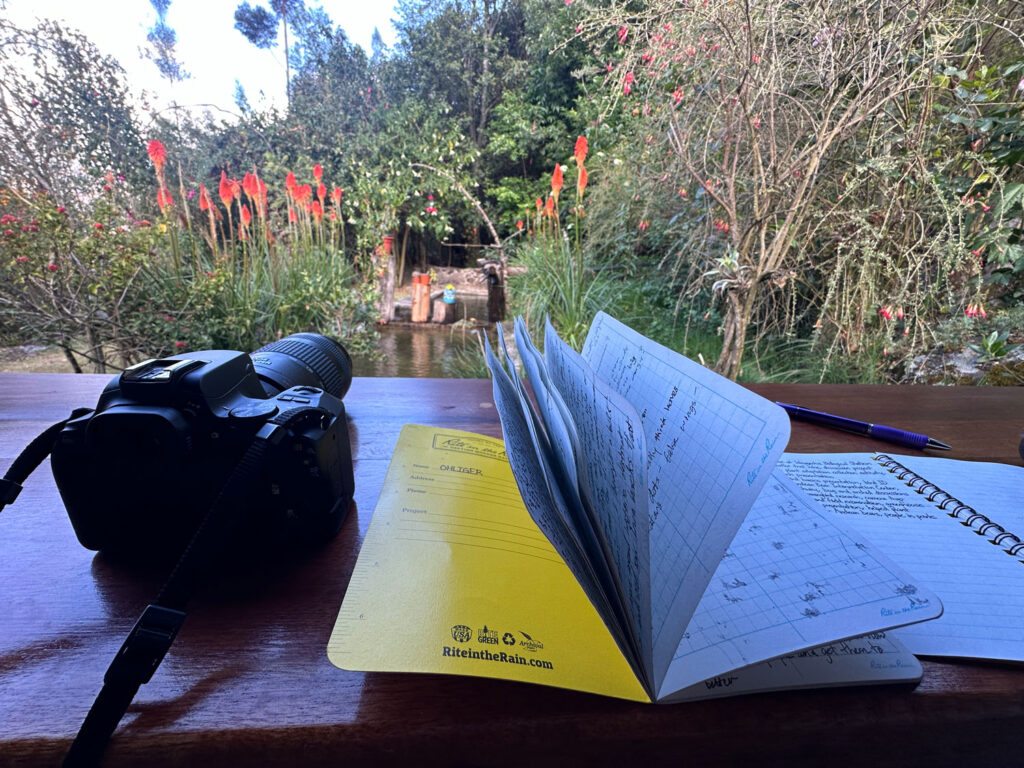
Despite Peru’s conservation issues, Valdez noted that there are also many things that people in the country do right when it comes to sustainability — including more efficient water usage by conscious farmers who practice ecological approaches in agriculture and more sustainable consumption practices. Students were each asked to keep a naturalist journal to turn in at the end of the trip, and many students noted they walked away with valuable lessons they felt they could take home and apply in their own lives.
“I focused on learning from Indigenous and local communities, and how they are overcoming the disproportionate burden of various environmental issues,” said Matthew Ohliger, a junior Environmental Public Health major at UW. “These groups possess an immense amount of generational knowledge, and I saw their perseverance as a model for behaviors that we in the U.S. might benefit from adopting.
“My ultimate conclusion was that although our world’s challenges may seem insurmountable, small choices still matter immensely,” he said. “Improving our resource usage and consumption habits is one of the simplest but most impactful things we can do to help combat the unsustainable systems our society depends on.”
Building community through shared experiences
The students said they learned a great deal — from natural and social science research techniques to new perspectives and a greater understanding of their role in nature. Many also shared that the highlight of the trip was the opportunity to share the experience abroad with one another.
“What I enjoyed most was building a strong sense of community with my fellow students and being able to experience so many unique regions of Peru,” Davis said. “I highly recommend this experience to anyone interested in biodiversity conservation, especially if studying abroad seems out of your comfort zone. I’ve always been hesitant to try new things, but it turned out to be one of the most enriching and unforgettable experiences of my life.”
For Valdez, the trip was yet another reminder of all the things she loves about Peru that keep her coming back for more.
“Every time you travel, you learn so much about a place’s biodiversity and ecosystems, but you also learn something about yourself, which is very important,” she said. “It’s a non-stop learning experience — and that doesn’t just go for the students, it goes for myself as well. That’s probably what motivates me to keep doing it.”