I love October in Seattle. The beautiful contrast of verdant evergreens and stunning Japanese maples as they turn from green to orange and red. The sun-kissed golden hue of a tree canopy on a cloudless day, and the colors on the wind that fall like rain.
In this city, as in life, each new season is a time of change.
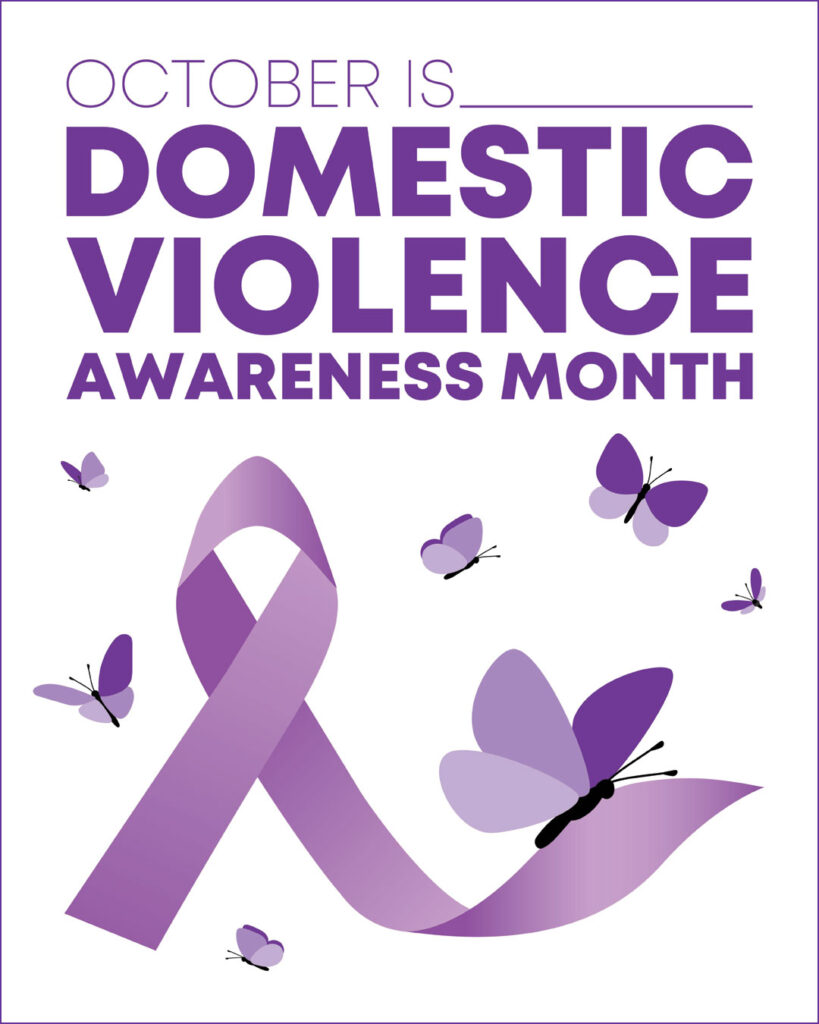
October holds, for me, a lot of memories of growth and change. It’s the month that I married my husband of 19 years. It’s also Domestic Violence Awareness Month, and during this time, I’ve reflected back on my life before marriage.
When I got married, I was 19 years old. As a young couple, my husband and I often heard how difficult it was to maintain a relationship. Now that we’ve been married this long, we understand why. Relationships are hard.
My husband and I both grew up surrounded by financial hardship, domestic violence and abuse. These things were normalized in our communities. And while it is not all we hold from our childhood memories, we both knew we didn’t like the way that we grew up. We wanted something different for our own family, and we worked hard to challenge those norms.
One of the most influential decisions we made was for me to attend college. Getting an education changed our way of thinking. The more we learned, the more we saw how different family life could be.
My education began at Cascadia Community College. With UW Bothell next door, it was a gateway to higher education for me. It’s true that college is where you learn more about yourself. As a mother of two young children, taking classes in the evenings and taking care of my family during the day, I began to learn that I was more than just a mother and a wife. I began to explore my identity as a daughter, a woman, a woman of color, an immigrant and a student.
As I learned more, I came to believe this newfound knowledge also came with yet another responsibility: The responsibility to create change — not just within my own family but in a bigger circle.
I felt called upon to challenge the norms on a more macro level and advocate for others. On campus, I became an advocate for students with families and challenged the social norms of what traditional students’ needs are. I advocated for gender equity by requesting support for pregnant students and students with young children.
After graduation, I felt empowered to continue advocating for others. I began working for the Department of Children, Youth and Families, and again, my life changed for the better. Getting to work to support families staying together safely and with healthy love was a delicate privilege for me. With each new encounter, I grew to love social work and the impact that I could have in helping empower someone in their own journey.
My growing passion led me back to UW, where I completed a master’s in Social Work. It was at the UW’s School of Social Work that I gained the tools to continue my work of empowering others and challenging the unhealthy societal gender norms that persist today.
Now, as a licensed clinical social work associate and a confidential advocate serving students at UW Bothell and Cascadia College, I consider myself an instrument of change — an instrument whose purpose is to deliver a small spark of love, care and empowerment to help students choose how they will challenge their own perspectives on healthy relationships and societal norms.
My work in this role is informed by my education and professional experiences but also by my personal background. I have learned that relationships can be difficult, painful, abusive, toxic, unhealthy and even blinding or deadly. But I never had to navigate those challenges alone. My husband has been by my side, learning and traveling this journey with me, and helping me get through it. We’ve also taught each other that relationships can be healthy and beautiful. That when they are filled with love, respect, understanding and healthy boundaries, relationships can lift you up.
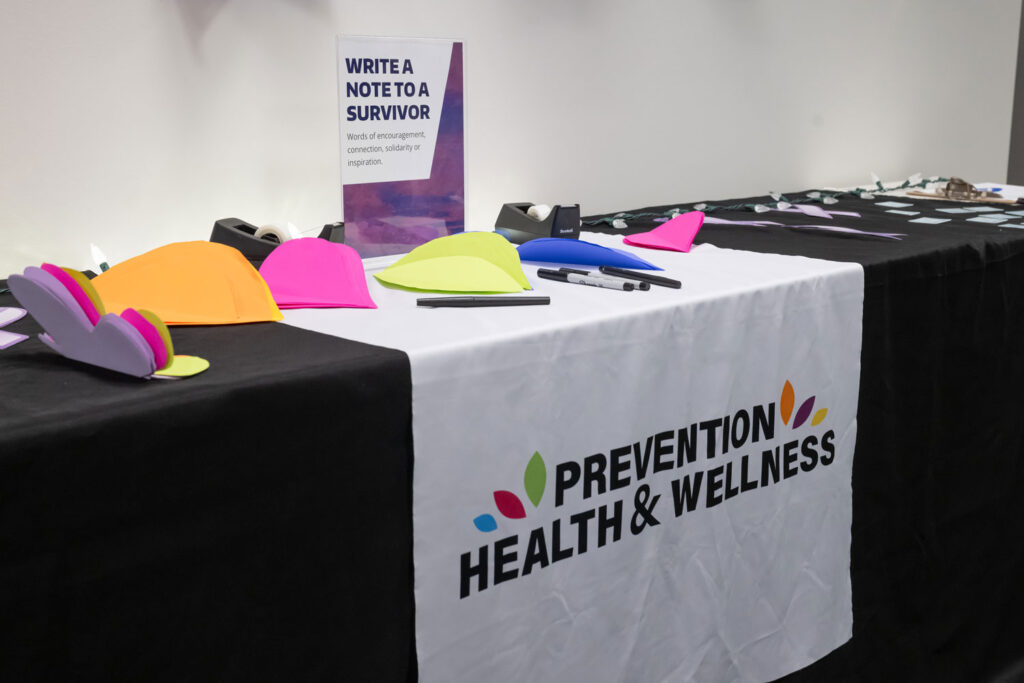
Growing up, I was also fortunate to have bystanders who supported me and my family. That helped a lot. It made me feel that I was not alone. And now, I get to be that presence in someone else’s life. At its core, the purpose of our office is to let students know that they are not alone, that there are other people who are willing to support them and who care about them.
As bystanders and advocates, we all have the power to be that person in someone’s life. To be trusted by someone in need is an honored responsibility. Should you ever find yourself in the position where someone is comfortable disclosing their experience with domestic violence and abuse to you, it’s important that you let them know you believe them and that it is not their fault. Let them know that help is out there, and there are resources to support them.
And above all, let them know they are not alone.
We are all capable of harm, both causing it in those we love most and receiving it from those who are supposed to love us. But it doesn’t have to stay that way, and it isn’t what defines us. We are all our own instruments of change, and we also have the power to create change for others.
Learn more about the violence and advocacy work happening on campus, and how you can help, by visiting the Prevention, Health & Wellness site. If you are in a crisis situation and need help, please visit the Crisis Services website to learn more, and as always, call 911 in the case of a life-threatening emergency.
Ruth Medina is a licensed social work associate and a confidential advocate at UW Bothell and Cascadia College. She is Alta language certified in Spanish with trauma-focused CBT skills and motivational interviewing. Medina holds a master’s from the UW’s School of Social Work; a bachelor’s degree in Society Ethics & Human Behavior and Global Studies, with minors in Human Rights and Education & Society from UW Bothell; as well as an associate’s degree from Cascadia College. Her professional background is in conducting psychosocial, risk assessments and crisis interventions when working in local hospitals from Evergreen Health, Providence and Harborview Medical Center. She was also named one of the first recipients of the Husky100 award after advocating for parenting resources at UW Bothell. She can be reached at medinar1@uw.edu or uwbvpa@uw.edu UW1-061.