From its research projects to events and learning programs, the University of Washington Bothell’s Collaborative for Socio-Ecological Engagement has grown its offerings considerably since it launched in 2024. And at the heart of this work — the engine that has supported this expansion along the way — is its internship program.
This summer, CoSEE welcomed its largest cohort to date with 22 interns.
“CoSEE’s internship program is designed not only to expand experiential learning for UW Bothell undergraduates but also to broaden the social and professional relationships through which students come to understand themselves and their communities as co-participants in socio-ecological decision-making,” said Dr. Veronica Cassone McGowan, CoSEE director.
“Through sustained, place-based work with faculty, local agencies and community partners, students learn to recognize themselves as part of natural systems while contributing to decisions and collective practices that support ecological flourishing, strengthen community relationships and deepen connections across generations.”
This summer’s cohort worked along five pathways: geographic information systems, invasive species, native plants, environmental education and communications.
Tracking invasive species
Interns on the GIS pathway developed mapping and data analysis skills while working on projects around the collaborative’s headquarters at the Environmental Education & Research Center, a facility that opened in 2022 at Saint Edward State Park in Kenmore, Washington.
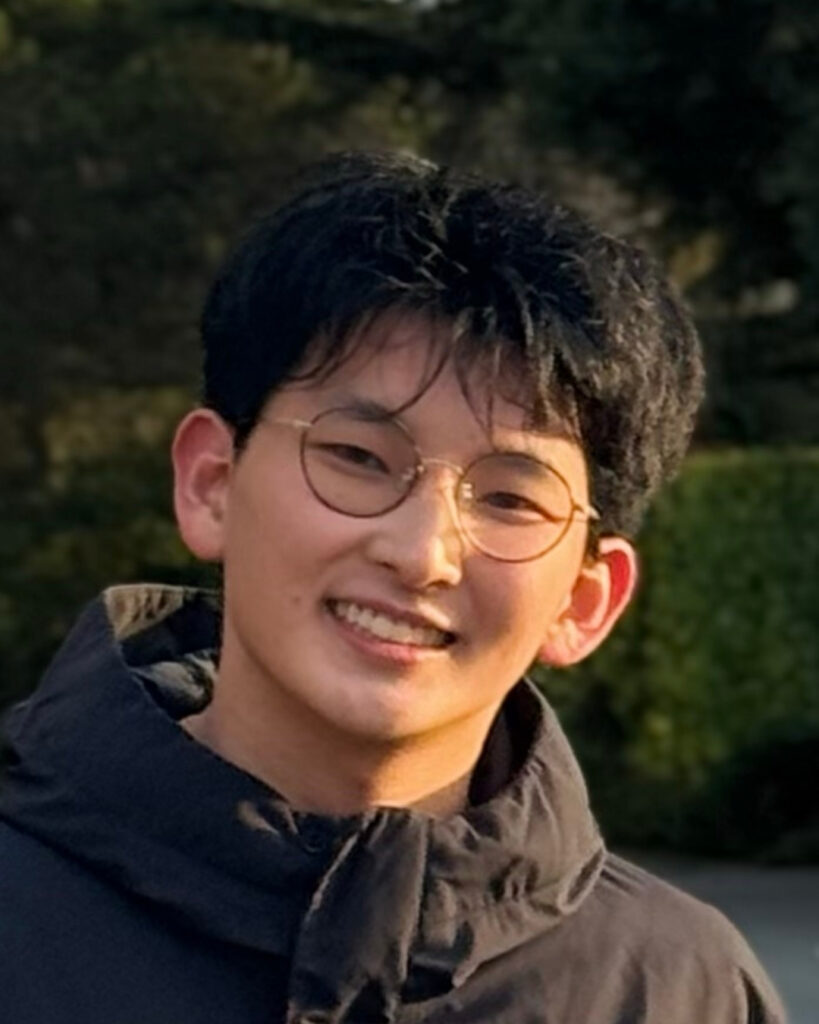
For his GIS internship, Junki Nakamura supported CoSEE’s work on invasive species designed to protect and restore native ecosystems in the park.
“CoSEE stood out to me because it connected my interest in hands-on GIS work with the environmental side of things,” said Nakamura, a senior majoring in Data Visualization. “Working on it alongside my peers has opened my eyes to new capabilities of GIS I hadn’t considered — especially how it can be used to inform and support local state parks.”
Nakamura has been building a digital map to track invasive species along a local trail. The goal is to create both a pre- and post-restoration map of the area, showing the work that needs to be done and the impact of the restoration once it’s completed.
“This internship gives me direct, hands-on experience in the kind of applied skills I’d need for a career working with a county on environmental or GIS-related projects,” he said. “It’s also strengthened my data analysis abilities, which ties directly into my Data Visualization major and opens the door to data analyst roles as well.”
“This internship gives me direct, hands-on experience in the kind of applied skills I’d need for a career working with a county on environmental or GIS-related projects … and opens the door to data analyst roles as well.”
Junki Nakamura, senior, Data Visualization
Supporting native plants
Ruth Tesfaberhan began interning with CoSEE last fall quarter to do social media and has continued interning with the collaborative since then.
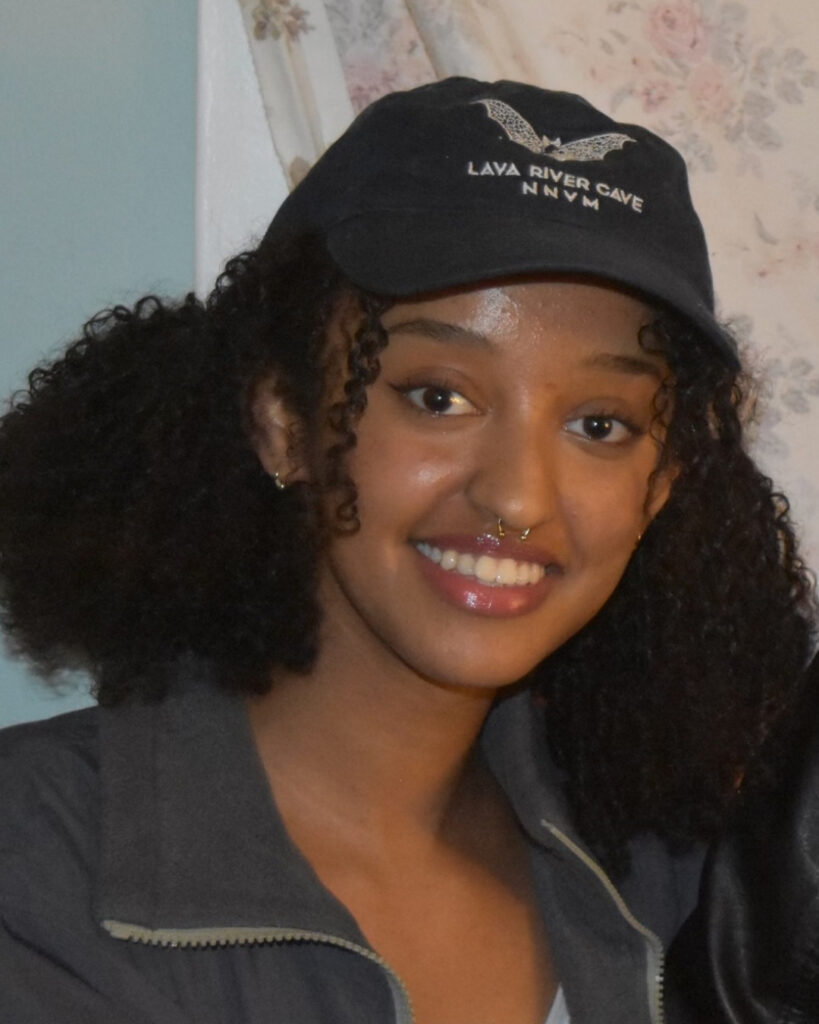
“CoSEE has me coming back every quarter because fellow interns and Maddie Iem, the program manager, are super supportive and easy to work with,” said Tesfaberhan, a senior majoring in Conservation & Restoration Science and minoring in GIS. “I never feel bad asking questions or reaching out to other interns about project-related things. It’s an amazing environment to learn and grow in.”
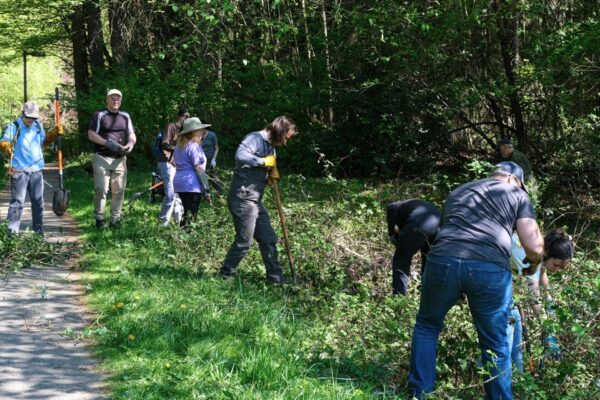
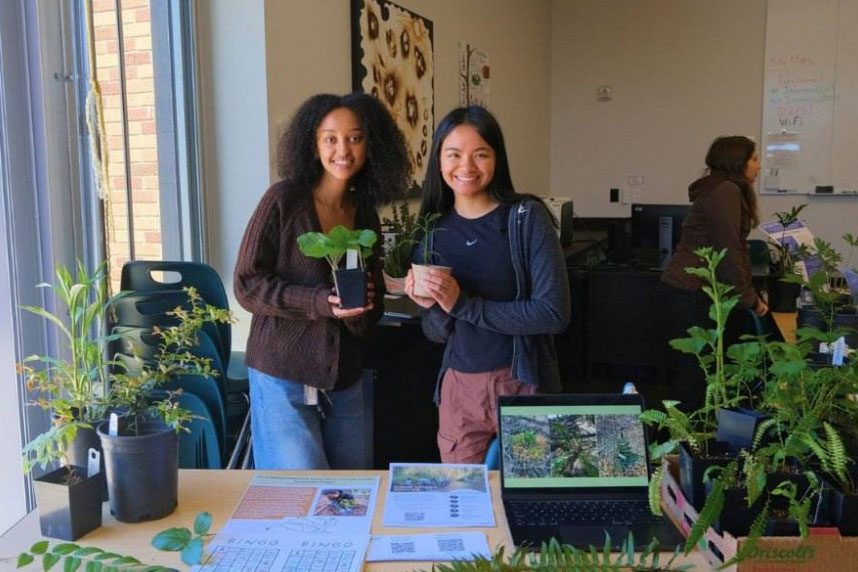
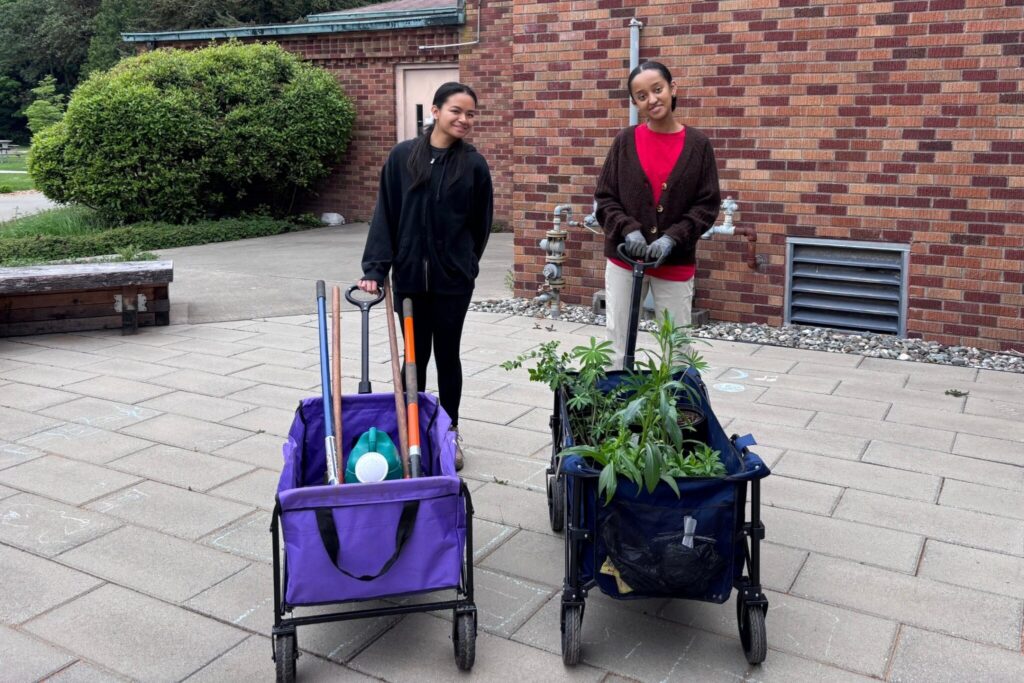
This summer, as part of her capstone, her work has centered around the EERC’S Native Plant Learning Garden restoration project. Tesfaberhan learned how to identify more than 30 different native plans, as well as some of their non-native counterparts. The work included watering and caring for native plantings, removing invasive weeds, and developing educational materials for visitors.
“I’m supporting the ongoing park improvement project, aimed at restoring the native learning plant garden into a space where the community can learn more about native plants and their role in our ecosystem,” she said. “The garden’s purpose is also to inspire people to plant native plants and engage the community in the interactive landscapes of the Pacific Northwest.
“I hope that by the end of my internship the garden becomes more known by the local community and environmental students as an example of native plant restoration.”
Fostering educational inclusivity
After finishing her degree in Mathematics and her minor in Teaching & Learning in June 2026, Cassandra Humarang wanted to find an education-related internship — a difficult task during the summer months, she said. When she found that CoSEE was looking for summer interns to work on its growing Adaptive Library, it seemed a perfect fit.
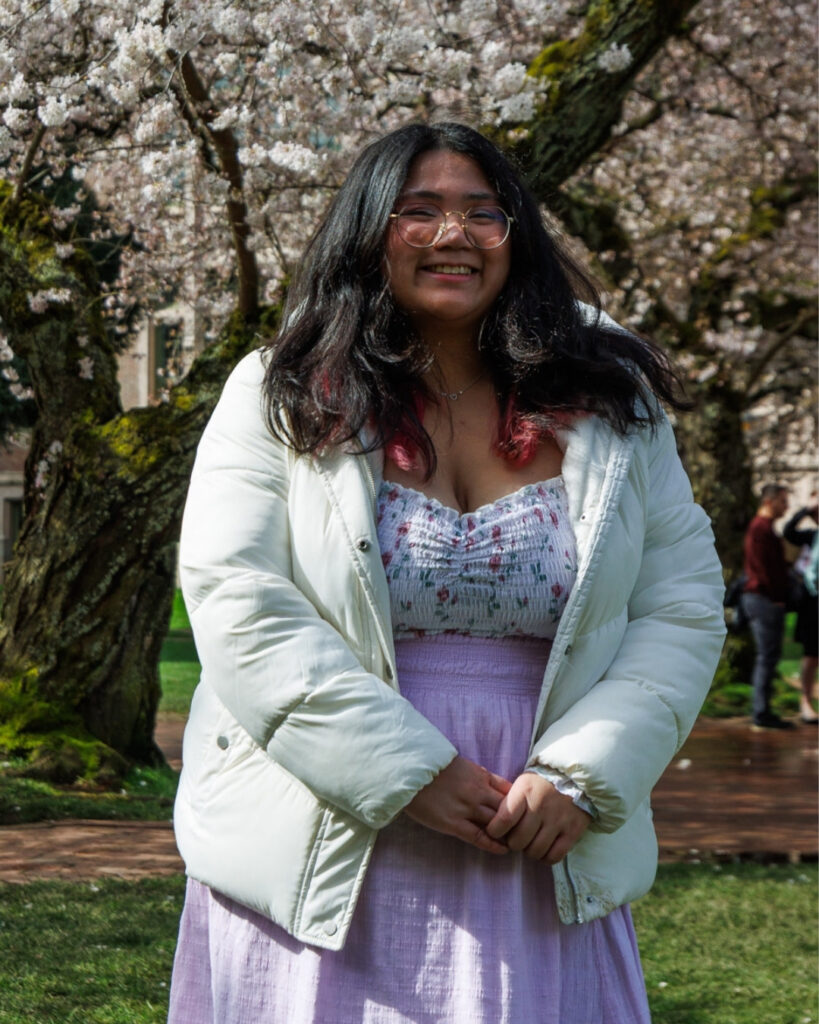
“I specifically chose the environmental education internship since I want to become an elementary school teacher, and I wanted to have the opportunity to adapt children’s books that would support interactive learning,” Humarang said.
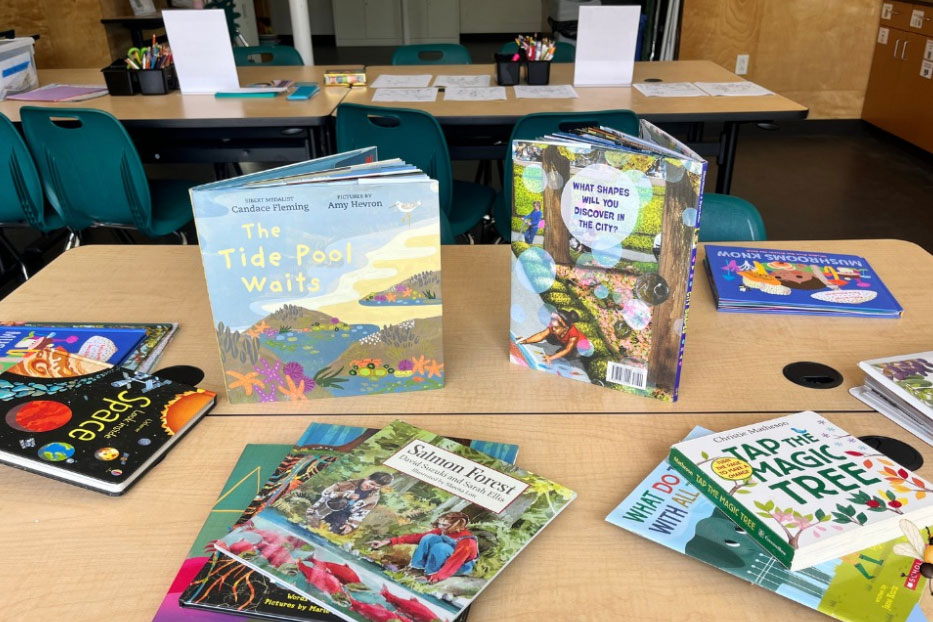
The Adaptive Library is a collection of children’s books designed to make environmental and STEAM (Science, Technology, Engineering, Arts and Mathematics) learning more accessible for learners with diverse communication and support needs. Humarang adapted several books to include more sensory aspects and ensure they align with the state’s learning standards.
“Math has always been my favorite core subject, and I know it doesn’t have a good overall reputation. One of my goals is to show that math is for everyone, it’s everywhere, and it can be fun,” she said. “The interactive books allow me to do this by thinking outside of the box and creating activities and elements relating to math that children may not realize.”
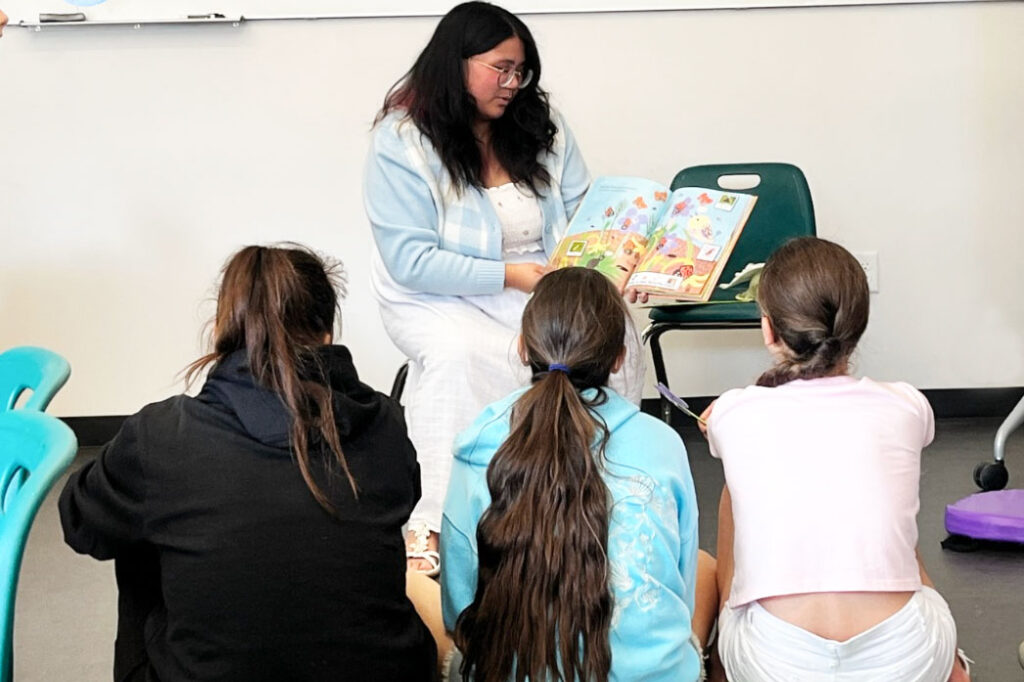
Humarang led a story time event last month where attendees enjoyed hearing her read from one of the library’s adapted books. They also engaged in nature-inspired crafts like making friendship bracelets and buttons. The attendees ranged from school-age children to educators — including a teacher who checked out three adaptive library books and requested materials for additional adapted books.
Creating opportunities to learn
This year’s larger intern cohort helps support CoSEE’s existing programs, while also creating opportunities for growth. Leading the charge on many of these efforts is Maddie Iem, program manager.
“Maddie has been instrumental in designing the organizational support structures that enable interns to thrive in their community-partnered work and to carry that learning into their educational and professional futures,” Cassone McGowan said.
She added that their five internship pathways not only prepare students for future careers but also help them develop the relationships, practices and forms of ecological responsibility needed to contribute meaningfully to the places and communities of which they are already a part.
“I came into this internship with a lot of ideas about what restoration should look like and how to balance school, research and work,” Tesfaberhan said. “I learned a lot about myself working with CoSEE and grew not only as a student in conservation and restoration science but also as a person.
“I would recommend this program to anyone who feels like there’s always more to learn.”