What drew you to become a career coach?
What drew me was the opportunity to help people recognize their potential, especially during moments when they might be uncertain about their next steps.
Career development isn’t always straightforward. People face different circumstances, responsibilities and barriers that can influence their decisions. I enjoy being able to meet students where they are, listen to their experiences and help them identify practical ways to move forward.
One of the most rewarding parts of this work is seeing a student’s confidence grow. Sometimes that comes from landing an internship or job, but other times it’s simply helping someone realize they have more to offer than they initially thought.
My own experiences navigating career decisions and transitions — and having navigated issues such as imposter syndrome in the workplace — have helped me appreciate how valuable it can be to have someone offer guidance, encouragement and a different perspective.
How do you support students and alumni with career development?

As a career coach, I work directly with students to help them navigate their career journeys, whether they’re exploring possible career paths, searching for internships, preparing for interviews or transitioning into the workforce after graduation. I also work closely with our campus and faculty to bring career readiness into classes and the curriculum with the support of technology and up-to-date best practices.
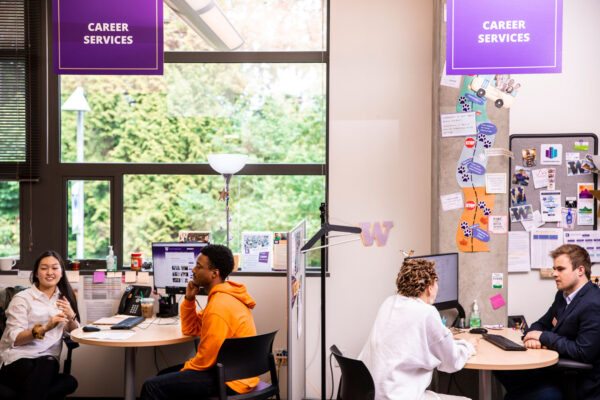
Through individual career coaching appointments, I work with students on everything from career exploration to resumes, cover letters, interviewing, networking, and job and internship search strategies.
Alumni, too, can access career-related resources and support, although specific services and eligibility may vary. All alumni have access to our coaching appointments for up to three years after graduation — and veterans have lifetime access.
I encourage graduates to stay connected and explore the resources available to them as their careers evolve.
What challenges are graduates today facing in the job market?
One of the biggest challenges is navigating an increasingly competitive and unpredictable job market, particularly for entry-level opportunities.
Many graduates are finding that positions labeled “entry-level” still ask for previous experience, which can be frustrating when they’re trying to get their foot in the door. We’re also seeing technology — including artificial intelligence — change how employers recruit, evaluate candidates and approach certain roles.
Another challenge is the emotional side of the job search. Students can submit dozens of applications without hearing back, and it’s easy to interpret that silence as a reflection of their abilities.
I think it’s important to acknowledge that the job market can be difficult while also reminding students that there are strategies they can use to improve their chances. Both things can be true.
How can they prepare for those challenges?
My recommendation is to start early and approach career development as an ongoing process rather than something that begins right before graduation.
That doesn’t mean students need to have everything figured out. It means taking small, intentional steps to explore their interests, build relevant skills, gain experience and develop professional relationships.
I encourage students to pursue internships, campus employment, volunteer opportunities, research or projects that allow them to apply what they’re learning. Get involved on campus by joining clubs or activities, as experiential learning and participation comes in many forms. These experiences can help them build confidence and give them concrete examples to share with employers.
Networking is also important, and it doesn’t have to feel transactional. Sometimes it’s simply reaching out to someone to learn about their career journey, asking thoughtful questions or staying connected with people you’ve met along the way.
I encourage students to be flexible and open-minded as well. Your first opportunity may not be your dream job, but it can still be a meaningful step toward where you want to go.
How has the job landscape changed during the time you’ve been a career coach, and how have you adapted?
One of the biggest shifts I’ve noticed is how quickly the job search process continues to evolve, particularly with the increased use of AI, automated screening tools and digital hiring platforms.
Students have access to more information and job opportunities than ever before, but that doesn’t necessarily make the process easier. In some ways, it can make it more overwhelming.
We are in a competitive job market, and students are wondering how to put their best foot forward when securing internships and jobs. So I’ve become more intentional about emphasizing quality over quantity in the job search. Rather than focusing solely on the number of applications submitted, I encourage students to think about how they’re targeting opportunities, communicating their qualifications and building connections.
I’ve also reinforced the importance of creating space for students to talk honestly about their frustrations. Sometimes the most valuable thing we can do is listen, acknowledge the challenges they’re facing and help them regain a sense of direction.
What mistakes do students and graduates make when applying to jobs or internships?
One common mistake is relying too heavily on submitting applications online without developing a broader job search strategy. Applying is important, but students can benefit from being more intentional about the opportunities they’re pursuing, tailoring their materials and connecting with people in their fields of interest.
Another mistake is underselling their experiences. Students sometimes assume that if they haven’t held a formal internship or worked in a specific industry, they don’t have anything relevant to offer. In reality, skills developed through coursework, part-time jobs, student organizations, volunteer work and personal projects are all valuable and transferable. The key is learning how to communicate those experiences in ways that connect to what employers want.
I also see students rule themselves out of opportunities because they don’t meet every qualification listed in a job description. While it’s important to be realistic, I encourage students to focus on whether they meet the core requirements and can demonstrate the skills needed to succeed.
What is your biggest piece of advice for graduates today?
Don’t measure your potential or your progress solely by how quickly you land your first job. It’s easy to compare yourself to classmates or feel like you should have everything figured out by graduation, but everyone’s career journey looks different.
Be proactive, stay curious, build relationships and don’t be afraid to ask for help.
Be willing to explore opportunities that may not look exactly like what you originally envisioned.
And perhaps most importantly, remember that your first job doesn’t have to define your entire career. It’s a starting point, not a final destination.
Career development is a process of learning, adapting and growing. Give yourself the space to do that while continuing to take meaningful steps forward. Students and recent alumni can get in touch with us by scheduling an appointment.