
Learning to manage employees is not an easy feat. That’s why there is no shortage of resources dedicated to the subject, from webinars and classes to self-help and management books. It is also a point of interest for researchers such as Dr. Sundar Balakrishnan.
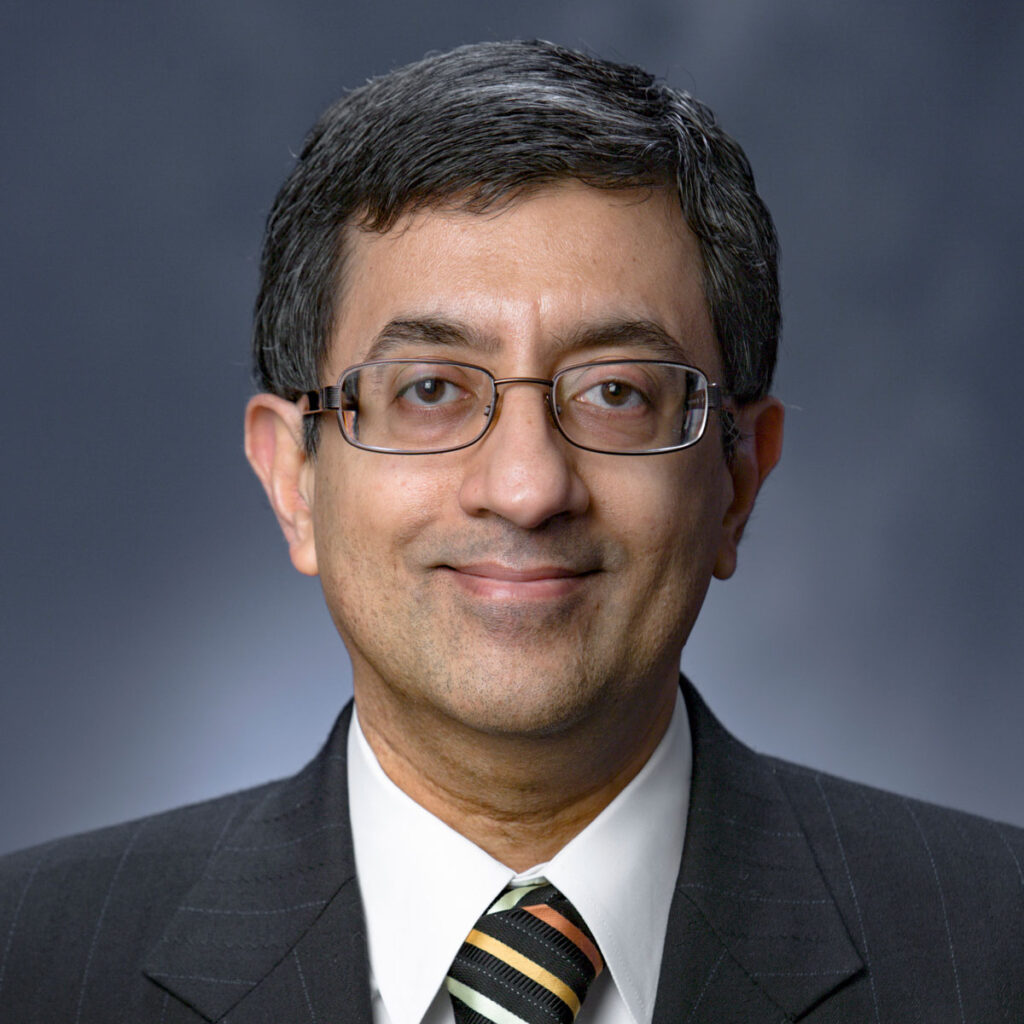
A professor and associate dean for the University of Washington Bothell’s School of Business, Balakrishnan has more than 30 years of experience teaching and researching everything from marketing theory and practice to organizational behavior.
In his latest paper, “Talent inside the diamond: a fluid, trifaceted framework for managing employees in knowledge-intensive workplaces,” Balakrishnan proposes three vital ingredients every employee needs to be successful — and how managers can foster that success.
Matrix for enhanced productivity
In addition to teaching and research, Balakrishnan has served in several administrative roles and is often asked to speak at and connect with other business schools around the world. A few years ago, he was asked to present virtually to an institution in India about his approach to managing faculty.
His proposed matrix for identifying different types of employees and their needs was so well received that he decided to explore the idea in more depth.
Over the past decade, Balakrishnan has been thinking about the issue of productivity. Stories such as the 2015 Volkswagen emissions scandal and accounts of Amazon employees being forced to urinate in bottles to keep up with daily quotas served as examples of productivity optimization gone awry.
“I saw that this was often the case — that managers and companies talk about increasing productivity, but that they’re missing this underlying third rail, this other dimension, which is ethics,” he said. “So, how do we incorporate ethics into this framework to ensure that what we are doing is not just trying to squeeze blood out of stone?
“How do we ensure what we do is leaving the world in a better place than we found it?”
A lot of the literature around worker productivity focuses on two major aspects — knowledge or skill plus motivation — that, like the wheels of a bike, propel workers along toward success, Balakrishnan said.
And while Balakrishnan includes both expertise and motivation in his framework, he takes it a step further by proposing that ethics is the third wheel that keeps an employee balanced and on track.
The missing third wheel
When all three elements are used as axes on a graph, Balakrishnan said, it is easier to see where each individual employee fits into the big picture. When plotting multiple people, patterns also start to emerge.
“Sometimes we think of our team members as ‘this person doesn’t work hard’ or ‘this person works like a dog,’ but we rarely step back and say where they are in the big picture — and why,” Balakrishnan said.
Through his framework, he has identified eight common archetypes: four ethical types and their corresponding less ethical counterparts. Plotted on a four-quadrant graph, these types delineate a “diamond” of optimal productivity. The axes represent expertise, motivation and ethics:
- High expertise and high motivation: Black Holes (low ethics) and Stars (high ethics)
- High expertise and low motivation: Schemers (low ethics) and Oysters (high ethics)
- Low expertise and high motivation: Hustlers (low ethics) and Eager Beavers (high ethics)
- Low expertise and low motivation: Poisoned Wells (low ethics) and Untapped Wells (high ethics)
Looking at the example of a Schemer — someone who has deep knowledge and expertise but seems checked out — Balakrishnan said it can be easy to think of this archetype as lazy. In reality, there are many reasons why they may lack motivation.
“By digging deeper, I can start to understand why they are checked out and if it’s something the company or organization is or isn’t doing to motivate them,” he said. “Maybe it’s something as simple as giving them recognition for their work.”
“How do we ensure what we do is leaving the world in a better place than we found it?”
Dr. Sundar Balakrishnan, professor, School of Business
A framework for success
Using these same concepts, Balakrishnan also recently developed an app where managers can input their teams, learn more about each archetype and see how best to foster growth and success within each one.
“For leaders who use this tool, the question then becomes, ‘What is it that we can do in terms of pulling the right lever in order to get these people back on track or continuing what they are doing?’”
He added that a Star may be best left alone, while a Black Hole may require more accountability and time to someday become a Star.
Balakrishnan believes this framework, which builds on other models for employee management, can provide a useful blueprint for companies. “In addition to being highly conceptual as a research framework, this can also be a very practical and useful addition for managers.”
Balakrishnan’s app is still being updated, but a public-facing version is available for users to explore the framework.