Access to nature is one of the main benefits for the people who live in the Pacific Northwest — as well as those who choose to attend the University of Washington Bothell. In fact, green spaces on campus and nearby often serve as a living laboratory for students to expand their knowledge and skills in environmental sciences.
One such space is Hooven Forest. Located just a 15-minute drive from campus, Hooven is a second-growth legacy forest and wetland area featuring more than 180 acres of diverse vegetation and wildlife.
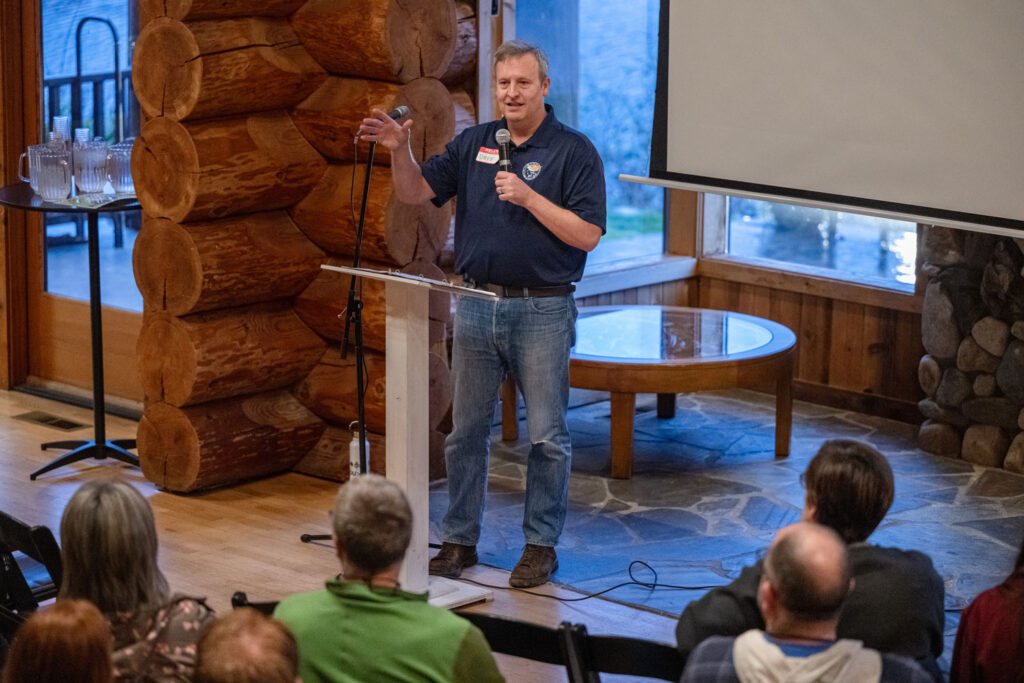
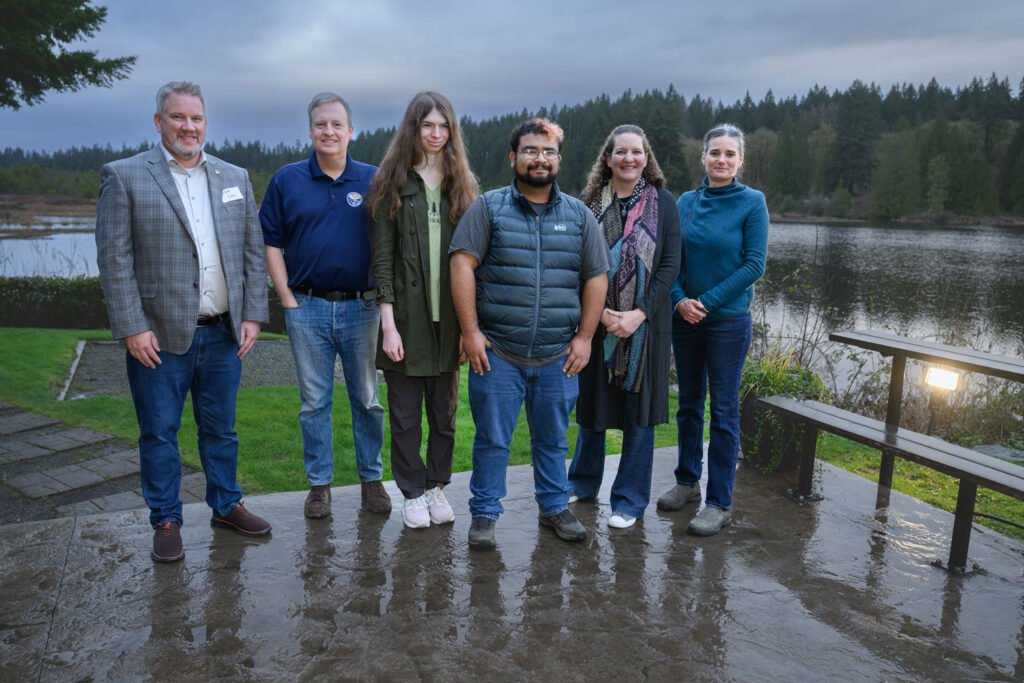
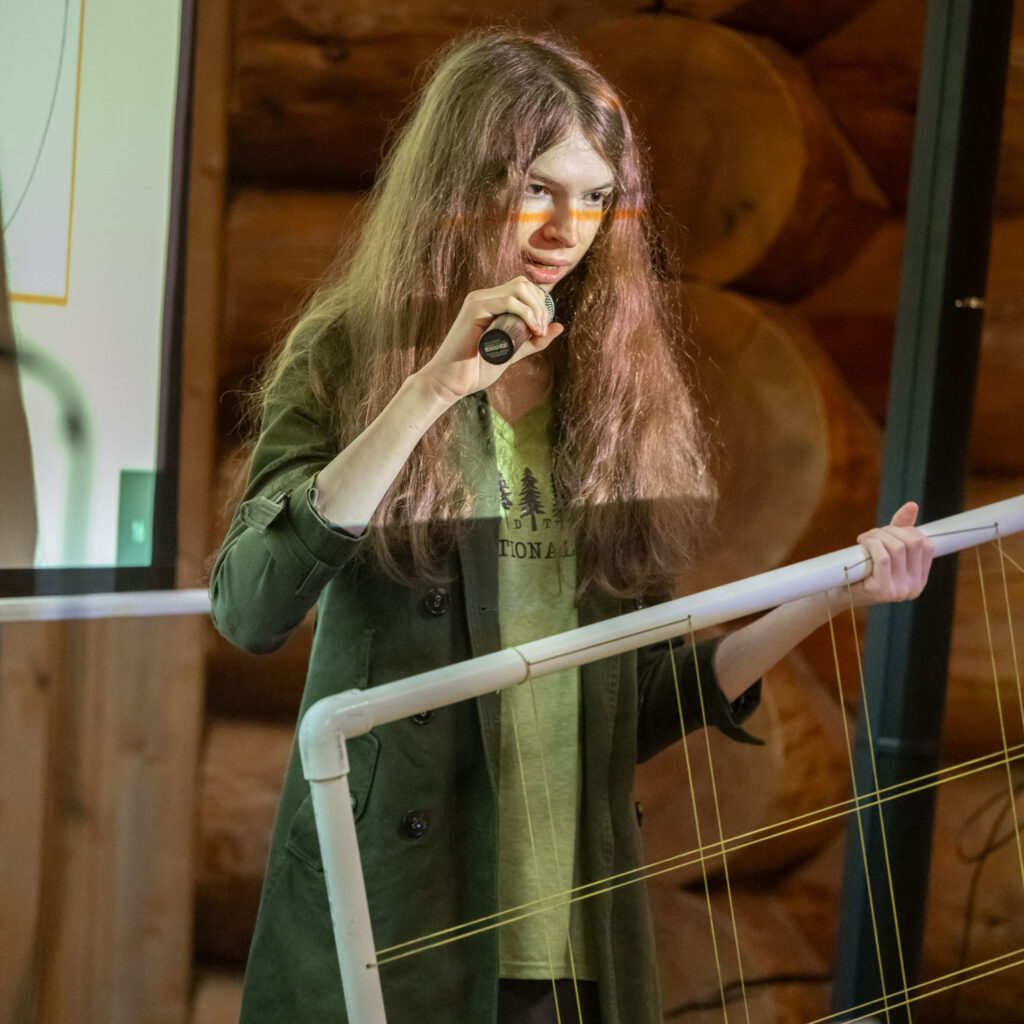
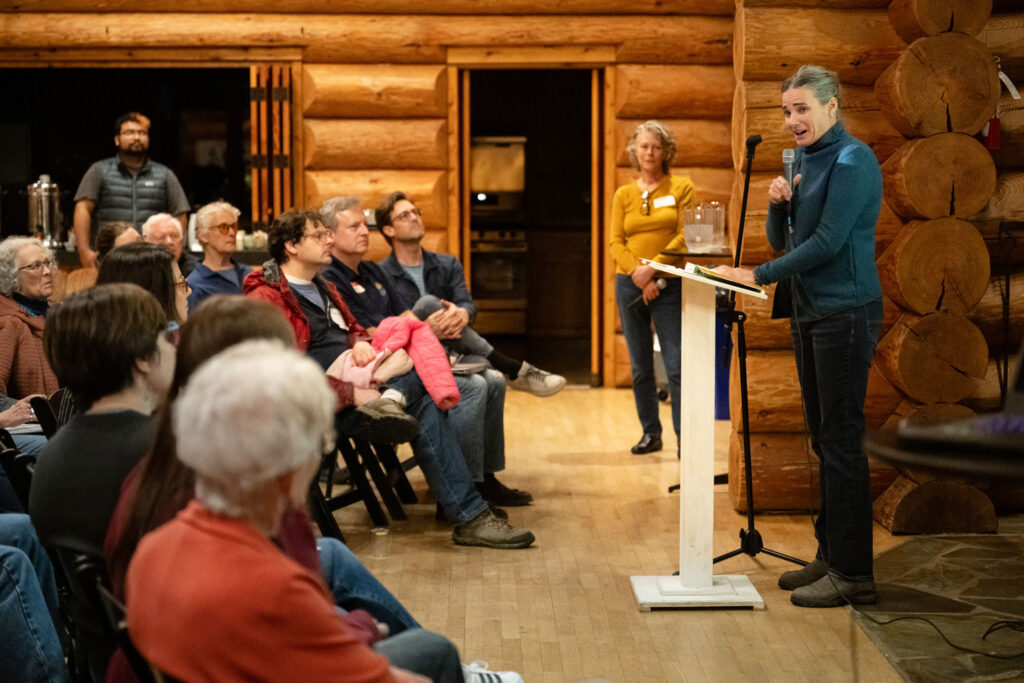
Recently, Hooven was host to the next generation of environmentalists and conservationists from UW Bothell. From water quality testing to invasive species mapping, four students took to the field for their capstone projects, which they presented in a community event at Crystal Lake Lodge in Woodinville, Washington, last month.
“What makes Hooven Forest so special is not just the landscape, it’s the people — a community that’s come together to care for this place, including a community-built trail system, educational walks, advocacy, stewardship and now a living laboratory for student research,” said Dave Upthegrove, Washington state commissioner of public lands, at the event.
“What I love about these projects is that they take something that we all feel about this forest and turn it into something we can actually measure, understand and act upon.”
An inventory of flora and fauna
Hooven Forest is owned and managed by the Washington Department of Natural Resources as part of the state’s efforts to conserve more than 70,000 acres of public lands. The students’ capstones on the forest were facilitated by Dr. Amy Lambert, associate teaching professor in UW Bothell’s School of Interdisciplinary Arts & Sciences, through a partnership with The Friends of Hooven Forest, a nonprofit that aims to protect the area from logging and development.
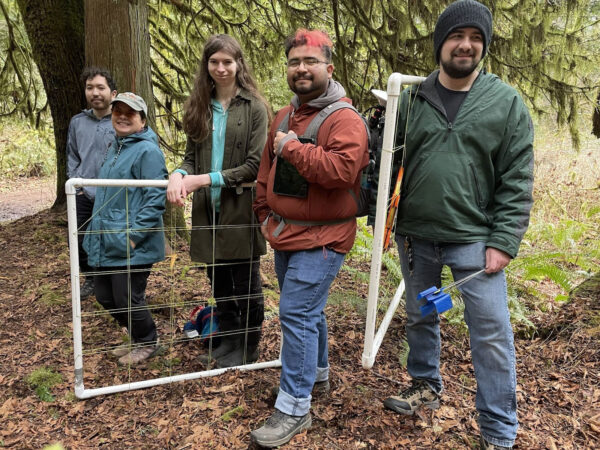
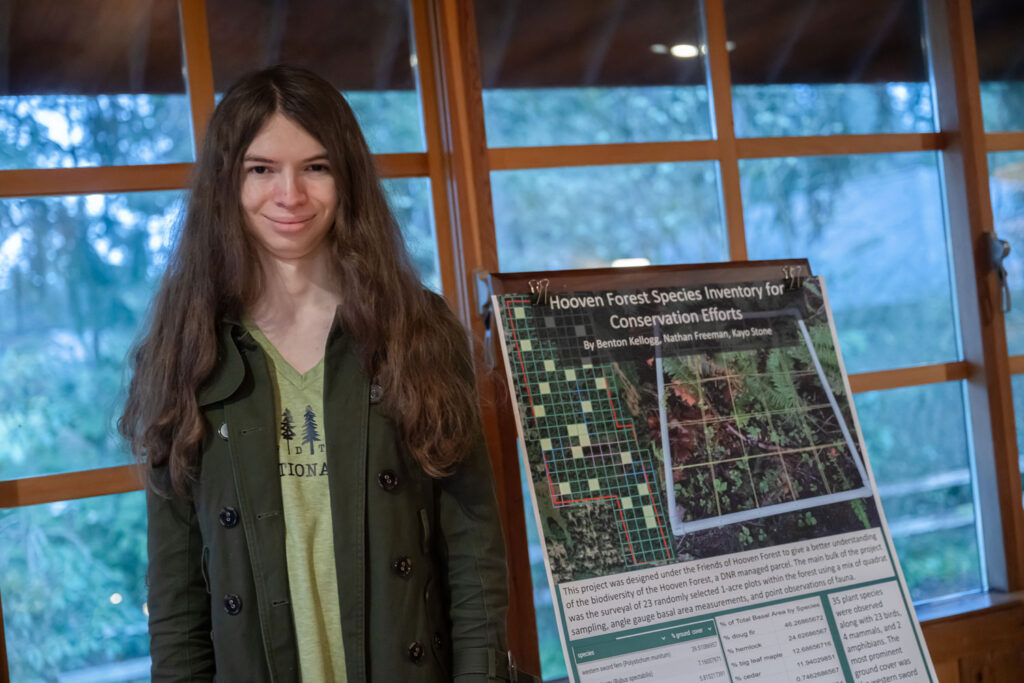
Knowing what plants and animals are currently present in the forest can be vital in making a case for their preservation. So in their project, Benton Kellogg and Nathan Freeman set out to inventory the various species that call Hooven home.
The pair divided the forest into sections, sampled 23 randomly selected one-acre plots and cataloged 35 plant species, 23 bird species, four mammals and two amphibians.
“I chose the Hooven Forest species inventory project because it involved a lot of field work, and it gave me the chance to design and execute my own research project,” said Kellogg, a senior majoring in Conservation & Restoration Science. “This project gave me good experience that will be helpful on my resume — and even let me share my work with several state politicians.”
A map of invasive species
Hooven Forest’s diverse habitat, while not far from urban environments, is part of a much larger wildlife corridor. The forest features towering century-old Douglas firs, Western red cedars and big leaf maples, as well as large wetland areas and seasonal creeks that attract animals ranging from coyotes and deer to mountain beavers and pileated woodpeckers.
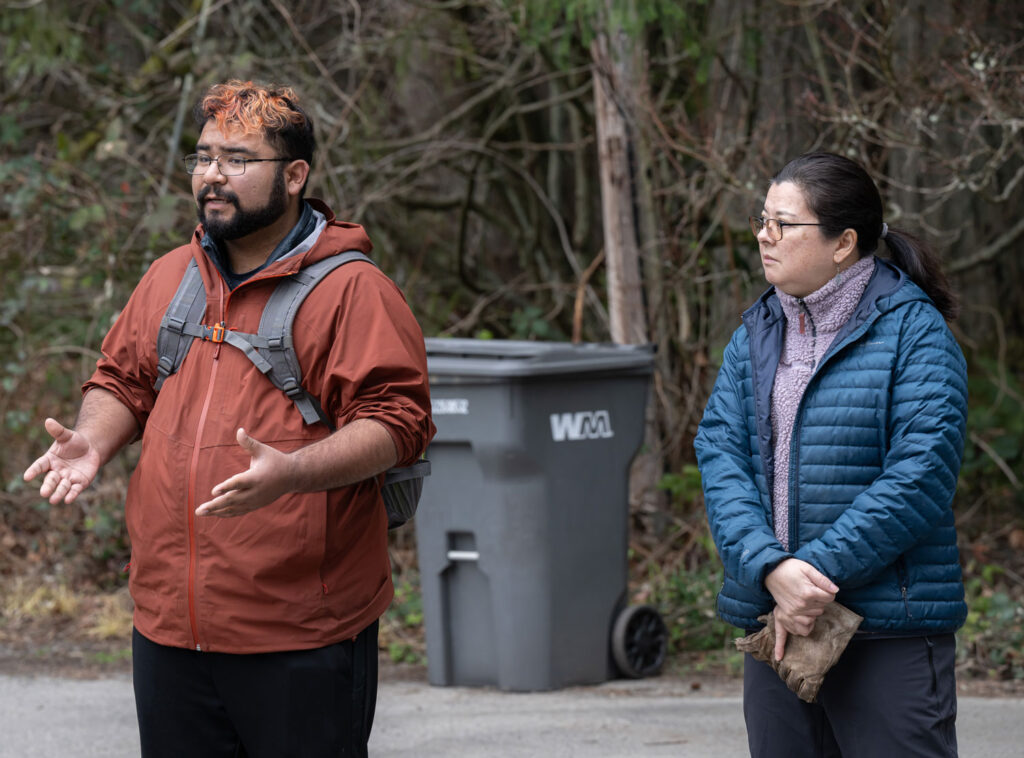
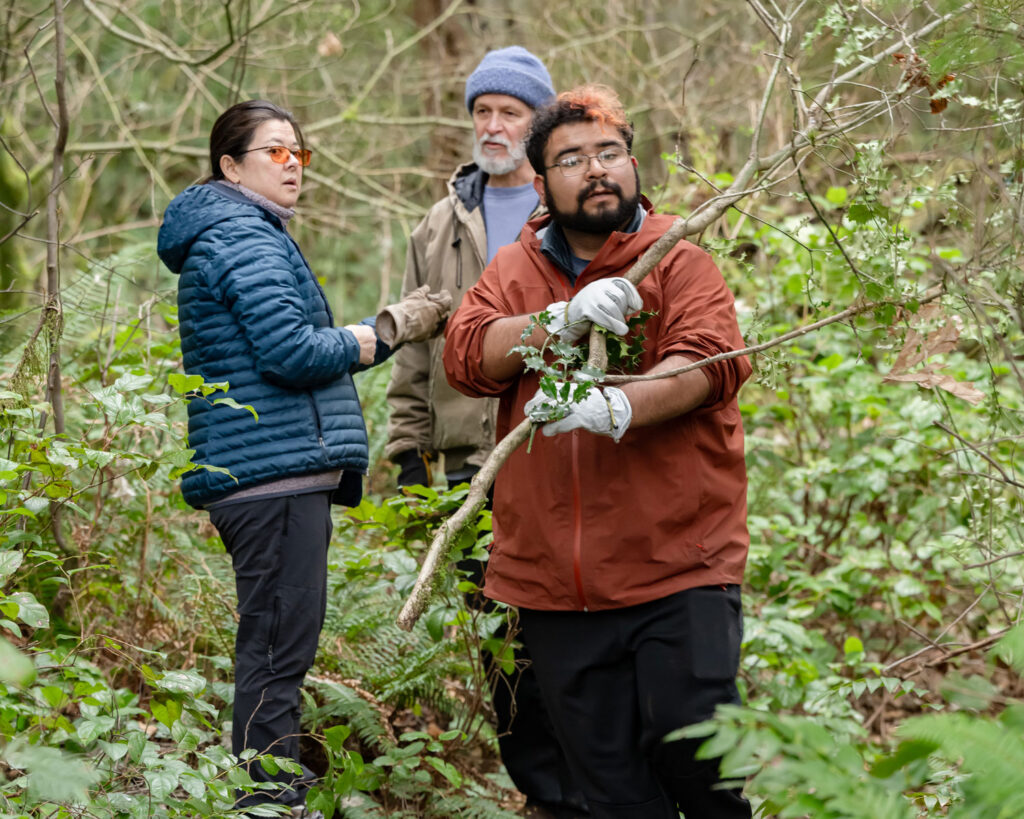
Like many wild spaces, however, Hooven isn’t immune to unwanted inhabitants. In his project, Cisco Jimenez surveyed invasive plant species including Himalayan blackberry, English holly, English ivy, Japanese knotweed and cherry laurel.
“I am passionate about conservation and restoration, and I see myself as both an environmentalist and a steward of the Earth. This project strongly aligned with those values.”
Cisco Jimenez, senior, Environmental Studies
“I am passionate about conservation and restoration, and I see myself as both an environmentalist and a steward of the Earth. This project strongly aligned with those values,” said Jimenez, a senior majoring in Environmental Studies who also plans to minor in Climate Change & Society. “I especially valued the opportunity to explore Hooven Forest and connect with a community deeply committed to protecting their local environment.”
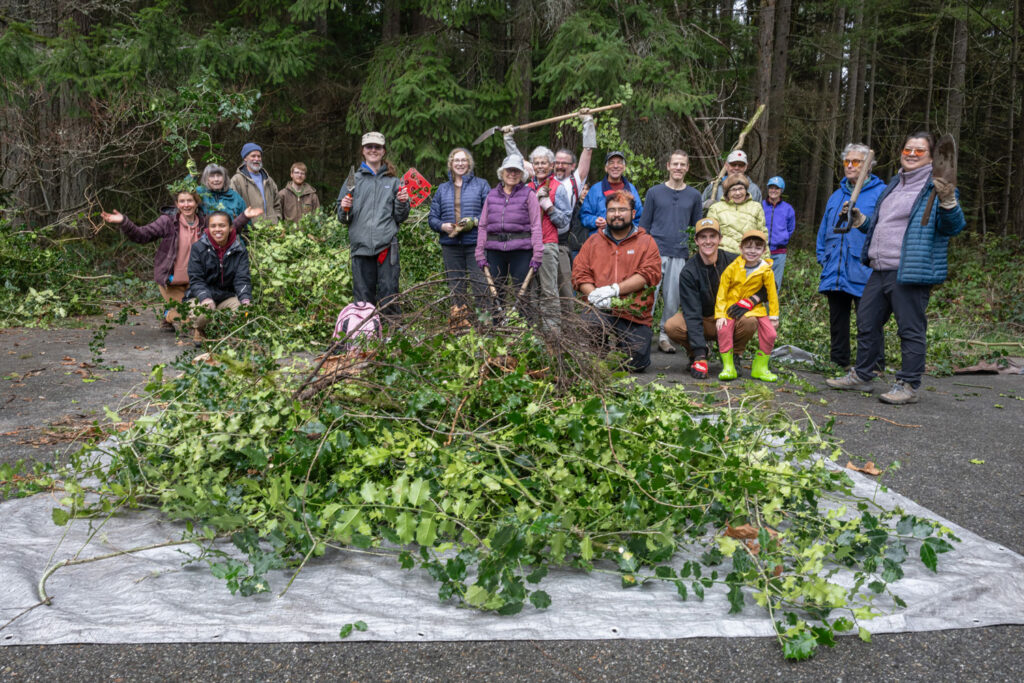
Through his project, Jimenez mapped a total of 177 sites where invasive species were present — with English holly and English ivy appearing the most dominant. His maps will support future restoration planning efforts, and his work has already paid off in a community invasive weeding party in March.
Tests of water quality
At the center of the forest lies the Hooven Bog and a wetland area marked by seasonal surface creeks and underground water seepage that flows into Crystal Lake and the Bear Creek watershed, which supports salmon. The wetlands, known as peat bogs, are among the most pristine of their kind in the state.
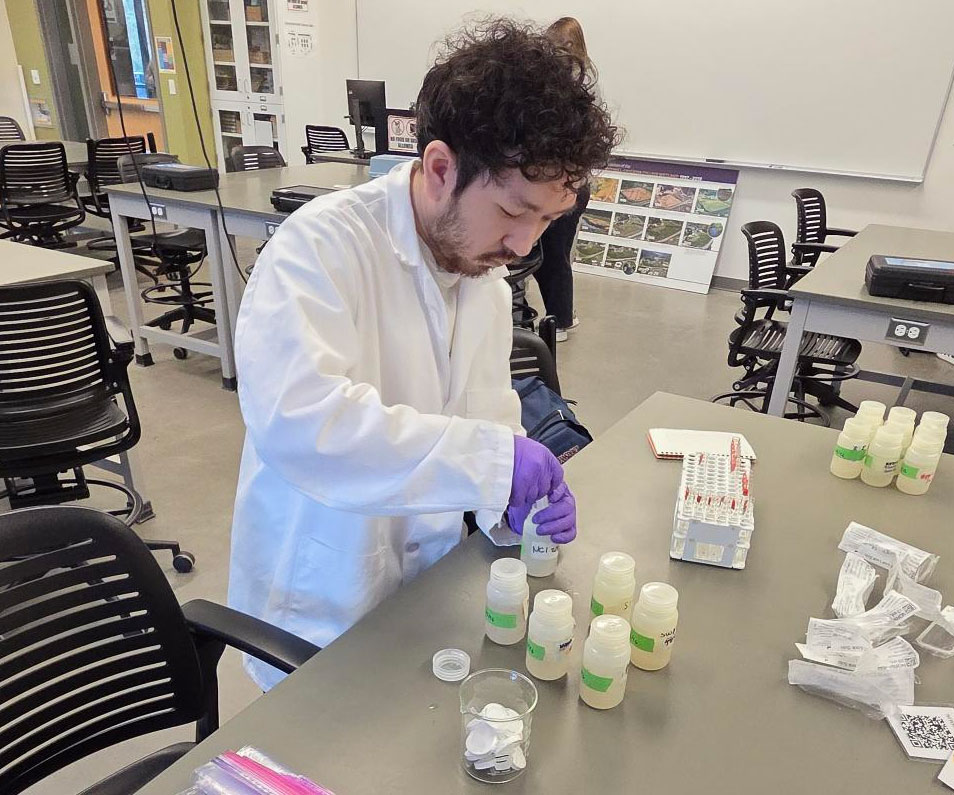
Adam Ryuki Parker had previous experience doing field work in water-focused classes and wanted to continue research in this area for his capstone. He tested the water quality as it flowed through Hooven Forest and compared it to water further downstream. He aimed to learn more about how the wetlands contributed to the overall health of the wider watershed.
Parker tested various parameters, such as pH and nutrient levels, across six different sites. He found that E. Coli and turbidity levels were especially low throughout the sampling period, indicating fairly good overall water quality.
“I’m hoping I can continue in a field similar to that of this project such as surface water management or monitoring,” said Parker, a senior majoring in Earth System Science and minoring in Data Analytics and Geographic Information Systems. “This was a great experience for me. I learned a lot about water and wetlands, met a lot of great people, and feel proud with what I was able to accomplish.”
A real community effort
Students were mentored and supported in their work by Lambert, as well as Solveig Whittle, president of The Friends of Hooven Forest, and Kayo Stone, steering committee member for the nonprofit.
“The support from the community partner and the neighbors around Hooven Forest and Crystal Lake was huge,” Jimenez said. “I learned a lot through them, and it made the project feel a lot more meaningful.”
Community partnerships such as these are vital to the capstone program, Lambert added, not only for the real-world experience they offer but also for teaching the value of relationship and community-building.
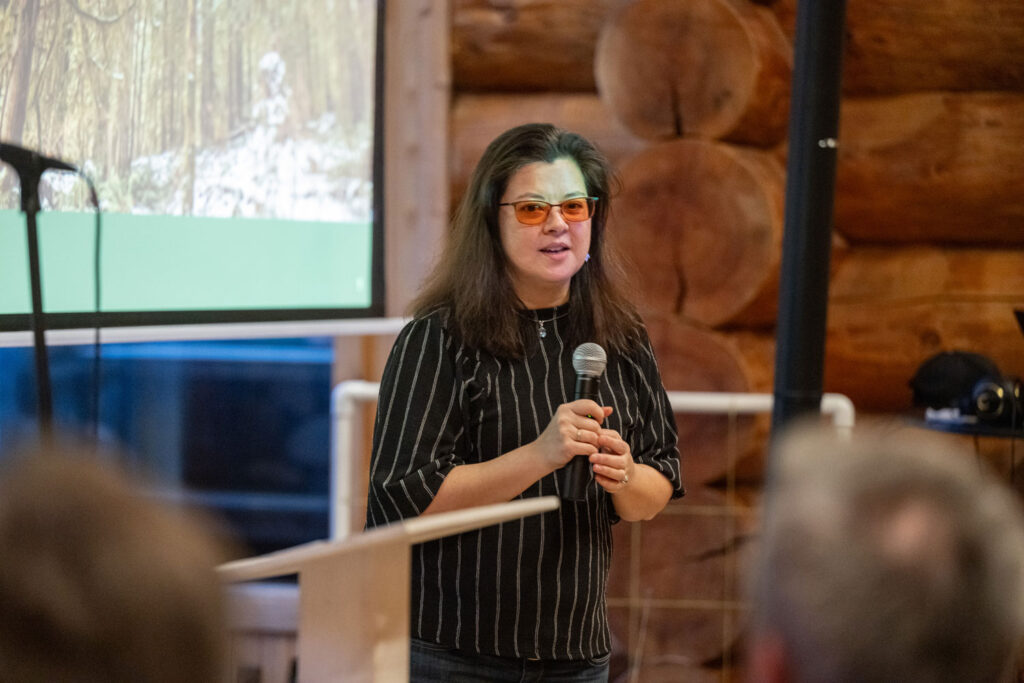
“The capstone program at UW Bothell is so valuable, and it’s important that we have these community-based and community-engaged opportunities for students,” she said. “To have that kind of gift — to teach and guide students and to have the level of relationship and reciprocity in the community — is truly an honor.”